As the craft beer market continues to expand, more investors are looking for brewery projects that balance production scale with product diversity. A brewery with an annual capacity of 10,000 hectoliters (10,000 HL) is an ideal solution. It is large enough to ensure stable production of popular beers such as lagers, while still flexible enough to produce a variety of specialty craft beers.
This scale is particularly suitable for regional markets and mid-sized cities, where breweries must supply consistent products while also responding quickly to changing consumer tastes.
In this article, we will explore a complete solution for building a modern 10,000 HL craft brewery, including facility planning, brewery equipment configuration, brewing processes, and production management.
1. Brewery Planning and Design: Efficient, Sustainable, and Scalable
A successful brewery begins with scientific and practical planning. For a 10,000 HL brewery, the layout must ensure smooth production flow, efficient energy usage, and future expansion capability.
Key Elements of Space Planning
Production Area
The brewhouse, fermentation, filtration, and packaging areas should be arranged in a logical sequence. This reduces material transportation distance and improves production efficiency.
Utility Area
Utilities such as refrigeration systems, compressed air, and steam boilers are centralized for easier management and energy recovery.
Storage Area
Raw material warehouses and finished product storage should be located close to the production area to improve logistics efficiency.
Office and Living Area
Office and staff areas should be separated from the production zone to maintain a comfortable working environment and ensure production hygiene.
Flexible Production and Logistics
Flexible Process Design
The brewery layout should leave room for expansion. Additional fermentation tanks or new product lines can be added as market demand grows.
Hygienic Zoning
Different cleanliness levels are separated to prevent cross-contamination and ensure stable beer quality.
Automated Logistics
Automated material handling and storage systems can reduce manual labor and improve operational efficiency.
Energy Efficiency and Environmental Design
Energy Recovery
A heat recovery system captures secondary steam generated during the boiling process and reuses it to reduce energy consumption.
Water Management
Production water is categorized and reused. Cleaning water can be recycled for pre-washing, and cooling water is circulated to reduce wastewater discharge.
By-Product Utilization
Spent grain and surplus yeast can be collected and sold as animal feed or organic fertilizer. A CO₂ recovery system purifies fermentation carbon dioxide for reuse.
2. Brewing Process: From Classic Lagers to Innovative Beers
The advantage of a 10,000 HL brewery is its ability to produce both high-volume flagship beers and small-batch specialty products.
Typical beer styles include:
- Classic lager beer for mainstream markets
- Wheat beer with fruity aroma and cloudy appearance
- Dark beer and stout with roasted malt character
- Fruit or tea flavored beers for younger consumers
- Low-alcohol and non-alcoholic beers
- Functional beers with added electrolytes or vitamins
Full Process Control
Modern brewery equipment integrates automation systems to control every step of production:
- Raw material ratio calculation
- Mash temperature curve control
- Fermentation temperature and pressure management
During post-processing, non-biological stability is ensured through centrifugal filtration and flash pasteurization, helping extend shelf life while preserving beer flavor.
3. Production Capacity and Brewery Equipment Configuration
Key Production Parameters
- Annual production capacity: 10,000 HL
- Production days per year: 330 days
- Work schedule: 3 shifts (24 hours)
- Average daily production: 30 HL
- Brewing batches per day: 6 batches
- Brewhouse capacity: 5 HL per batch
- Average fermentation cycle: 20 days
- Total fermentation capacity: 600 HL
Système de brassage
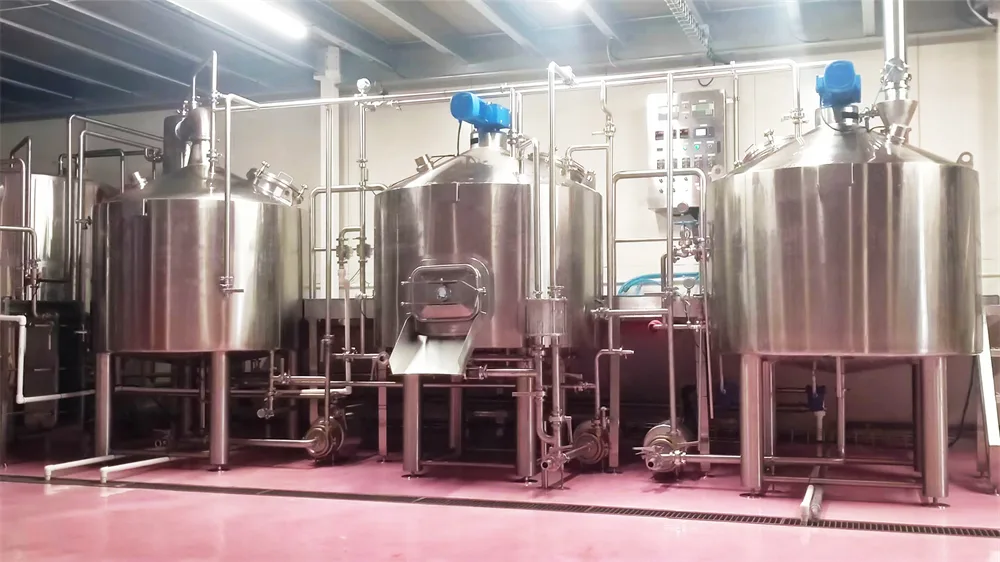
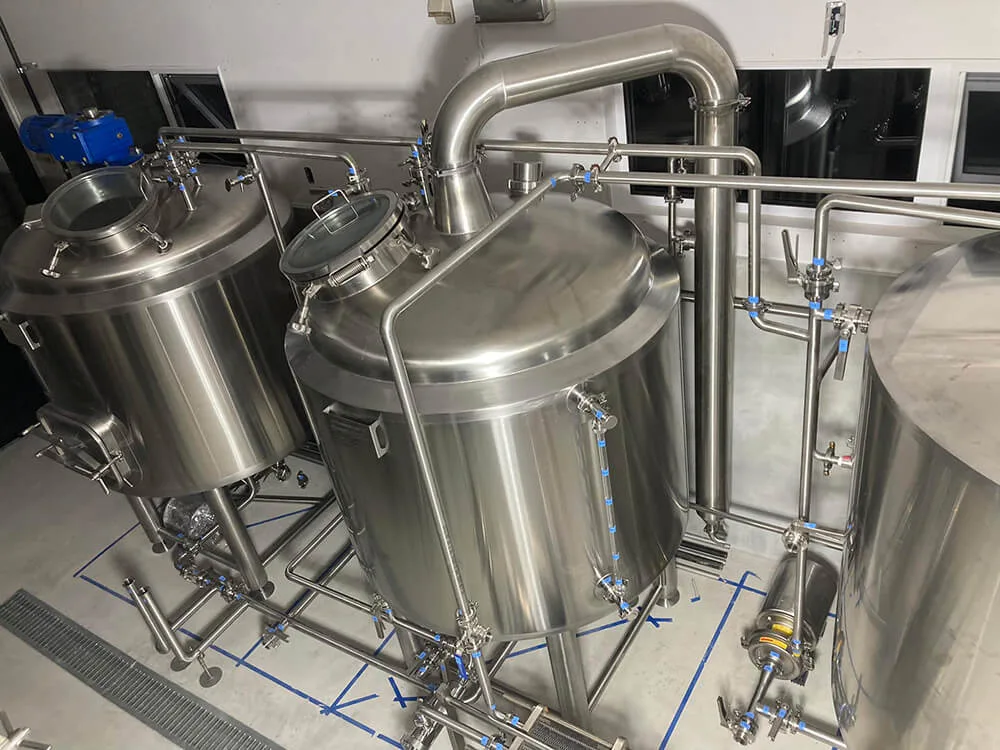
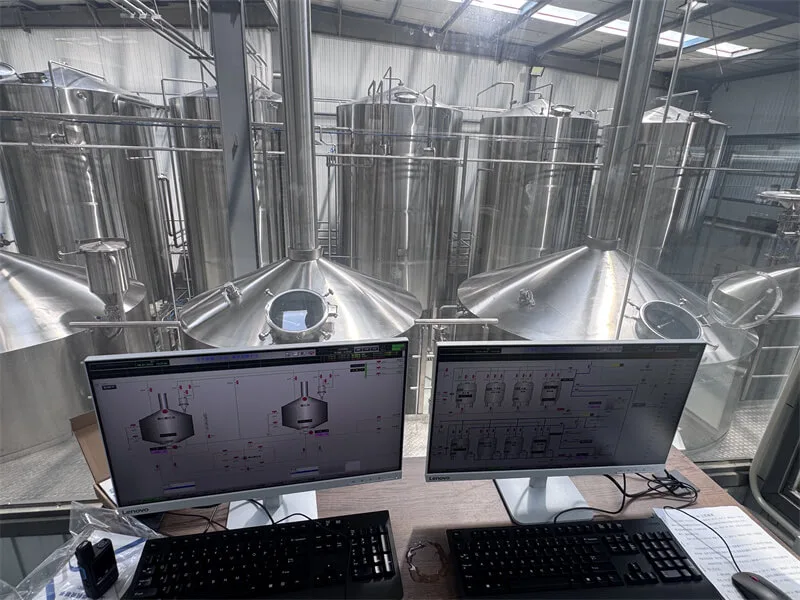
The brewery uses a five-vessel automatic brewhouse, including:
- Mash kettle
- Lauter tun
- Buffer tank
- Boiling kettle
- Whirlpool tank
Each batch produces 5 HL of wort, supporting up to 6 brewing cycles per day.
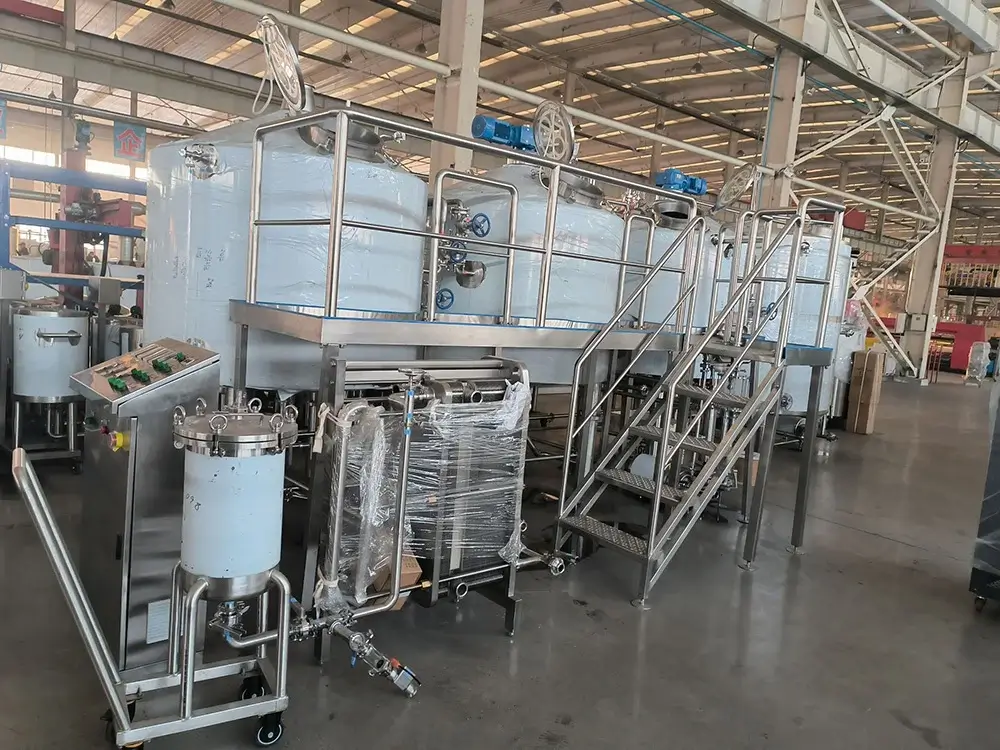
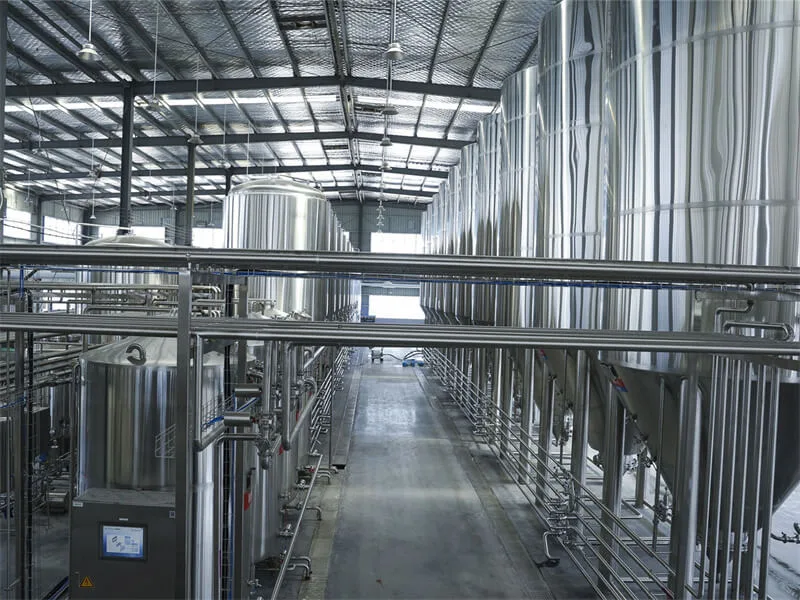
Fermentation and Storage System
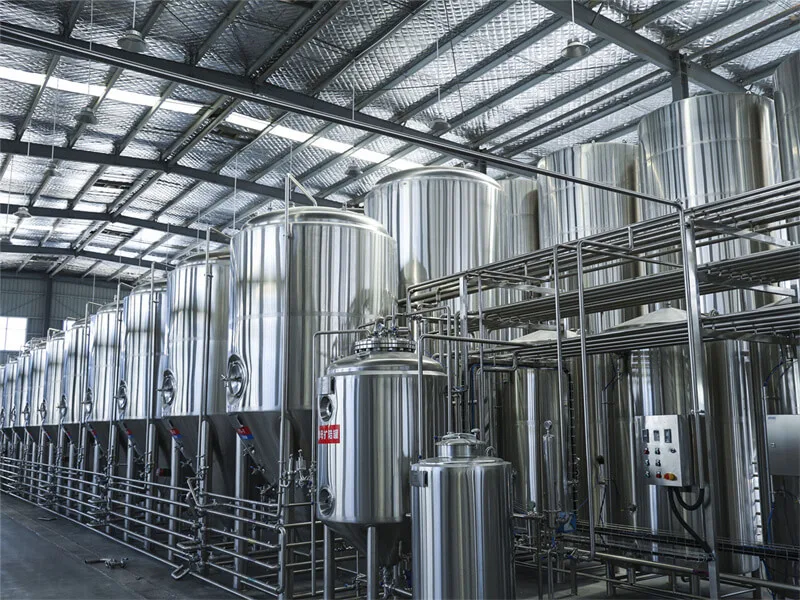
Fermentation tanks are configured to support both high-volume products and small-batch specialty beers.
- 30 HL fermentation tanks × 10 (mainstream products)
- 20 HL fermentation tanks × 10 (flexible production)
- 10 HL fermentation tanks × 10 (specialty beers)
Bright beer tanks:
- 30 HL × 2
- 20 HL × 1
- 10 HL × 1
Filtration and Packaging Capacity
- Centrifugal filter: >5 HL/hour
- Flash pasteurization system: 5 HL/hour
Packaging lines include:
- Glass bottle filling line
- Aluminum can filling line
- Fully automatic keg filling system
This configuration allows breweries to meet diverse packaging requirements.
4. Detailed Brewery Equipment List
Raw Material Handling System
- Malt silos: 50 m³ × 2
- Wet malt milling system: >5 tons/hour
- Rice grinding system: >3 tons/hour
Brewing System
- Automatic 5 HL brewhouse system
- Pneumatic spent grain removal system
- Spent grain storage tank: 20 m³
Fermentation system:
- Total capacity 600 HL
Yeast management:
- 1,000 L yeast recovery tanks × 2
- 500 L yeast propagation system
Filtration system:
- Centrifugal filter >5 HL/hour
Bright beer system:
- 4 bright beer tanks with total capacity of 90 HL
High-gravity dilution system:
- >5 HL/hour
Utility Systems
Water treatment system: 8 m³/hour
Hot water, cold water, and glycol systems:
20 m³/hour circulation capacity
Steam supply:
- 500 kg/hour steam boiler
Compressed air:
- 1.2 m³/min, 7.5 kW
CO₂ system:
- 10 m³ liquid CO₂ storage tank
Cleaning and Control Systems
Brewhouse CIP system:
- 1,000 L hot caustic tank
- 1,000 L hot water tank
Fermentation CIP system:
- 3,000 L hot caustic tank
- Acid tank
- Sanitizing tank
- Hot water tank
Central control system:
- Fully automated with multiple brewing process recipes.
5. Why Choose a 10,000 HL Brewery?
A 10,000 HL craft brewery sits at the perfect balance between industrial scale and craft flexibility.
Moderate investment
The brewery equipment configuration matches the production scale, improving capital efficiency.
Strong market adaptability
With up to 6 batches per day, breweries can easily switch between different beer styles.
Expandable design
The system can be expanded to 20,000 HL in the future by adding fermentation tanks.
Complete turnkey solution
Professional suppliers provide services including brewery design, brewery equipment manufacturing, installation, and brewing training.
Conclusion
The appeal of craft beer lies in its diversity and creativity, while commercial success depends on balancing scale with flexibility.
A 10,000 HL craft brewery provides exactly that balance. It allows breweries to maintain stable production for the main market while quickly introducing new and innovative beers.
If you are planning to build a new brewery, this capacity is an excellent starting point. With the right planning and professional brewery equipment, every step—from malt to finished beer—can become a competitive advantage.
Contactez nous today to receive a detailed brewery project proposal and brewery equipment list. Let’s build your craft brewing business together.