Producing high-quality whisky requires more than a well-designed distillation system. Every stage, from grain preparation and mashing to fermentation and double distillation, contributes to the final spirit’s aroma, flavor, and overall quality.
For distillery investors and whisky producers, selecting the right whisky distillery equipment is essential for establishing a reliable production process and achieving consistent product quality.
As a beverage and alcohol equipment manufacturer, METO provides integrated whisky production solutions covering the brewing system, fermentation equipment, copper pot stills, and supporting process equipment. The following project showcases how different equipment units work together to transform grain-based raw materials into new make spirit, ready for oak cask maturation.
1. Overview of the Complete Whisky Production Process
A traditional whisky production process involves several interconnected stages. Each stage has a specific function and directly influences the characteristics of the final product.
The complete production process generally includes:
- Grain milling and preparation
- Mashing and wort production
- Temperature-controlled fermentation
- First distillation in the wash still
- Second distillation in the spirit still
- Spirit collection and temporary storage
- Oak cask maturation
The equipment configuration is designed around this production sequence, ensuring smooth material transfer and coordinated operation between different processing stages.
2. Brewing System: Building the Foundation of Whisky Flavor
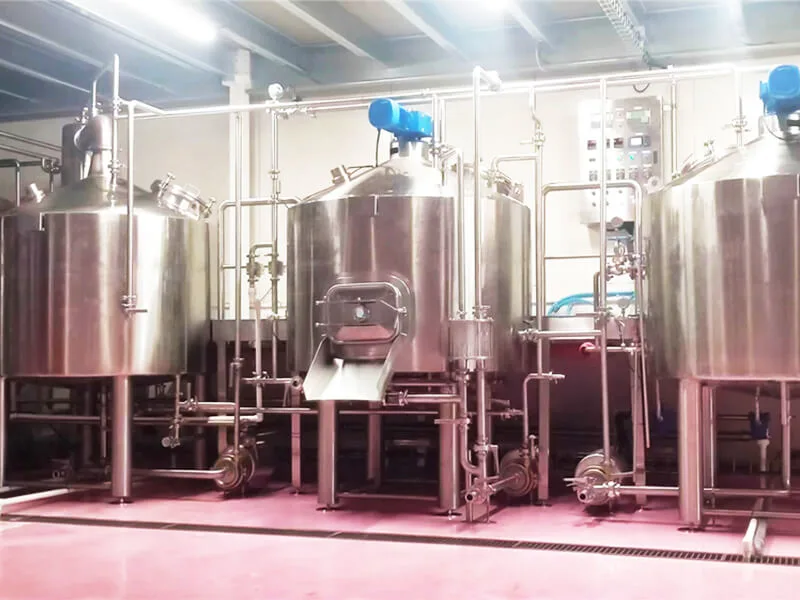
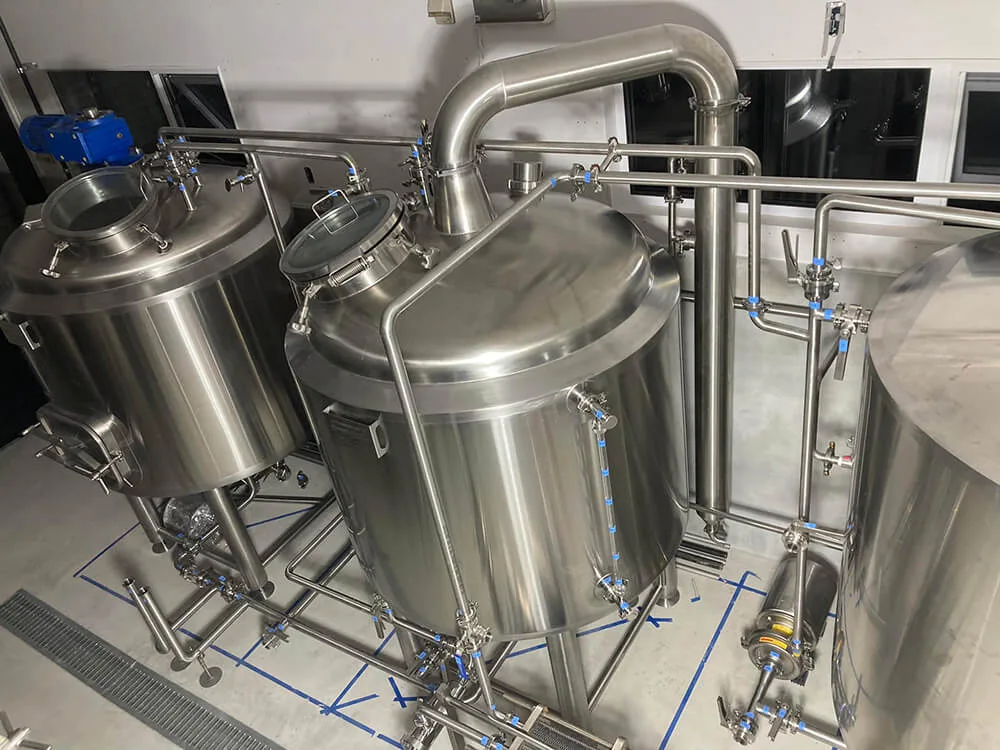
The brewing system is one of the most important upstream components of a whisky distillery. It converts grain-based raw materials into fermentable wort through controlled milling and mashing, providing the necessary foundation for subsequent fermentation and distillation.
The quality of the wort and the conditions established during fermentation influence the flavor precursors that eventually appear in the distilled spirit.
During fermentation, yeast produces various flavor compounds, including esters, higher alcohols, and organic acids. These compounds contribute to the initial flavor structure and help determine the aromatic characteristics of the new make spirit.
Grain Milling and Preparation
The process begins with a professional dual-roller malt mill.
Rather than grinding the grain into fine flour, the milling system is designed to break open the grain while retaining the husks as much as possible. This helps release the starch while preserving the natural husk structure, which serves as a filtration bed during lautering.
Proper milling is important for achieving efficient starch utilization and stable wort separation.
Mashing and Wort Production
After milling, the grain enters the mashing system, where it is mixed with hot water under controlled temperature conditions.
For this project, a single-step mashing process is operated at approximately 65–68°C. This temperature range supports enzymatic starch conversion, producing fermentable sugars for the subsequent fermentation stage.
The resulting wort provides the essential raw material for yeast fermentation.
Temperature-Controlled Fermentation
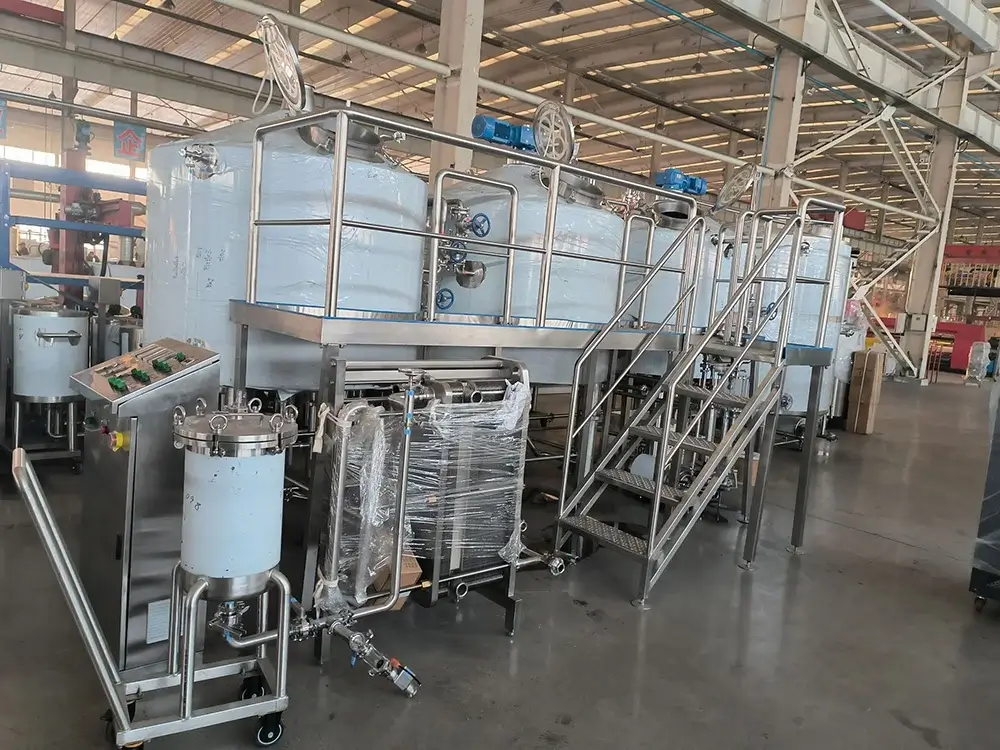
The wort is transferred into temperature-controlled fermentation tanks, where yeast converts fermentable sugars into alcohol and flavor compounds.
The fermentation period for this project is approximately 48–120 hours, depending on the process requirements and desired flavor development.
An integrated cooling system helps maintain suitable fermentation temperatures, supporting stable yeast activity and consistent production conditions.
The brewing and fermentation stages together establish the initial flavor profile of the whisky before distillation.
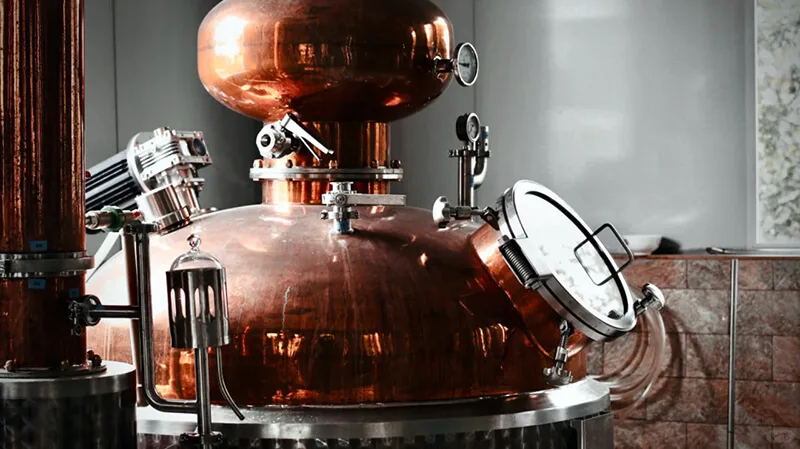
3. Whisky Distillation System: Precision Copper Pot Still Design
The distillation system is the core processing section of a whisky production line.
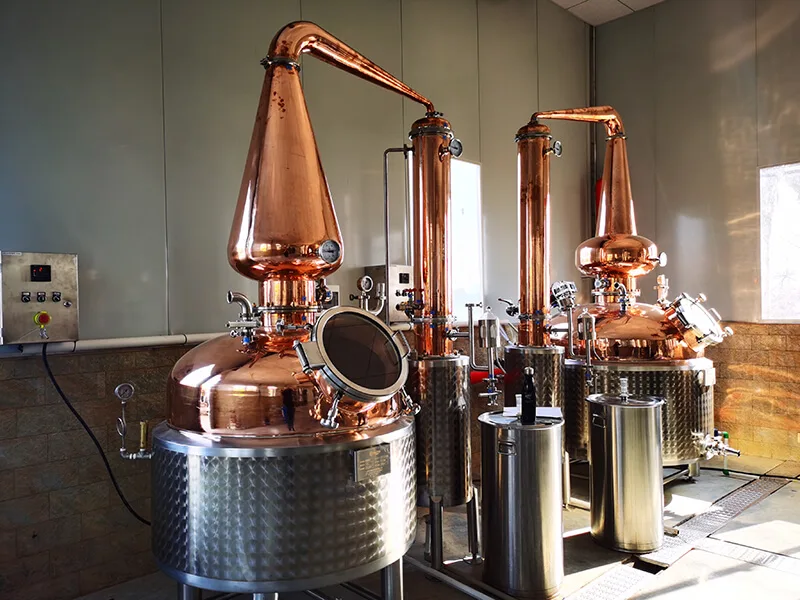
This project uses a traditional double-distillation configuration, consisting of a wash still and a spirit still, together with associated copper components and condensers.
Copper is an important material in whisky distillation. Its interaction with sulfur-containing compounds helps reduce undesirable sulfur notes and contributes to a cleaner spirit profile.
The main copper components include:
- Pot Still: The main vessel used for heating and vaporizing the fermented wash.
- Onion Head: The enlarged upper section that forms part of the vapor path.
- Swan Neck: Connects the still head to the condenser and influences vapor movement and reflux.
- Condenser: Cools alcohol vapor and converts it back into liquid spirit.
The stills and key copper components are manufactured using TP2 copper, selected for its material properties and suitability for distillation equipment.
The overall configuration focuses on three important aspects:
- Functional Equipment Design: Each still and component performs a defined role in the distillation process.
- Quality Copper Construction: Copper provides extensive contact surfaces for interaction with vapor and spirit.
- Process-Oriented Separation: The double-distillation arrangement supports controlled separation and spirit quality development.
4. First Distillation: Wash Still Operation
The first distillation takes place in the wash still.
The fermented wash is transferred into the still and heated indirectly. During heating, alcohol and other volatile compounds vaporize and travel through the copper vapor path before entering the condenser.
After condensation, the collected liquid is known as low wines.
The alcohol concentration of the low wines is typically around 20–30% ABV, depending on the fermentation wash and distillation conditions.
For this project, the wash still system incorporates TP2 copper components, including:
- Copper still liner
- Onion head
- Swan neck
- Copper condenser
The extensive copper contact area helps promote interactions between copper and sulfur-containing compounds during distillation, contributing to the production of a cleaner intermediate spirit.
The low wines collected from this stage are then transferred to the spirit still for the second distillation.
5. Second Distillation: Spirit Separation and Quality Control
The second distillation is carried out in the spirit still.
During this stage, the low wines are heated again to separate the different volatile components according to their boiling behavior and the distiller’s process judgment.
A critical operation is making the cuts, which separates the distillate into three main fractions:
Heads
The initial fraction contains highly volatile compounds. Its composition is evaluated carefully, and it is generally separated from the desired heart cut.
Hearts
The heart is the central fraction selected for new make spirit production. It contains the desired balance of alcohol and flavor compounds and forms the basis of the whisky’s final character.
Tails
The final fraction contains a different composition of less volatile compounds, including higher alcohols. It is separated according to the distiller’s desired flavor profile and production strategy.
The timing and volume of each cut are important decisions in whisky production. They influence the balance between spirit purity, aroma, and flavor complexity.
For this project, the collected heart fraction typically reaches approximately 60–70% ABV, depending on the distillation process and cut points.
This new make spirit is then transferred to a dedicated spirit receiver for temporary storage before maturation.
6. Spirit Collection: Preparing for the Maturation Stage
Following the second distillation, the selected heart cut is collected in a spirit receiving tank.
At this stage, the new make spirit has developed its initial aromatic and flavor characteristics through the combined effects of raw material selection, fermentation, and distillation.
The receiving tank provides a dedicated storage point between distillation and the next production stage.
The spirit can subsequently be prepared for oak cask filling according to the distillery’s maturation requirements.
Proper handling and storage at this stage help maintain product quality and support the transition into long-term maturation.
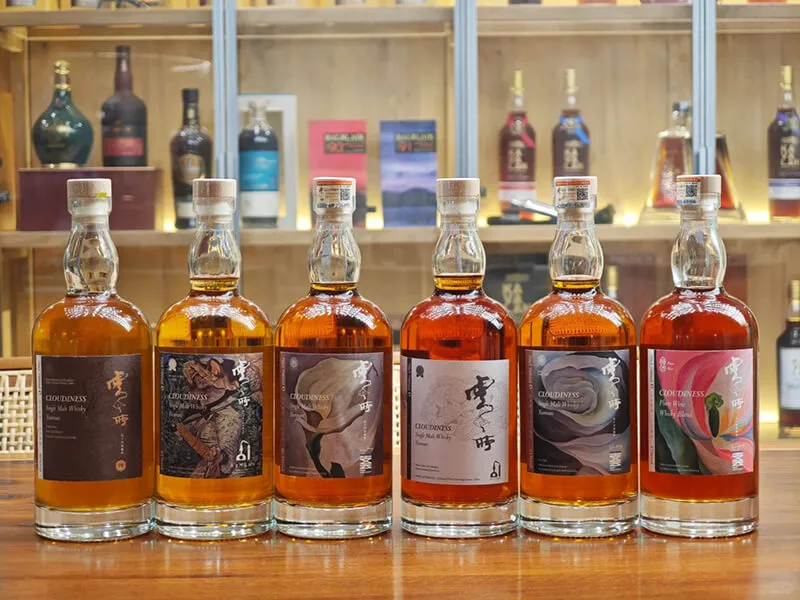
7. Oak Cask Maturation: Developing the Final Whisky Character
Distillation produces new make spirit, but the whisky’s final character develops further during maturation.
After collection, the spirit is transferred into oak casks for aging.
During maturation, the spirit gradually interacts with the wood, developing additional color, aroma, and flavor complexity. Oak contributes compounds associated with vanilla, spice, wood, and tannin characteristics.
The maturation environment, cask type, storage conditions, and aging duration all influence the final whisky profile.
A well-designed distillation system therefore needs to produce a consistent new make spirit that provides a suitable foundation for the maturation process.
8. Why Choose METO for Customized Whisky Distillery Equipment?
Building a whisky distillery requires more than purchasing individual machines. Equipment compatibility, process design, material selection, manufacturing quality, and installation planning all influence the success of the project.
METO is a manufacturer specializing in beverage and alcohol production equipment, providing engineering, manufacturing, installation, commissioning, and after-sales support.
Our capabilities include:
Integrated Production Solutions
From grain processing and mashing to fermentation, distillation, and spirit collection, METO can coordinate the equipment configuration according to the required production process.
Copper and Stainless Steel Fabrication
We manufacture distillation equipment using suitable materials, including copper and stainless steel, according to equipment design and process requirements.
Customized Equipment Configuration
Different distilleries have different production capacities, raw materials, heating requirements, and preferred distillation methods. Equipment dimensions, vessel configurations, and process layouts can be customized according to individual project requirements.
Manufacturing and Quality Control
With professional manufacturing facilities and equipment, METO supports the fabrication and quality inspection of industrial vessels and beverage production equipment.
Project Support
Our engineering team can assist with equipment selection, production layout, manufacturing coordination, installation, and commissioning to support the implementation of complete distillery projects.
9. Start Planning Your Whisky Distillery Project
Whether you are establishing a new whisky distillery, expanding an existing production facility, or upgrading your distillation process, selecting the right equipment configuration is an important first step.
METO provides customized whisky distillery equipment solutions based on your production capacity, raw materials, distillation preferences, and factory conditions.
Tell us about your whisky production project.
Contact METO to discuss:
- What is your planned production capacity?
- Are you producing malt whisky, grain whisky, or another grain-based spirit?
- Do you prefer traditional copper pot stills or a customized distillation configuration?
- Do you require a complete brewing, fermentation, and distillation system?
Our engineering team can help evaluate your requirements and develop an equipment proposal suited to your production goals.
Contactar con METO today to discuss your customized whisky distillery equipment solution.