The craft spirits industry has expanded rapidly in recent years, with more distilleries developing premium whiskey, gin, brandy, rum, and fruit spirits in small and medium production volumes. Unlike large industrial plants focused on standardized output, craft producers need equipment that provides flexibility, precise control, and the ability to create different spirit styles.
However, many traditional distillation systems are designed for a single application. A pot still delivers excellent flavor retention but may not provide the purity required for neutral spirits. A column still offers high efficiency but has limitations when producing spirits that require rich aromas and complex character.
For small and growing distilleries, installing multiple independent distillation systems increases investment costs, production space requirements, and maintenance complexity.
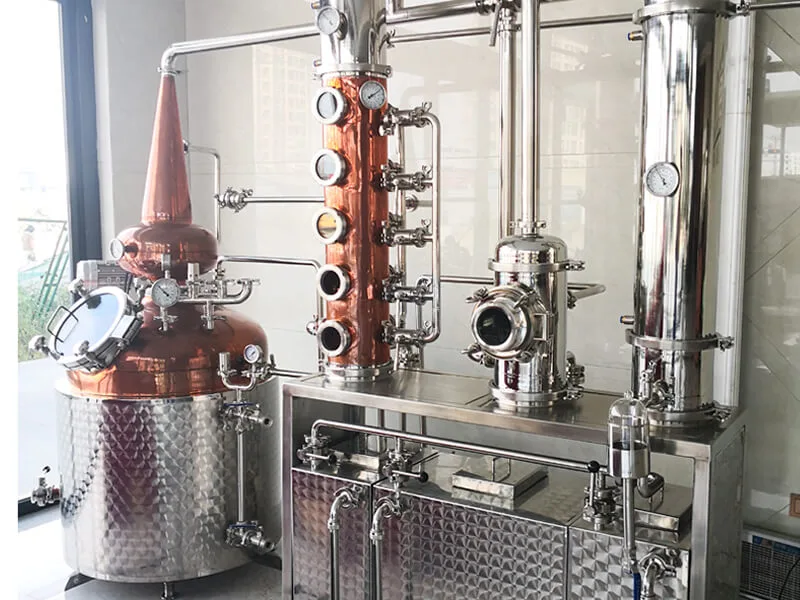
A multi-functional distillation system solves this challenge by integrating pot still and column still technologies into one platform. With flexible configurations, distillers can produce various spirit categories while improving equipment utilization and reducing overall investment.
Hybrid Still Design for Multiple Spirit Applications
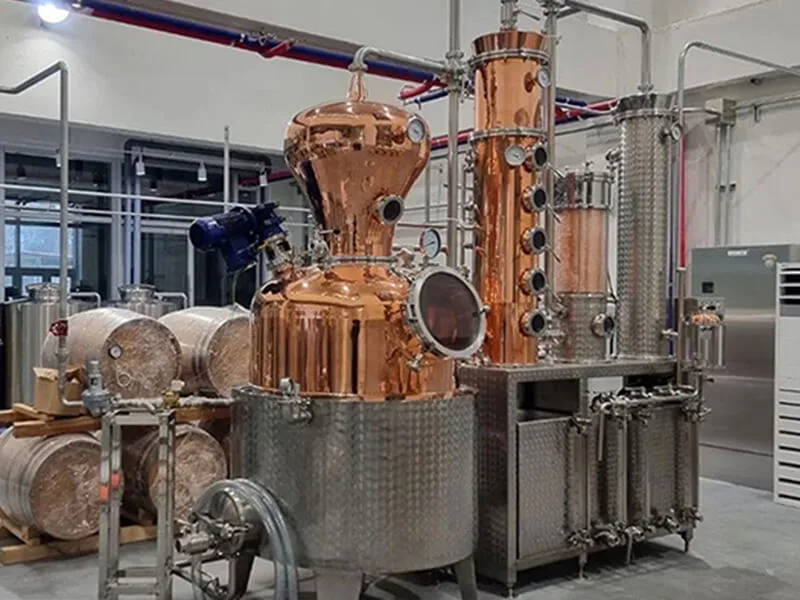
The core advantage of a multi-functional distillation system is its hybrid design, which combines traditional pot distillation with column rectification.
Pot Still Mode for Flavor-Rich Spirits
Pot still distillation remains the preferred method for producing spirits where aroma and character are critical.
Typical applications include:
- Whiskey
- Brandy
- Ron
- Fruit spirits
The slower distillation process allows more flavor compounds from the fermentation mash to remain in the final spirit. Copper contact surfaces further improve spirit quality by reducing sulfur compounds and unwanted aromas.
Column Still Mode for High-Purity Spirits
For products requiring higher alcohol concentration and a cleaner profile, column distillation provides greater separation efficiency.
Typical applications include:
- Vodka
- Neutral spirits
- Gin base alcohol
By adjusting the column configuration, reflux ratio, and operating parameters, producers can achieve different alcohol profiles from the same equipment.
This flexibility is especially valuable for craft distilleries that want to expand their product range without purchasing separate systems.
Copper and Stainless Steel Construction for Quality and Durability
Material selection directly affects both distillation performance and equipment lifespan.
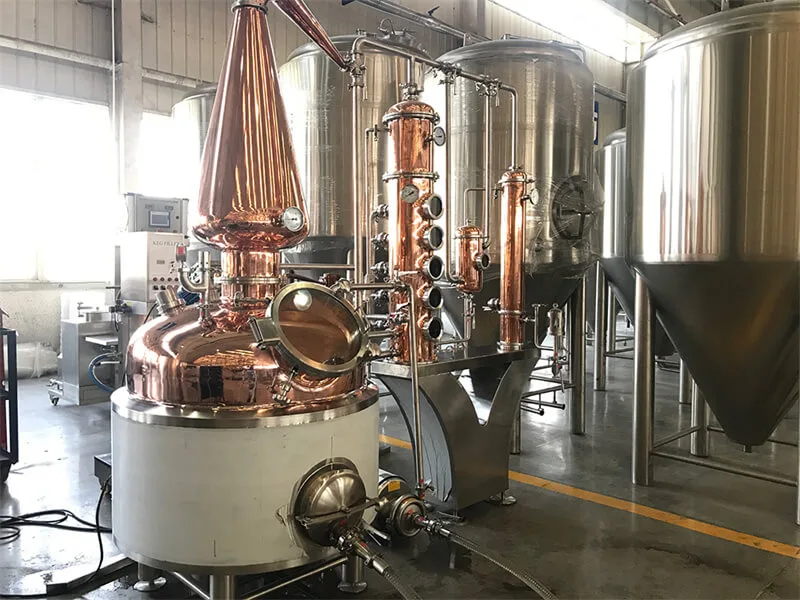
Professional distillation equipment commonly combines red copper and stainless steel to balance traditional distilling performance with modern industrial requirements.
Copper Components for Better Spirit Quality
Copper plays an important role during distillation because it reacts with sulfur compounds generated during fermentation.
Key benefits include:
- Cleaner spirit aroma
- Smoother taste profile
- Reduced unwanted sulfur notes
Copper is commonly used in areas with direct vapor contact, including:
- Still heads
- Columns
- Condensers
- Internal components
Stainless Steel Structure for Long-Term Reliability
Food-grade stainless steel, especially SUS304, is widely used for the main structure of distillation equipment due to its:
- Corrosion resistance
- Mechanical strength
- Easy cleaning characteristics
- Larga vida útil
For applications requiring higher corrosion resistance, SUS316L components can also be selected depending on the product and process requirements.
The combination of copper and stainless steel provides the advantages of traditional craftsmanship while meeting modern hygiene and durability standards.
Precision Control for Stable Distillation Performance
Consistency is one of the biggest challenges in craft spirit production. Variations in heating, temperature control, and operator experience can directly affect alcohol quality.
Modern multi-functional distillation equipment can be equipped with advanced control systems to improve process stability.
Las características clave incluyen:
Accurate Temperature Management
Different alcohol compounds evaporate at different temperatures. Precise temperature control helps operators separate heads, hearts, and tails more effectively.
Available solutions include:
- Digital temperature monitoring
- PID temperature control
- Automatic heating adjustment
- Programmable operation parameters
Agitation System for Difficult Mash Applications
For fruit mash or high-solid fermentation materials, an agitator system helps maintain uniform heating and prevents burning during distillation.
This is particularly useful for:
- Apple brandy
- Fruit spirits
- Specialty fermented products
Automated Operation and Safety Protection
Depending on customer requirements, distillation systems can include:
- Automatic process control
- Distillation endpoint monitoring
- Over-temperature protection
- Dry-heating protection
- Anti-backflow design
These features reduce operator workload while improving production safety.
Hygienic Design and Easy Maintenance
For commercial distilleries, cleaning efficiency is an important factor affecting production costs.
Modern distillation systems can integrate CIP (Clean-In-Place) solutions, allowing internal cleaning without extensive disassembly.
Advantages include:
- Reduced cleaning time
- Improved hygiene control
- Lower labor requirements
- More stable production conditions
Equipment design can also include:
- Sanitary piping connections
- Smooth internal surfaces
- Easy-access maintenance ports
- Food-grade welding and polishing processes
These details help ensure reliable operation in professional production environments.
Applications Beyond Traditional Spirits
A multi-functional distillation system is not limited to one type of beverage production.
Whiskey, Brandy, Rum, and Gin Production
With different configurations, the same equipment can support a wide range of premium spirits.
For gin production, a botanical basket can be added for vapor infusion of:
- Juniper berries
- Herbs
- Spices
- Citrus ingredients
This allows producers to create customized botanical profiles.
Fruit Spirit Production
Fruit-based spirits require careful temperature control because delicate aroma compounds can easily be lost during high-temperature processing.
Distillation equipment designed for fruit applications can support:
- Gentle heating
- Precise temperature control
- Aroma preservation
Los productos más comunes son:
- Apple brandy
- Pear spirit
- Plum spirit
- Berry-based spirits
Botanical Extraction Applications
With suitable configuration changes, distillation systems can also be used for:
- Essential oil extraction
- Hydrosol production
- Natural plant extraction
This provides additional business opportunities for producers looking to maximize equipment utilization.
How to Select the Right Distillation Equipment
Choosing the correct distillation system requires careful consideration of production goals, local conditions, and future expansion plans.
Production Capacity
Common craft distillery equipment sizes include:
- 200L systems for startup distilleries and pilot production
- 300L–500L systems for commercial craft production
- Larger customized systems for expanded operations
The correct size depends on:
- Fermentation capacity
- Expected annual output
- Product category
- Expansion plans
Método de calentamiento
Different heating methods suit different production environments.
Electric heating
Suitable for small and medium systems with advantages including:
- Simple installation
- Precise control
- Low maintenance requirements
Steam heating
Recommended for larger production because of:
- Even heat distribution
- Higher efficiency
- Continuous operation capability
Electrical Standards and International Requirements
For overseas projects, equipment should be customized according to local requirements, including:
- Tensión
- Frecuencia
- Control components
- Safety regulations
Professional manufacturers should provide electrical solutions suitable for different markets, including North America, Europe, Australia, and Asia.
Why Work with an Experienced Distillation Equipment Manufacturer
Selecting a distillation equipment supplier is not only about purchasing a machine. Engineering capability and long-term support are equally important.
An experienced manufacturer can provide:
- Complete equipment design
- Process optimization support
- Customized configurations
- Installation guidance
- Technical service and spare parts support
Customization options may include:
- Copper decoration and hammered finishes
- Different collection tank configurations
- Customized column designs
- Automatic control systems
- Special capacity requirements
For craft distilleries, the right equipment partner helps transform production ideas into reliable commercial systems.
Conclusión
Multi-functional distillation equipment provides craft spirit producers with a practical way to expand product capabilities while controlling investment costs.
By combining copper distillation technology, stainless steel durability, hybrid still flexibility, and modern automation, these systems allow producers to manufacture a wide range of spirits with consistent quality.
For distilleries looking to produce whiskey, gin, brandy, rum, or specialty spirits, a properly designed multi-functional distillation system offers the flexibility needed for long-term growth.
Let us build your distillery. Let your beer tell the story.