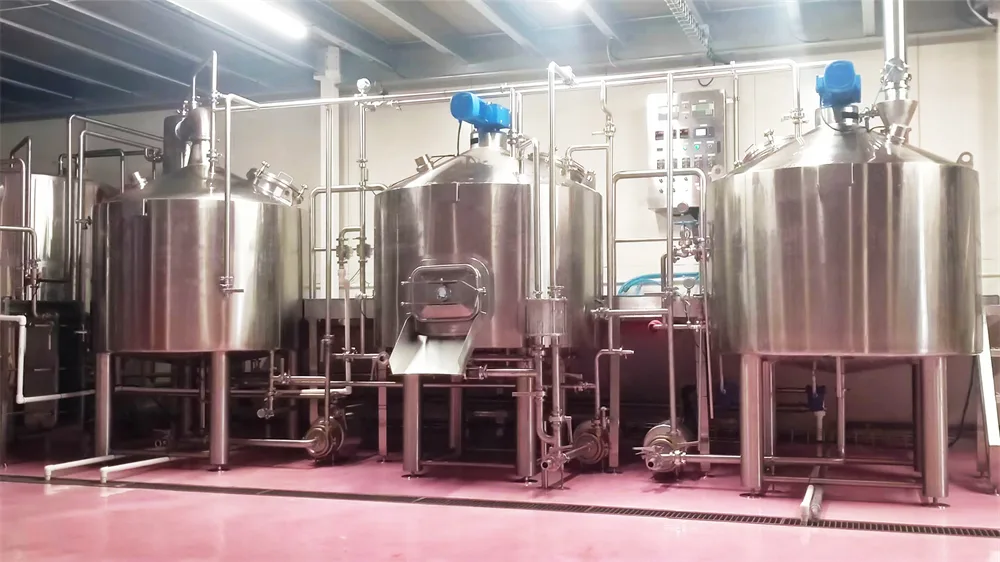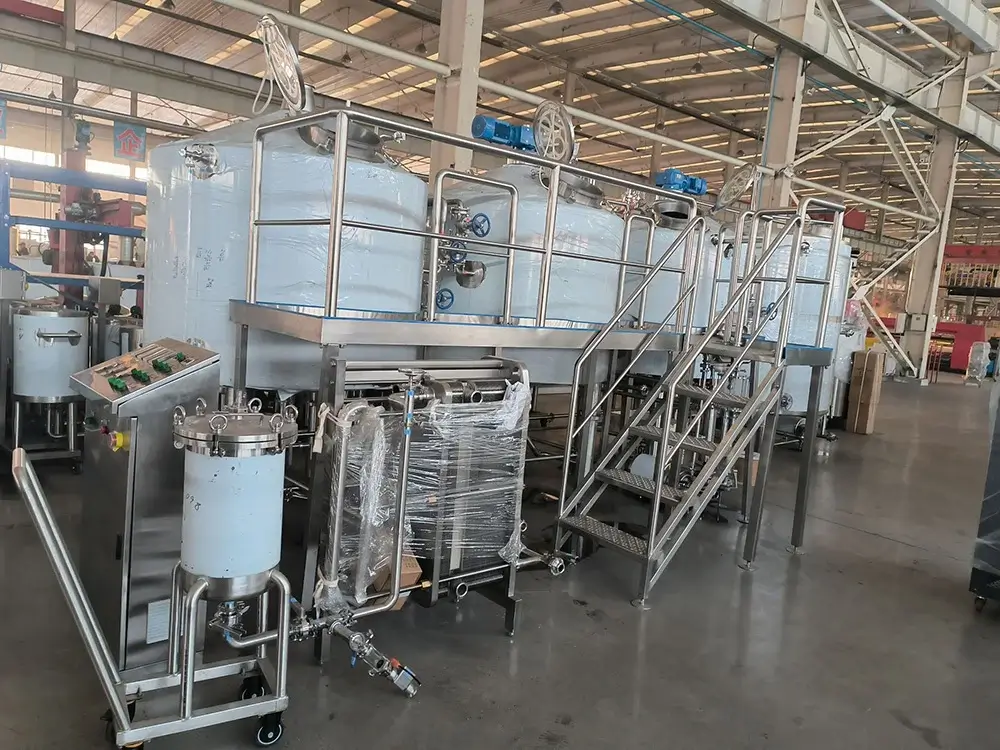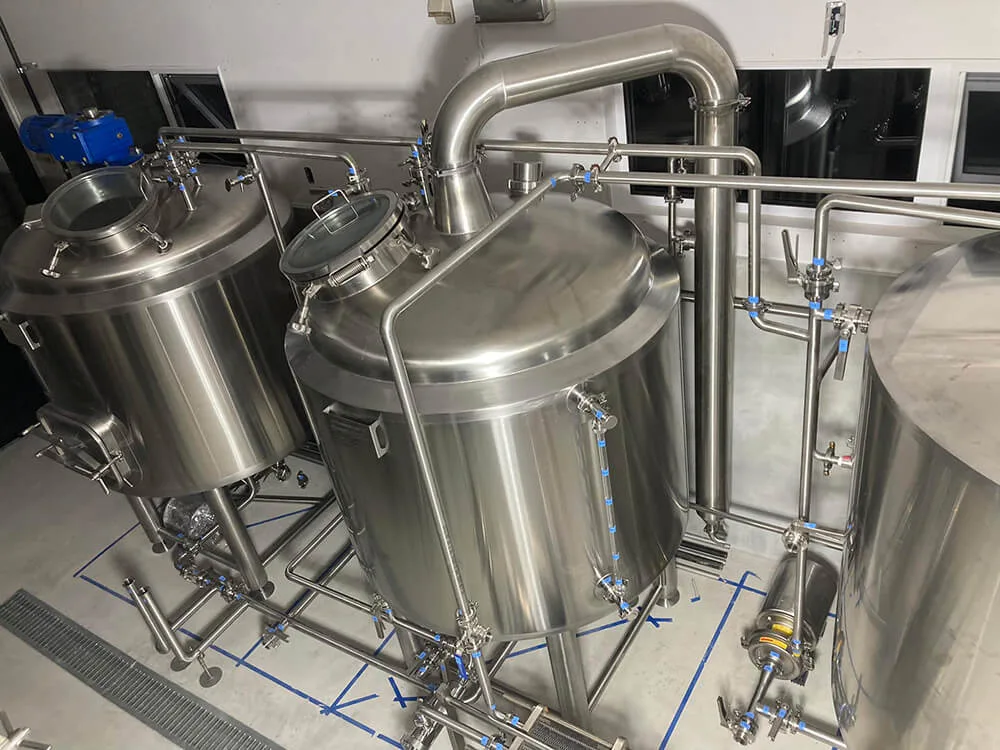

In recent years, small-batch craft spirits have become increasingly popular. Whether your goal is to produce whiskey, gin, rum, or brandy, passion and a good recipe are only part of the equation. Consistent, high-quality production requires the right equipment. Proper distillery equipment not only streamlines production but also allows precise control over temperature, alcohol purity, flavor, and consistency.
What Makes Craft Distillery Equipment Special
Craft Brennereiausrüstung is designed for small- to medium-scale production and has several key features:
- Compact and flexible: Suitable for limited production volumes while allowing room for expansion.
- Quality control: Enables precise monitoring to maintain flavor and aroma consistency.
- Versatile: Supports different types of spirits, depending on your production goals.
- Easy maintenance: Equipment is designed for hands-on artisanal production with easy cleaning and upkeep.
A small distillery typically consists of multiple systems working together: raw material handling, fermentation, distillation, storage/maturation, and bottling.
Core Equipment Categories
Raw Material Handling System
- Malt Mill or Grinder: Crushes grains to the appropriate particle size for mashing, improving extraction efficiency.
- Mash Tun: Usually stainless steel, often with heating and stirring capabilities, it converts starch into fermentable sugars.
- Pre-treatment Tanks: Used for softening or preparing fruits and other botanicals before fermentation.
Planning for proper floor space and drainage is essential to ensure smooth operation and easy maintenance.
Gärsystem
- Fermentation Tank: Stainless steel tanks with cooling jackets allow precise temperature control, which is critical for flavor and consistency.
- Ventilation System: Safely releases CO₂ and maintains a clean environment.
- Clean-in-Place (CIP) System: Enables regular cleaning and sanitation of tanks and pipelines, essential for hygiene and product quality.
Although plastic fermenters are sometimes used to save costs, they can result in poor temperature control and inconsistent results.
Distillation Equipment
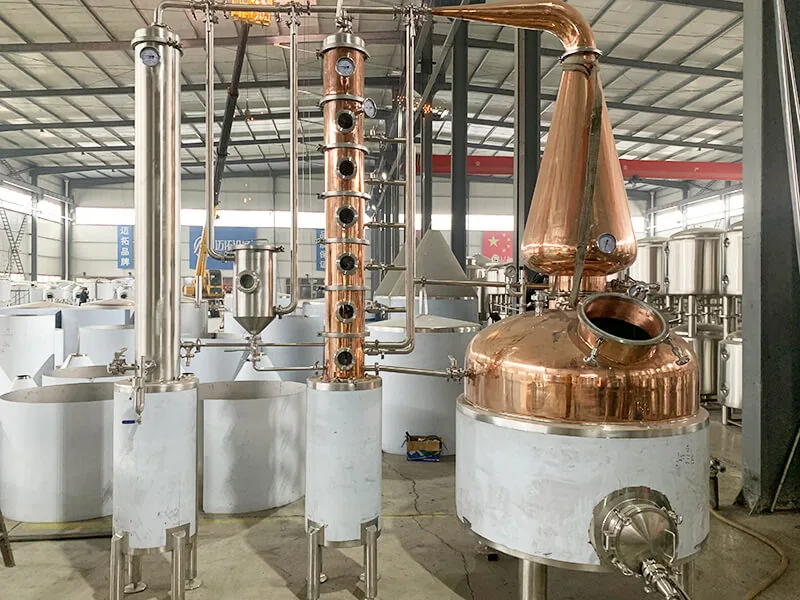
The distillation system is the heart of a craft distillery. Key components include:
- Pot Still: Preserves the character of the raw material, ideal for whiskey or brandy.
- Column or Reflux Still: Produces high-purity spirits such as vodka or light rum by separating impurities.
- Condenser: Cools vapor into liquid after distillation.
- Fractional Distillation Controls: Allows separation of heads, hearts, and tails, ensuring only the desirable fraction is collected.
Advanced stills with sight glasses, thermometers, and multiple column sections provide better control over flavor and purity.
Storage and Maturation Equipment
- Stainless Steel Storage Tanks: Useful for short-term storage or blending before bottling.
- Oak Barrels: Essential for aging spirits like whiskey or brandy, adding complexity, aroma, and character over time.
Filling and Packaging System
- Filtration Equipment: Removes suspended particles before bottling, improving clarity and stability.
- Small-Batch Filling Lines: Ensures neat, safe, and consistent bottling for limited output.
Proper planning for packaging is important, as bottling can become a bottleneck if not considered early.
Matching Equipment to the Spirit You Want to Make
| Spirit Type | Recommended Setup |
|---|---|
| Whiskey, Brandy | Pot still, fermentation tank, mash tun, aging barrels |
| Vodka, Neutral Spirits | Column still, fermentation tank, fine filtration, bottling line |
| Gin | Pot still or hybrid still, fermentation tank, botanical infusion unit, filtration/bottling |
| Rum | Pot still for richer rum, column still for lighter rum, fermentation tank, optional barrels |
| Brandy (fruit-based) | Pot still, fruit fermentation, optional aging barrels |
Guiding Principles for Choosing Equipment
- Start small, plan to scale: Systems from 100–300 L are suitable for experimentation; 500–1000 L for small craft production.
- Choose the right heating method: Electric heating is simple and cost-effective; steam heating is efficient for larger systems; direct fire can add flavor but requires skill.
- Material choice matters: Stainless steel is durable, easy to clean, and corrosion-resistant. Copper stills improve aroma and smoothness by removing sulfur compounds.
- Consider automation and control: Temperature control, safety gauges, and automation improve consistency.
- Plan for maintenance and support: Reliable suppliers with installation and service support reduce long-term problems.
- Balance budget with long-term goals: Investing in quality equipment upfront reduces future costs and ensures stable output.
Recommended Path for a Startup Craft Distillery
- Define your target spirit to determine key equipment.
- Start with a modular, scalable setup for small volumes while leaving room for growth.
- Prioritize hygiene, temperature control, and ease of cleaning.
- Invest in reliable distillation equipment with proper controls.
- Plan for maturation, filtration, and bottling early.
- Work with a reputable supplier to ensure proper installation and maintenance.
Schlussfolgerung
Craft distilling combines art and science. While recipes and creativity matter, consistent high-quality production relies on the right equipment. Small-batch producers benefit from systems that are properly sized, easy to clean, temperature-controlled, and flexible enough to produce different spirits. Choosing the right equipment ensures a smooth production process and long-term success.
Wenn Sie Fragen zum Bierbrauen haben, wenden Sie sich bitte an Kontaktieren Sie uns Meto-Ausrüstung.