Wenn Sie eine Brauerei gründen wollen - sei es eine kleine handwerkliche Brauerei oder ein größeres Unternehmen - ist die Auswahl der richtigen Brauereianlagen von grundlegender Bedeutung. Die von Ihnen gewählte Ausrüstung bestimmt, welche Art von Bier Sie herstellen können, wie effizient Sie es brauen können und wie gleichbleibend die Qualität sein wird.
Core Brewery Systems: The “Brewhouse”
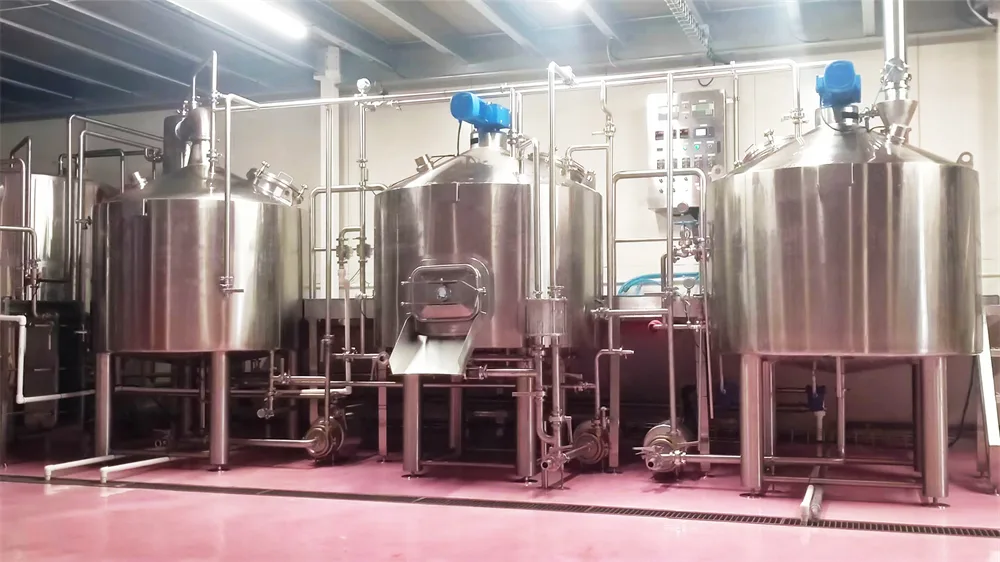
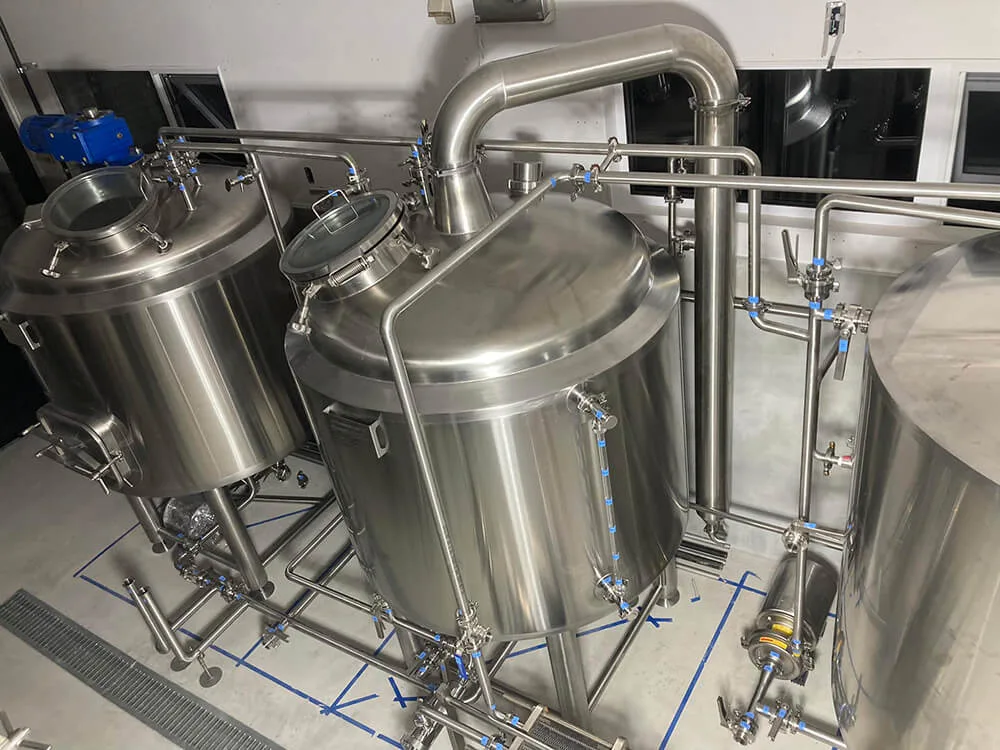
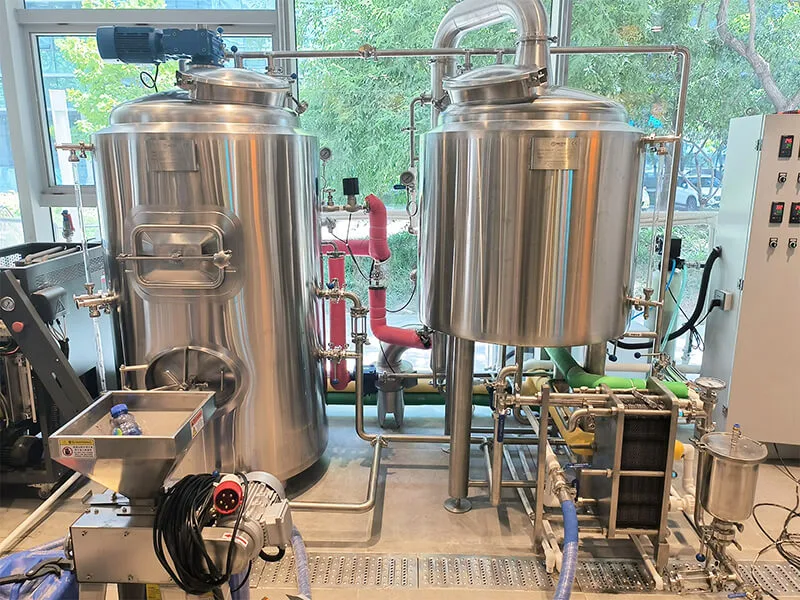
At the heart of any brewery is the Sudhaus — the collection of vessels and systems where wort is created, boiled, cooled, and transferred for fermentation. Key components include:
- Mash Tun and Lauter Tun — The mash tun mixes crushed malt with hot water so enzymes convert starches into sugars. The lauter tun separates the sweet wort from spent grain. For small operations, these might be combined; for larger ones, separate vessels improve efficiency.
- Brew Kettle (Boil Kettle) — Here, the wort is boiled and hops (or other flavoring) are added — essential for sterilization, bitterness, flavor, aroma.
- Whirlpool — After boiling, a whirlpool vessel helps separate out solids (like hop residue and coagulated proteins), yielding clearer wort before cooling.
- Hot- and Cold-Liquor Tanks (Water / Utility Tanks) — These manage the hot water (“liquor”) used for mashing and sparging, as well as cooling water for the wort-cooling process.
- Heat Source & Water Treatment — Depending on your setup, you may need steam boilers (with water-softening systems), electric heating elements, or other heating infrastructure. Also, filtration or water-treatment equipment may be required to ensure brew water has suitable quality.
Many small or micro-breweries opt for a 2-, 3-, 4-or 5-vessel brewhouse — depending on expected batch size, automation desires, and available space.
Cold-Side & Fermentation: From Wort to Beer
Once wort is boiled and cleaned, it must be cooled, fermented, conditioned, and eventually packaged. Key equipment for these stages includes:
- Wort Chiller / Heat Exchanger — After the boil, wort must be cooled rapidly to a temperature suitable for yeast. A plate heat exchanger (or other heat-exchange system) is often used, supplying cold “liquor” from cold-water or glycol tanks.
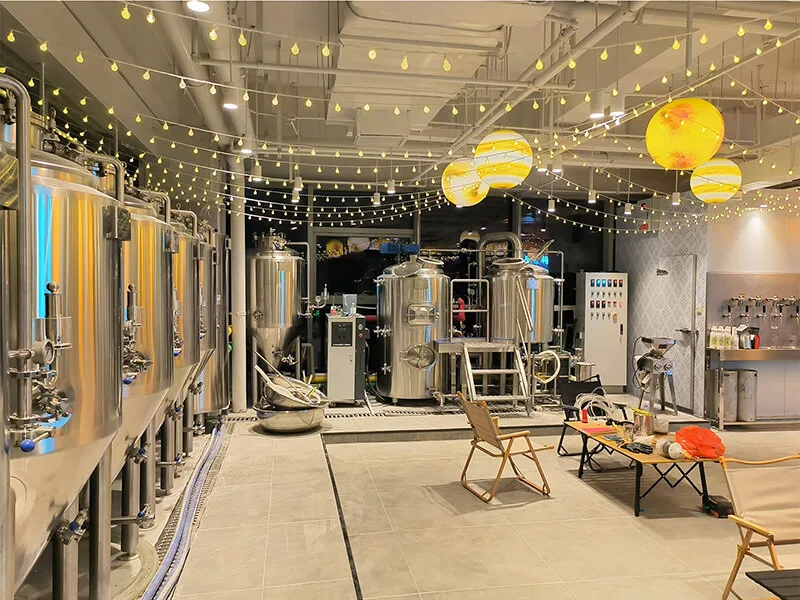
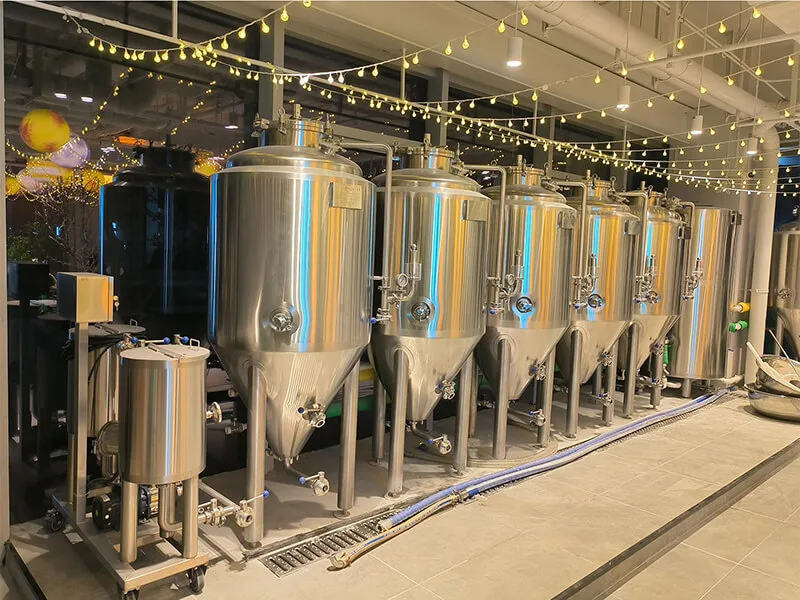
- Fermentation Tanks — Stainless-steel fermenters or uni-tanks provide controlled environment for fermentation and maturation. Temperature and pressure control are often essential for maintaining beer quality.
- Bright / Conditioning Tanks — Once fermentation is complete, beer may be transferred to bright tanks (or conditioning tanks) to clarify, carbonate (if needed), and prepare for packaging.
Packaging & Serving: Bottling, Canning, Kegging, Taproom Systems
If your brewery will serve or sell beer beyond onsite draft pours, you’ll need packaging or draft-serving equipment:
- Bottling Line or Canning Line — For retail or distribution, breweries often set up manual, semi-automatic, or fully automatic bottling/canning lines. Packaging lines may include washers, fillers, cappers/sealers, labelers, inspection units, and carton or keg packaging modules.
- Kegging System / Keg Filler — For draft beer distribution or bar/taproom service, proper keg-filling equipment is needed.
- Taproom Draft Setup (optional) — If you plan to serve beer on tap, expect to install draft lines, faucets, towers — possibly storing beer directly in serving tanks or kegs.
Hygiene, Utilities, and “Supporting” Infrastructure — Things Brewers Often Overlook
Having the major vessels isn’t enough. A robust brewery needs supporting systems to ensure safety, consistency, and smooth operations:
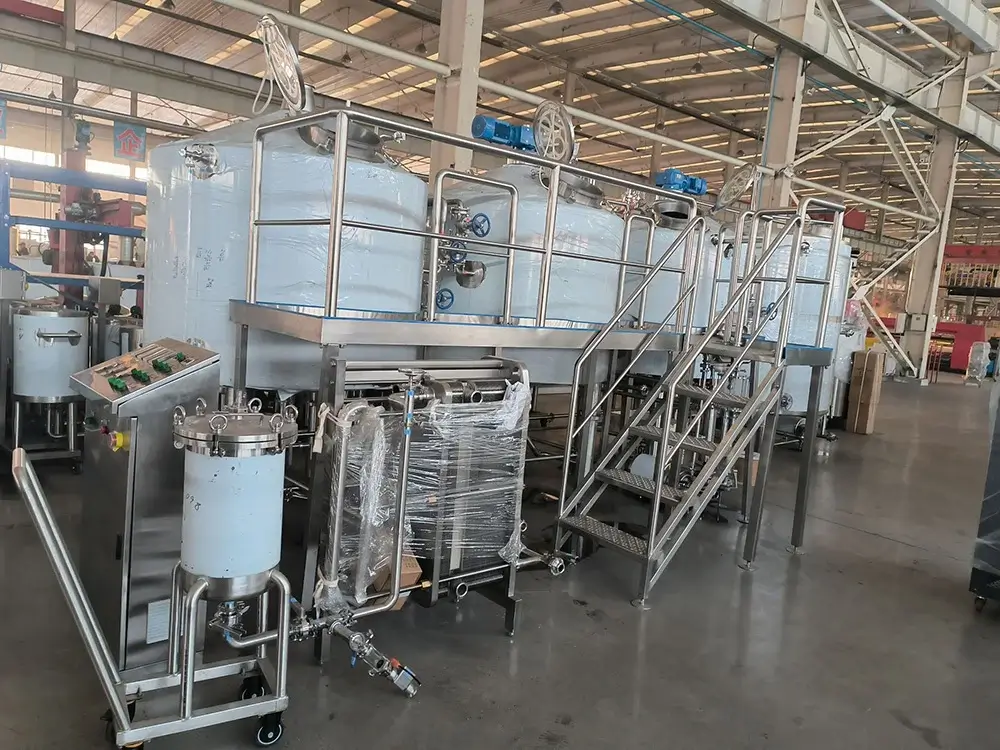
- Cleaning & Sanitizing Systems — A CIP (Clean-In-Place) system helps sanitize tanks, pipes, and equipment without full disassembly — critical for preventing contamination and maintaining beer quality.
- Water Filtration / Treatment & Utility Infrastructure — A water treatment or filtration system, as well as reliable supply of clean water, steam or electric heating, CO₂ (if carbonating), compressed air (if using pneumatic controls), and good drainage/flooring are all important.
- Pumps, Pipes, Hoses, Fittings, Valves, Flowmeters — For transferring wort and beer between vessels, and for accurate measurement and control, quality plumbing and sanitary fittings are essential.
- Control Systems / Automation (optional) — For mid-sized to larger breweries, control panels, temperature sensors, pumps, valves and possibly PLC-based automation can greatly improve consistency, safety, and efficiency.
Neglecting these supporting systems is a common reason small breweries run into problems: stalled brew days, sanitation failures, or regulatory issues.
Choosing New vs. Second-Hand Equipment — Pros and Cons
When sourcing brewery equipment, many new brewery owners must decide between brand-new gear or used items:
- New Equipment — Offers warranty, modern design, often better energy efficiency, easier cleaning, and support from suppliers. It’s more expensive but tends to be lower risk and more reliable long-term.
- Used Equipment — Can dramatically reduce upfront costs — especially attractive for start-ups or microbreweries on tight budgets. But it carries risks: wear and tear, possible cleaning/sanitation issues, mismatched sizes or outdated designs, and typically no warranty or support.
- Hybrid Approach — Some breweries mix and match: new brewhouse systems or critical vessels, combined with used or second-hand tanks or auxiliary equipment. This can strike a balance between budget constraints and reliability.
Planning for Scale: Matching Equipment to Your Output Goals
When planning what brewery equipment you need, it’s critical to match your system’s capacity, complexity, and automation level to your production goals:
- Microbrewery / Small-Batch Setup — For batches of a few hundred to a few thousand liters: a compact brewhouse, small fermentation tanks, minimal automation. Ideal for taproom-only or local-market breweries.
- Mid-size Brewery — Requires larger vessels, more fermentation capacity, possibly semi-automated systems, packaging lines (bottling/canning/kegging), and more robust supporting utilities.
- Larger-Scale Commercial Brewery — Full automation, large fermenters and bright tanks, full packaging lines, water treatment, utility infrastructure, quality-control lab gear, and expansion capacity.
Starting with a scalable setup — one that allows you to add or upgrade components over time — tends to be the smart path. It lets you avoid over-investing early while leaving room for growth.
Summary: Invest in Smart, Balanced Brewery Equipment
Choosing the right brewery equipment is more than buying shiny tanks. It’s about building a balanced system — one that addresses brewing, fermentation, cooling, packaging, sanitation, utilities, and scale.
Whether you’re starting small with a microbrewery or building for larger production, prioritize:
- A reliable, appropriately sized brewhouse (mash tun, lauter, kettle, whirlpool)
- Cooling, fermentation, and conditioning infrastructure
- Utilities and hygiene systems (water treatment, CIP, proper plumbing)
- Packaging or serving solutions if you aim to distribute or run a taproom
- Flexibility: ability to scale or upgrade as demand grows
By thinking holistically about brewery equipment from day one, you’ll minimize headaches and set yourself up for brewing consistent, quality beer — batch after batch.
Wenn Sie Fragen zum Bierbrauen haben, wenden Sie sich bitte an Kontaktieren Sie uns Meto-Ausrüstung.