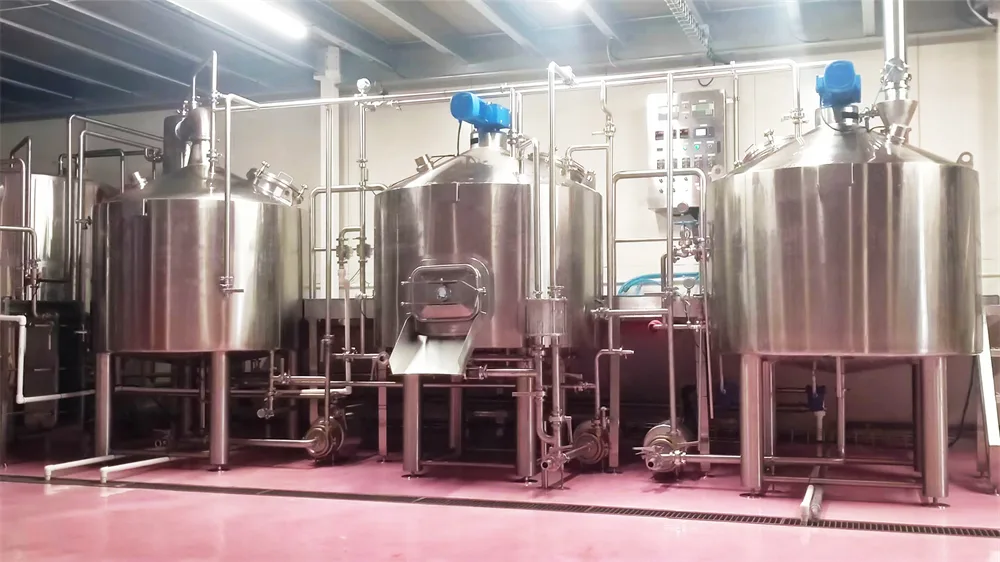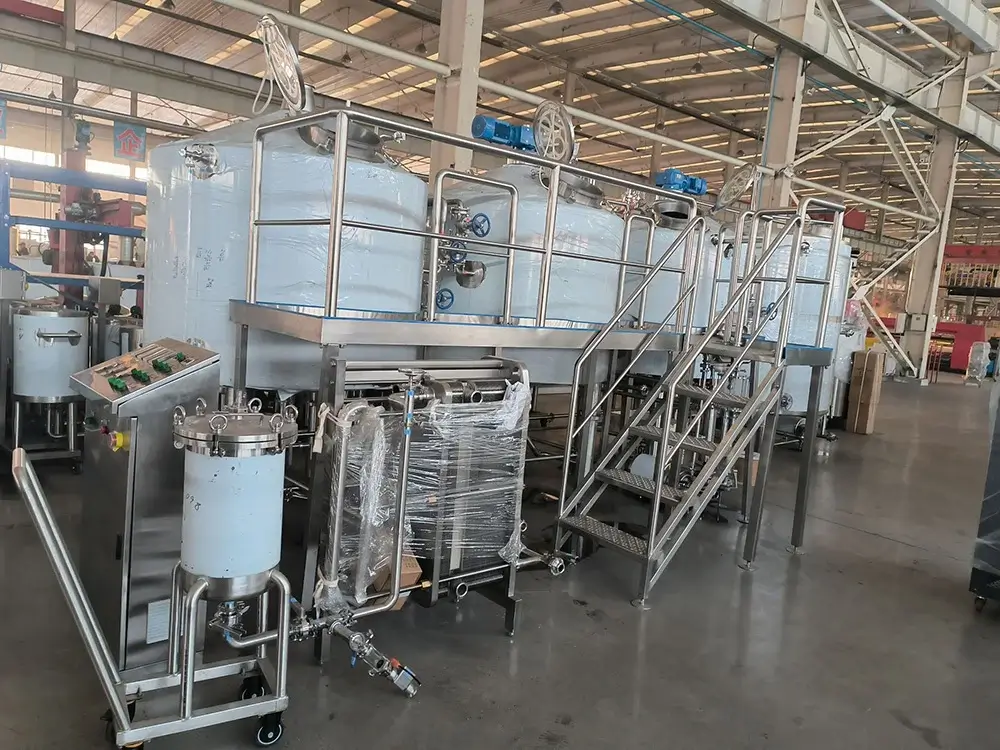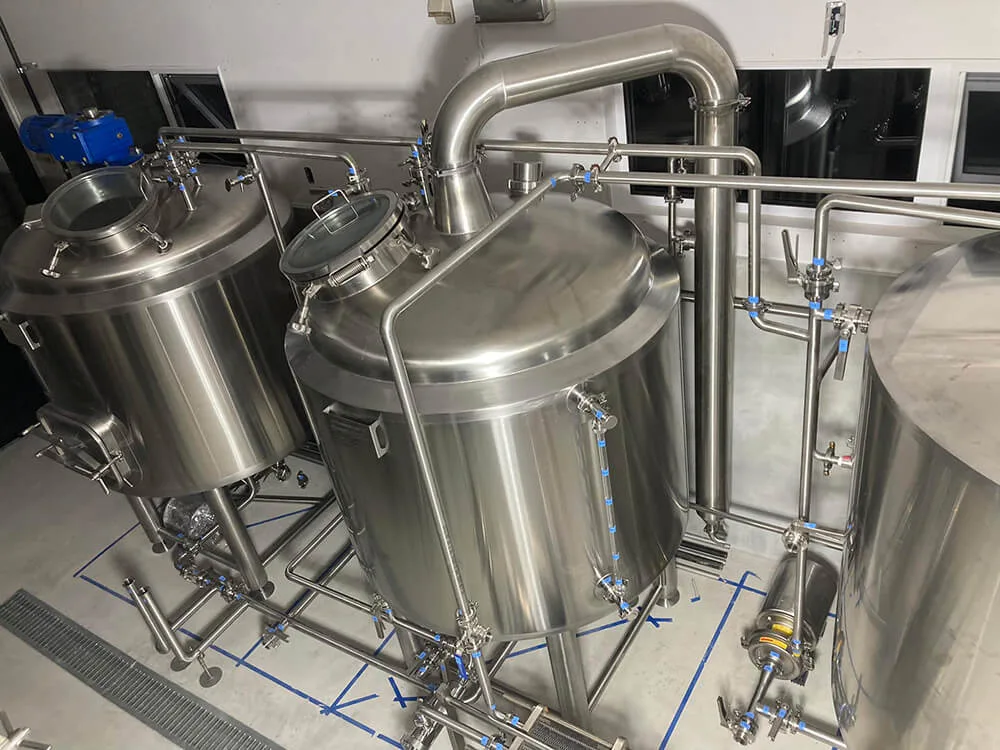
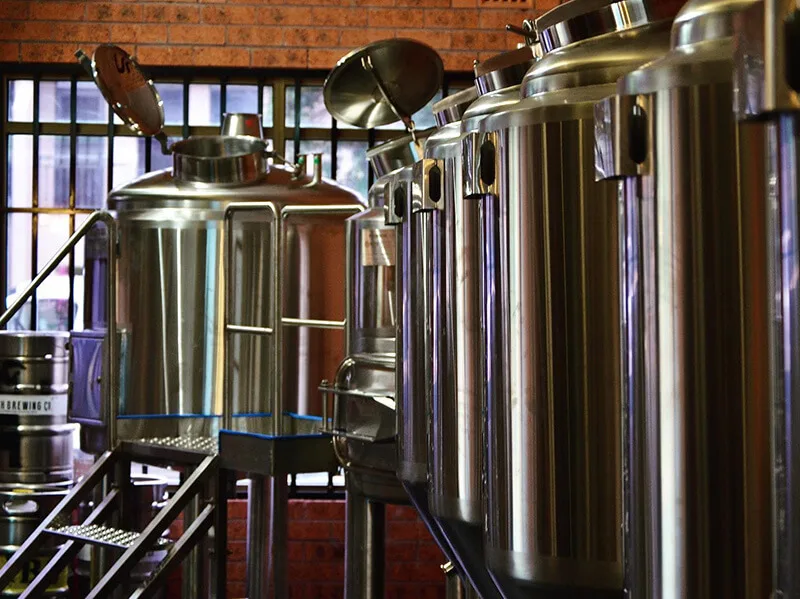
Fitting brewing equipment into a small bar space may seem challenging—but it’s entirely achievable with the right planning. In fact, many successful urban brewpubs and neighborhood bars operate compact brewing systems that not only produce great beer, but also enhance the guest experience and improve profitability.
This guide walks through practical strategies to integrate brewing equipment into limited bar space—without sacrificing workflow, safety, or aesthetics.
1. Start with Clear Brewing Goals
Before thinking about tank sizes or layouts, define what role brewing plays in your bar.
Key questions to answer:
- Is brewing mainly for house beers only, or future expansion?
- How many taps will be dedicated to in-house beer?
- How often will you brew each week?
- Is brewing a back-of-house function or a front-of-house attraction?
For most small bars, the goal is:
Consistent production of 2–6 house beers with minimal space and staffing.
This clarity prevents over-sizing equipment and wasting valuable square meters.
2. Choose the Right System Size (Smaller Is Smarter)
In compact bar environments, right-sizing is more important than maximum output.
Typical space-efficient capacities:
- 300L systems – Ideal for very small bars or first-time brewers
- 500L systems – The most popular choice for urban brewpubs
- 1000L systems – Only suitable if fermentation space is available elsewhere
A 500L system brewing 2–3 times per week can comfortably support:
- 4–8 taps of fresh house beer
- Seasonal and limited-release batches
- Healthy inventory turnover
Oversized systems often create space, cash flow, and operational stress.
3. Use Compact Brewhouse Configurations
Two-Vessel Systems Save Space
For small bars, a two-vessel brewhouse is the most space-efficient option:
- Mash/Lauter Tun
- Kettle/Whirlpool
Vorteile:
- Smaller footprint
- Fewer pumps and pipes
- Lower installation cost
- Easier operation for bar staff
Three-vessel systems offer higher efficiency but typically require more floor area—often unnecessary for bar-scale production.
4. Go Vertical: Tank Height Over Floor Area
When floor space is limited, vertical design becomes your best ally.
Smart vertical strategies include:
- Taller fermenters with smaller diameters
- Stackable or closely grouped tanks
- Narrow hot water and cold liquor tanks
Many bar breweries fit:
- 3–6 fermentation tanks
- In less than 8–12 m²
By prioritizing height instead of width.
Always confirm ceiling height early—especially in renovated buildings.
5. Separate “Show” from “Production” Areas
One of the most effective design strategies is functional zoning.
Front-of-House (FOH)
- Brewhouse vessels with polished finishes
- Optional LED lighting
- Visible piping and sight glasses
- Designed to impress customers
Back-of-House (BOH)
- Fermentation tanks
- Chiller and glycol system
- CIP equipment
- Grain storage
This approach:
- Keeps noisy and wet processes away from guests
- Allows tighter technical layouts
- Makes the brewhouse a branding feature, not just equipment
6. Integrate Brewing into the Bar Design
In small spaces, brewing equipment should feel intentional, not squeezed in.
Design integration tips:
- Match tank finishes with interior style (industrial, modern, rustic)
- Use glass partitions instead of solid walls
- Align tank placement with lighting design
- Turn piping into a visual feature, not something to hide
When brewing equipment becomes part of the décor, it justifies its footprint by adding marketing value.
7. Simplify Utilities and Infrastructure
Complex infrastructure kills small-space projects.
Heating
- Electric heating is often preferred for small bars
- No boiler room required
- Easier permitting in many cities
Cooling
- Compact glycol chillers (3–7 HP)
- Located in storage rooms or outdoors
- Insulated piping routed vertically where possible
Drainage
- Central floor drains
- Slight floor slopes in brewing areas
- Shared drainage paths with kitchen when permitted
Early coordination with architects and contractors avoids costly redesigns later.

8. Plan for Safe and Efficient Workflow
In small spaces, workflow mistakes are amplified.
Key workflow principles:
- Short hose and pipe runs
- Clear access to manways and valves
- Safe grain handling routes
- No crossing of hot liquid paths and guest areas
Ask during design:
“Can one trained person brew safely and clean efficiently in this space?”
If the answer is no, the layout needs adjustment.
9. Use Modular and Mobile Equipment
Flexibility is critical in small bars.
Helpful options include:
- Mobile CIP carts
- Wheeled pumps
- Modular control panels
- Removable grain bins
These allow:
- Easier maintenance
- Temporary relocation during events
- Future layout changes without major reconstruction
10. Design with Growth in Mind (But Don’t Overbuild)
Smart bar breweries plan for growth without blocking current operations.
Examples:
- Leave space for one additional fermenter
- Choose a chiller with limited extra capacity
- Use control systems that support expansion
Avoid installing equipment “just in case.”
Growth should be modular and staged, not speculative.
11. Work with Suppliers Who Understand Bar Spaces
Not all brewing equipment suppliers design for bars.
A qualified partner should:
- Understand tight urban layouts
- Offer custom tank dimensions
- Coordinate with architects and designers
- Balance production needs with aesthetics
The best layouts come from collaboration—not from forcing standard brewery designs into bar spaces.
Abschließende Überlegungen
Fitting brewing equipment into a small bar space is not about compromise—it’s about intentional design.
With the right system size, vertical layout, smart zoning, and integrated design, even the smallest bar can operate a professional brewing system that:
- Produces high-quality beer
- Enhances customer experience
- Strengthens brand identity
- Generates strong long-term returns
Small spaces don’t limit great brewing—poor planning does.