Das Schroten des Malzes ist der erste Schritt im Maischprozess und spielt eine entscheidende Rolle bei der Bestimmung des Geschmacks, des Körpers, der Klarheit und der Braueffizienz eines Bieres. Die Art des Schrotens wirkt sich direkt auf die Extraktausbeute, die Integrität der Spelzen, die Tanninfreisetzung, die Läuterleistung und letztlich auf die Trinkbarkeit des fertigen Bieres aus. Für Brauereien, die eine stabile Qualität und konsistente Geschmacksprofile anstreben, ist es wichtig zu verstehen, wie die verschiedenen Mahltechniken den Geschmack beeinflussen.
1. Common Malt Milling Methods
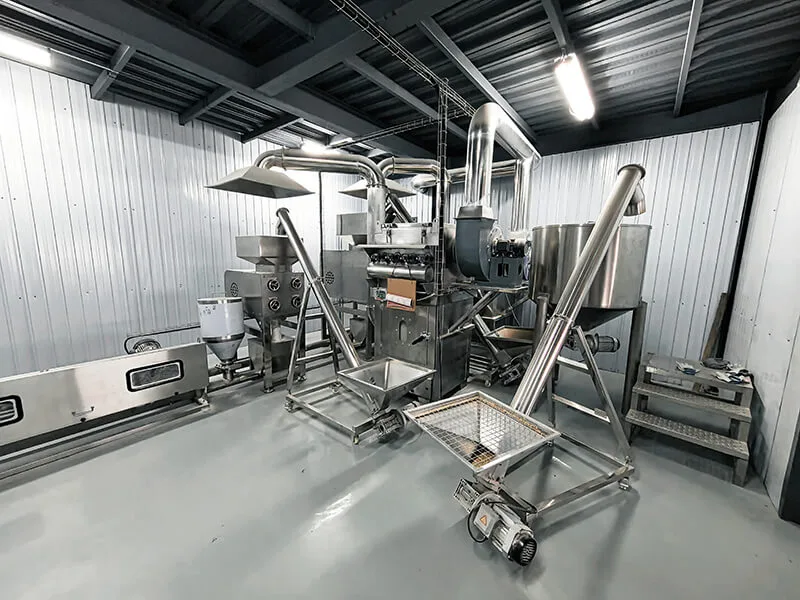
1) Roller Milling
Roller mills are the most widely used milling equipment in craft breweries due to their precision and consistency.
Wesentliche Merkmale:
- Uniform crush size
- Maximizes husk integrity
- Fine control over crush gap
- Lower tannin extraction
Flavor Influence:
- Clean, smooth flavor
- Reduced bitterness and astringency
- Ideal for lagers, pilsners, and crisp ale styles
2) Hammer Milling
This method pulverizes malt using high-speed hammers and is more commonly used for adjunct grains or large-scale grain processing.
Wesentliche Merkmale:
- Produces very fine powder
- Husks are mostly destroyed
- Suitable for unmalted grains (corn, rice)
Flavor Influence:
- Higher haze potential
- More tannin extraction → rough or astringent taste
- Not recommended for beers that rely on clarity
- Works best with brewhouses designed for fine-grind mashes
3) Wet Milling (Conditioning Milling)
Before milling, the malt is lightly moistened so the husk becomes elastic while the endosperm stays dry.
Wesentliche Merkmale:
- Husk remains intact and flexible
- Excellent lautering bed formation
- Höhere Effizienz der Extraktion
- Dust-free operation
Flavor Influence:
- Purified, cleaner flavor
- Lower tannin extraction → smoother mouthfeel
- Ideal for premium lagers, pilsners, and high-end breweries demanding maximum control
4) Pre-Crushed Malt
Common among homebrewers, where malt is milled by suppliers before shipping.
Wesentliche Merkmale:
- Convenient
- Crush size may not fit all brewery setups
- Higher oxidation risk during storage
Flavor Influence:
- Reduced freshness
- Too-fine crush → bitterness, haze
- Too-coarse crush → thin body, low malt aroma
- Best for small-scale brewing or experimental batches

2. How Crush Size Impacts Beer Flavor
(1) Coarse Crush
Pros:
- Low haze
- Smooth lautering
- Reduced tannin release
Flavor Result:
- Cleaner, crisper flavor
- Lighter malt character
Best for lagers, pilsners, and light ales.
(2) Standard Brewery Crush (Balanced Crush)
The most widely adopted setting in craft breweries.
Flavor Result:
- Balanced malt flavor
- Reliable extraction
- Clean, stable beer profile
Suitable for most ales, IPAs, stouts.
(3) Fine Crush
Pros:
- Höhere Effizienz der Extraktion
Cons:
- More haze
- Bitter, harsh, or astringent notes
- Risk of stuck mash
Flavor Result:
- Fuller body
- Potential grain bitterness
Suitable for NEIPA, hazy ales, high-body beers.
3. Summary Table: Milling Methods and Flavor Effects
| Milling Method | Flavor Impact | Best Beer Styles |
|---|---|---|
| Roller Milling | Clean flavor, low tannins, excellent control | Lagers, pilsners, ales |
| Hammer Milling | Harshness risk, high haze | Adjunct-heavy mashes |
| Nassmahlen | Smooth flavor, premium quality | High-end lagers, specialty beers |
| Pre-Crushed Malt | Less fresh, variable results | Homebrewing |
4. How to Choose the Right Malt Milling Method
- Limited equipment? → Choose roller milling for precision
- Want fuller body? → Go slightly finer
- Want a very clean flavor? → Slightly coarser with intact husks
- If your lautering system is weak → Avoid fine milling
- Premium lagers or professional breweries → Wet milling is the best option
By understanding how milling affects flavor, breweries can optimize their brewing system and achieve consistent, high-quality beer.
Wenn Sie auch an unseren Brauanlagen interessiert sind, wenden Sie sich bitte an Kontaktieren Sie uns Meto-Ausrüstung.