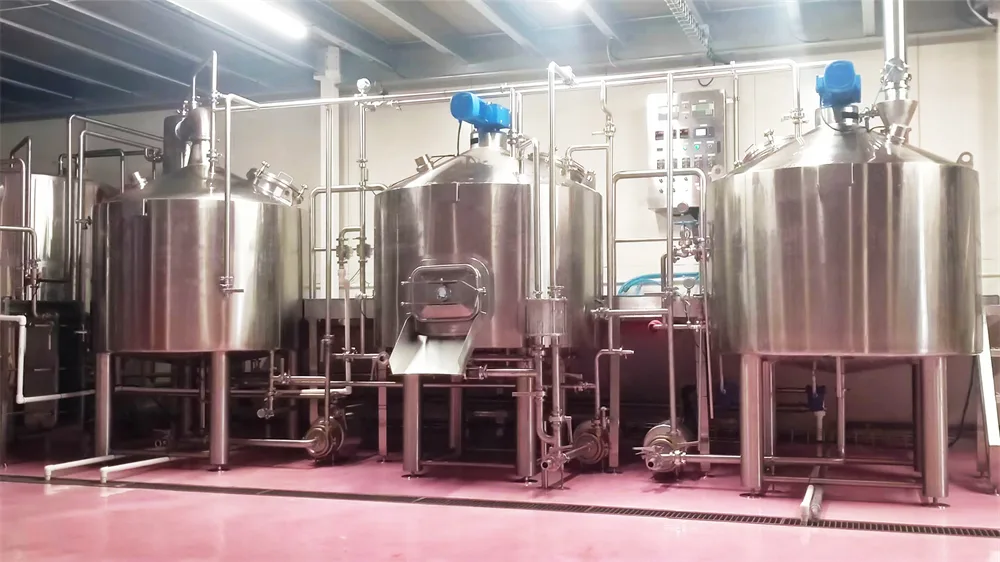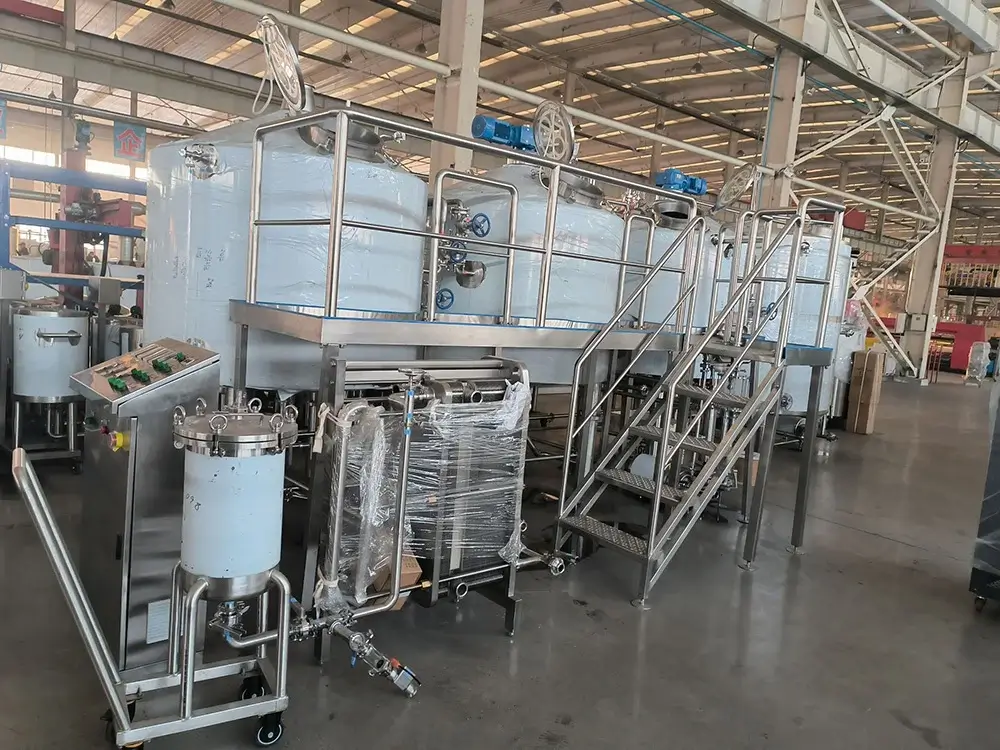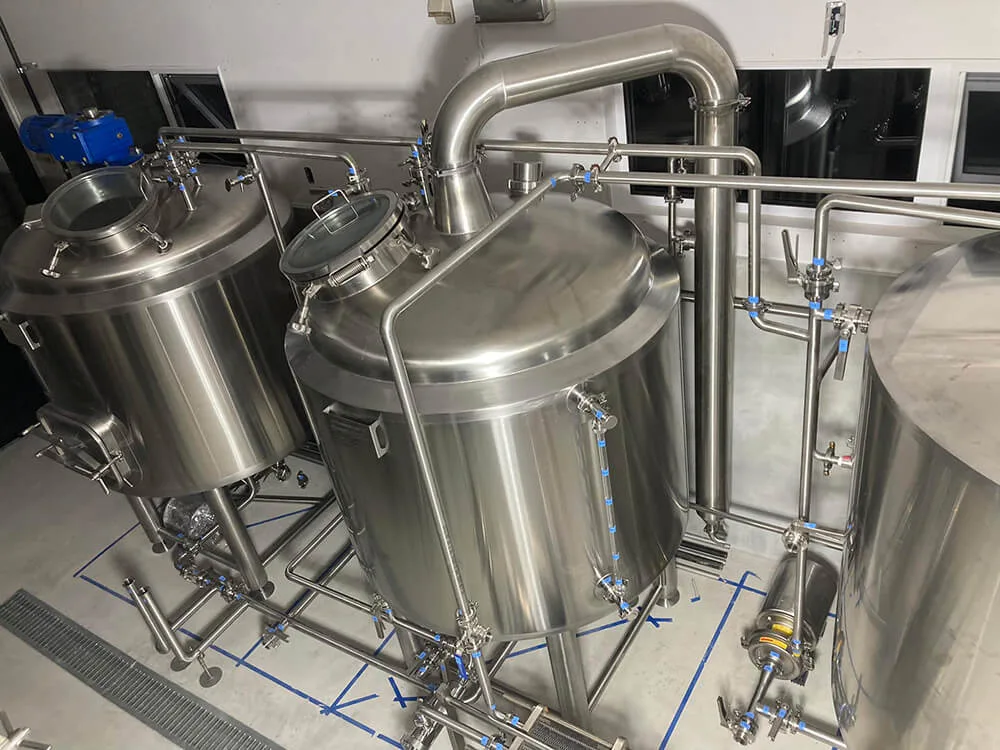

As the craft beer market grows, many brewpubs are looking for ways to increase output without moving to a full-scale production facility. For most venues, upgrading to 300L or 500L brewery equipment offers the perfect balance between space, investment, and production capability. These systems are widely used in micro brewery equipment setups because they allow brewpubs to scale efficiently while maintaining high-quality beer.
This article explains how brewpubs expand capacity using 300L and 500L systems, what upgrades matter most, and how to plan for sustainable growth.
Why 300L and 500L Systems Are Ideal for Brewpub Expansion
1. Balanced Capacity for On-Site Brewing
Many brewpubs operate in limited spaces, which makes 300L and 500L brewery equipment ideal starting points.
- 300L system: Great for multi-style brewing and consistent taproom supply
- 500L system: Suitable for busy brewpubs planning limited distribution or take-away keg sales
Because these sizes match the typical demand of microbrew venues, they’re considered essential for modern micro brewery equipment setups.
How Brewpubs Expand Using 300L and 500L Brewery Equipment
1. Increasing Fermentation Capacity
Scaling production often starts in the cellar. Brewpubs typically upgrade by adding:
- Additional 300L / 500L fermenters
- Larger unitanks (1,000L)
- More BBTs for serving or packaging
Fermentation tank capacity directly determines real weekly output, making it the core part of any expansion plan.
2. Shifting to Steam Heating for Higher Efficiency
Many brewpubs begin with electric heating but upgrade to steam when production grows.
Vorteile:
- Faster heat-up times
- Höhere Effizienz des Sudhauses
- Better temperature stability
- Support for larger batches
Steam-compatible micro brewery equipment is typically the preferred choice for long-term expansion.
3. Upgrading Cooling and Glycol Systems
When batch size increases, cooling becomes a bottleneck. Brewpubs usually upgrade:
- Glycol chiller capacity
- Cold liquor tank volume
- Plate heat exchanger efficiency
A strong cooling system ensures faster turnaround and supports multiple brews per day.
4. Automating Brewhouse Controls
Even semi-automatic control systems help brewpubs:
- Maintain consistent mash temperatures
- Improve repeatability
- Reduce labor during peak seasons
This makes automation one of the most valuable upgrades for micro brewery equipment users planning to scale.
5. Expanding Hot Water Storage
A larger hot liquor tank (500–1,000L) allows:
- Faster sparging
- Double-batch brewing
- More efficient energy use
This is one of the easiest and most affordable upgrades.
Production Output with 300L and 500L Systems
300L Brewery Equipment
- Weekly output: 600–1,200L
- Annual output: 30–60 tons
- Ideal for: compact brewpubs, restaurants, hotels
500L Brewery Equipment
- Weekly output: 1,000–2,000L
- Annual output: 50–100 tons
- Ideal for: high-demand brewpubs, local distribution
These capacities make both systems essential components of modern micro brewery equipment configurations.
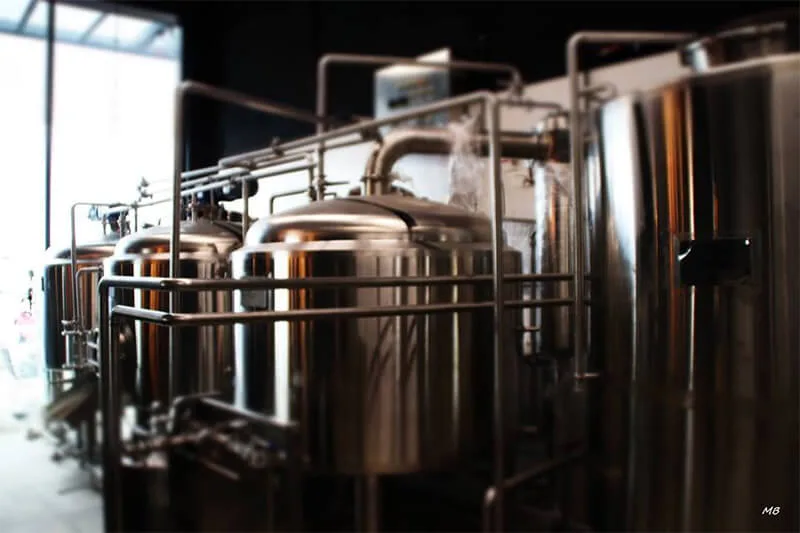
When Should a Brewpub Upgrade from 300L to 500L?
Upgrade when:
- Popular beers sell out frequently
- You want to distribute to nearby bars
- Labor/energy cost per batch becomes inefficient
- Taproom traffic grows steadily
A gradual upgrade path is common:
- Add more fermentation tanks
- Install a bigger hot liquor tank
- Replace the brewhouse with 500L equipment when demand stabilizes
Best Practices for a Smooth Expansion
- Plan utilities before purchasing new brewery equipment
- Evaluate floor load capacity for larger tanks
- Improve cellar workflow and piping design
- Maintain strict sanitation and QC practices
- Choose scalable micro brewery equipment from the beginning
Schlussfolgerung
Expanding a brewpub doesn’t require a large facility or a costly overhaul. With the right 300L or 500L brewery equipment, brewpubs can boost production, improve consistency, and support growing customer demand. By upgrading fermentation capacity, optimizing heating and cooling systems, and investing in scalable micro brewery equipment, brewpubs can grow sustainably while maintaining the freshness and quality that defines craft beer.
Wenn Sie Fragen zum Bierbrauen haben, wenden Sie sich bitte an Kontaktieren Sie uns Meto-Ausrüstung.