Da sich die Craft-Bier-Industrie von kleinen Brauereibetrieben hin zu einer industriellen Produktion wandelt, bleibt der Ausgleich zwischen Kapazitätserweiterung und gleichbleibender Qualität eine zentrale Herausforderung für Brauereien weltweit. Das Shenyang 5.000L (5KL) Projekt ist ein Beispiel für diesen Wandel. Durch die Integration eines fortschrittlichen Prozessdesigns und eines intelligenten Steuerungssystems erreicht dieses kommerzielle Brauereisystem nicht nur einen beeindruckenden Jahresausstoß von 9.000 Tonnen, sondern leistet auch Pionierarbeit für ein diversifiziertes "Bier + Destillation"-Produktionsmodell. In diesem Artikel werden die wichtigsten Merkmale der Anlage, technologische Durchbrüche, intelligente Qualitätskontrolle und komplexe Koordinierungsstrategien analysiert.
I. System Overview: Six Core Equipment Modules
The project features a highly integrated and automated production line composed of six core modules:
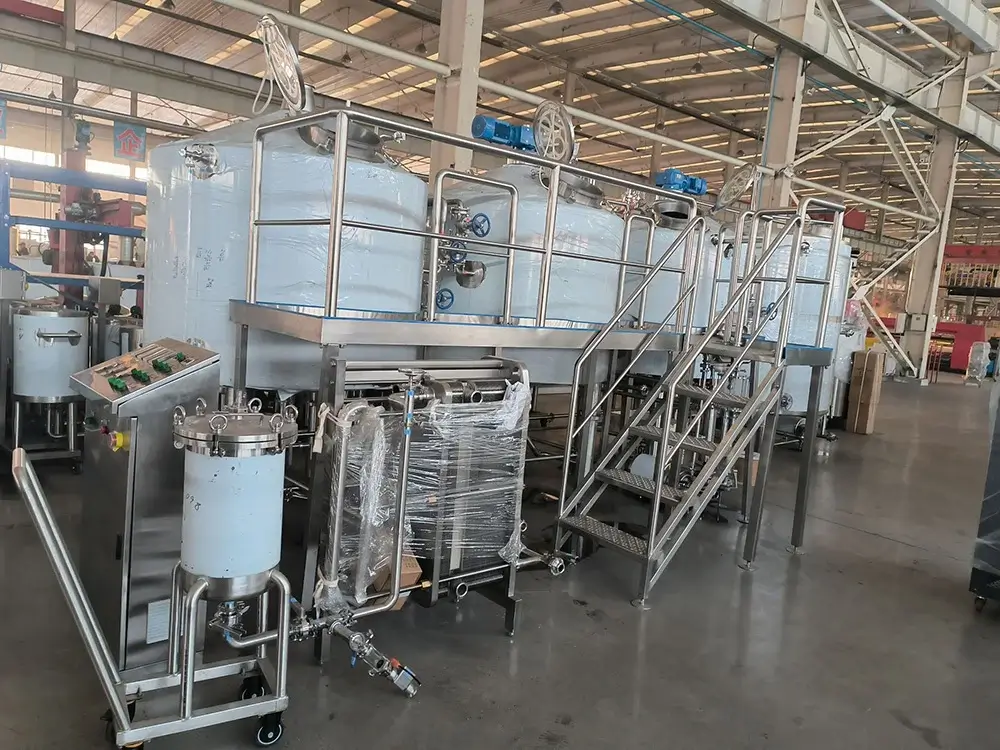
1. Milling System: Efficiency and High Yield
- Upgraded Dry Milling: A complete system featuring malt elevators, high-efficiency dry mills, and flexible conveying.
- Mash-In Innovation: Incorporating mash-in technology (water mixing during milling) into the traditional dry milling process. With a processing capacity of 3,000 kg/hour, this design eliminates dust issues while significantly improving extract efficiency, laying a solid foundation for fermentation.
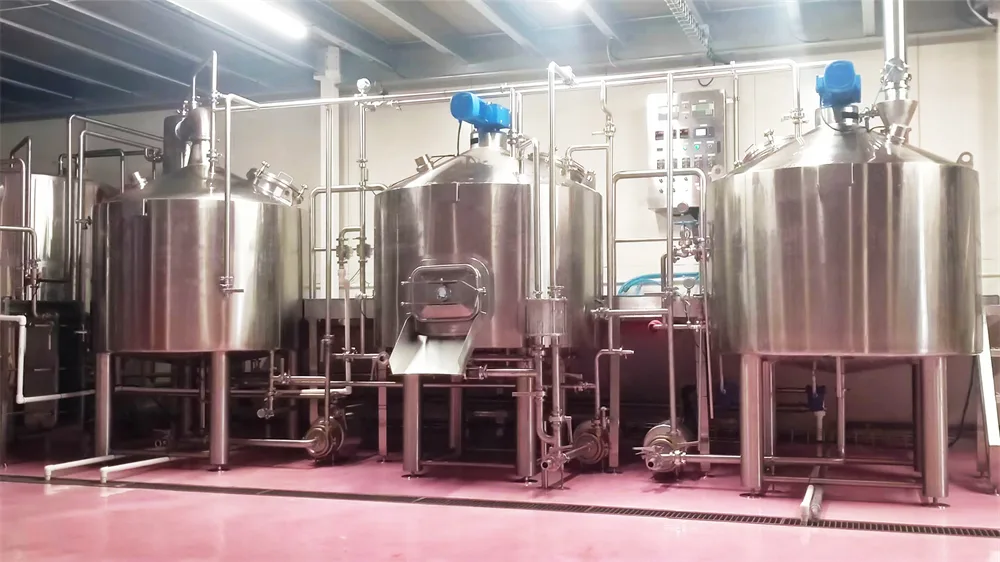
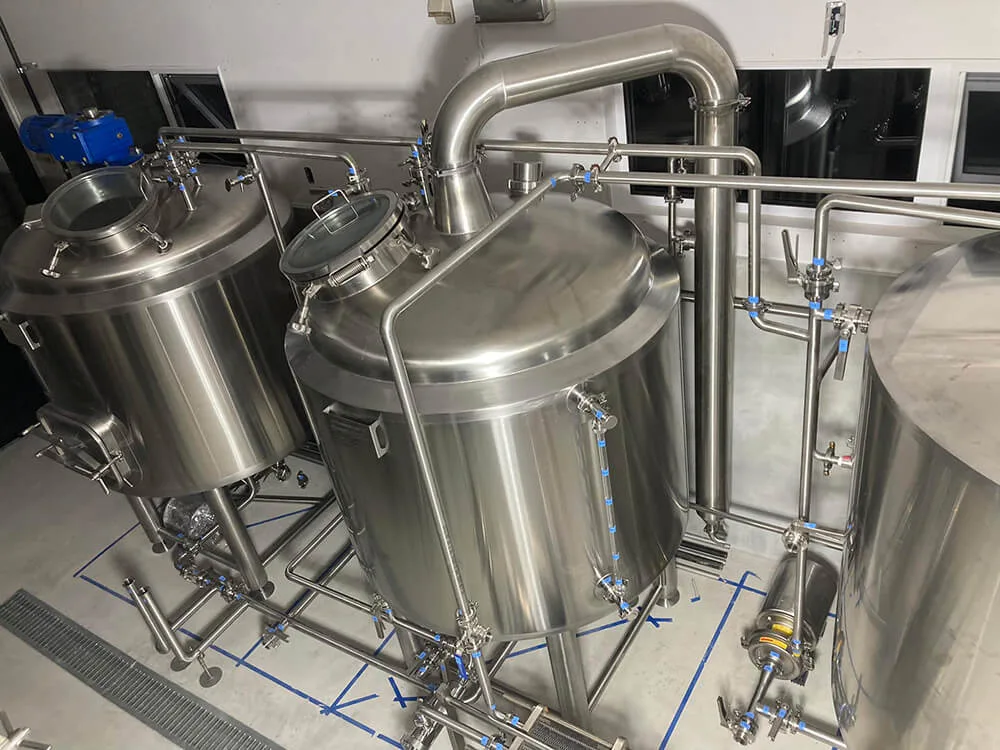
2. Brewhouse System: High Capacity and Flexible Scheduling
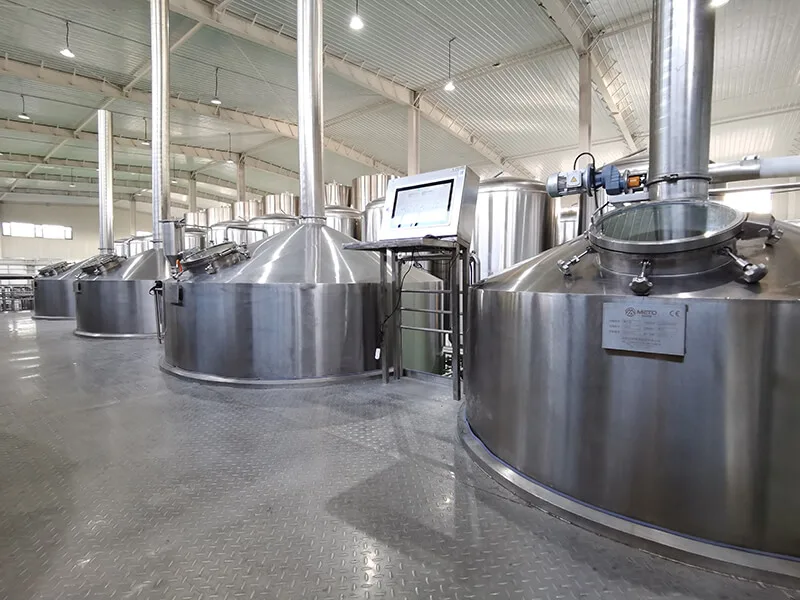
- Classic Four-Vessel Configuration: Comprising a mash tun, lauter tun, kettle, and whirlpool.
- High-Frequency Turnover: With a 5,000L batch size, the system supports 4–5 batches per day.
- Automated Management: Equipped with pneumatic spent grain removal and advanced control logic, the system offers exceptional market responsiveness, allowing rapid adaptation to fluctuating order volumes.
3. Fermentation System: Scalability and Optimized Layout
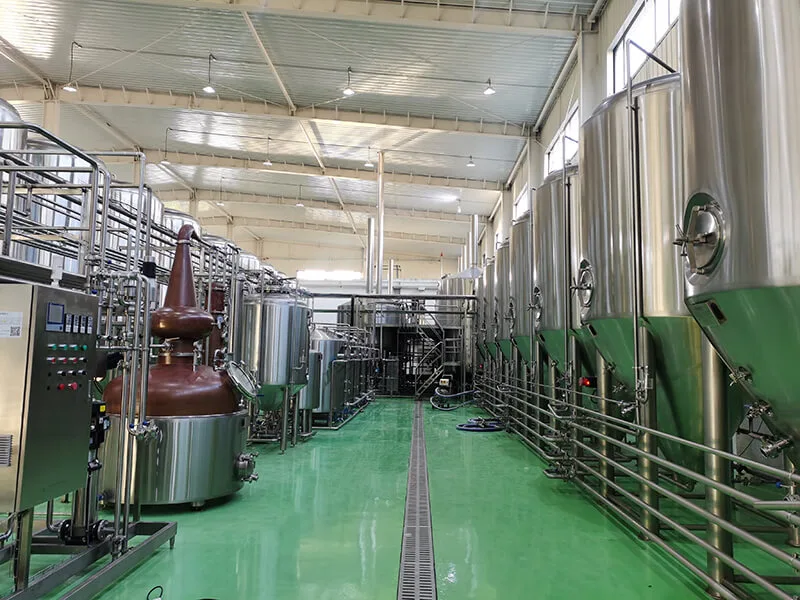
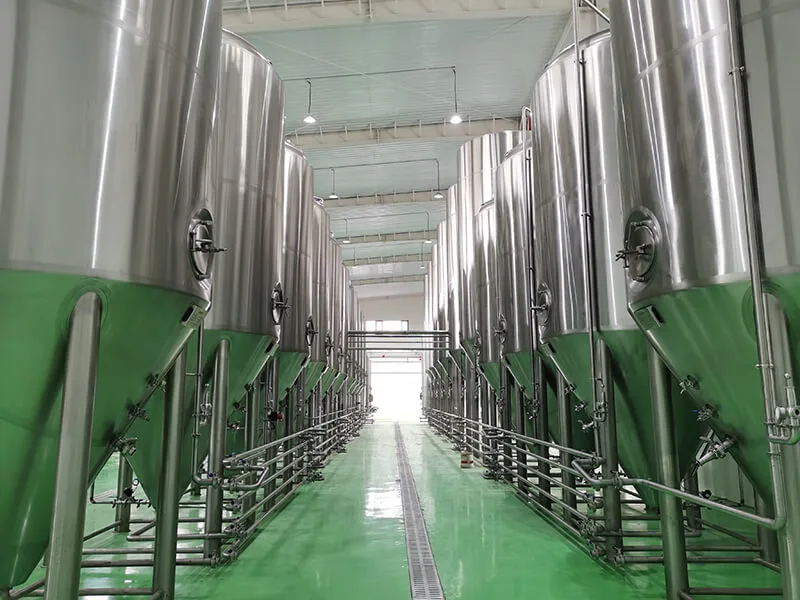
- Flexible Tank Configuration: Utilizes a modular mix of 5T, 10T, and 20T fermentation tanks, paired with 10T and 20T bright beer tanks to suit diverse product lines.
- Front-Integrated Pipe Gallery: An innovative design that consolidates six utility lines—wort, beer transfer, CIP, compressed air, CO₂, and drainage—into a single gallery located in front of the tank farm. This layout drastically simplifies operations, maximizes space utilization, and enhances maintenance accessibility.
4. Utility Systems: Precision Environmental Control
- Service Water System: Provides temperature-stable and constant-pressure buffering for ice water, pure water, hot water, and brewing water, ensuring continuous and stable CIP and production cycles.
- Refrigeration & CIP: Precise temperature control locks in flavor profiles, while automated sterile cleaning ensures food safety, jointly creating a stable brewing micro-environment.
5. Control System: Full-Process Intelligent Traceability
- Dual-PLC Architecture: Two Siemens PLCs are dedicated separately to controlling the brewhouse and the fermentation/utility systems, interfaced with WINCC SCADA software.
- Data Closed-Loop: Enables intelligent parameter regulation, real-time status monitoring, and full-chain production data traceability, reaching Industry 4.0 standards.
6. Multi-Function Distillation Module
- Continuous Distillation Capability: Integrates a still pot, distillation column, gin basket, and condenser to support continuous distillation. This not only improves alcohol purification efficiency but also empowers the brewery to produce spirits such as gin and whiskey new-make spirit.
II. Technological Breakthroughs: Innovations Across Six Dimensions
This project represents more than just equipment installation; it delivers technological breakthroughs across key areas:
- Milling Efficiency Revolution: The mash-in technology overcomes the limitations of traditional dry milling (low extract rate and high dust), achieving a dual boost in efficiency and yield.
- Structural Reconfiguration of Layout: The front-integrated pipe gallery breaks away from traditional scattered piping, modularizing complex fluid networks to significantly reduce operational complexity.
- Intelligent Leap in Control Systems: The dual-PLC architecture with data traceability ensures independent and precise control of the brewhouse and fermentation, marking a leap from “experience-based brewing” to “data-driven brewing.”
- Perfect Balance of Capacity and Flexibility: Through modular multi-species tank configuration, the system achieves an annual capacity of 9,000 tons on a 5,000L batch basis while retaining the flexibility for small-batch specialty products.
- Cross-Industry Fusion (“Beer + Distillation”): The integration of continuous distillation equipment breaks the single-product limitation of craft breweries, offering diversified revenue streams.
- Precision Quality Assurance Loop: Relying on constant temperature/pressure water sources and automated sterile cleaning, the system locks in freshness and maintains yeast vitality from a physical environmental perspective.
III. Intelligent Quality Control: Ensuring Consistency at Scale
In large-scale production, the intelligent control system acts as the “anchor” for consistent beer quality:
- Intelligent Regulation of Process Parameters: The system strictly executes optimal process curves (temperature, time, pressure), eliminating human error and ensuring consistency in flavor and physicochemical indicators across batches.
- 24/7 Real-Time Monitoring: Using PLCs and SCADA, the system monitors equipment status around the clock, instantly detecting and intervening in potential risks like temperature deviations or pressure anomalies to prevent bulk quality incidents.
- Full-Chain Data Traceability: A complete digital archive is maintained. In the event of quality fluctuations, the system allows rapid backtracking to specific production nodes and parameters for precise root cause analysis and continuous process optimization.
- Refined Division of Control: Dedicated systems for mashing and fermentation prevent control delays caused by system overload, ensuring both critical stages operate under optimal conditions.
- Precise Multi-System Synergy: The intelligent hub deeply integrates with refrigeration and service water systems to ensure extreme temperature stability during wort cooling, fermentation, and cold storage, effectively “locking in” freshness.
IV. Deep Dive: Challenges and Solutions in Coordinating Multi-Specification Fermentation Tanks
The most technically demanding aspect of this project is the efficient coordination of 5T, 10T, and 20T fermentation tanks. This process faces four core challenges, each addressed through intelligent solutions:
1. Temperature Control Challenges Due to Heat Exchange Differences
- Challenge: Tanks of different volumes have vastly different surface-area-to-volume ratios (small tanks cool faster; large tanks struggle with center temperature control). A uniform control strategy would lead to inconsistent flavors within the same batch.
- Solution: The system incorporates an expert PID algorithm library tailored for each tank type. It automatically compensates for thermodynamic differences caused by physical dimensions, ensuring the yeast experiences a consistent temperature curve regardless of tank size.
2. Complexity of Pipeline Scheduling and Error Prevention
- Challenge: During simultaneous operations (e.g., filling, draining, and CIP cleaning across different tanks), the logic for hundreds of valves becomes extremely complex, raising the risk of cross-contamination or media misdirection.
- Solution: The system employs a matrix-style valve management logic. It calculates fluid paths in real-time and enforces strict interlock mechanisms, eliminating the risk of cross-contamination at the software level.
3. Dynamic Matching of Production Rhythms
- Challenge: The brewhouse produces 5T per batch, while fermentation tanks vary (5T/10T/20T). Perfectly matching continuous brewhouse output with varying tank reception windows (e.g., merging 4 batches into one 20T tank) is a significant scheduling hurdle.
- Solution: The system features dynamic scheduling capabilities. It automatically calculates the optimal production sequence to ensure wort does not wait (preventing contamination) and fermentation tanks remain utilized (maximizing efficiency).
4. Differentiated CIP Cleaning and Data Traceability
- Challenge: Different tank sizes require specific cleaning parameters. Additionally, accurately “bundling” data from multiple brewhouse batches to a single large fermentation tank ID demands rigorous data logic.
- Solution: The system automatically identifies tank specifications and calls the corresponding cleaning recipe. On the data side, it establishes a granular digital ID for every drop of liquid, ensuring clear traceability of origin and destination without data mismatches.
Schlussfolgerung
The Shenyang 5,000L project represents a profound transformation in the craft beer production model, not merely an equipment upgrade. It demonstrates that through scientific process layout, flexible modular design, and deep intelligent control, the traditional trade-off between scale and customization, or efficiency and quality, can be broken. For breweries aiming to expand capacity, diversify product lines, and pursue ultimate quality, this case study offers a highly valuable standardized benchmark for the future of commercial brewery systems.
If you are planning to build a brewery, feel free to contact us for our equipment list.