In recent years, demand for personalized, high-quality beverages has surged, driving rapid growth in the craft beer industry across China and globally. Opening a unique brewpub or craft beer bar not only satisfies consumers’ desire for diverse flavors, but also offers strong business potential.
However, successful operations begin with scientific planning, and brewery equipment selection sits at the core of your startup strategy. Many entrepreneurs are overwhelmed by countless equipment options, yet overlook a fundamental principle:
equipment serves capacity, and capacity must align with your business model.
This guide breaks down the six core modules of brewpub equipment, the golden rules of capacity calculation, and practical configuration strategies to help you avoid costly mistakes.
1. Brewpub Equipment Overview: Six Core Modules
A complete brewpub equipment system is not just a few tanks—it’s an integrated brewing ecosystem. For small to mid-sized brewpubs, it typically includes:
1. Fräsen System
Crushes malt to the optimal particle size. A high-quality milling system preserves husks (for filtration) while exposing endosperm (for efficient sugar extraction), improving brewhouse efficiency.
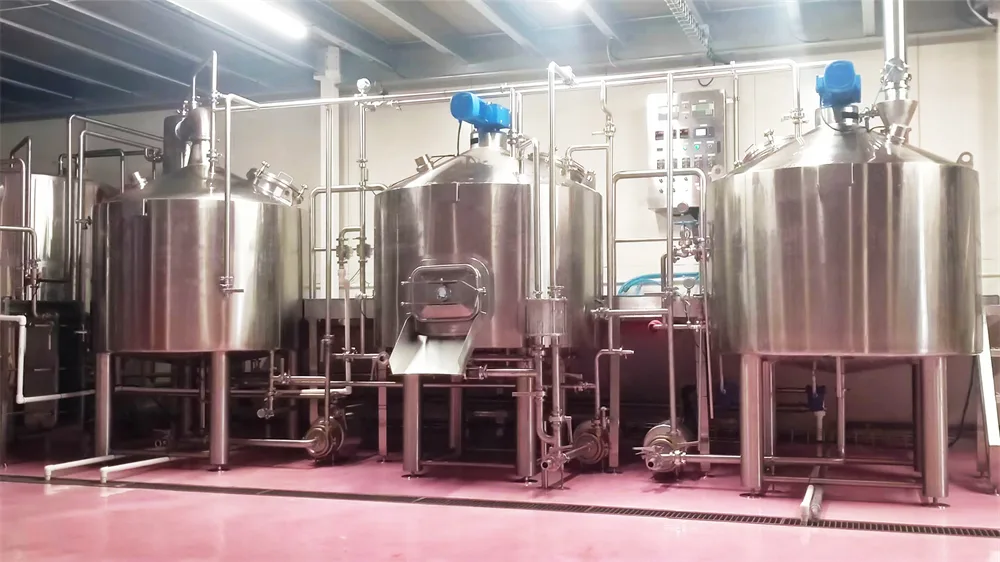
2. Brewhouse System — The “Heart” of Brewing
Includes mash tun, lauter tun, kettle, and whirlpool. This stage converts starch into fermentable sugars and adds hops for bitterness and aroma—directly impacting wort quality.
3. Fermentierungssystem
Composed of multiple fermentation tanks. This is the true production bottleneck. With a typical fermentation cycle of ~14 days, tank quantity determines your actual output.
4. Refrigeration System
Maintains precise temperatures during fermentation and storage. Stable cooling ensures yeast performance and prevents contamination—critical for flavor consistency.
5. CIP System (Cleaning in Place)
Automated cleaning system that ensures hygiene, reduces labor, and improves equipment turnover efficiency.
6. Control System & Auxiliary Components
Includes PLC control panels, pumps, valves, piping, and sensors—enabling automated, data-driven brewing operations.
💡 Key Insight:
Many beginners assume larger brewhouses mean higher output. In reality, fermentation capacity—not brewhouse size—limits production.
2. Capacity Planning: How to Calculate Daily Output
Before choosing your brewery equipment, you must define a clear production model.
📐 Core Formula
Daily Output = Fermenter Volume × Number of Fermenters ÷ Fermentation Days
Example:
4 × 500L fermenters, 14-day cycle:
500 × 4 ÷ 14 ≈ 143L/day
If your expected sales exceed this, you must increase fermenter count or size.
⚠️ Important: Add Buffer Capacity
Real-world operations include variables such as:
- Cleaning downtime (10–15%)
- Weekend demand spikes (2–3× weekday sales)
- Multiple beer styles requiring tank allocation
👉 Recommendation: Add 20–30% capacity buffer to your system.
3. How to Choose the Right Brewhouse System
The brewhouse is central to brewpub equipment performance.
1. Match Fermentation Capacity
Brewhouse batch size should match fermenter volume (or slightly higher, 1.2–1.3×) to offset losses.
2. System Configuration Options
Zwei-Gefäß-System
- Compact, cost-effective
- Limited to 1 brew/day
- Best for small brewpubs
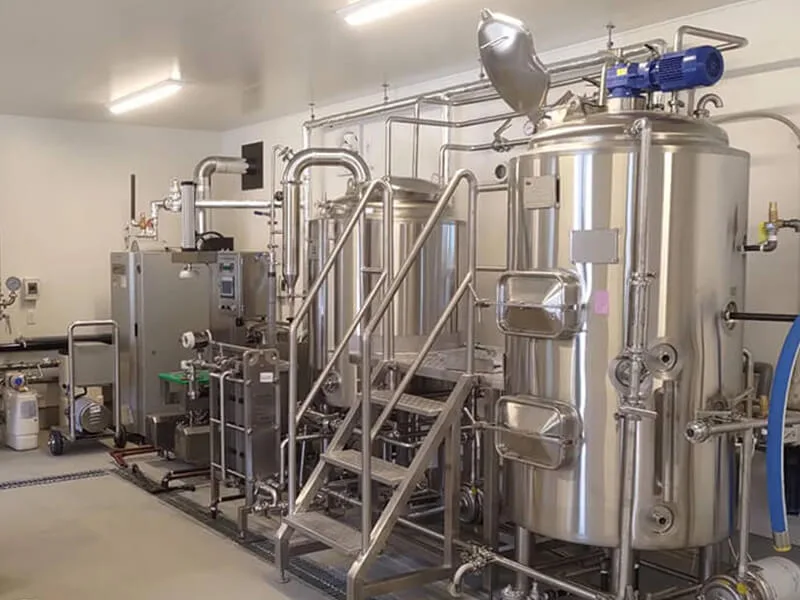
Drei-Gefäß-System
- Most popular configuration
- 1.5–2 brews/day
- Ideal for mid-sized brewpubs
Vier-Gefäß-System
- Maximum efficiency (2–3 brews/day)
- Higher cost and footprint
- Suitable for large-scale operations
3. Material & Build Quality
- 304 stainless steel (standard)
- 316L stainless steel (recommended for sour beers or aggressive cleaning)
- Polyurethane insulation (80–100mm)
- Heating options:
- Steam (efficient, scalable)
- Electric (easy installation, high power demand)
4. Automatisierungsebene
- Manual / Semi-auto → Lower cost, requires skilled brewers
- Fully automatic → Ideal for scaling and consistency
4. Brewpub Equipment Configurations by Business Model
🍺 Small Craft Beer Bar
- Target: <100L/day
- Setup: 200L brewhouse + 4–6 × 200L fermenters
- Low investment, small footprint
🍻 Mid-Sized Brewpub / Restaurant
- Target: 100–300L/day
- Setup: 500L brewhouse + 6–8 × 500L fermenters
- Most popular brewpub equipment configuration
- Strong ROI and scalability
🌿 Large Brewery / Beer Garden
- Target: >300L/day
- Setup: 1000L brewhouse + 8–12 × 1000L fermenters
- Supports events, branding, packaging expansion
5. Common Mistakes to Avoid
❌ Starting too small → leads to costly upgrades
✔ Plan for 3-year growth
❌ Focusing only on brewhouse size
✔ Prioritize fermentation capacity
❌ Blindly choosing imported equipment
✔ Modern domestic brewery equipment offers excellent quality at lower cost
❌ Ignoring utilities & floor load
✔ Plan water, electricity, and structural capacity early
6. Cost & ROI Overview
| System Size | Investment | Daily Output | Payback Period | Anmeldung |
|---|---|---|---|---|
| 200L | $10K–$20K | 50–80L | 6–9 months | Small bars |
| 500L | $25K–$50K | 120–200L | 10–15 months | Brewpubs |
| 1000L | $70K–$120K | 250–400L | 18–24 months | Large venues |
💰 Craft beer gross margins can reach 65%–75%, especially with on-site sales.
7. Custom Brewpub Equipment Solutions
Every brewpub is unique. Professional suppliers provide:
- 3D layout design
- Process customization
- Smart automation upgrades
- Training & technical support
📋 Before requesting a quote, prepare:
- Floor plan & ceiling height
- Target production capacity
- Local regulations
- Budget & timeline
Conclusion: Build Your Brewpub with Confidence
Craft beer is more than a product—it’s an experience. The right brewpub equipment is not just a production tool, but the foundation of your brand.
Whether you’re launching a small bar or a large-scale brewery, smart equipment selection and capacity planning will determine your long-term success.
Start with the right system—and brew your future.
👉 Kontaktieren Sie uns heute for a custom brewhouse system design tailored to your production goals, budget, and future expansion plans.