Eine 300-Liter-Brauanlage ist einer der klassischsten und praktischsten Kapazitätsbereiche in der Craft-Bier-Industrie.
Sie bietet ein ausgewogenes Verhältnis zwischen kommerzieller Leistungsfähigkeit und überschaubarer Investition, was sie besonders für Brauereibetriebe, Start-up-Brauereien, Pilotbrauereien und den Einsatz in der Ausbildung beliebt macht.
Bevor sie eine Kaufentscheidung treffen, stellen die meisten Käufer jedoch die gleichen Fragen:
Ist der 300L für mein Projekt geeignet? Wie sollte es konfiguriert werden? Und kann es mit meinem Unternehmen wachsen?
Dieser Artikel beantwortet diese Fragen klar und praktisch.
1. Für wen ist ein 300-Liter-Brausystem geeignet?
Ein 300L-System ist kein "Kleingerät" - es ist eine seriöse kommerzielle Einstiegslösung, die sich am besten für Projekte mit einem klaren Anwendungsfall eignet.
✅ Ideal für:
- Brauereibetriebe, Schankwirtschaften und Bierausschank
- Erstmalige Gründung einer Handwerksbrauerei
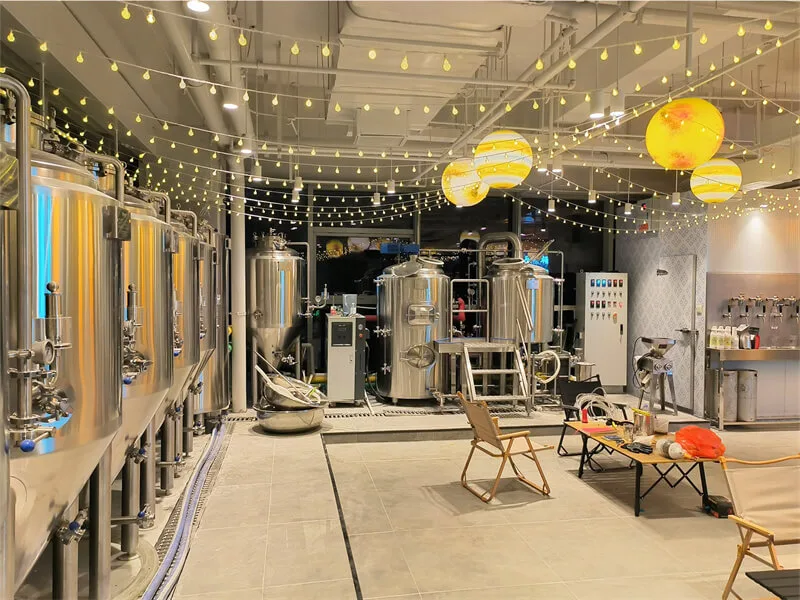
- Restaurants oder Bars, die ihre eigene Biermarke einführen
- Brauschulen, Ausbildungszentren und Pilotbrauereien
- Brauereien, die von 100-200 l auf kommerzielle Produktion umstellen
❌ Nicht ideal für:
- Brauereien, die sich auf den Großhandelsvertrieb mit hohem Volumen konzentrieren
- Projekte, die vom ersten Tag an eine schnelle Produktion in großem Maßstab erfordern
👉 Kurzum:
Wenn Ihr Ziel darin besteht, das Risiko zu kontrollieren, den Markt zu validieren und Raum für Wachstum zu lassen, ist ein 300-Liter-System ein ausgezeichneter Ausgangspunkt.
2. Elektrische Heizung oder Dampfheizung: Was sollten Sie wählen?
Dies ist eine der am häufigsten gestellten Fragen.
Eine elektrische Heizung ist geeignet, wenn:
- Die Stromversorgung ist stabil und ausreichend
- Die Brauerei befindet sich in einer Bar, einem Einkaufszentrum oder einer städtischen Umgebung
- Das anfängliche Budget ist begrenzt
- Schnelle Installation und einfache Bedienung stehen im Vordergrund
Dampfheizung ist besser, wenn:
- Langfristige Produktionsstabilität ist erforderlich
- Präzise Maische- und Siedekontrolle ist wichtig
- Künftige Erweiterungen sind bereits geplant
- Energieeffizienz und Chargenkonsistenz sind wichtig
📌 Praktische Ratschläge:
Wenn Sie in Zukunft auf 500L oder 1000L aufrüsten wollen, bietet die Dampfheizung langfristig einen besseren Wert.
Für das Brauen in einer Brauerei oder in einer Auslage ist eine elektrische Heizung in der Regel mehr als ausreichend.
3. Wie viele Personen werden für den Betrieb einer 300-Liter-Brauerei benötigt?
Unter normalen Bedingungen:
- 👤 Eine Person kann den täglichen Brauprozess bewältigen
- 👥 Beim Einmaischen, Beladen und Reinigen sind 1-2 Personen ideal
Mit Funktionen wie:
- Automatische Temperaturkontrolle
- Automatisierte Pumpenschaltung
- Rezepturgestützte Prozesssteuerung
Der Arbeitsaufwand kann weiter reduziert werden - einer der Hauptgründe, warum Brauereien halbautomatische Systeme bevorzugen.
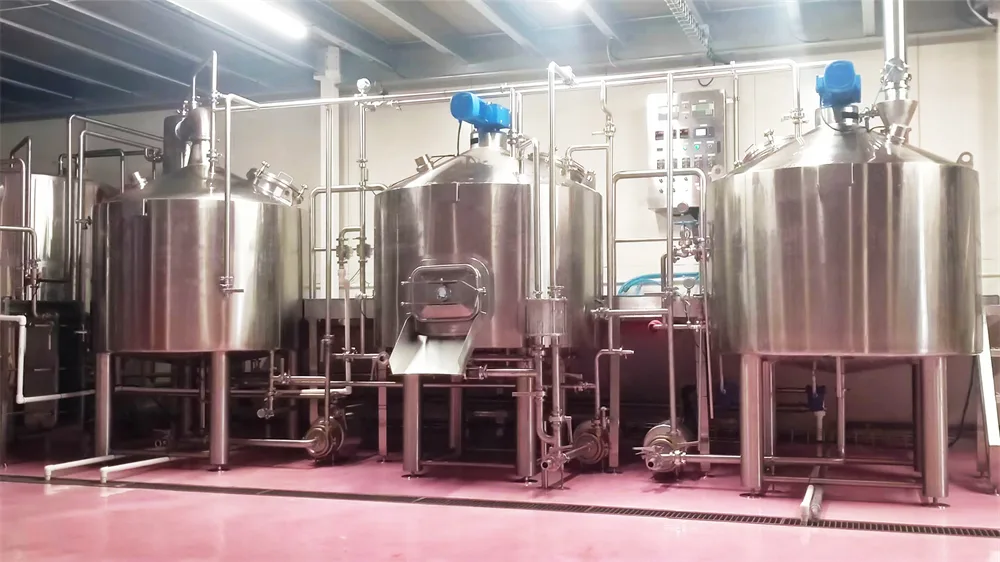
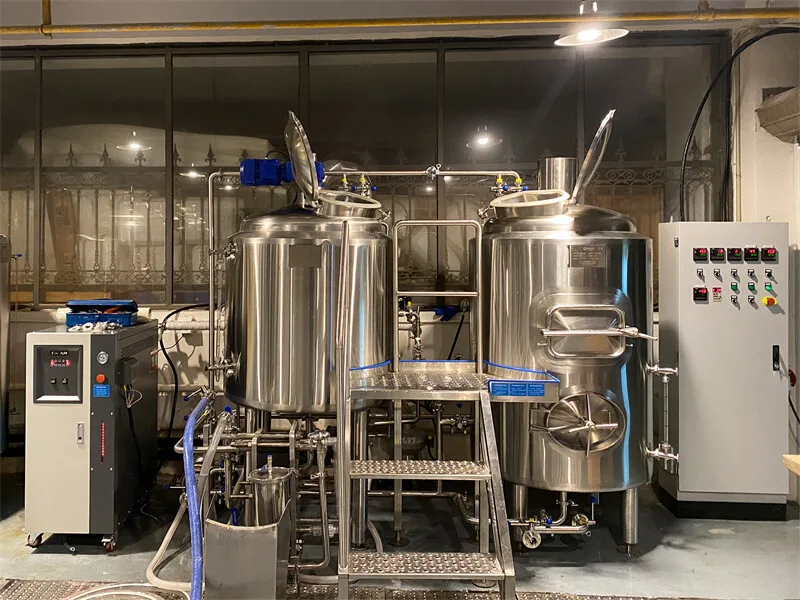
4. Sudhauskonfiguration: 2-Gefäß- vs. 3-Gefäß-Systeme
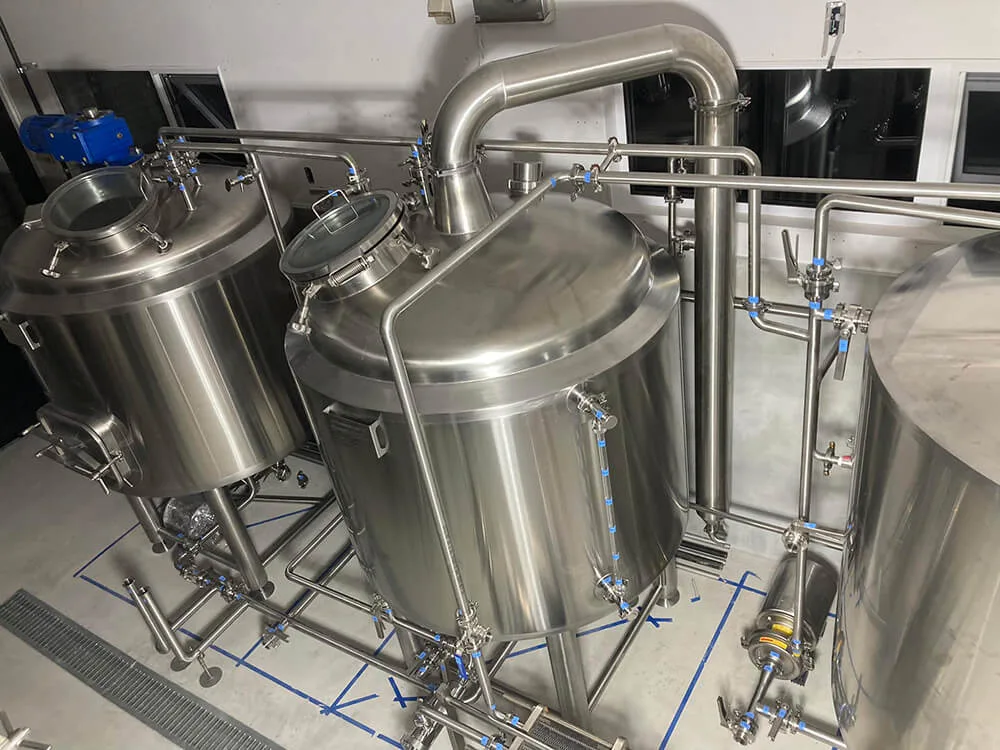
🔹 2-Gefäß-System
(Maische/Läuterbottich + Kessel/Whirlpool)
- Kompakter Fußabdruck
- Geringere Investitionskosten
- Sehr gut geeignet für Brauereibetriebe und Start-ups
- Einfache und effiziente Bedienung
🔹 3-Gefäß-System
(Maischebottich + Läuterbottich + Kessel/Whirlpool)
- Größere Prozessflexibilität
- Höhere Brühleistung
- Besser geeignet für mehrere Bierstile
- Leichtere Skalierbarkeit der Produktion
📌 Anleitung zur Auswahl:
- Begrenzter Platz / Barbrauen → 2-Gefäß-System
- Höherer Ausstoß oder verschiedene Bierstile → 3-Gefäß-System
5. Wie viele Gärbehälter sollten mit einem 300-Liter-System gekoppelt werden?
Diese Entscheidung wirkt sich unmittelbar auf die Gesamtproduktionskapazität aus.
Typische Konfiguration:
- 300L-Sudhaus
- 3-6 Gärtanks (je 600 l)
Warum größere und mehr Tanks?
- Die Gärungszyklen sind viel länger als die Brauzyklen
- Mehr Tanks erhöhen die Auslastung des Sudhauses
- Ermöglicht die gleichzeitige Herstellung mehrerer Bierstile
📌 Allgemeiner Rat der Industrie:
"Das Hinzufügen von Gärtanks ist in der Regel rentabler als die Aufrüstung des Sudhauses selbst.
6. Wie wählt man das richtige Kühlsystem?
Eine 300-Liter-Standardbrauerei umfasst in der Regel:
- Glykol- oder Eiswassertank
- Industrielle Kühleinheit
Wichtige Auswahlfaktoren:
- Geplante Anzahl von Gärbehältern
- Bedingungen der Umgebungstemperatur
- Überlegungen zur künftigen Expansion
Wir empfehlen, 20-30% Kühlkapazität über den aktuellen Bedarf hinaus zu reservieren, um zukünftiges Wachstum zu unterstützen.
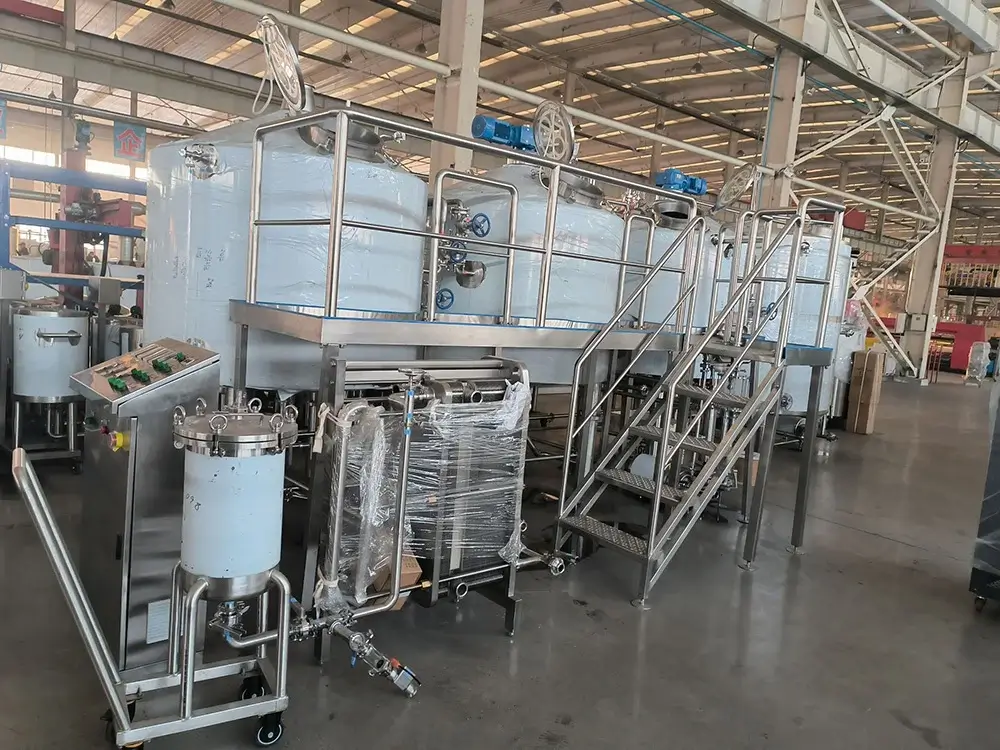
7. Ist ein CIP-System für eine 300-Liter-Brauerei notwendig?
Die Antwort lautet: Ja - sehr empfehlenswert.
Selbst bei 300L:
- Manuelle Reinigung ist zeitaufwändig
- Die Reinigungskonsistenz ist schwer zu kontrollieren
- Schlechte Reinigung wirkt sich direkt auf die Stabilität und Qualität des Bieres aus.
Ob es nun:
- Eine mobile CIP-Einheit
- Ein halbautomatisches CIP-System
Sie verbessert sich erheblich:
- Hygienestandards
- Operative Effizienz
- Lebensdauer der Ausrüstung
8. Wie automatisiert sollte das Kontrollsystem sein?
Zu den gängigen Kontrollmöglichkeiten gehören:
- Manuelle Kontrolle (geringste Kosten)
- Halbautomatische Steuerung (Temperatur + Pumpenautomatik)
- Vollautomatische Steuerung (Rezepte, Datenerfassung, Wiederholbarkeit)
📌 Bewährte Verfahren:
- Startup-Brauereien & Braugaststätten → Halbautomatische Systeme bieten den besten ROI
- Ausbildung und F&E-Einrichtungen → Vollautomatische Systeme verbessern die Konsistenz und Dokumentation
9. Wie kann eine 300-Liter-Brauerei auf 500 oder 1000 Liter aufgerüstet werden?
Eine der größten Stärken eines 300L-Systems ist seine Skalierbarkeit - wenn es von Anfang an richtig geplant wird.
Ein reibungsloser Upgrade-Pfad umfasst:
- Zuerst das Volumen des Gärtanks erweitern
- Überdimensionierung des Kühlsystems bei der Erstinstallation
- Planung von Rohrleitungen für höhere Durchflussraten
- Verwendung skalierbarer Kontrollsysteme
- Wahl von Dampf und Versorgungseinrichtungen, die eine zukünftige Expansion unterstützen
👉 Ob das ursprüngliche System mit Blick auf eine Erweiterung konzipiert wurde, entscheidet darüber, ob die Aufrüstung problemlos - oder kostspielig - vonstatten geht.
Schlussfolgerung
Ein 300-Liter-Brausystem ist weit mehr als eine Pilotanlage - es ist eine vollwertige kommerzielle Braulösung.
Mit der richtigen Konfiguration und einem vorausschauenden Design kann es Sie auf Ihrem Weg von der ersten Charge bis hin zu einem skalierbaren Craft-Brauereibetrieb unterstützen.
Wenn Sie eine Brauerei oder ein kleines Brauereiprojekt planen, können wir eine 300-Liter-Braulösung auf der Grundlage Ihrer räumlichen Gegebenheiten, Ihres Budgets und Ihrer langfristigen Ziele maßschneidern. Zögern Sie nicht Kontaktieren Sie uns für professionelle Beratung.