Although breweries and distilleries both rely on biochemical conversion of starches into alcohol, the engineering principles, process flows, and equipment configurations differ significantly. This technical overview examines the distinctions, operational requirements, and points of convergence between brewery and distillery systems.
1. Raw Materials and Pre-Processing
1.1 Grain Selection
Breweries primarily use malted barley because of its enzymatic activity, flavor impact, and predictable lautering behavior.
Distilleries may use malted or unmalted grains (barley, rye, wheat, corn), depending on spirit type. Enzymatic supplementation is common in distillation mashes, especially with high-adjunct or non-malted grain bills.
1.2 Milling Requirements
- Breweries use roller mills to maintain husk integrity, which is essential for lauter tun filtration.
- Distilleries often use hammer mills to produce fine grist or flour to maximize starch accessibility—because they typically do not rely on grain bed filtration.
2. Mashing and Conversion
2.1 Temperature Control
Both systems require controlled enzymatic activity, but the goals differ:
- Brewing: Multi-step mashing schedules target specific fermentability, body, and flavor precursors.
- Distilling: Mashing aims for maximum starch conversion and fermentable sugar yield, often with high-temperature gelatinization steps for grains such as corn or rye.
2.2 Mash Vessel Design
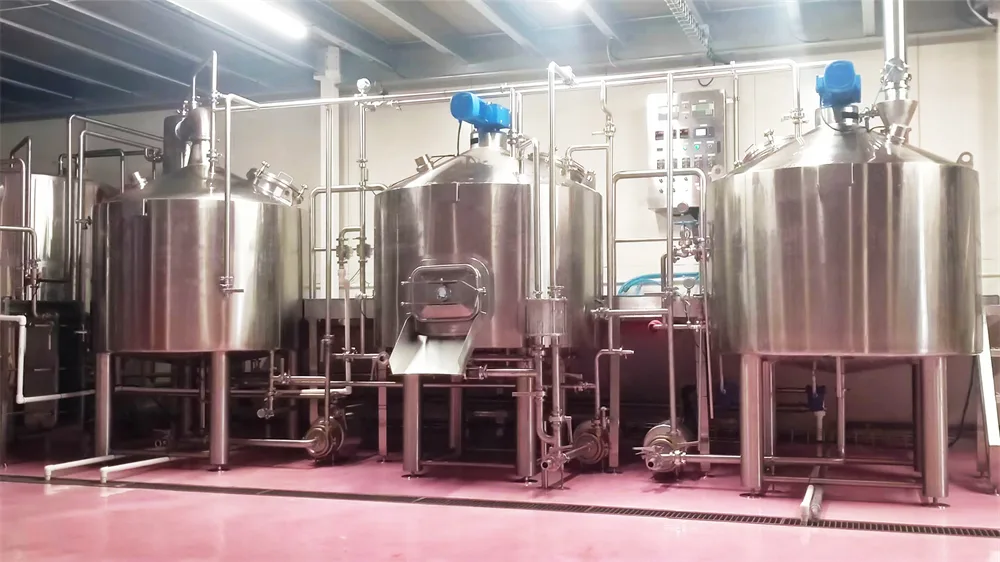
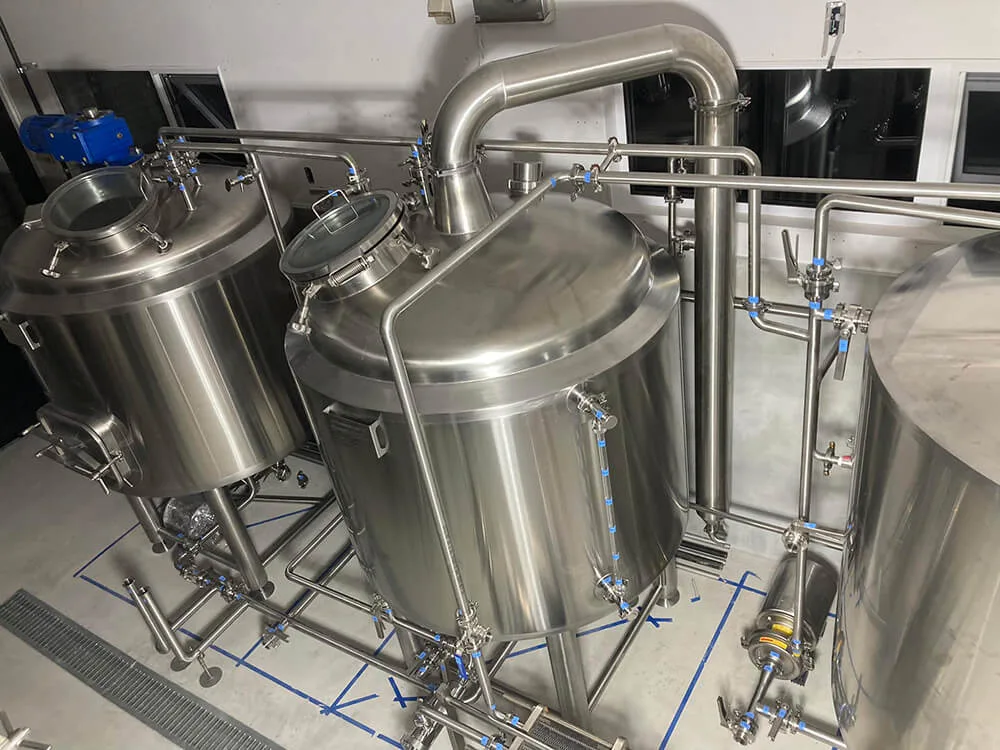
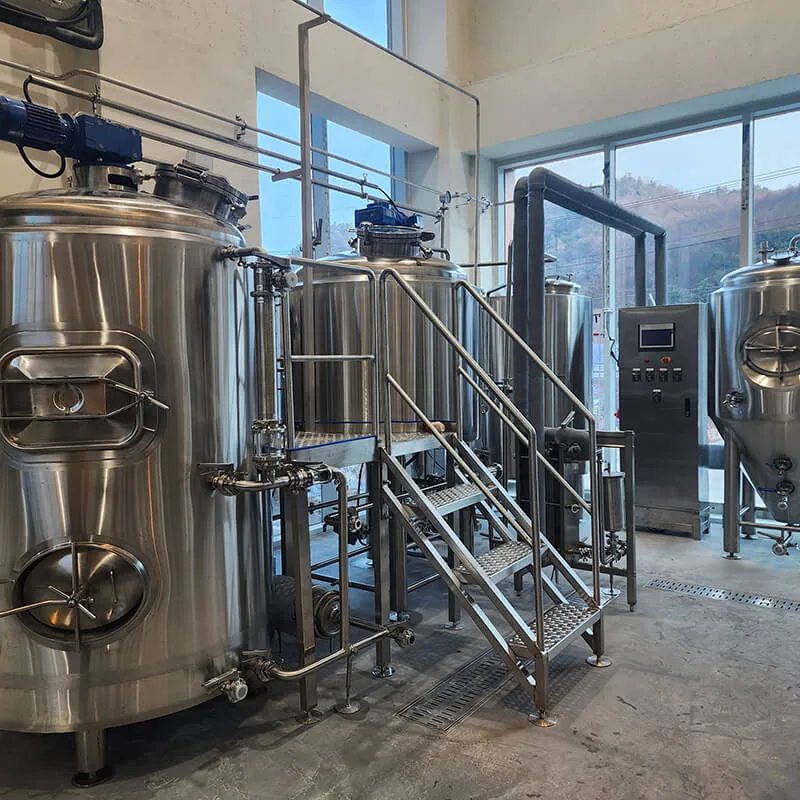
- Brewhouse Mash Tun: Agitator, steam jackets, temperature zones, false bottom (if combined mash/lauter tun).
- Distillery Mash Cooker: Heavy-duty agitators, high-shear mixing, high-temperature steam jackets, CIP spray balls, no filtration plates.
3. Wort/Wash Separation
3.1 Brewery Lautering
Breweries separate clear wort from solids using:
- Lauter tuns with false bottom
- Mash filters for high efficiency
- Whirlpool clarification for hot break removal
Clarity is important because solid carryover affects fermentation flavors and beer stability.
3.2 Distillery Mash Handling
Many distilleries ferment on the grain, eliminating lautering completely. This approach increases yield and complexity but requires pumps, valves, and fermentation tanks capable of handling high-solid slurries.
4. Fermentation System Design
4.1 Yeast Selection
- Breweries use yeast strains selected for flavor profile, attenuation, and flocculation.
- Distilleries favor strains with rapid fermentation kinetics, high alcohol tolerance, and minimal off-flavors (since flavor is later refined via distillation).
4.2 Fermentation Tanks
Both use stainless steel fermentation vessels, but their specifications differ:
| Merkmal | Brewery Fermenters | Distillery Fermenters |
|---|---|---|
| Shape | Cylindroconical | Cylindrical, open or closed |
| Cooling | Multi-zone glycol jackets | Single-zone or limited cooling |
| Pressure | Can be pressurized | Usually non-pressurized |
| Solids Management | Clear wort only | High solids wash optional |
Breweries prioritize flavor control, dissolved oxygen management, and temperature stability. Distilleries prioritize fast fermentation and throughput.
5. Distillation — The Key Technical Divergence
Distillation introduces significant differences in process design.
5.1 Stills
Two main still types:
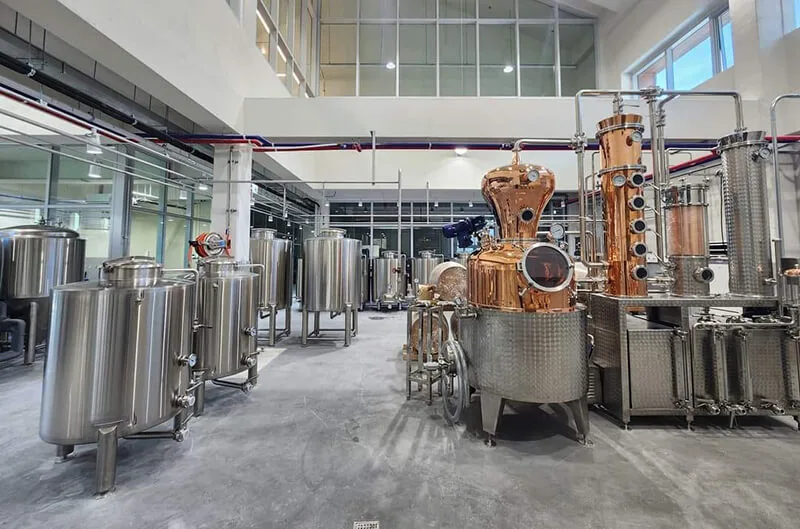
- Pot Still
- Batch operation
- Retains more congeners
- Common in whiskey, rum, brandy production
- Säule Still
- Continuous operation
- Higher purity
- Suitable for vodka, neutral spirits, and high-volume industrial processes
5.2 Thermal Requirements
Distillation relies on precise temperature and pressure control, including:
- Steam jacket pressure regulation
- Reflux ratio control
- Condenser water flow and temperature regulation
- Heads/hearts/tails cut timing based on temperature, alcohol concentration, and vapor composition
5.3 Material Considerations
Stills may incorporate copper for its catalytic properties (reduction of sulfur compounds). Brewery kettles, by contrast, are usually 100% stainless steel.
6. Utilities and Automation
6.1 Brewery Utilities
- Glycol refrigeration system
- Steam for mash tun/kettle
- Compressed air for valves & controls
- CIP systems designed for high sanitation standards
- Carbonation systems and cold-side packaging utilities
6.2 Distillery Utilities
- High-pressure steam supply for stills
- Cooling tower or chiller for condenser water
- Explosion-proof electrical configurations
- Specialized CIP for stills, fermenters, and mash cookers
Automation levels vary, but distillation often requires advanced control of temperatures, reflux, and flow rates to ensure spirit quality and safety.

7. Aging, Storage, and Post-Processing
7.1 Beer
Most beers are not aged long; maturation happens in stainless steel tanks under controlled temperatures.
7.2 Spirits
Whiskey, rum, and brandy may require years of barrel aging, during which evaporation (angel’s share), oxidation, esterification, and wood extraction occur.
Beer packaging requires filtration, carbonation, and microbiological control. Spirits require proofing, blending, and sometimes charcoal filtration.
8. Points of Convergence and Hybrid Systems
8.1 Shared Equipment
Early stages (mashing and fermentation) can use similar vessels when designed appropriately.
8.2 Hybrid Facility Trend
Many modern craft producers combine beer and spirits production by:
- Using brewery fermentation tanks to produce distiller’s wash
- Distilling high-gravity beer to create specialty spirits
- Sharing utilities such as CIP systems, glycol loops, and steam boilers
8.3 Engineering Challenges
Hybrid systems require attention to:
- Product cross-contamination
- Cleaning protocols for hop-free vs. hopped products
- Capacity planning for two production streams
- Electrical and fire safety codes specific to distillation
9. Summary: Technical Comparison
| Kategorie | Brewery | Distillery |
|---|---|---|
| Bioprocess | Enzymatic conversion + fermentation | Fermentation + distillation |
| Key Aim | Flavor development through brewing | Alcohol concentration & refinement |
| ABV Output | ~4–12% | 30–95% |
| Equipment | Mash tun, lauter tun, kettle, whirlpool, CCTs | Mash cooker, fermenter, pot/column still, condenser |
| Utility Demand | Glycol cooling, steam | High-pressure steam, heavy cooling load |
| Safety Requirements | Standard food-grade | Fire/explosion protection, strong ventilation |
| Time Scale | Days to weeks | Days → years (aging) |