
In the modern restaurant industry, offering high-quality house-brewed beer has become an effective way to attract customers and strengthen brand identity. With the rapid growth of the craft beer market, many restaurants are now integrating brewing systems directly into their operations.
However, successful restaurant brewing requires more than just a great recipe. The right restaurant beer brewing equipment ensures consistent flavor, efficient production, and reliable quality in every batch. Choosing the correct brewing system can also reduce labor costs, improve workflow efficiency, and help restaurants create a unique drinking experience for their customers.
This guide explains the essential equipment needed for restaurant brewing and how to choose the right system.
Essential Equipment for Restaurant Brewing
Sudhaus-System
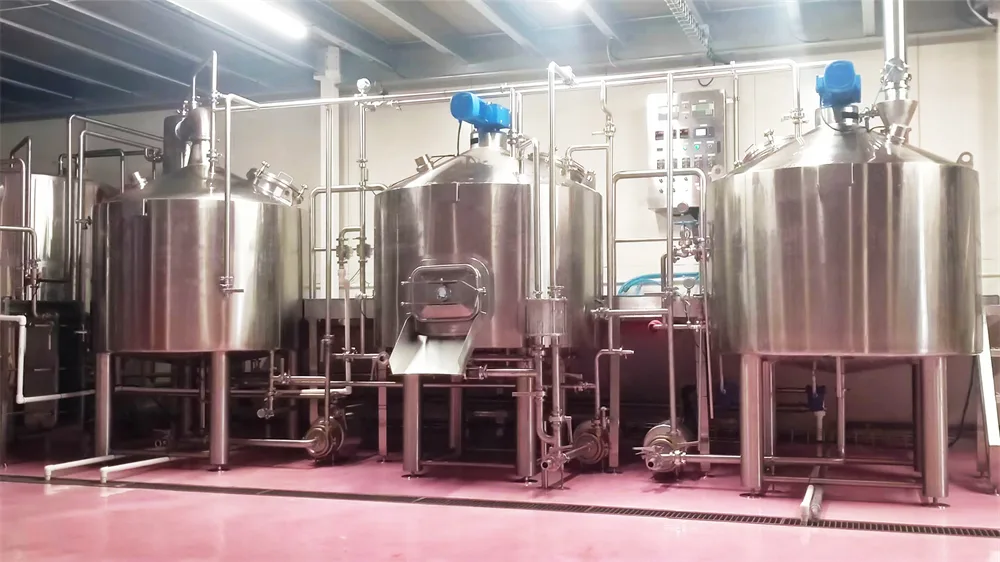
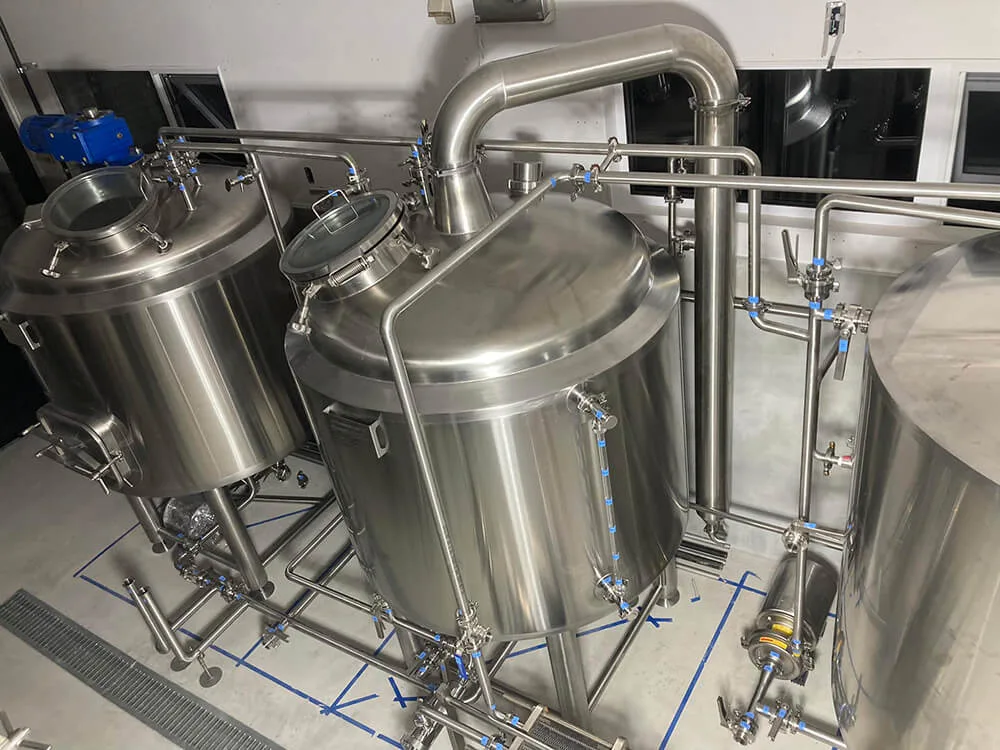
The brewhouse is the core of any brewing operation. It is responsible for converting malt starches into fermentable sugars and boiling the wort with hops to create the beer’s bitterness and aroma.
A typical restaurant brewing system includes:
Mash Tun
The mash tun mixes crushed malt with hot water, allowing enzymes to convert starches into fermentable sugars. Precise temperature control is essential to achieve consistent wort quality.
Boil Kettle
The boil kettle is used to boil the wort and add hops. This step sterilizes the wort, extracts hop bitterness and aroma, and improves clarity.
Modern brewhouse systems often include automated temperature control and efficient heating systems to ensure stable brewing performance.
Gärbehälter
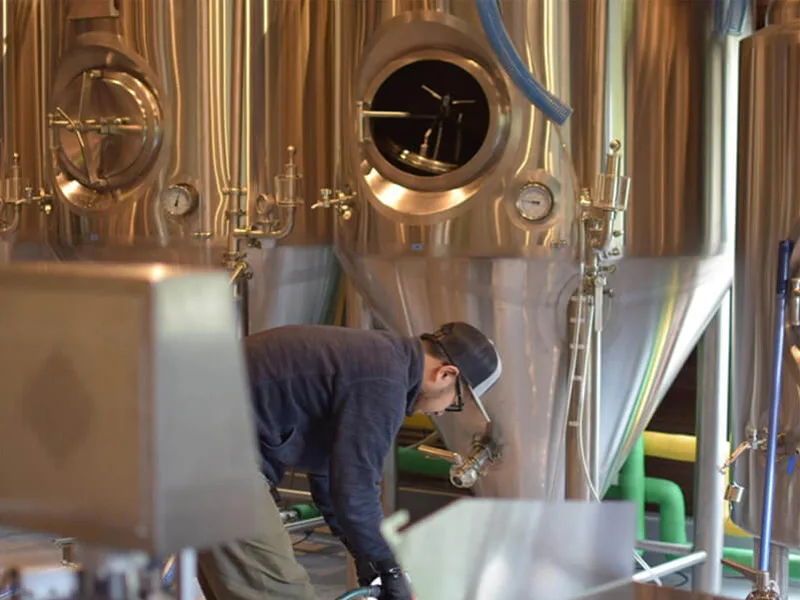
Fermentation tanks are where yeast converts sugars into alcohol and carbon dioxide. This stage typically lasts between one and two weeks depending on the beer style.
A fermentation tank provides a sealed, temperature-controlled environment that allows yeast to work efficiently while protecting the beer from contamination.
The size and number of fermentation tanks directly affect production capacity and brewing flexibility. Restaurants usually install multiple tanks so they can brew different beer styles simultaneously.
Kühlsystem
Temperature control is crucial throughout the brewing process, especially during wort cooling and fermentation.
The cooling system typically includes:
Cooling Jackets
Fermentation tanks are equipped with cooling jackets that circulate chilled glycol to maintain precise fermentation temperatures.
Chiller Unit
A glycol chiller quickly cools hot wort after boiling and supplies cold glycol to fermentation tanks. Rapid cooling protects yeast health and improves beer quality.
Filtration System
Filtration helps remove unwanted particles such as yeast sediment and protein haze. While some beer styles like Hazy IPA intentionally retain haze, most restaurant beers benefit from light filtration to improve clarity and stability.
Common filtration methods include membrane filtration or cartridge filtration, which remove impurities while preserving flavor compounds.
Types of Restaurant Brewing Equipment
Restaurants can choose from different brewing system sizes depending on their production needs.
| Brewing System | Description |
|---|---|
| 100L Brewing System | Ideal for pilot brewing, small restaurants, or experimental batches |
| 200L Brewing System | Suitable for small-scale restaurant brewing with moderate production |
| 300L Brewing System | Popular for nano breweries and restaurants producing multiple beer styles |
| 500L Brühsystem | Designed for independent microbreweries or high-volume restaurants |
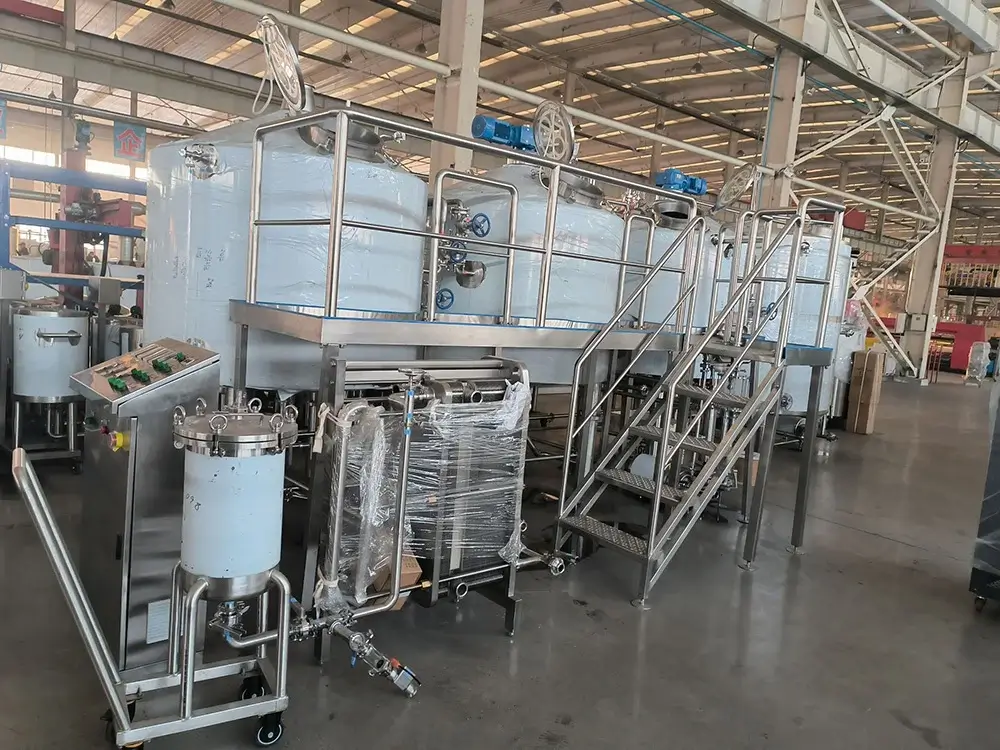
| 700L Brewing System | A complete brewing system including milling, mashing, fermentation, cooling, and CIP cleaning |
Choosing the right capacity ensures a balance between production demand and available space.
Factors to Consider When Buying Brewing Equipment
Equipment Quality
High-quality brewery equipment ensures durability, safety, and consistent brewing performance. Stainless steel systems are commonly used because they are corrosion-resistant, hygienic, and easy to clean.
Investing in reliable equipment can reduce maintenance issues and improve long-term operational stability.
Available Space
Before purchasing brewing equipment, restaurants must evaluate their available space. Brewing systems require room not only for tanks but also for utilities such as chillers, heat exchangers, and cleaning systems.
The layout should allow efficient workflow for brewers while remaining accessible to staff and customers.
Cleaning and Maintenance
Regular cleaning is essential to maintain beer quality. Most modern brewing systems include CIP (Clean-in-Place) systems, which automatically clean tanks and pipelines using controlled cleaning solutions.
Proper cleaning helps prevent contamination, maintain fermentation performance, and extend equipment lifespan.
Supplier Support
After-sales service and technical support are critical when purchasing brewing equipment. Reliable suppliers provide installation guidance, operational training, and maintenance assistance to ensure smooth operation.
Choosing an experienced manufacturer can significantly reduce downtime and operational risks.
Advantages of Modern Restaurant Brewing Systems
| Equipment Type | Vorteile |
|---|---|
| Nano Brewing Systems | Affordable solutions for small professional brewers producing experimental beers |
| Microbrewery Systems | Suitable for restaurants expanding their beer offerings and production capacity |
| Commercial Brewing Systems | Designed for larger operations requiring consistent high-volume production |
| 100L Brewing Systems | Ideal for small batch brewing and recipe development |
| 300L Brewing Systems | Balanced option for restaurants producing multiple beer styles |
| 500L Brewing Systems | High efficiency with automated brewing control |
| 700L Brewing Systems | Complete brewing solution for higher output restaurants |
Frequently Asked Questions
What equipment is needed to brew beer?
A basic brewing setup includes a brewhouse system, fermentation tanks, wort pumps, heat exchangers, a cooling system, and cleaning equipment. Additional components such as malt mills and yeast propagation tanks can further improve brewing efficiency.
How long does the brewing process take?
The brewing cycle usually includes mashing, boiling, fermentation, and maturation. The brewing stage takes around 6–8 hours, while fermentation typically lasts between one and three weeks depending on the beer style.
How do I choose the right fermentation tank?
Fermentation tank size should match the brewhouse capacity. Stainless steel conical fermenters are the most common choice because they are durable, easy to clean, and allow efficient yeast management.
Is brewing equipment expensive to maintain?
Maintenance costs depend on equipment complexity and usage frequency. Regular cleaning, inspection of temperature control systems, and replacement of consumable parts are the most common maintenance tasks.
Automated brewing systems may require higher initial investment but provide better efficiency and consistency over time.
Schlussfolgerung
Installing restaurant beer brewing equipment allows restaurants to create unique craft beer experiences while strengthening their brand identity. By choosing the right brewing system, restaurants can ensure consistent flavor, efficient production, and long-term operational reliability.
As craft beer continues to grow in popularity, investing in high-quality brewery equipment provides restaurants with a powerful competitive advantage.
If you are planning to build a brewery, feel free to contact us for our equipment list.