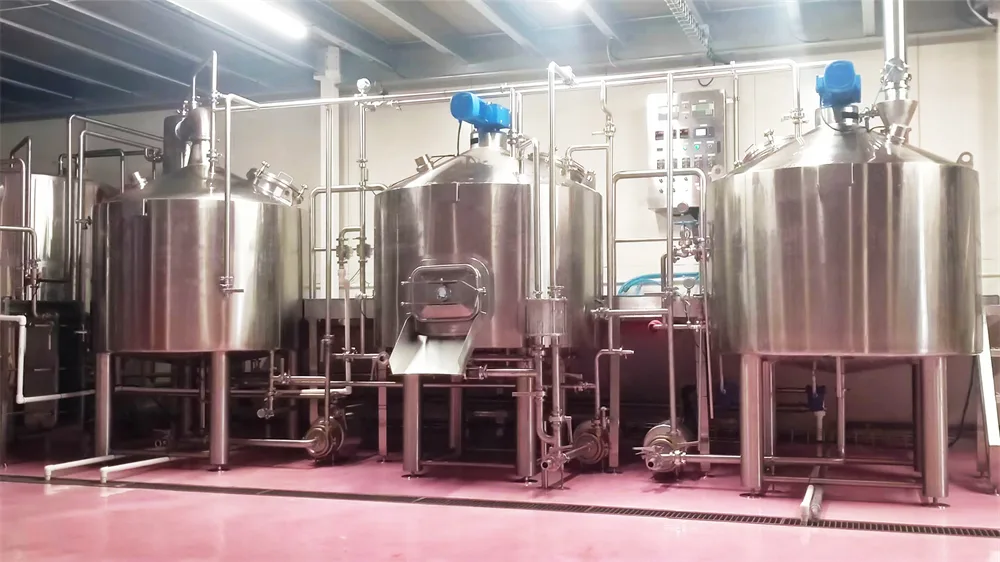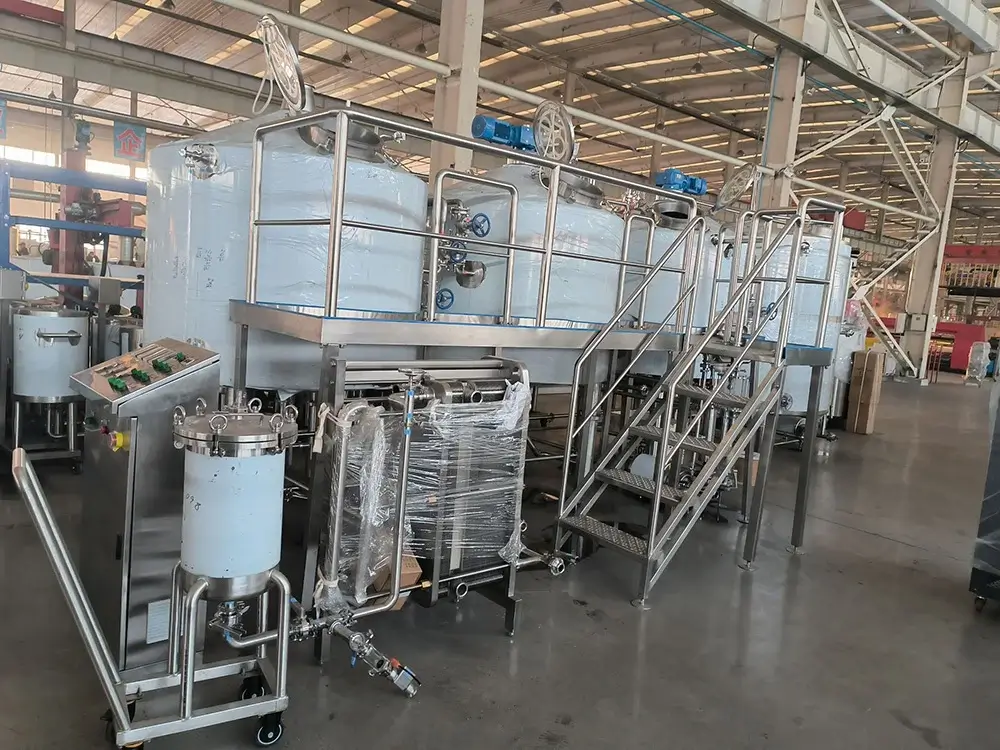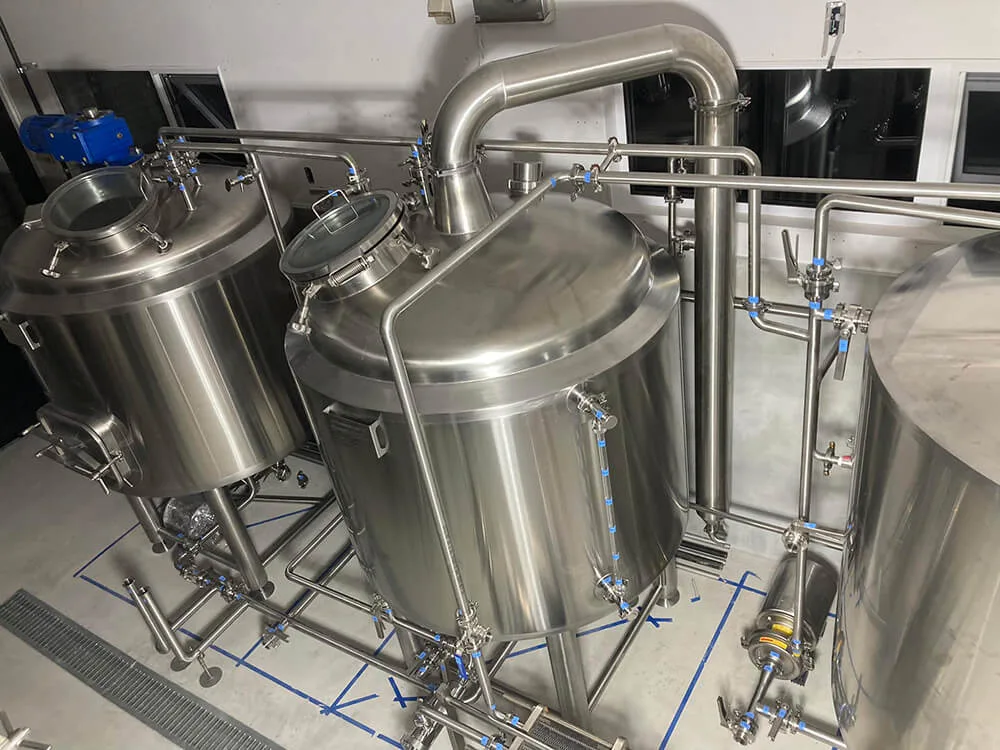
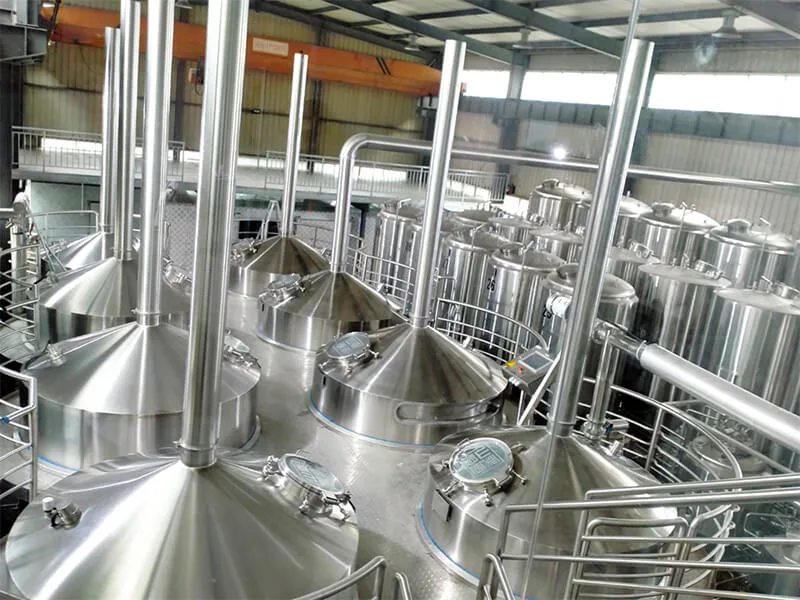
In today’s craft beer industry, breweries are rapidly evolving from small workshops into scalable production facilities and regional brands.
However, 90% of growth bottlenecks are not in the brewhouse or sales channels —
they are in fermentation system planning and expansion strategy.
With the same 2500L brewhouse, some breweries:
- Achieve ROI within 12 months
- Expand to 3000+ tons annual output
While others:
- Struggle with tank shortages
- Face contamination issues
- Cannot meet peak-season demand
This article, based on a real 2500L brewery project, will explain:
- How to design a scientific fermentation system
- Why a fermentation pipe gallery is essential
- 7 critical ways expansion strategy impacts brewery success
1. The Truth Most Investors Miss
Brewhouse Determines Efficiency — Fermentation Determines Capacity
Many new brewery investors overspend on:
- Brewhouse systems
- Interior design
- Branding
But underestimate fermentation planning.
This leads to serious operational problems:
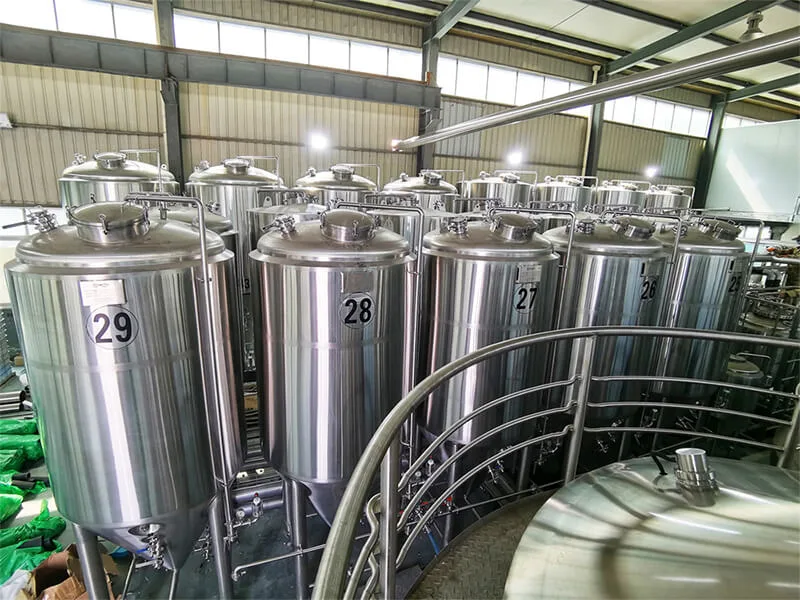
- Brewing stops due to lack of fermentation tanks
- Difficult scheduling with mixed tank sizes
- Cross-contamination from shared pipelines
- Costly reconstruction during expansion
Industry Insight
- Brewhouse = Production capability
- Fermentation = Capacity ceiling
- Pipeline system = Quality control baseline
- Expansion strategy = Business sustainability
2. Standard Fermentation System Design for a 2500L Brewery
Best Practice: Modular & Scalable Configuration
The most efficient and low-risk solution is:
Phased investment + flexible tank combination
Phase 1: Stable Production & Market Validation
Recommended configuration:
- 2.5T Fermentation Tanks (match 2500L batch)
- 5T Fermentation Tanks (double batch / conditioning / storage)
Tank setup:
- 2.5T × 6–8 units
- 5T × 2–4 units
Annual capacity:
👉 ~1200 tons
Geeignet für:
- New breweries entering the market
- Multi-style brewing and recipe testing
- Controlled inventory and cash flow
Phase 2: Scaling Up for Market Expansion
Upgrade strategy:
- Add 10T fermentation tanks
- No need to modify:
- Sudhaus
- Utilities
- Kontrollsystem
Vorteile:
- No production downtime
- Lower unit cost (labor, energy, cleaning)
Total capacity after expansion:
👉 ~3000 tons/year
Geeignet für:
- Regional distribution
- Retail & supermarket supply
- OEM / contract brewing
Tank Ratio Optimization
For a 2500L brewhouse:
- Total fermentation tanks: 10–16 units
- Fermenter : Brite tank ratio → 3:1 or 2:1
- Tank mix:
- 2.5T + 5T + 10T = Maximum flexibility
Must reserve space for:
- Brite beer tanks
- Yeast propagation tanks
- Buffer tanks
Performance Comparison
| Planning Type | Cost | Efficiency | Kapazität |
|---|---|---|---|
| Poor Planning | — | — | — |
| Scientific Planning | -20% | +40% | +150% |
3. Fermentation Pipe Gallery: The Hidden Core of Modern Breweries
Professionals don’t judge a brewery by tanks —
they judge it by the pipeline system.
A modern brewery must include a dedicated fermentation pipe gallery.
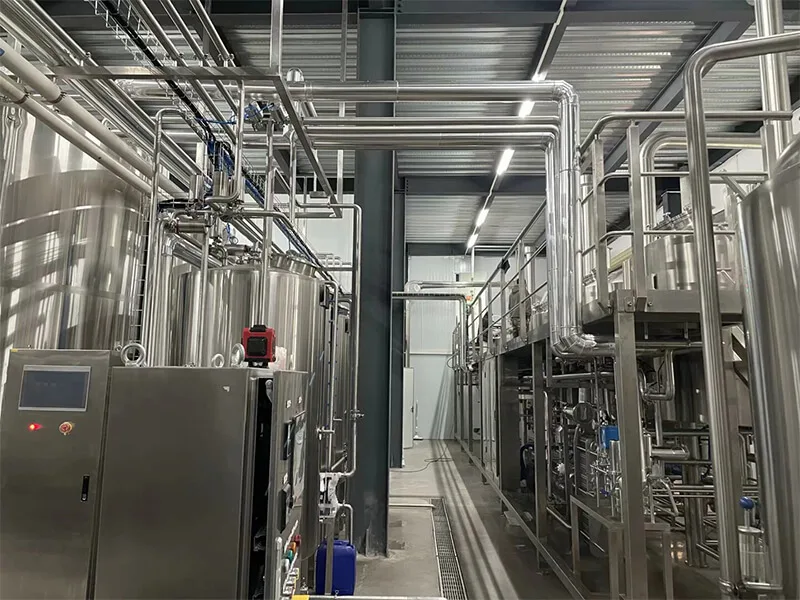
6 Dedicated Pipelines in Standard Design
- Wort transfer line
- Beer transfer line
- CIP cleaning line
- Compressed air line
- CO₂ pressure line
- Waste discharge line
1. Dedicated Lines = Zero Cross-Contamination
Common issues in small breweries:
- Shared hoses for wort, beer, and cleaning
- Incomplete cleaning → bacterial contamination
- Flavor crossover between beer styles
Pipe gallery ensures:
- Independent flow paths
- Dedicated valves
- Zero misuse risk
2. Oxygen Control = Profit Protection
Oxidation causes:
- Off-flavors (cardboard, stale notes)
- Short shelf life
- Product returns
Pipe gallery advantages:
- Closed transfer system
- CO₂ purging and pressure control
- Stable flow without oxygen intake
3. Efficiency Boost (Critical for Multi-Batch Brewing)
Without pipe gallery:
- Manual hose switching
- High labor cost
- Slow batch turnover
With pipe gallery:
- Automatisierte Ventilsteuerung
- CIP system integration
- Simultaneous operations
👉 Enables 4–5 brews per day
4. Compliance & Commercial Access
A standardized pipeline system is essential for:
- Food safety certification
- Factory audits
- Retail & export approval
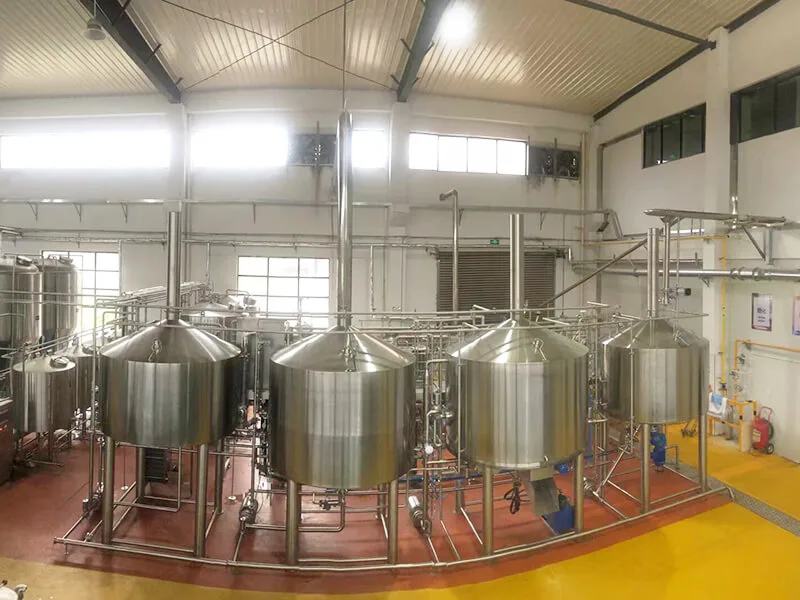
4. 7 Key Impacts of Expansion Strategy on Brewery Success
1. Determines Production Capacity
- Wrong: Over-invest early → idle tanks
- Right: Scale with demand
2. Affects ROI (6–12 Months Faster Payback)
- Poor planning: 24–36 months ROI
- Smart expansion: 12–18 months ROI
3. Controls Business Risk
- Fixed heavy investment = high risk
- Phased expansion = flexible growth
4. Ensures Product Consistency
- Standardized system improves batch consistency by 80%
5. Improves Efficiency
- Labor ↓ 25–40%
- Cleaning time ↓ 50%
- Turnover ↑ 30%
- Energy waste ↓ 15–20%
6. Expands Market Access
- Small setup → local pubs only
- Standardized brewery → retail, chain, export
7. Reduces Future Expansion Cost
- Early planning → add tanks only
- Poor planning → rebuild entire system
5. Conclusion: The Optimal Growth Model for a 2500L Brewery
The most effective strategy is:
- Plan fermentation for 1200 → 3000 tons expansion
- Use 2.5T + 5T + 10T tank combination
- Build a standard fermentation pipe gallery
- Invest in brewhouse upfront, expand fermentation gradually
- Integrate:
- KVP-Anlage
- Das Kühlsystem
- Automation system
What This Strategy Delivers
- Lower initial investment
- Faster ROI
- Stabile Bierqualität
- Easy expansion
- Reduced operational risk
- Higher long-term profit
About Us
This solution is developed based on real-world brewery projects.
We specialize in:
- Turnkey craft brewery solutions
- Fermentation system design
- Brewery expansion planning
- Automation upgrades
- 2500L brewery equipment list
- Layout design
- Budget estimation
- Customized solutions