For breweries, brewpubs, and craft beer startups, a 1000L brewing system is often the ideal balance between scalability and flexibility. It’s large enough for commercial production, yet compact enough for efficient space utilization and cost control.
This guide breaks down the core specifications and system structure of a 1000L brewery setup—helping international buyers quickly understand its capabilities, configuration, and real production performance.
1. Core Specifications of a 1000L Brewing System
A clear understanding of technical specifications is essential when evaluating brewery equipment. Below are the key parameters every buyer should know.
1.1 Hardware Specifications
• Total Volume:
1000L (with an effective brewing volume of approx. 850–900L)
• Material:
- Food-grade SUS304 stainless steel (standard)
- Optional SUS316 stainless steel (enhanced corrosion resistance)
✔ Advantages: hygienic, corrosion-resistant, easy to clean, no flavor contamination
• Dimensions (Typical):
- Customizable based on layout
- Example brewhouse footprint: approx. 2500 × 2000 × 2500 mm
• Weight:
- Typically 800–1500 kg depending on configuration
• Power Requirements:
- Brewhouse heating power: 18–36 kW (electric) or steam heating optional
- Cooling system power: 5–10 HP chiller
• Voltage:
- 380V / 50Hz / 3-phase (industrial standard, adaptable for global markets)
1.2 Brewing Performance Parameters
• Batch Output:
- 1000L per brew
- Equivalent to ~2000 bottles (500ml each)
• Brewing Cycle Time:
- Craft beer: 10–15 days (including fermentation)
- Faster cycles possible for certain styles or industrial processes
• Compatible Beer Styles:
- Lager / Pale Ale / IPA / Stout / Wheat Beer
✔ High flexibility for recipe development and seasonal brews
2. System Structure: Complete Brewery Configuration
A 1000L brewery is not just a single machine—it’s a modular brewing system composed of multiple integrated units.
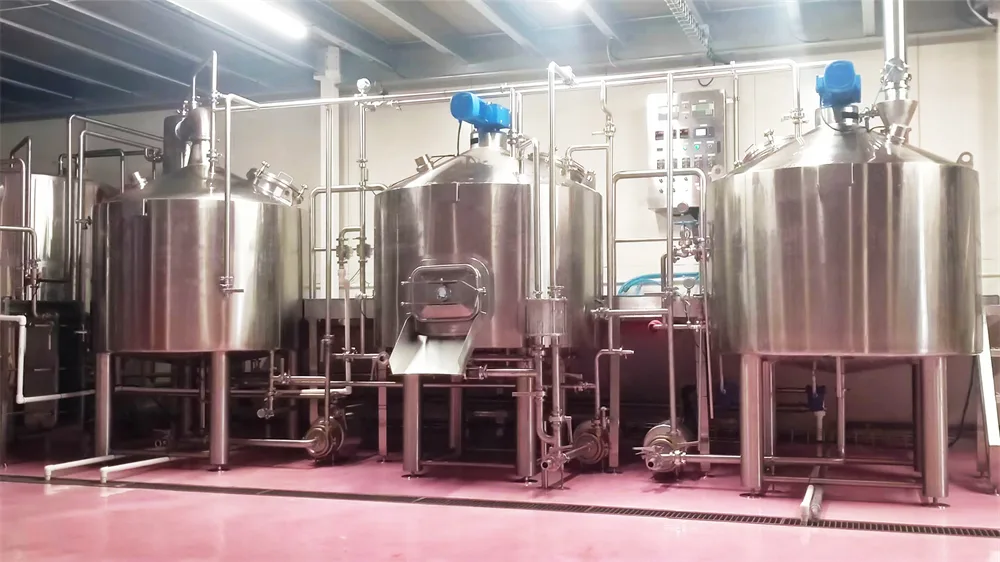
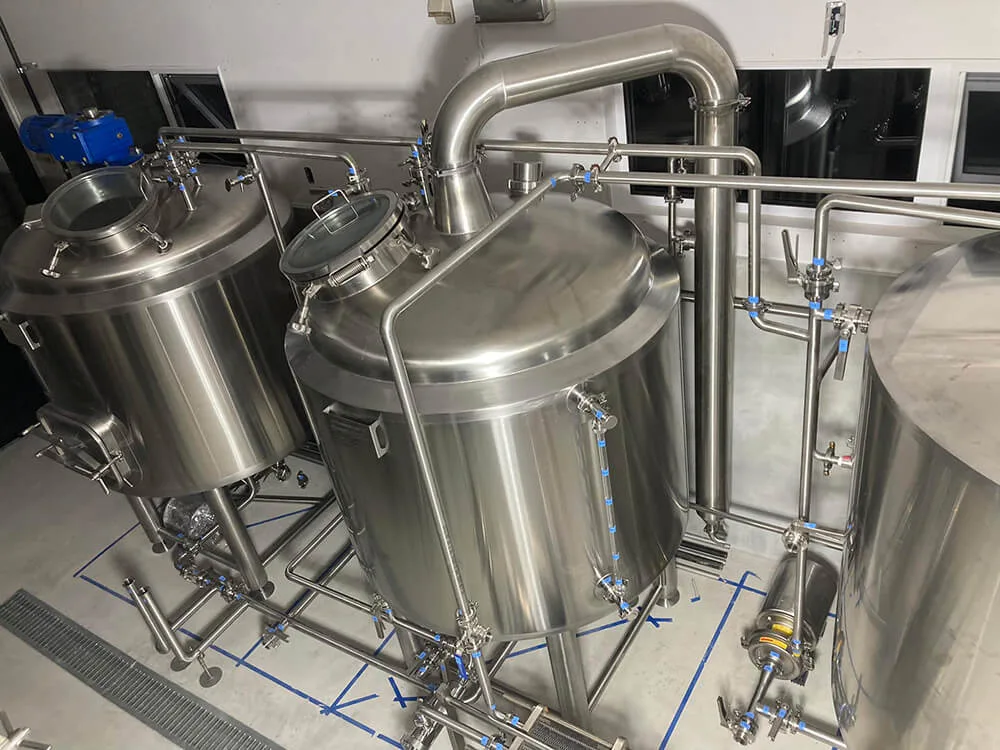
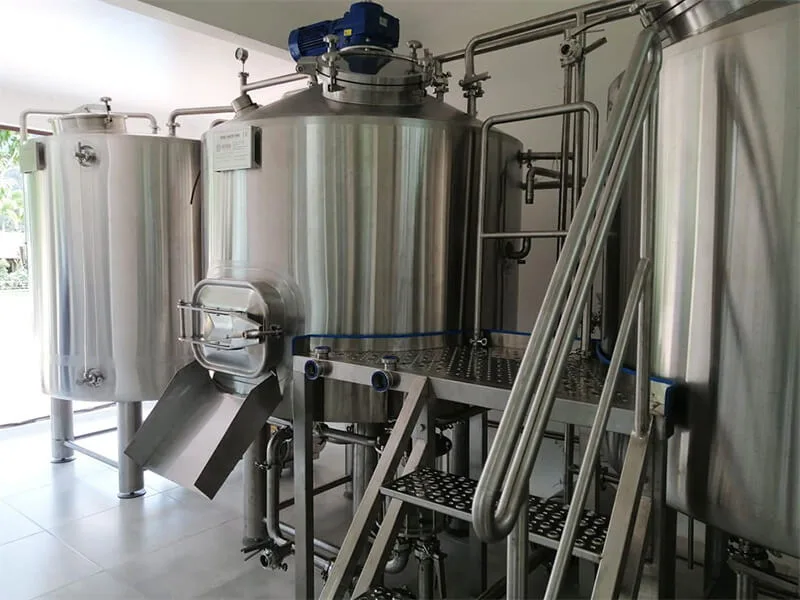
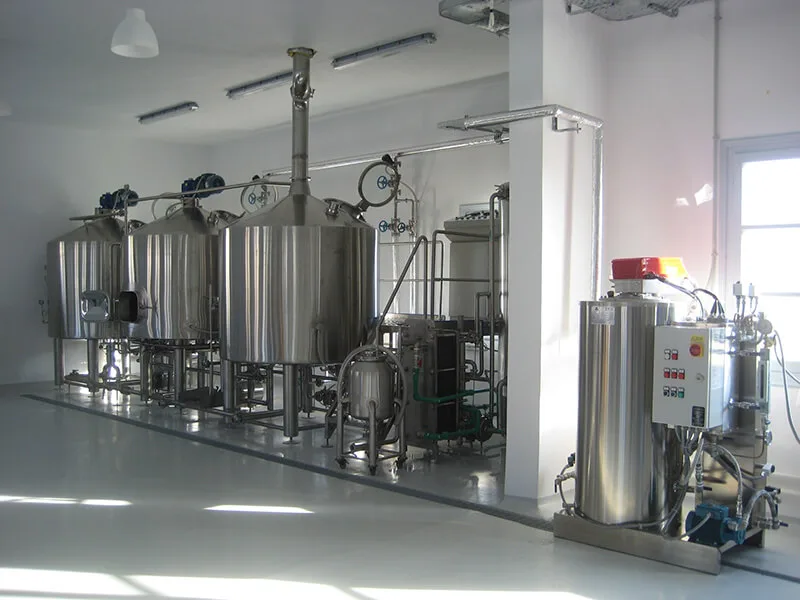
2.1 Brewhouse System (Mashing System)
Core Components:
- Mash Tun
- Lauter Tun
- Kettle / Whirlpool Tank
Functions:
- wandelt Stärke in vergärbaren Zucker um
- Separates wort from spent grains
- Boils wort and extracts hop bitterness & aroma
✔ Designed for efficiency, clarity, and consistent wort quality
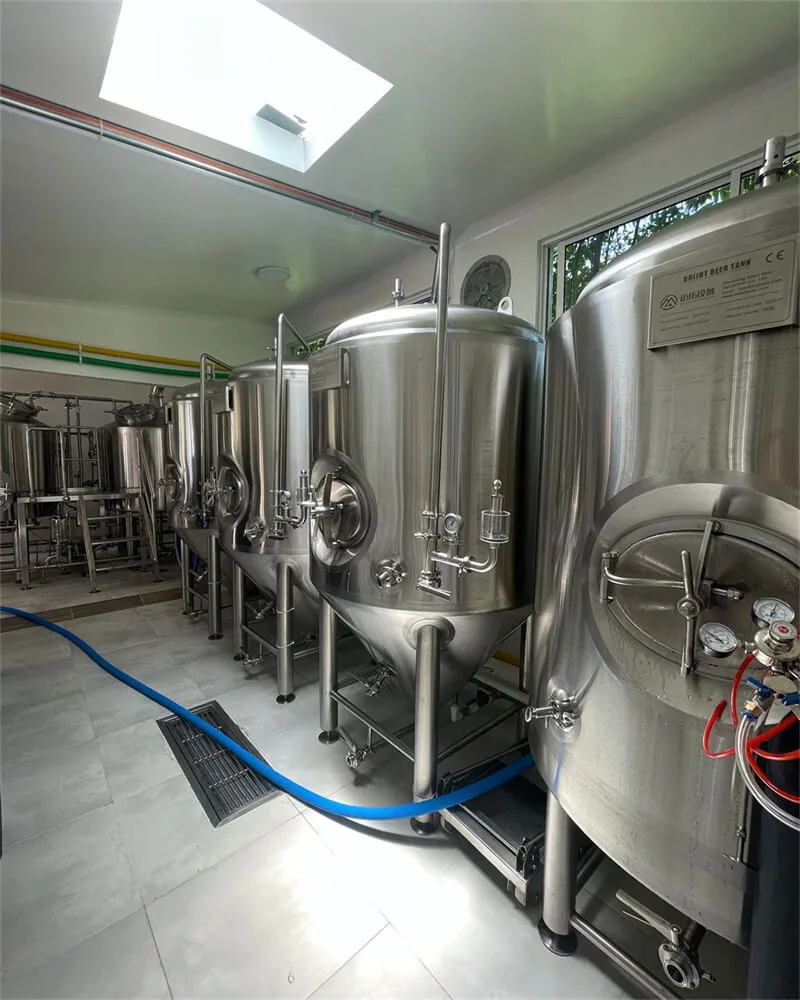
2.2 Fermentation System
Konfiguration:
- 1000L conical fermenters (quantity depends on capacity planning)
- Double-wall jacketed cooling system
Wesentliche Merkmale:
- Temperature control accuracy: ±1°C
- Glycol cooling for stable fermentation
- Insulated structure for energy efficiency
✔ Ensures yeast performance stability and consistent beer flavor
2.3 Filtration System
Optionen:
- Plate & frame filter
- Membrane filtration system
Functions:
- Removes yeast and suspended solids
- Improves clarity and shelf stability
✔ Optional for craft breweries (many choose unfiltered styles)
2.4 Filling System
Types:
- Semi-automatic filling
- Fully automatic bottling/canning lines
Applications:
- Bottles (330ml / 500ml)
- Kegs (20L / 30L / 50L)
- Cans
Filling Speed:
- Depends on automation level (300–1500 bottles/hour typical)
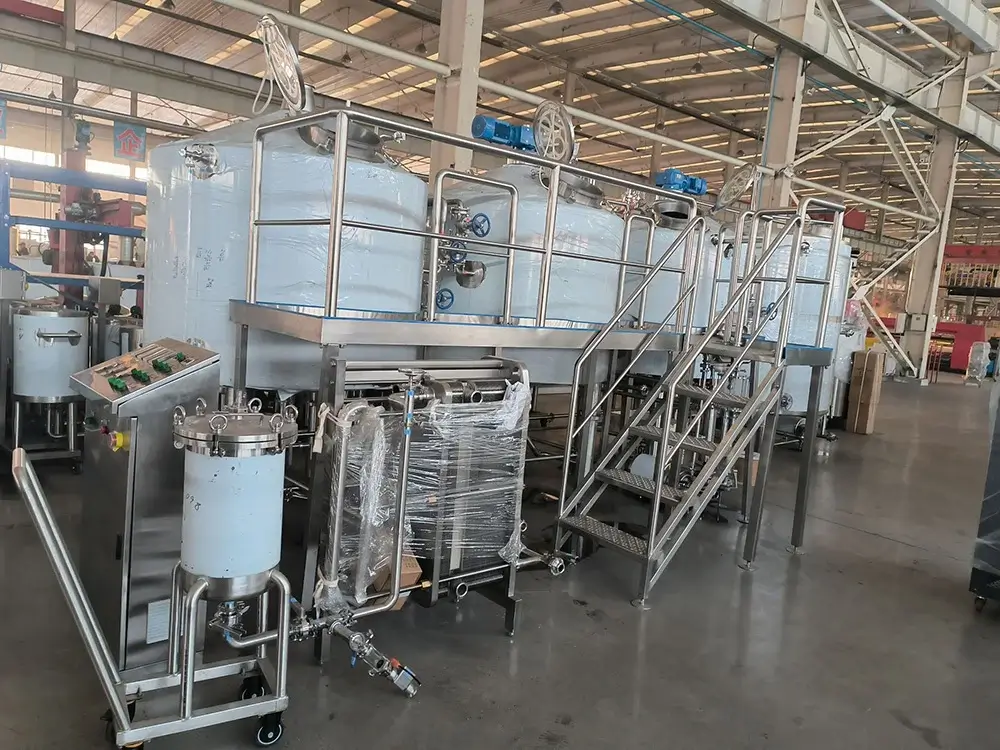
2.5 Auxiliary Systems
Includes:
- CIP Cleaning System → Automated tank cleaning, reduces labor
- Grain Milling System → Prepares malt for mashing
- Glycol Chiller Unit → Provides cooling for fermentation
- Control System (PLC) → Centralized operation & monitoring
✔ Improves efficiency, hygiene, and operational consistency
3. Why Choose a 1000L Brewery System?
A 1000L setup is widely considered the “sweet spot” for commercial craft brewing:
- Scalable production without excessive investment
- Flexible recipe experimentation
- Suitable for brewpubs, microbreweries, and regional brands
- Balanced footprint vs. output efficiency
4. Final Thoughts
A 1000L brewery system is more than just equipment—it’s a complete production solution. From brewhouse to fermentation and packaging, each component plays a critical role in ensuring beer quality, consistency, and operational efficiency.
For international buyers, focusing on clear specifications, modular structure, and reliable material standards is the key to making the right investment.
👉 Kontaktieren Sie uns heute for a custom brewhouse system design tailored to your production goals, budget, and future expansion plans.