“Great kombucha starts with great equipment.”
Whether you’re brewing at home or planning a commercial operation, choosing the right tools can make all the difference.
Introduction: Why Equipment Matters for Kombucha
Kombucha isn’t just tea, sugar, and a SCOBY (Symbiotic Culture of Bacteria and Yeast). It’s a delicate balance of living cultures, acidity, flavor, and safety. For home brewers, a jar and a cloth might work. But for commercial producers, consistency, hygiene, and scalability are key—and that’s where professional equipment comes in.
Let’s dive into what you need to know about kombucha brewing equipment, from small-scale setups to large commercial lines.
The Kombucha Brewing Process and Essential Equipment
1. Ingredient Preparation
- Tea Extraction System:
Stainless steel tea buckets or continuous extraction machines ensure even extraction without burning the tea. - Sugar Solution Tank:
Equipped with a stirrer and heater to dissolve sugar completely.
2. Primary Fermentation
This is where the magic happens—sugar turns into acids and gases, forming the base flavors of your kombucha.
Types of Fermentation Tanks:
| Type | Pros | Cons | Suitable For |
|---|---|---|---|
| Plastic Buckets | Affordable, lightweight | Hard to clean, prone to scratches | Homebrewers |
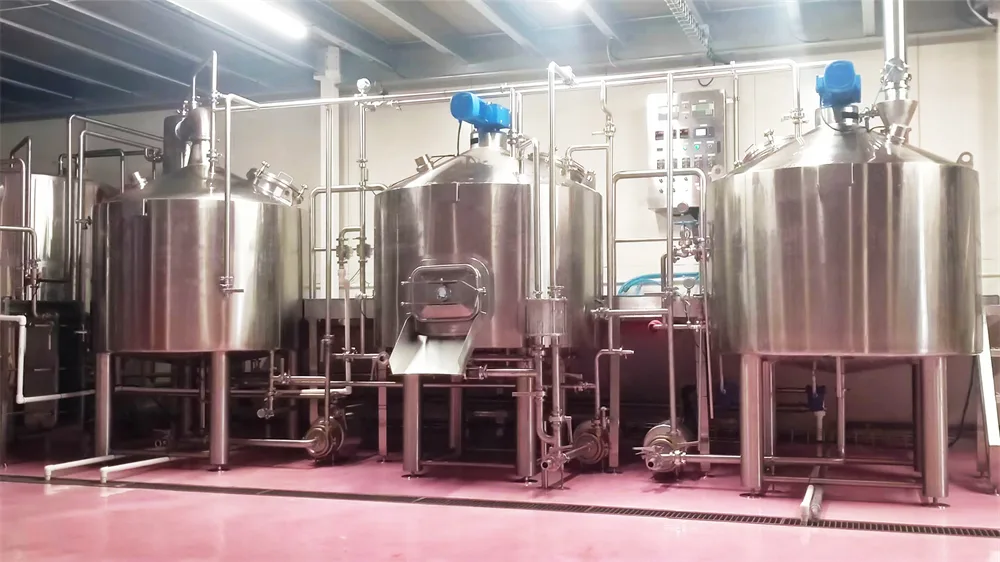
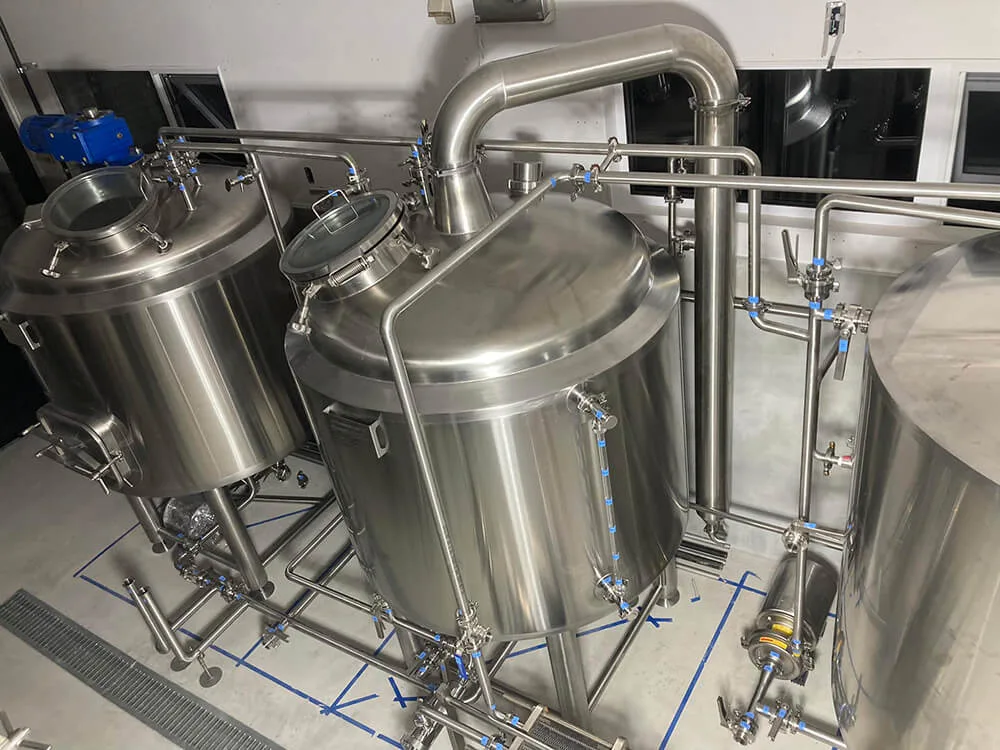
| Stainless Steel Conical Tanks | Hygienic, durable, easy to clean | Higher cost | Commercial Producers |
| Glass Jars | Transparent, non-reactive | Fragile, not scalable | Small Batch Testing |
Ключевые особенности:
- Temperature Control: Ideal range 24–30°C.
- Pressure Relief Valves: Prevent oxygen ingress and contamination.
- pH & Brix Monitoring: Optional but highly recommended for quality control.
3. Filtration and Clarification
After primary fermentation, you may want to remove yeast residues for a clearer product.
- Bag Filters / Plate Filters: Remove yeast particles.
- Cooling Systems: Rapid cooling stops fermentation and stabilizes the brew.
4. Secondary Fermentation (Flavoring & Carbonation)
This step adds flavors and carbonation through additional sugars or fruit juices.
- Pressurized Fermentation Tanks: Must withstand 2–3 bar pressure.
- Online Flavoring Systems: For larger operations, these systems inject precise amounts of juice or flavorings.
5. Bottling and Packaging
- Isobaric Filling Machines: Preserve carbonation levels.
- Pasteurization or Cold Chain Management: Decide whether you need pasteurization equipment based on your distribution model.
- Labeling, Sealing, Palletizing: Automate as needed to increase efficiency.
Key Considerations When Choosing Your Equipment
1. Production Scale
- Home / Market Stall Level (<100L/week): Glass jars + manual filtration.
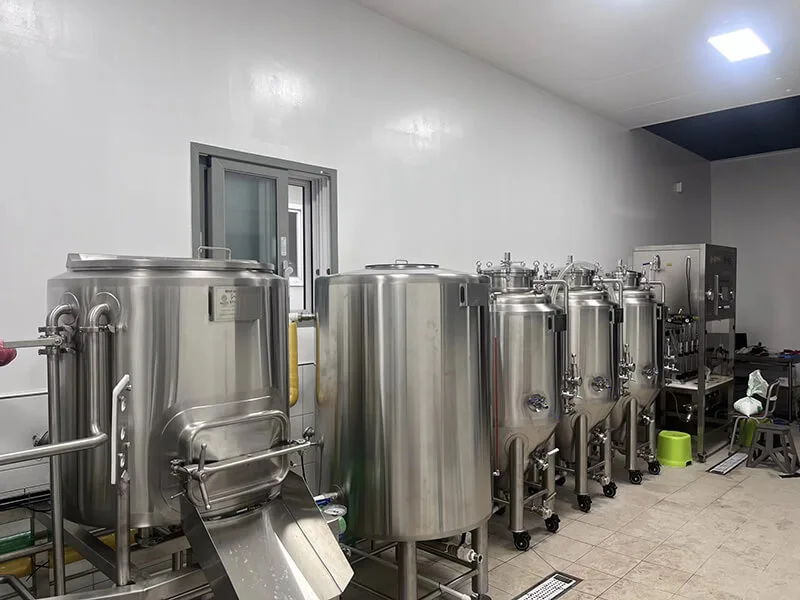
- Micro-Brewery (100–1000L/week): Stainless steel conical tanks + basic temperature control.
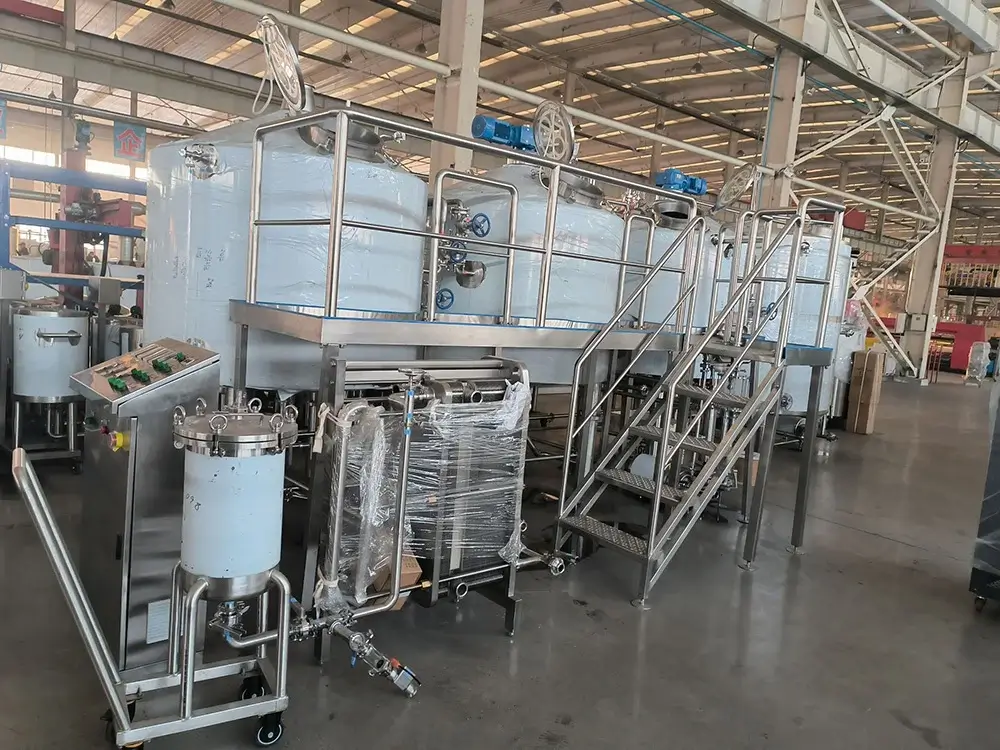
- Commercial Factory (1T+/day): Fully automated fermentation lines + CIP + online monitoring.
2. Food Safety and Compliance
- Materials: Use 304/316L stainless steel compliant with FDA/EU regulations.
- Surface Finish: Ra ≤ 0.8μm to prevent bacterial biofilm formation.
- CIP (Clean-in-Place) System: Essential for maintaining hygiene.
3. Process Flexibility
- Can the system handle multiple flavors simultaneously?
- Is it modular for future expansion?
4. Budget and ROI
- Consider leasing auxiliary equipment to reduce upfront costs.
- Calculate savings from reduced labor, lower waste rates, and increased production capacity.
Common Mistakes and How to Avoid Them
- ❌ Using Beer Fermentation Tanks: Kombucha’s high acidity requires higher corrosion resistance.
- ❌ Open Fermentation: High risk of contamination; always use sealed tanks with positive pressure.
- ❌ Ignoring Cooling Systems: Uncontrolled fermentation can lead to overly acidic or alcoholic batches (>0.5% ABV = classified as an alcoholic beverage).
Future Trends: Smart & Sustainable
- Energy Efficiency: Heat recovery systems to preheat new batches.
- Water-Saving CIP: Closed-loop cleaning systems reduce water usage by up to 40%.
- Modular Factories: Container-based kombucha production lines for pop-up brands.
Recommendations for Different Users
| User Type | Recommended Setup |
|---|---|
| Home Enthusiasts | 5L glass jars + cloth covers + heating mats |
| Startups | 200–500L stainless steel conical tanks + temp control + manual bottling |
| Established Brands | Full automation: extraction → fermentation → flavoring → bottling + lab-grade testing |
Conclusion: Quality Starts with Equipment
“Even the healthiest SCOBY can’t survive in a scratched tank.”
Professional equipment isn’t just an investment—it’s a commitment to product quality, consumer safety, and brand integrity.