In a commercial brewery, cleaning is not a background task—it is a core production process. A well-designed CIP (Clean-In-Place) system directly affects beer quality, production efficiency, operating costs, and overall business stability.
For brewery founders and owners, choosing the right CIP cleaning system is not about buying pumps and tanks—it’s about building a reliable, scalable cleaning solution that supports long-term growth.
This guide explains how commercial breweries should approach CIP system selection from a practical, business-focused perspective.
1. Why the CIP System Is a Critical Business Investment
Every contaminated batch costs more than lost beer—it costs time, labor, brand reputation, and customer trust.
A professional CIP system helps breweries:
- Maintain consistent hygiene standards
- Reduce infection risk across fermentation and packaging
- Shorten cleaning cycles
- Control water, chemical, and energy costs
From a founder’s perspective, a reliable CIP system is risk management, not just sanitation equipment.
2. Start with Brewery Size and Production Scale
The first step in choosing a CIP system is understanding your current and future production needs.
Key factors include:
- Brewhouse size and number of vessels
- Number and volume of fermentation tanks
- Cleaning frequency per day
- Planned expansion within 3–5 years
Founder insight:
Many breweries outgrow their CIP system faster than expected. Designing for future capacity from day one avoids costly retrofits and operational disruption.
3. Manual, Semi-Automatic, or Automatic CIP Systems
Manual CIP Systems
Лучшее для:
- Small commercial breweries
- Start-up projects with limited budgets
Ограничения:
- Трудоемкость
- Inconsistent cleaning results
- Higher risk of human error
Semi-Automatic CIP Systems
Лучшее для:
- Most commercial craft breweries
- Balanced cost and control
Преимущества:
- Programmable cleaning steps
- Reduced labor dependency
- Improved repeatability
Fully Automatic CIP Systems
Лучшее для:
- High-output or multi-shift breweries
- Breweries prioritizing consistency and efficiency
Преимущества:
- Precise chemical dosing
- Automated sequencing
- Minimal operator involvement
For founders, semi-automatic systems often provide the best return on investment during early growth stages.
.webp)
4. CIP Tank Configuration: How Many Tanks Do You Need?
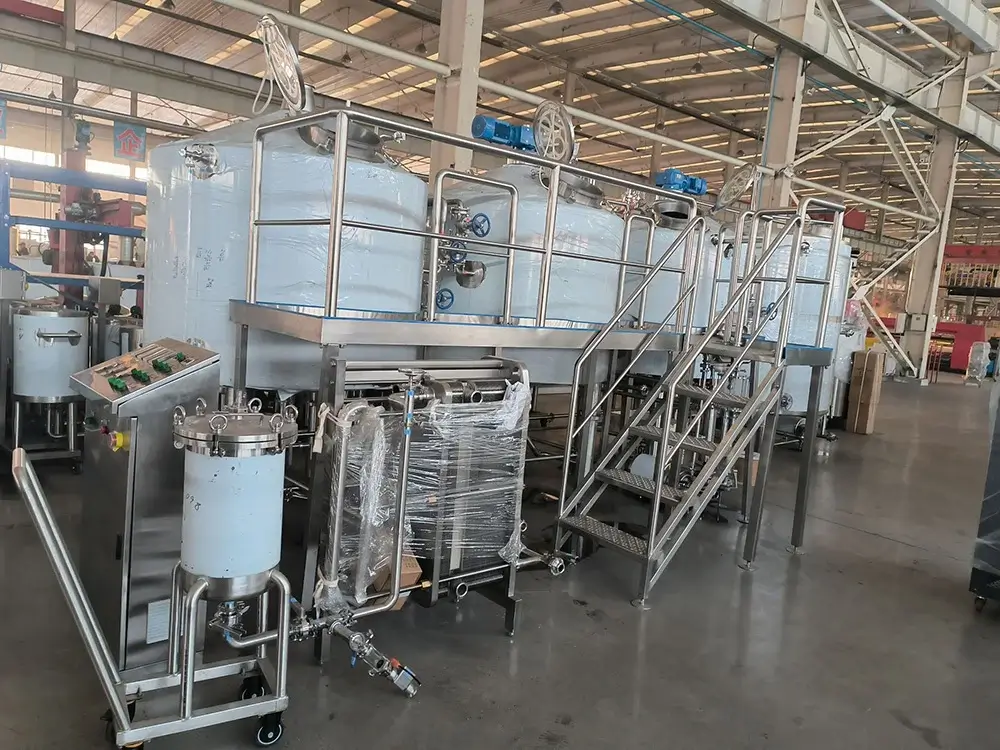
A typical commercial brewery CIP system includes:
- Hot water tank
- Caustic (alkali) tank
- Acid tank (optional but recommended)
- Recovery or rinse water tank (optional)
Common configurations:
- 2-tank CIP: Entry-level, limited flexibility
- 3-tank CIP: Industry standard for commercial breweries
- 4-tank CIP: Ideal for high-efficiency, water-saving operations
More tanks increase flexibility, reduce downtime, and improve chemical reuse—important factors for controlling long-term operating costs.
5. Heating Method and Temperature Control
Effective cleaning depends on temperature stability.
Ключевые соображения:
- Electric heating vs. steam heating
- Ability to maintain consistent cleaning temperatures
- Insulated tanks to reduce heat loss
A well-designed heating system shortens cleaning cycles and improves detergent effectiveness, directly reducing water and chemical usage.
6. Pump Capacity and Flow Rate Matter More Than You Think
CIP pumps must deliver:
- Sufficient flow rate for spray balls
- Stable pressure for consistent coverage
- Compatibility with the largest vessel in the brewery
Undersized pumps result in:
- Poor cleaning performance
- Longer CIP times
- Higher infection risk
For founders, proper pump sizing is about protecting beer quality, not just meeting technical specs.
7. Automation, Control, and Ease of Use
A CIP system should be easy to operate, even with a small team.
Founder-friendly features include:
- Simple control interfaces
- Preset cleaning programs
- Clear temperature and flow monitoring
- Safety interlocks to prevent misuse
User-friendly automation reduces training time and dependence on individual operators.
8. Integration with Your Brewery Layout
The CIP system must be designed around your actual brewery layout—not added as an afterthought.
Important layout considerations:
- Distance to brewhouse and cellar
- Hose routing and valve positioning
- Drainage and wastewater handling
- Expansion zones for future tanks
Good integration saves labor, reduces cleaning time, and improves daily workflow.
A Practical Note for Brewery Founders
Working with an experienced brewery equipment supplier can significantly reduce sanitation risks and long-term operating costs. A professionally engineered CIP cleaning solution—matched to your production scale and growth plan—allows founders to focus on brewing and brand building instead of cleaning problems.
Заключение
For commercial breweries, the CIP system is a foundational part of the production process. Choosing the right CIP solution improves hygiene, reduces operational risk, and supports efficient growth.
By selecting a CIP system designed for your brewery’s size, workflow, and future expansion, founders can build a cleaning process that is reliable, scalable, and cost-effective—ensuring consistent beer quality and long-term business success.