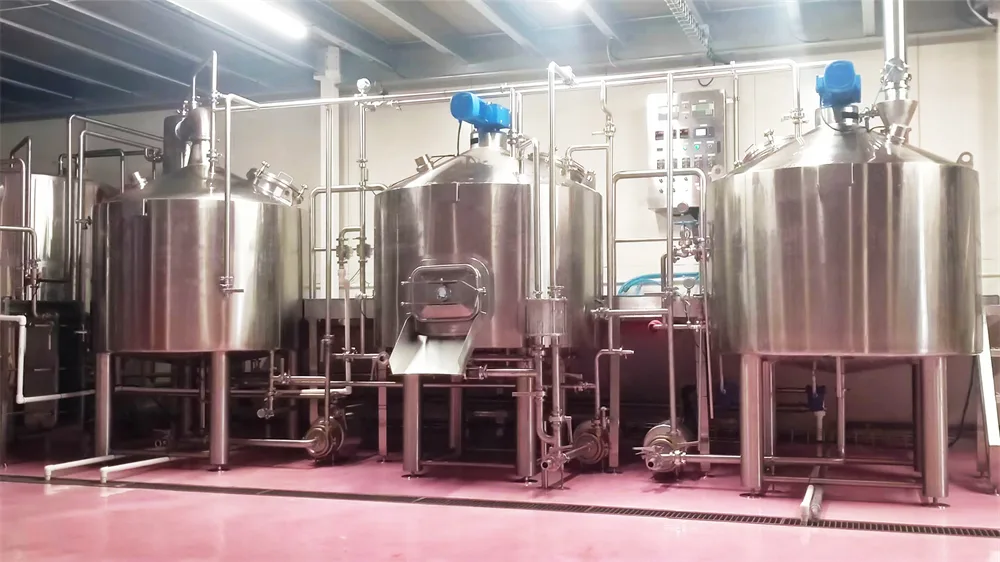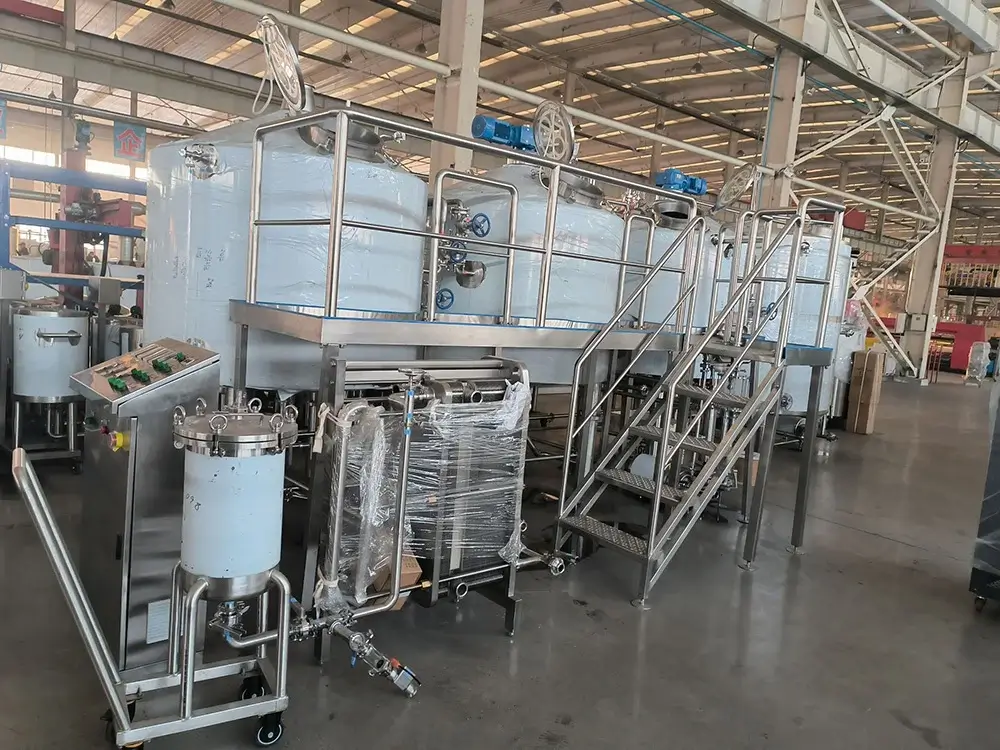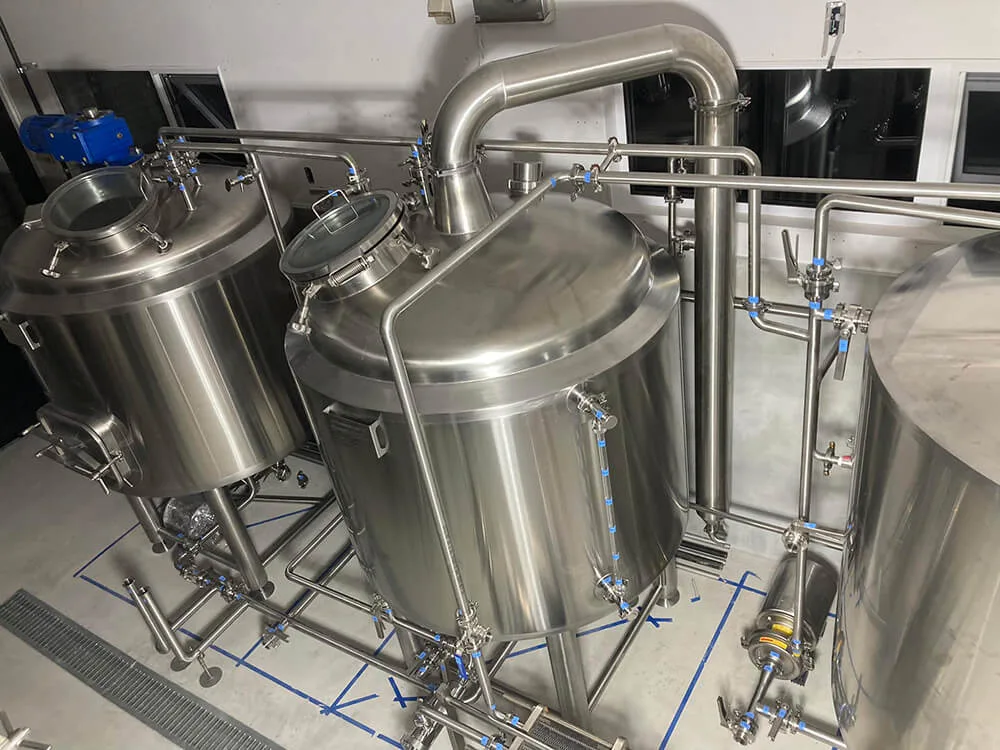
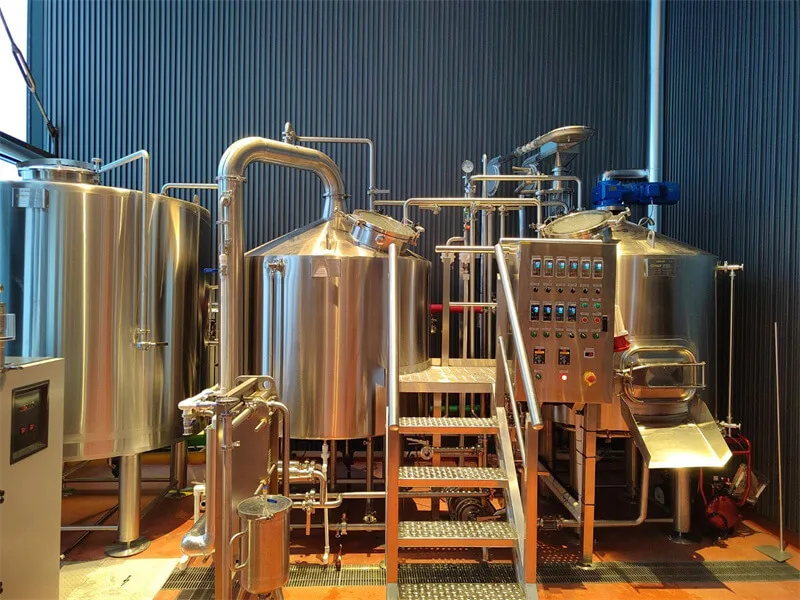
For start-up brewing practitioners, craft breweries, or featured bars, 500L brewing equipment has become the first choice for most entrepreneurs, thanks to its core characteristics of “small-batch, multi-variety, and high flexibility”. This article will help you clearly understand the value of 500L equipment, avoid selection mistakes, and accurately match your production needs from three dimensions: capacity positioning, applicable scenarios, and core advantages.
I. Capacity Positioning: Precisely Matching the Core Demand of “Small-Batch & Multi-Variety”
The capacity design of 500L brewing equipment is precisely tailored to the production rhythm of start-up practitioners. It not only ensures a certain production scale but also retains the flexibility of product category adjustment. The specific capacity parameters can be clearly referred to the following details:
The core capacity of the equipment is 500L per batch. Affected by differences in wine types (such as IPA, stout, fruit wine) and normal losses during fermentation, the actual output volume is about 350-450L. In terms of production efficiency, it can stably produce 1-2 batches per day. Combined with the time cost of equipment maintenance and raw material preparation, the monthly capacity can reach 10-25 tons, which is fully capable of meeting the production needs of “small-batch trial production and multi-variety rotation”.
Compared with equipment of other specifications, the positioning of 500L equipment is very clear: different from the capacity of 100-300L home-use equipment, its capacity can support commercial operation; compared with the “large-scale mass production” positioning of industrial-grade equipment above 1000L, it does not need to bear excessive capacity pressure, can flexibly adjust production plans, and avoid inventory backlog.
II. Applicable Scenarios: Detailed Scenario Analysis to Precisely Match Different Needs
One of the core advantages of 500L brewing equipment is its strong scenario adaptability. It can adjust equipment configuration according to different operating scenarios, covering the production of craft beer, fruit wine, rice wine and other categories. The following is a detailed analysis of the four core applicable scenarios:
1. Start-up Craft Beer Factories
For start-up factories just entering the craft beer industry, 500L equipment is the best entry choice. On the one hand, the monthly capacity of 10-25 tons can support the supply needs of offline stores, supermarkets, online e-commerce and other channels in the region; on the other hand, the equipment can flexibly switch beer categories. Whether it is IPA, wheat beer, lager, or featured fruit craft beer, it can quickly adjust the formula for production, which is suitable for creating core best-selling products through “multi-variety trial and error” and reducing start-up risks. At the same time, the equipment can be equipped with small-scale warehousing, filtration and filling equipment to form a complete small-scale production line, without the need for additional large investment in building industrial-grade production lines.
2. In-house Brewing for Bars (Brew on Site, Sell on Site)
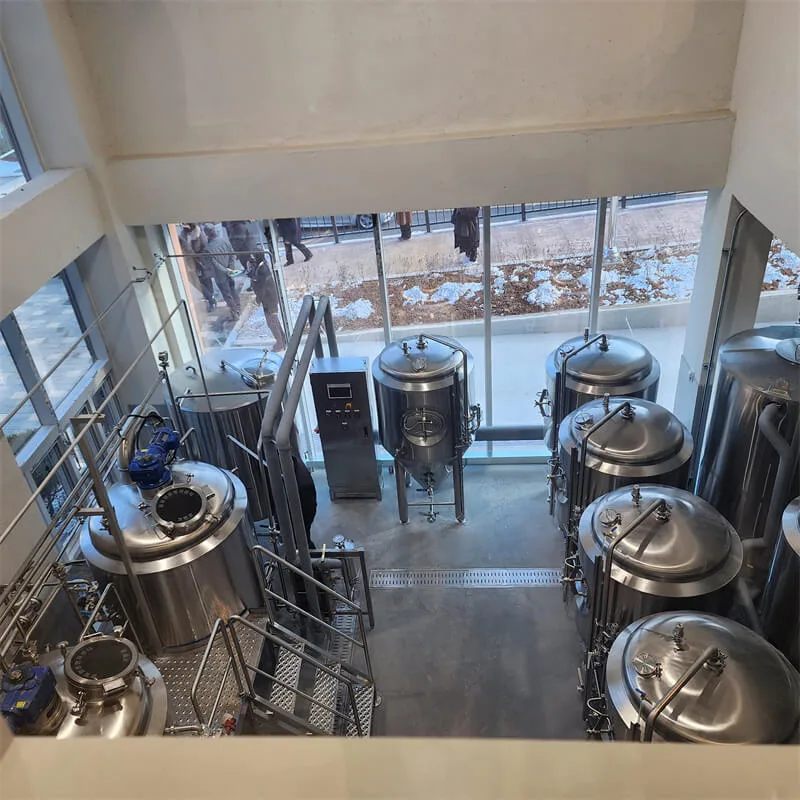
For craft beer bars and pubs that focus on “brew on site, sell on site”, the compact design of 500L equipment is highly adaptable. Bars have limited space, and the equipment can adopt an integrated design with a small footprint, which can be directly placed in the back kitchen or a dedicated brewing area. It can not only serve as a “visual brewing scene” of the store to attract customers but also realize “brew today, sell today”, ensuring the freshness of beer and improving customer experience. In addition, the demand of bars is mostly small-batch and multi-flavor. The single-batch output of 500L equipment can meet the sales demand of the store for 3-7 days, without inventory backlog. At the same time, it can quickly adjust the taste according to customer feedback to meet consumer needs.
3. Small-Scale Fruit Wine/Rice Wine Processing Factories
In addition to craft beer, 500L equipment can also be adapted to the production of low-alcohol wines such as fruit wine (e.g., apple wine, berry wine) and rice wine, meeting the needs of multi-category entrepreneurship. Small-scale fruit wine/rice wine processing factories mostly take “niche characteristics” as their core competitiveness and do not need large-scale mass production. The capacity of 500L equipment can precisely match the needs of small-batch production. At the same time, the equipment can adjust parameters such as fermentation temperature and stirring frequency according to the brewing process of fruit wine and rice wine to ensure stable product taste. Compared with special fruit wine brewing equipment, 500L equipment has stronger versatility and can realize “one equipment for multiple purposes”, reducing the equipment investment cost in the early stage of entrepreneurship.
4. Pilot-Scale Equipment for Laboratories (Formula R&D)
For university laboratories, food R&D institutions, or enterprises with independent formula R&D needs, 500L equipment can be used as pilot-scale equipment for testing and optimizing new formulas. Compared with small-scale experimental equipment (50-200L), the production scale of 500L equipment is closer to actual commercial production, which can accurately simulate the fermentation, filtration, maturation and other links in large-scale brewing, test the feasibility of the formula in actual production, and avoid taste deviation caused by the difference between small-scale test and mass production. At the same time, the equipment can flexibly adjust various parameters, suitable for comparative testing of multiple groups of formulas, improving R&D efficiency.
III. Core Advantages: Balancing Cost-Effectiveness and Flexibility, the Optimal Solution for Start-ups
The core value of 500L brewing equipment lies in balancing the three core needs of “capacity, cost, and flexibility”. Compared with small and large equipment, it has irreplaceable advantages, which can be divided into two dimensions:
1. Compared with Small-Scale Equipment (50-300L): Dual Optimization of Capacity and Cost
Small-scale equipment is only suitable for home brewing or small-scale trial production and cannot support commercial operation. However, 500L equipment can realize large-scale production, reducing the raw material, labor, and energy consumption costs per unit product. The unit loss rate of 500L equipment can be controlled at 10%-15%, and the labor cost does not need to increase proportionally. In the long-term operation, it can significantly reduce production costs and improve profit space.
2. Compared with Large-Scale Equipment (Above 1000L): Dual Advantages of Low Threshold and Flexibility
Industrial-grade large-scale equipment has a very high investment threshold. Not only is the equipment purchase cost 2-5 times that of 500L equipment, but it also needs to be equipped with a large-area factory building, a professional production team, and a complete warehousing and logistics system, which is suitable for large-scale mass production of mature enterprises. In contrast, 500L equipment has a low investment threshold, moderate purchase cost, and covers only 1/3-1/2 of the area of large-scale equipment. It does not require a professional large-scale production team, and 1-2 people can complete daily operations. More importantly, the equipment can flexibly adjust production categories and capacity, without worrying about overcapacity or single category, which is suitable for start-ups to quickly adjust business strategies according to market demand and reduce start-up risks.
IV. Technical Strength: Dual Guarantee of Intelligence and Process Precision
Modern 500L brewing equipment has long been separated from the extensive mode of traditional “cooking wine in a big pot” and turned to intelligence, standardization, and greenization. For commercial operators pursuing stable quality, the following technical details are the key to determining product competitiveness:
1. Intelligent Temperature Control and PLC Automation System
The soul of craft beer lies in fermentation, and the core of fermentation lies in temperature control.
Precise Temperature Control: High-quality equipment is usually equipped with a PLC intelligent central control system, and the temperature control error can be controlled within ±0.5℃. This means that whether it is lager that requires low-temperature and long-time fermentation, or IPA that needs high temperature to stimulate the aroma of hops, the equipment can accurately restore the process curve.
One-Click Operation: The processes such as mashing, boiling, and whirlpool precipitation can be set through the touch screen, and the system automatically executes heating, heat preservation, and cooling instructions. This not only reduces the excessive dependence on the brewer’s personal experience but also ensures the consistency of the flavor of different batches of wine, avoiding quality fluctuations that “depend on the weather”.
2. Modular Design and Process Compatibility
The “flexibility” of 500L equipment is reflected not only in capacity but also in the tolerance for diverse processes.
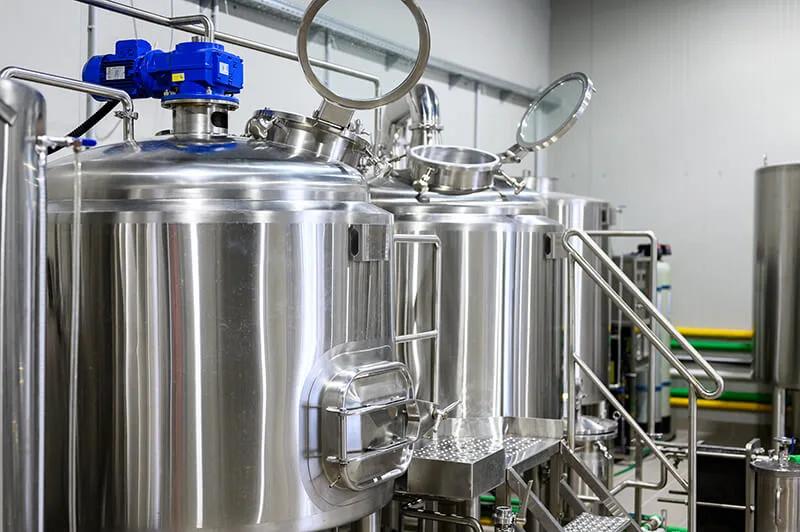
Full-Category Adaptation: The equipment usually supports the free combination of two-vessel, three-vessel, or even four-vessel mashing systems. Whether it is German wheat, English ale, or popular sour beer and barrel-aged beer, the equipment can be realized by adjusting parameters.
Reserved Special Functions: Many modern equipment reserve dry hopping ports, cold haze interfaces, and yeast propagation system interfaces. For example, in response to the “new Chinese-style” craft beer trend, the equipment can support the special addition process of auxiliary materials such as tea flavor and fruit flavor, providing a hardware foundation for product innovation.
3. Energy Conservation, Consumption Reduction and Green Manufacturing
Operating cost is a hidden cost that start-ups must consider.
Heat Recovery Technology (RHR): Advanced 500L equipment has a built-in heat recovery system, which can use the steam heat generated by boiling to preheat brewing water, reducing energy consumption by 20%-30% compared with traditional equipment.
Water Circulation Utilization: Equipped with CIP cleaning system and cooling water circulation device, it not only reduces water waste but also reduces labor intensity through automatic cleaning, complying with the environmental protection standards of modern green factories.
V. Pitfall Avoidance Guide: How to Choose Reliable 500L Equipment?
The equipment on the market is mixed. When selecting equipment, start-ups should focus on the following three “hard indicators” to avoid pitfalls:
1. Material and Craftsmanship Are the Bottom Line
Recognize the Grade: Food-grade SUS304 or 316L stainless steel must be used. Inferior steel not only has poor corrosion resistance but may also precipitate heavy metals, affecting beer flavor and even food safety.
Weld Treatment: Observe whether the tank welds have been mirror-polished (Ra≤0.6μm). Rough welds are easy to hide dirt and breed bacteria, leading to difficult tank cleaning and wine contamination.
2. Reject “Fake Automation”
Some low-cost equipment is labeled as “automatic”, but it is actually only a simple timing switch, which cannot realize complex temperature control curves. When selecting equipment, be sure to test whether the logic of the control system is rigorous and whether it has remote monitoring and data recording functions, which is crucial for later process review.
3. After-Sales Service Determines Life and Death
Equipment is a production tool, and one day of shutdown means one day of loss.
Response Speed: Choose manufacturers that promise 24-hour response and have the ability to supply accessories quickly.
Technical Training: High-quality suppliers not only sell equipment but also provide a “turnkey project”, including on-site installation and commissioning, brewing process training, and formula support, helping newbies quickly pass the running-in period.
Заключение
The core positioning of 500L brewing equipment is “a commercial entry-level equipment suitable for start-up brewing practitioners”. Its capacity can support small-batch commercial operation, and its scenarios can cover multiple fields such as craft breweries, bar in-house brewing, fruit wine processing, and formula R&D. At the same time, it balances cost-effectiveness and flexibility, perfectly solving the pain points of insufficient capacity of small-scale equipment and high threshold of large-scale equipment.
If you are in the start-up stage of the brewing industry and pursue a production model of “small-batch, multi-variety, and low threshold”, 500L equipment is undoubtedly the best choice; if you have clear scenario needs (such as bar in-house brewing, fruit wine production), you can adjust the equipment configuration according to the scenario characteristics to achieve precise matching of capacity and demand, laying a solid foundation for your entrepreneurial path.
Свяжитесь с нами сегодня for a custom brewing design tailored to your production goals, budget, and future expansion plans.