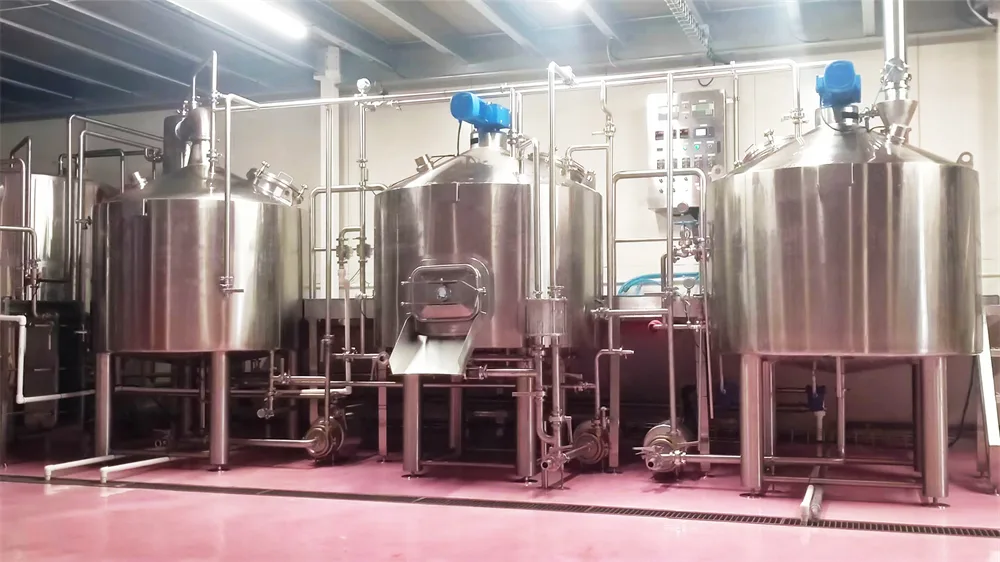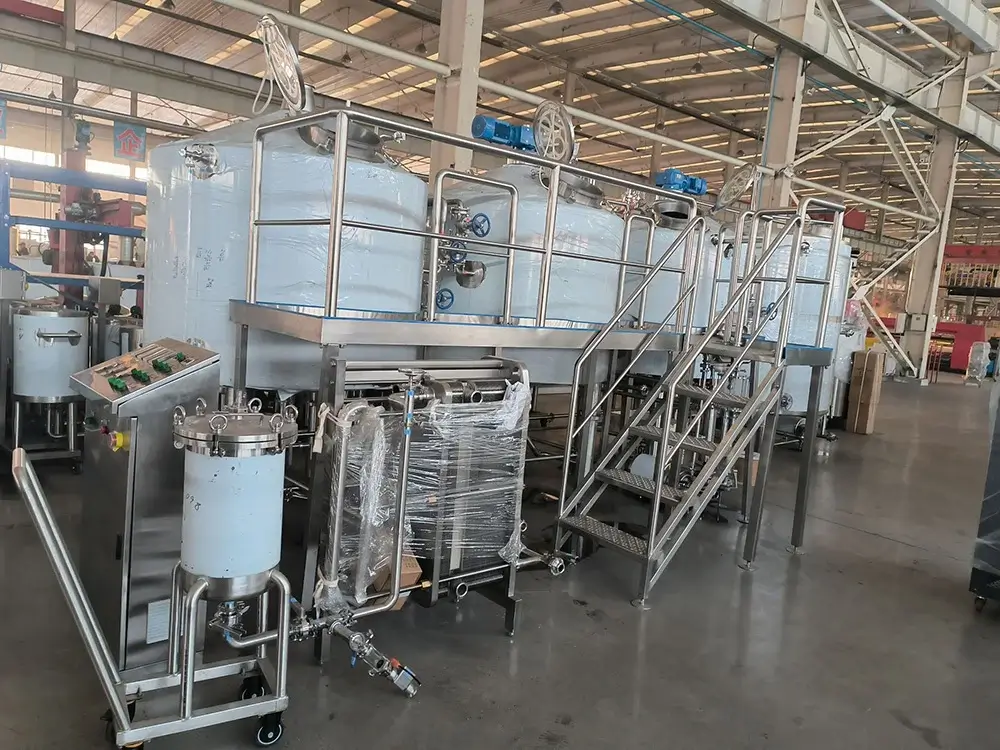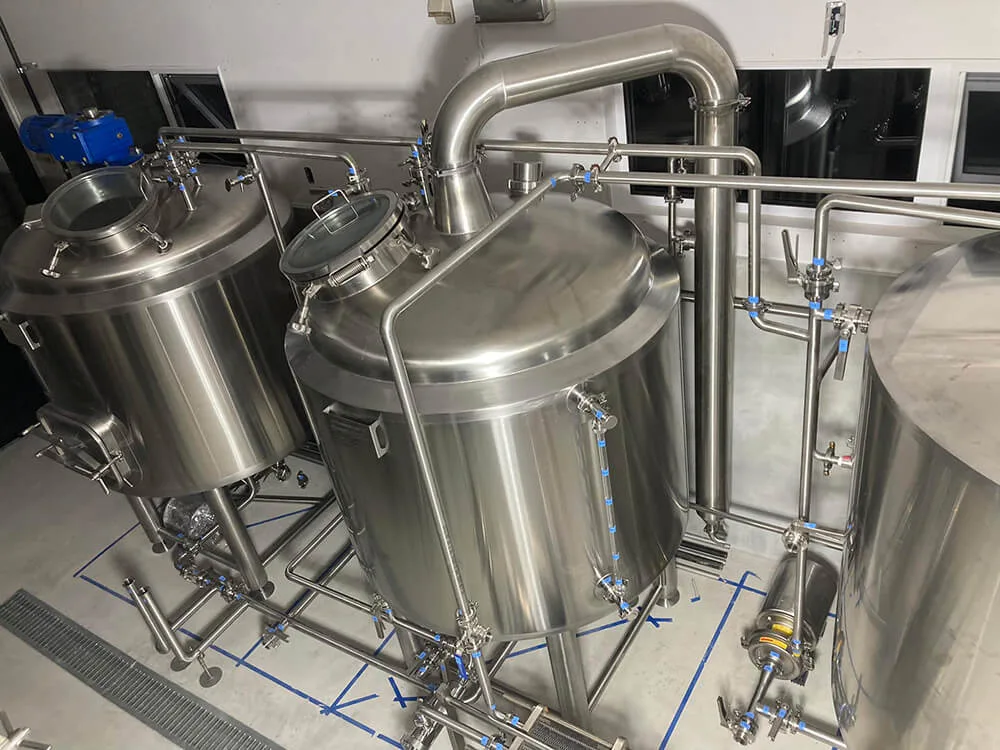
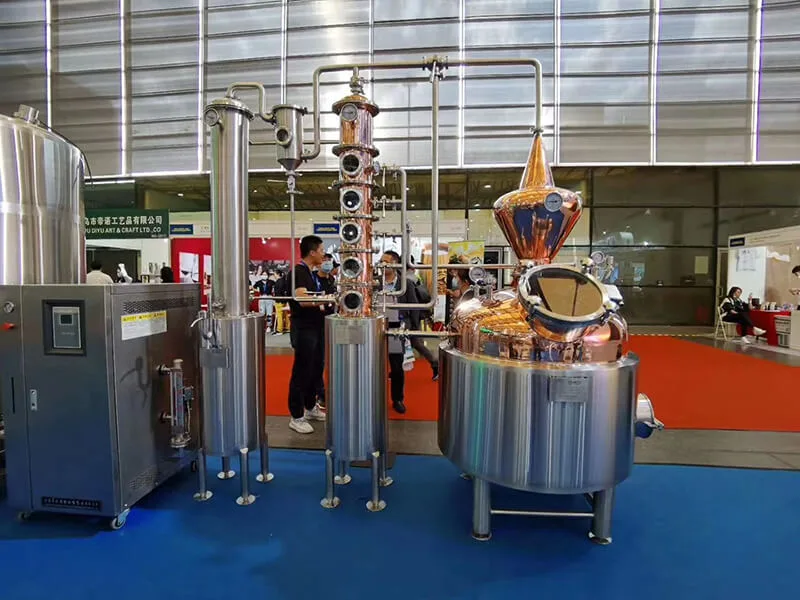
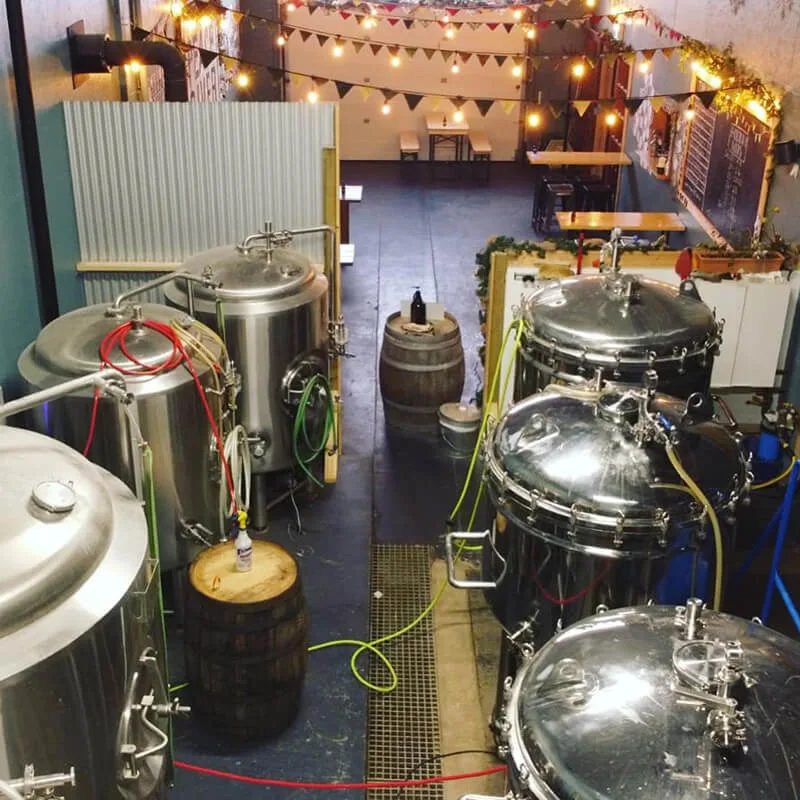
Our long-term customer from Canada continued their partnership with Meto by purchasing a new set of equipment to support their expansion into craft spirits. Their latest order included 5 BBL and 10 BBL sake-style fermentation tanks, along with a 600L tower-type distillation system consisting of a distillation kettle, column, condenser, and gin-blue (spirit collection/reflux component). This upgraded setup allows the brewery to move beyond beer production and begin creating gin and other handcrafted spirits.
Purpose & Rationale
- Diversification of product offerings: While the Brewing’s core business had been craft beer, the addition of a distillation system allowed them to enter the spirits market — producing small-batch, house-made spirits (e.g., gin). Given their reputation for handcrafted quality, spirits would complement their existing beer and kombucha offerings.
- Flexibility in production scale: The 5 BBL and 10 BBL fermentation tanks supported modest but flexible batch sizes, suitable for small-boutique production without requiring large-scale infrastructure. This suits a community-oriented brewery/distillery where demand is local/regional rather than mass-market.
- Quality control and artisanal process: A tower-type distillation setup (with kettle, column, condenser, gin blue) gives greater control over distillate purity and character — important for craft spirits, where flavor profile and consistency matter.
Implementation & Integration
The brewery integrated the equipment into their existing facility. The new distillation setup was installed along with their brewing operations, allowing them to run both beer brewing and spirit distillation under the same roof. The small footprint and moderate capacity (600 L) fitted well with their existing microbrewery/taproom layout.
The sake-tank-style fermenters (5 BBL and 10 BBL) were repurposed or used directly for fermenting mash or wash intended for distillation — providing flexibility for different recipes and batch sizes.
Outcomes & Benefits
- Expanded product range: With the distillation system, Peace River Brewing could now produce spirits (e.g., gin), in addition to beer — enabling them to offer more to their local customers and diversify revenue streams.
- Small-batch artisanal spirits: The modest batch size allowed them to maintain an artisanal, craft-style production, consistent with their brand identity as a local, community-oriented brewery/distillery.
- Efficient use of space and resources: Because of the moderate scale, the new equipment did not require large-scale infrastructure changes, which minimized capital expenditure and allowed quick ramp-up of spirits production.
- Brand differentiation and market positioning: By offering handcrafted spirits (in addition to craft beer), the brewery strengthened their appeal to customers seeking unique, locally-made beverages rather than mass-market products.
Why This Collaboration Matters
This case demonstrates how a small craft brewery can successfully expand into craft spirits production by adopting appropriately scaled equipment — without overinvesting in oversized industrial infrastructure. By supplying 5 BBL / 10 BBL fermentation tanks and a 600 L tower-type distillation system, Meto enabled the brewery to diversify, experiment, and grow, while preserving the artisanal character central to their identity.
For potential clients looking to follow a similar path, this case shows that even modest investments in the right equipment can open new product lines, improve flexibility, and broaden market opportunities, especially for small- to mid-sized craft producers.
How a 500L Still Helps a Micro Distillery Increase Production Capacity
For growing craft producers, upgrading to a 500L still is one of the most effective ways to expand output without losing product quality. As micro distilleries transition from experimental batches to commercial-scale production, choosing the right distillation equipment becomes critical for efficiency, consistency, and long-term growth.
This guide explains how a 500L distillation system enhances capacity and supports a micro distillery’s scaling strategy.
1. A Practical Capacity Upgrade for Micro Distilleries
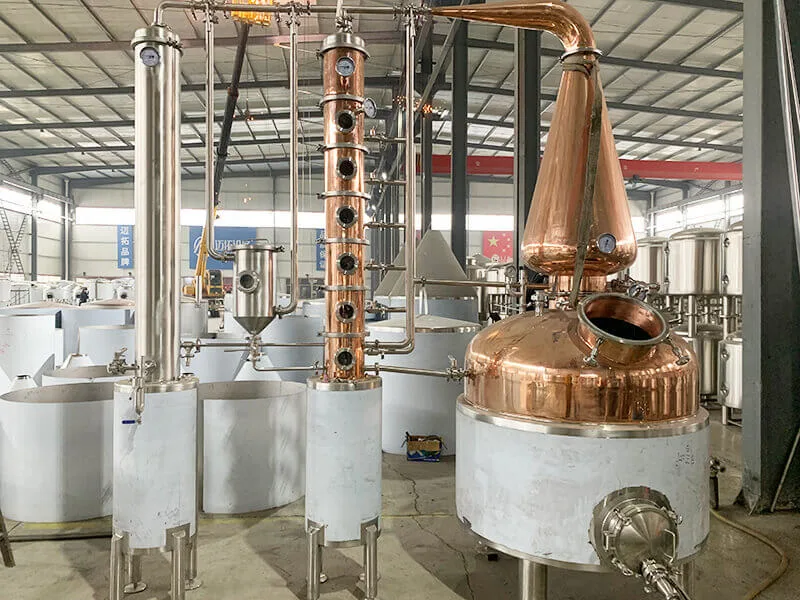
A 500L still offers the ideal middle ground between small 50–200L hobby systems and large industrial units. It supports commercial-level output while maintaining flexibility for small-batch spirits.
Typical Output of a 500L Still
- Whisky / Rum / Brandy: 60–110 L of hearts per batch
- Vodka (with multi-plate reflux column): 30–60 L of high-purity spirit
- Gin (one-shot method): 70–120 L per run
With one to two runs per day, a micro distillery can achieve 20,000–40,000+ liters per year, depending on spirit type and production schedule.
2. Improved Efficiency With Professional Distillation Equipment
A 500L unit often includes commercial-grade components that significantly boost distillation efficiency.
Efficiency Features Common in 500L Systems
- Steam or electric heating with stable temperature control
- Copper pot + reflux column design for improved flavor and sulfur removal
- Multiple bubble plates to increase purity and distillation speed
- Oversized condensers for faster cooling and shorter cycle times
- Optional automation (PLC) for consistent cuts and repeatable results
Compared with small-scale stills, a 500L still can improve total production efficiency by 30–50%.
3. Optimal Fermentation-to-Distillation Workflow
One common bottleneck in a micro distillery is that fermentation tanks outpace the still’s processing speed.
A 500L system brings workflow balance:
- Best paired with 3 × 500–800L fermenters
- Supports daily or alternate-day distillation runs
- Reduces fermentation backlog and storage pressure
- Increases overall production turnover
This alignment ensures smooth scheduling and better operational efficiency.
4. Enhanced Consistency and Spirit Quality
Scaling production while maintaining flavor consistency is a major challenge. A 500L still provides stability due to:
- Larger volume = reduced batch variability
- More accurate temperature control
- More stable vapor flow for precise cuts
- Better control over reflux and purity
For micro distilleries building a long-term brand identity, this equipment size supports consistent flavor profiles run after run.
5. Greater Flexibility for Multiple Spirit Types
One reason many micro distilleries upgrade to a 500L system is its ability to support diversified production.
A 500L still can be optimized for:
- Whisky / rum via pot distillation
- Vodka using a multi-plate column
- Gin with a botanical basket or gin column
- Neutral spirits for liqueur production
This flexibility allows producers to create multiple product lines using the same core piece of distillation equipment.
6. Reduced Production Costs as Volume Increases
A 500L system reduces overall cost per liter by improving:
- Энергоэффективность
- Labor productivity
- Cooling and heating cycles
- CIP cleaning intervals
- Spirit losses during cuts and transfer
Many micro distilleries see operating cost reductions of 15–30% after upgrading.
7. Scalable for Future Expansion
A modular 500L still can grow with the distillery as demand increases. Common upgrades include:
- Adding more plates for high-purity vodka
- Adding a gin basket for botanical spirits
- Increasing condenser size
- Integrating automated control systems
- Running multiple stills on the same steam source
This ensures the equipment remains valuable even as the business expands.
Заключение
For any micro distillery planning to scale up, a 500L still offers the perfect balance of capacity, flexibility, and professional performance. It provides:
- Higher annual output
- Better distillation efficiency
- Improved product consistency
- Lower operational costs
- Room for future expansion
As a key piece of distillation equipment, a well-designed 500L system supports sustainable growth and helps distillers confidently move from small-batch operations to commercial-scale production.
Если у вас есть вопросы по пивоварению, пожалуйста, не стесняйтесь связаться с нами Оборудование Meto.