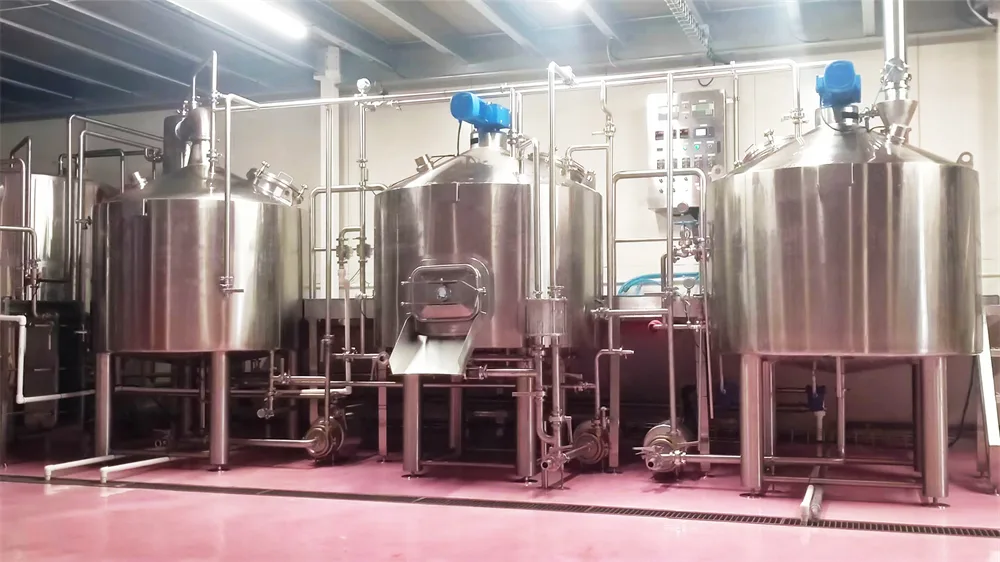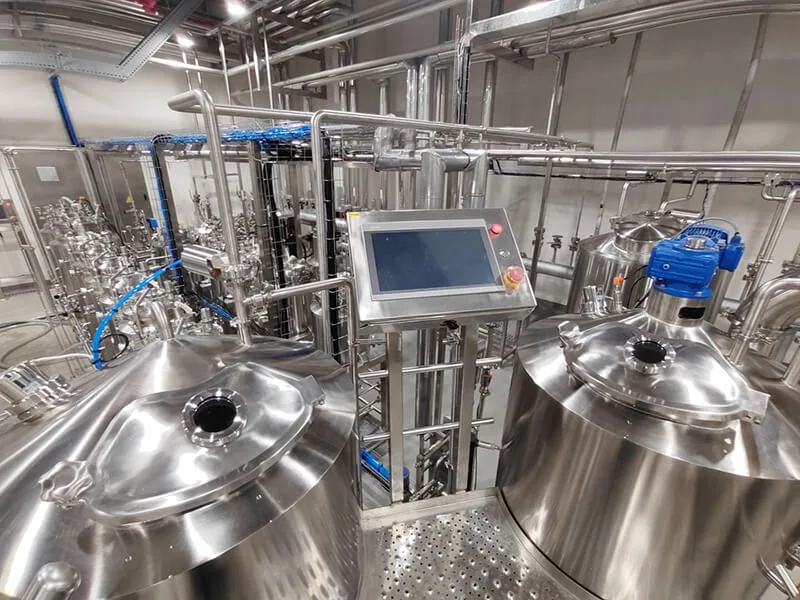
In the world of brewing equipment, the 200L brewing system stands out as the “Golden Ratio.” It is the perfect bridge between hobbyist setups and industrial production. Whether you are equipping a boutique brewpub, a startup microbrewery, or a high-end home studio, this capacity offers the ideal balance of flexibility and output.
Today, we break down everything you need to know about the 200L Brewing System—from core components and selection tips to ROI analysis—helping you make the smartest investment for your brewing journey.
I. Core Components: Anatomy of a 200L Brewing System
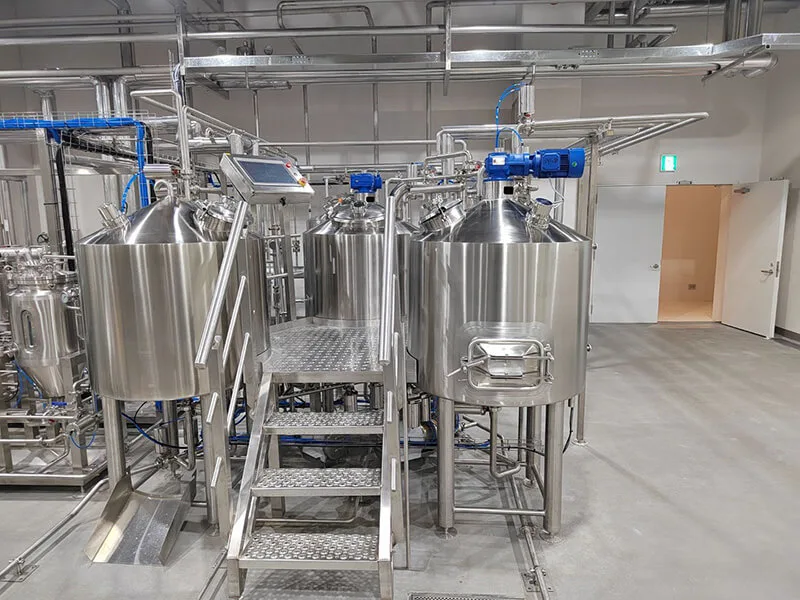
A complete 200L craft beer equipment setup is a symphony of precision engineering. It consists of several integrated systems working in harmony.
1. The Brewhouse System: The Creative Kitchen
The brewhouse is where the magic begins, converting malt into wort. For a 200L setup, we typically recommend:
- 2-Vessel System (Mash/Lauter Tun + Kettle/Whirlpool): The industry standard for efficiency and space-saving. It allows for distinct mashing and boiling phases, perfect for commercial brewpubs.
- 3-Vessel System: Adds a separate filtration tun for higher efficiency and shorter brewing cycles, ideal for high-demand scenarios.
- Function: Precisely controls temperature to activate enzymes, breaking down starches into fermentable sugars—the foundation of beer flavor.
2. Fermentation Tanks: The Soul Incubator
The 200L Unitank (Uni-tank) or Conical Fermenter is the heart of your cellar.
- Material: Must be Food-Grade SUS304 Stainless Steel to ensure corrosion resistance and flavor purity.
- Key Features: Equipped with a dimple jacket cooling system and insulation (polyurethane foam) to maintain precise temperatures (e.g., 18-22°C for Ales, 10-15°C for Lagers).
- Design: Conical bottoms facilitate easy yeast harvesting and sediment removal.
3. Filtration & Heat Exchange: Quality Control
- Plate Heat Exchanger: Rapidly cools the boiled wort to fermentation temperatures, minimizing the risk of oxidation and bacterial contamination.
- Filtration: Ensures the separation of clear wort from grain husks (spent grain), directly impacting extraction efficiency.
4. CIP Cleaning System: The Hygiene Guardian
Essential for commercial compliance. The CIP (Cleaning In Place) system allows for automated cleaning and sterilization of tanks and pipelines without disassembly. This saves labor and ensures consistent sanitary standards.
5. Control System: The Digital Brain
- Semi-Automatic (PLC): The sweet spot for 200L systems. It automates temperature curves and timing while allowing manual override for recipe tweaking.
- Fully Automatic: One-touch operation for standardized mass production.
6. Auxiliary Equipment
- Malt Mill: A 2-roller or 4-roller crusher to prepare the grain.
- Glycol Chiller: The cooling source for fermentation and wort cooling.
II. Selection Guide: 3 Dimensions to Avoid Pitfalls
Choosing a microbrewery equipment supplier requires more than just looking at capacity.
Dimension 1: Automation vs. Budget
| Type | Best For | Pros | Cons |
|---|---|---|---|
| Manual | Homebrewers / Hobbyists | Low cost, hands-on control | Labor-intensive, inconsistent |
| Semi-Auto | Brewpubs / Startups | Best ROI, easy to learn | Requires some manual steps |
| Fully Auto | Production Brewery | Standardized quality, saves labor | High initial investment |
Dimension 2: Material & Craftsmanship
- The Golden Rule: Never compromise on SUS304 Stainless Steel. Avoid 201 grade steel, which rusts and ruins beer flavor.
- Welding: Look for TIG welding with internal polishing (Ra ≤ 0.4μm) to prevent bacterial harboring in crevices.
- Insulation: High-density polyurethane cladding is essential for energy efficiency.
Dimension 3: Turnkey Solutions & Service
Don’t just buy a machine; buy a solution. Ensure your supplier offers:
- Layout Design: Custom fitting for your specific floor space.
- Installation & Training: On-site or remote guidance.
- Warranty: Look for long-term support on core parts (e.g., 10+ years on tanks).
III. The Brewing Process: From Grain to Glass
Here is how the 200L system performs in a standard cycle:
- Milling & Mashing: Crushed malt is mixed with hot water in the Mash Tun. Enzymes convert starches to sugars at controlled temperatures (60-70°C).
- Lautering & Boiling: The clear wort is separated from the grain bed and boiled in the Kettle. Hops are added for bitterness and aroma.
- Whirlpool & Cooling: Solids are separated, and the wort is pumped through the Heat Exchanger to drop the temperature to pitching levels (approx. 20°C).
- Fermentation: Yeast is added (pitched) in the Fermentation Tank. Over 7-14 days, sugars are converted into alcohol and CO₂.
- Maturation & Serving: The beer is cold-crashed, carbonated, and ready for kegging or bottling.
IV. Investment & ROI: Why 200L is the Smart Choice
Investing in a 200L system is not just a passion project; it is a viable business model.
- High Margins: Self-brewed beer typically boasts a gross margin of 70-80%.
- Flexible Production: A 200L system can produce roughly 400L-800L per day (depending on batches), perfectly matching the daily consumption of a medium-sized bar or restaurant.
- Payback Period: With proper marketing, the equipment cost can often be recouped within 6-12 months.
V. Maintenance: Extending Equipment Lifespan
To ensure your craft beer machinery lasts for decades:
- Strict Cleaning: Never skip the CIP cycle. Residual organic matter is the enemy of stainless steel.
- Regular Inspection: Check seals, gaskets, and pump lubrication quarterly.
- Temperature Control: Ensure your glycol chiller is maintained to prevent compressor burnout.
VI. Ideal Scenarios: Where Does the 200L System Shine?
- The Brewpub: Create a “Farm-to-Table” experience but for beer. Freshly brewed beer is your strongest marketing tool.
- The Startup Brewery: Low risk, high flexibility. Test different recipes (IPA, Stout, Lager) without the overhead of a massive factory.
- High-End Dining/Hotels: Adds a premium “Craft” label to your menu, increasing average ticket size and brand prestige.
Заключение
The 200L Craft Beer Brewing System is the ultimate versatile warrior. It offers the professional quality of industrial machinery with the agility of a boutique setup. Whether you are chasing a brewing dream or a business opportunity, this system provides the most efficient, economical, and high-quality path to success.
Ready to start your brewing journey? Свяжитесь с нами сегодня for a custom quote and layout design!