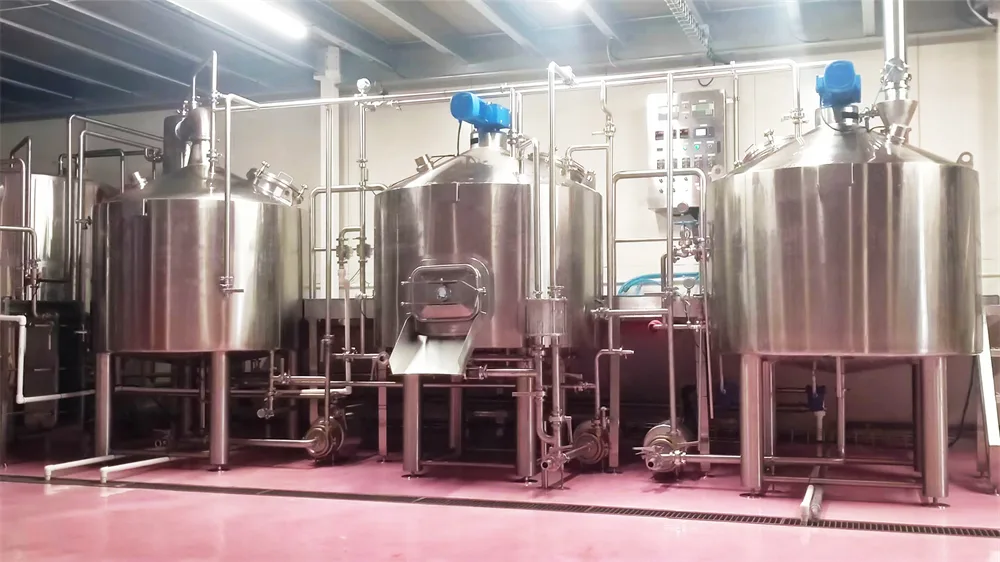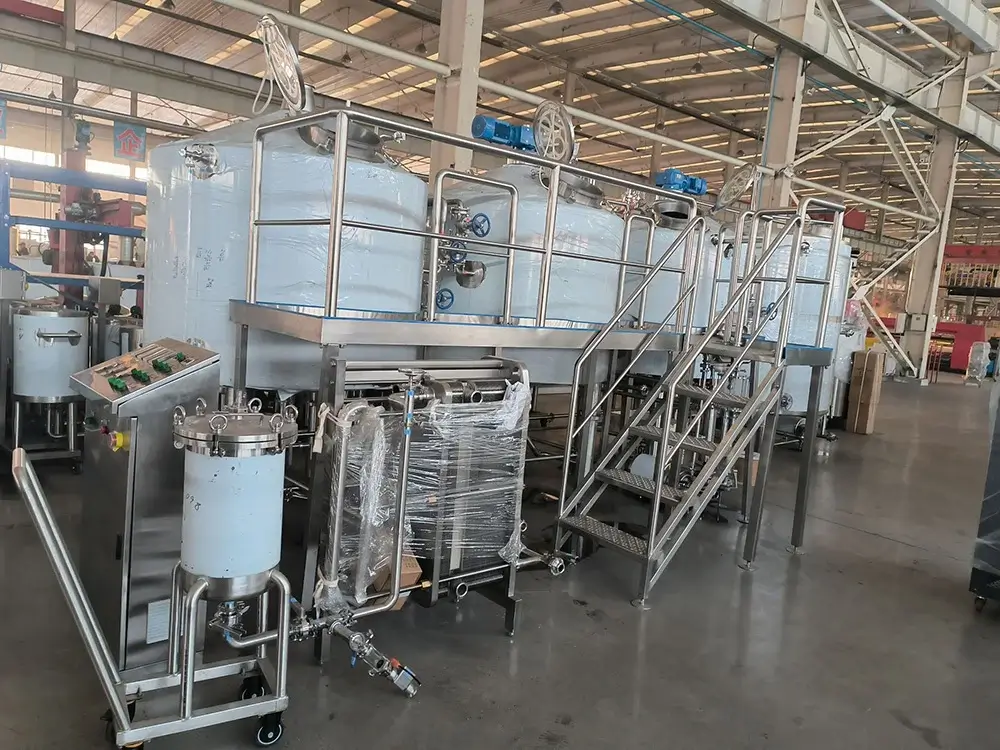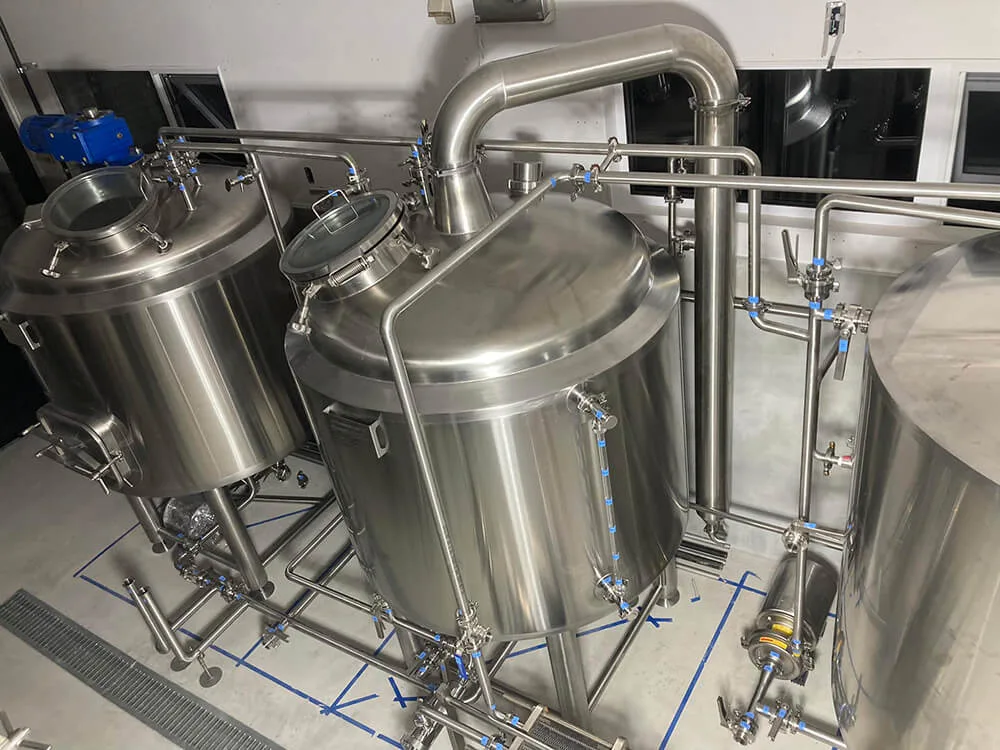
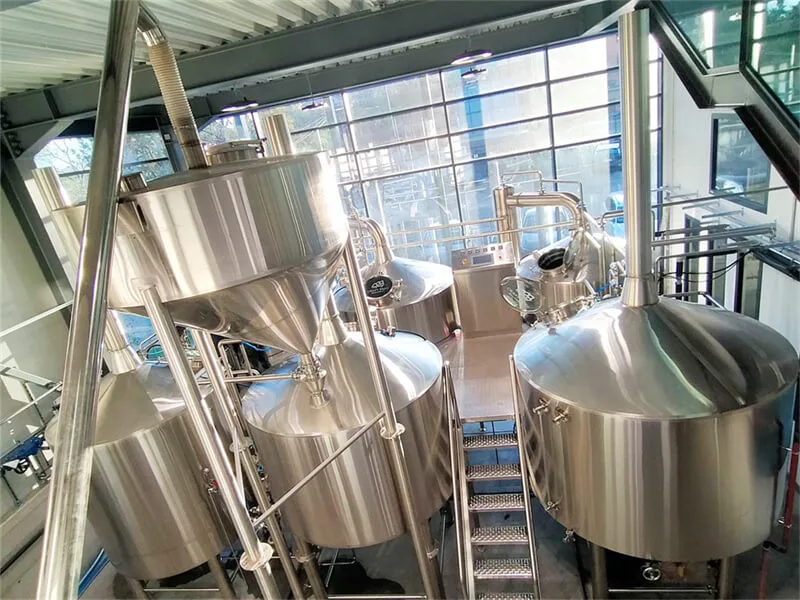
One of the biggest concerns for craft brewery founders is not how to start—but how to grow without making costly mistakes. Many breweries begin with a 1000L brewing system because it offers an excellent balance between investment, flexibility, and commercial viability.
However, a common question quickly follows:
How can a brewery scale production efficiently with a 1000L system without replacing the entire brewhouse?
The good news is that a well-designed 1000L brewery system is highly scalable. In this article, we explain the most practical and proven ways to increase output while protecting your original investment.
Why 1000L Brewery Equipment Is Ideal for Scalable Growth
A 1000L brewhouse is often referred to as the “sweet spot” for commercial craft breweries. It is large enough to support distribution, yet small enough to remain flexible.
As principais vantagens incluem:
- Balanced capital investment
- Manageable operating complexity
- Strong compatibility with phased expansion
Most importantly, production growth does not require brewhouse replacement when the system is properly planned from the beginning.
Step 1: Increase Production by Adding Fermentation Capacity
The most efficient and cost-effective way to scale a 1000L brewery is by increasing fermentation volume.
Why Fermentation Tanks Matter More Than the Brewhouse
In many breweries, the brewhouse is not the bottleneck—fermentation is.
By adding:
- More fermentation tanks
- Larger-capacity tanks (e.g. 2000L or 3000L)
breweries can dramatically increase annual output while keeping the same 1000L brewhouse.
Practical Example
- Initial setup:
- 1000L brewhouse
- 6 × 1000L fermenters
- Expanded setup:
- 1000L brewhouse
- 12 × 2000L fermenters
This approach can double or triple annual production without changing the brewhouse.
Step 2: Increase Brewhouse Utilization (More Brews per Day)
Once fermentation capacity is sufficient, the next scaling method is improving brewhouse efficiency.
Multiple Brews per Day
A 1000L system can typically support:
- Single brew per day (standard)
- Double brews per day (with optimized workflow)
Key requirements:
- Adequate hot liquor tank capacity
- Fast heating and lautering performance
- Efficient wort cooling
With proper planning, double-brew days can significantly increase monthly output.

Step 3: Use Larger Fermenters for High-Volume Beers
Another common expansion strategy is brewing into larger fermentation tanks.
How It Works
- Brew two or three 1000L batches
- Transfer into one 2000L or 3000L fermenter
This is especially effective for:
- Core beers with high demand
- Flagship styles with consistent recipes
It reduces:
- Cleaning frequency
- Tank management complexity
- Labor per liter produced
Step 4: Upgrade Supporting Systems (Not the Brewhouse)
As production grows, supporting systems must scale accordingly.
Cooling and Glycol System
Higher production means:
- Increased cooling demand
- More fermentation tanks
A scalable glycol system should:
- Be sized with expansion margin
- Allow additional cooling loops
CIP Cleaning System
Upgrading from a mobile CIP to a semi-automatic or multi-tank CIP system:
- Saves labor
- Improves cleaning consistency
- Supports higher production volume
Step 5: Plan for Packaging and Logistics Expansion
Brewhouse expansion alone is not enough.
As output increases, breweries must also consider:
- Kegging capacity
- Bottling or canning lines
- Cold storage space
Many breweries expand packaging in phases, starting with manual or semi-automatic systems and upgrading as sales grow.
Common Scaling Mistakes to Avoid
1. Oversizing the Brewhouse Too Early
Replacing a 1000L brewhouse with a 2000L system too soon often leads to:
- Higher capital pressure
- Underutilized capacity
2. Ignoring Utility Limits
Steam, electricity, water, and drainage must support future growth.
3. Not Planning Expansion Interfaces
Lack of spare ports, pumps, or control capacity can limit future upgrades.
Smart Expansion Starts with Smart Design
A scalable 1000L brewery is not defined by size alone—but by design philosophy.
Key design principles include:
- Modular layout
- Oversized utilities where possible
- Expansion-ready control systems
With the right planning, many successful breweries operate a 1000L brewhouse for 10+ years while continuously increasing output.
Considerações finais
Scaling production does not require replacing your brewhouse. With a properly engineered 1000L brewery system, growth can be achieved step by step—through smarter fermentation management, better utilization, and modular upgrades.
If you have any questions about scaling production or brewery equipment solutions, feel free to contactar-nos—we’re always happy to help.