1. Types of Fermentation Tanks: Pick the Right Vessel for Your Winemaking
1.1 Stainless Steel Tanks – The Modern Standard
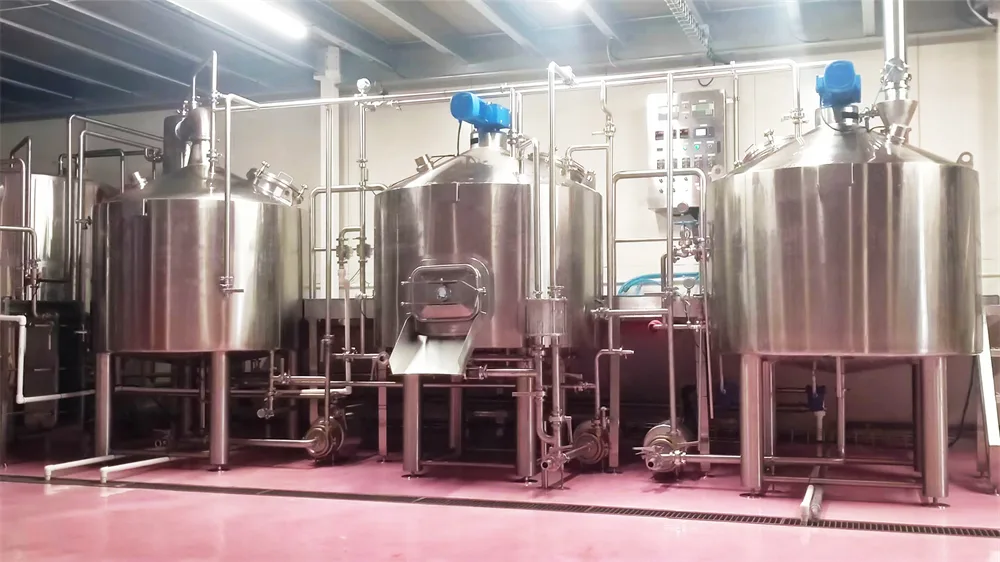
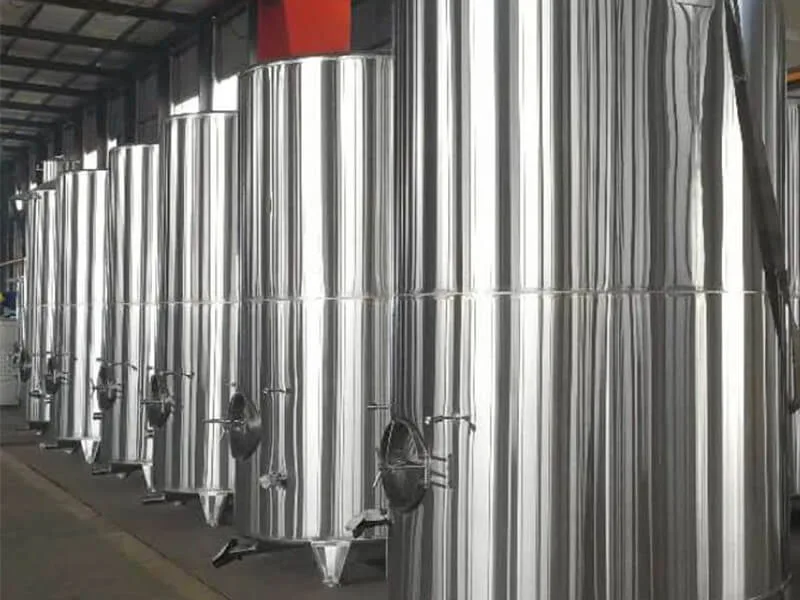
Stainless steel tanks are the top choice for wineries worldwide. They offer excellent temperature control, are easy to clean, and help produce consistent, high-quality wine.
1.2 Special Material Tanks – For Unique Wine Styles
- Concrete Tanks: Allow tiny amounts of oxygen in (micro-oxygenation) and hold temperature very steadily—great for soft, complex wines.
- Oak Tanks: Add flavor, aroma, and texture while fermenting—ideal for rich, layered wines.
- Clay Amphorae (Terracotta): An ancient method making a comeback. Perfect for natural, low-intervention winemaking.
1.3 Functional Tank Types – Match the Tank to Your Process
- Open-Top Tanks: Easy access for manual punch-downs; great for small-batch reds.
- Closed Tanks: Fully sealed—best for white wines or when you need strict hygiene and oxygen control.
- Rotary Tanks: Spin gently to mix grape skins and juice evenly—efficient extraction with less labor.
- Auto-Pumpover Tanks: Automatically circulate juice over the cap for consistent color and tannin.
2. Key Technical Features: Small Details, Big Impact
2.1 Temperature Control – The Heart of Fermentation
Modern tanks use multi-zone cooling:
- Top zone: Cools fast during peak fermentation heat.
- Middle zone: Keeps fermentation stable.
- Bottom zone: Helps yeast and solids settle slowly.
Smart systems add:
- Real-time temperature sensors
- Automatic adjustments
- Remote monitoring via phone or computer
2.2 Hygiene Design – Keep Every Batch Clean
- Electropolished interior (smoothness ≤ 0.6μm): No hiding spots for bacteria.
- CIP (Clean-in-Place) system: Rotating spray nozzles clean every corner without disassembly.
- No sharp corners: All curves—easy to rinse and sanitize.
2.3 Better Extraction
- Adjustable pumpover or punch-down systems
- Built-in cap management (automatic pressing or pumping)
- Vertical and horizontal juice circulation for even color and tannin pickup
2.4 Strong, Smart Structure
- Dual support legs: Stable, even in earthquakes
- Insulated walls: Save over 40% on energy
- Modular design: Easy to install, expand, or reconfigure later
3. Why Stainless Steel Tanks Stand Out
3.1 Precise Control
- Temperature accuracy: ±0.5°C
- Batch-to-batch variation: under 3%
- Full digital logging for traceability
3.2 Top Hygiene Standards
- Meets FDA and EU food safety rules
- Prevents cross-contamination
- Lasts 25+ years with proper care
3.3 Saves Time & Money
- Cuts labor costs by 30–50%
- Reduces cleaning time by 40%
- Boosts tank usage by 15–25%
3.4 Great Return on Investment
- Most wineries recover costs in 3–5 years
- Low maintenance = lower long-term costs
- Higher quality = better prices and customer loyalty
4. How to Choose the Right Tank for Your Winery
4.1 Start With Your Needs
Simple sizing rule:
Annual wine volume (liters) ÷ Number of fermentation batches per year = Ideal tank size
Considere também:
- Number of grape varieties
- Whether you ferment plots separately
- Harvest volume changes year to year
4.2 Key Specs at a Glance
| Caraterística | Red Wine | White Wine | Special Cases (e.g., Natural Wine) |
|---|---|---|---|
| Tank Size | 5,000–50,000 L | 3,000–30,000 L | Custom sizes |
| Cooling Power | High | Medium | Flexible |
| Extraction System | Required | Optional | Depends on style |
| Oxygen Control | Controlled micro-oxygen | Strictly sealed | May allow natural exposure |
4.3 Check Your Space & Utilities
- Plan layout for easy access and workflow
- Make sure you have enough power, water, and cooling capacity
- Leave room for maintenance and future upgrades
4.4 Budget Options
- Basic: Core functions only—good for startups
- Professional: Full features for serious production
- Premium: Fully automated, smart-connected systems
4.5 How to Pick a Supplier
- Engineers who understand winemaking
- Certified manufacturing quality (e.g., ISO)
- Experience with wineries like yours
- Fast support and spare parts availability
5. Real-World Success Stories
5.1 Mid-Size Boutique Winery (50,000–100,000 bottles/year)
- Solution: Modular stainless steel tanks
- Result: 35% faster production, 28% lower operating costs
5.2 Large Commercial Winery (1M+ bottles/year)
- Solution: Fully automated fermentation line
- Result: 99.2% batch consistency at scale
5.3 Specialty Winery (Many Varieties/Styles)
- Solution: Mix of stainless, concrete, and clay tanks
- Result: Maximum flexibility to meet diverse market demands
6. What’s Next? Future Trends
6.1 Smarter Winemaking
- Remote alerts if something goes wrong
- AI suggests best settings based on grape data
- Blockchain tracks every bottle from vine to shelf
6.2 Greener Practices
- Reuse heat from fermentation
- Water-saving cleaning tech
- Eco-friendly insulation and coatings
6.3 Custom Solutions
- Tanks designed for specific grapes (e.g., Pinot Noir, Riesling)
- Features tailored to natural, orange, or skin-contact styles
- Blends of old-world materials with modern engineering
Ready to Take the Next Step?
✅ Free Consultation: Our winemaking engineers will visit your site—at no cost.
✅ Trial Fermentation: Test your wine in our demo tank.
✅ ROI Report: See exactly how much you’ll save and earn.
✅ Custom Plan: We’ll design a system that fits your vision.
📩 Get Started Today: Contact us for our simple Fermentation Tank Selection Checklist—and begin upgrading your winery the smart way!