In brewpub brewing setups, the malt mill is often underestimated.
Yet in reality, it’s one of the most critical pieces of equipment—directly influencing mash efficiency, lautering stability, and even flavor consistency across batches.
For common 300L and 500L brewpub systems, the goal isn’t simply to choose the biggest mill—but to select one that aligns precisely with your system scale, recipe complexity, and daily operational rhythm.
This guide breaks down, from real-world application perspectives, how to choose a malt mill that’s truly easy to use, durable, and hassle-free.
1. Why Brewpubs Must Take Malt Milling Seriously
Unlike large-scale industrial breweries, brewpubs typically share these characteristics:
- Small batch sizes but high brewing frequency
- Frequent recipe changes (often featuring wheat, oats, specialty malts, etc.)
- Limited back-of-house space, sometimes with visible brewing areas
- High expectations for consistent quality and batch-to-batch repeatability
Poor or inconsistent milling can quickly lead to problems such as:
- Fluctuating mash efficiency → affecting ABV and final gravity
- Slow or clogged lautering → extending brew day
- Inconsistent flavor profiles across batches → damaging brand reputation
✅ Choosing the right mill is essentially laying the foundation for your entire brewing system.
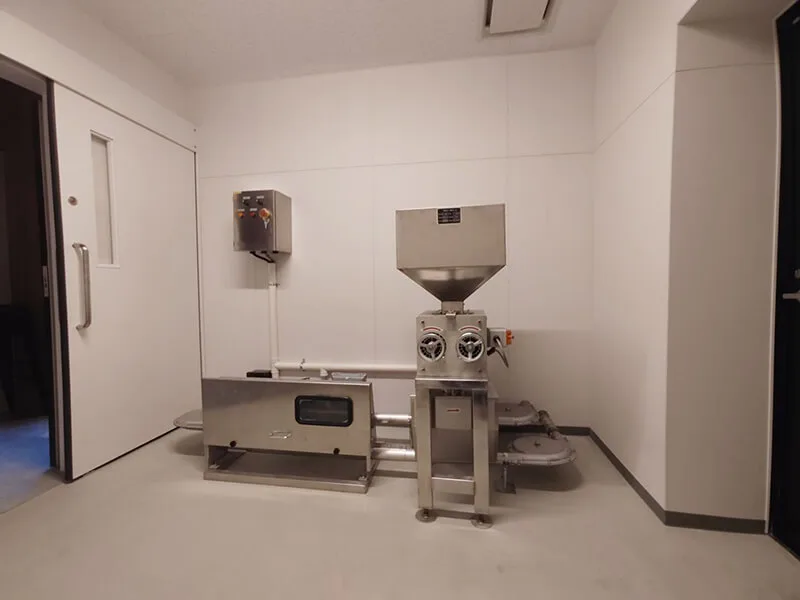
2. Real-World Milling Requirements for 300L / 500L Systems
Before selecting a mill, answer this key question: How much malt do you need to crush per batch?
Based on typical recipes (original gravity ~12–14°P), here are practical guidelines:
表格
| System Size | Malt per Batch |
|---|---|
| 300L | 80–120 kg |
| 500L | 120–180 kg |
Brewpubs usually follow a “mill-as-you-go” approach—meaning the mill runs intermittently rather than continuously. Therefore, it must balance single-batch capacity with reliable start-stop performance.
3. Key Selection Criteria Explained
1. Roller Material & Diameter
- Material: Must be food-grade 304 stainless steel—resistant to corrosion and easy to clean. Avoid carbon steel (prone to rust and contamination).
- Diameter: Recommended ≥ 75mm. Larger diameters run smoother and resist jamming, especially with sticky adjuncts like wheat or oats.
- Surface Finish: Brushed or sandblasted rollers improve grip and deliver more uniform crush—critical for complex grain bills.
2. Gap Adjustment Precision
- Ideal Range: 0.8–1.2 mm (slightly finer for wheat/oats; coarser for base malts).
- Adjustment Mechanism: Prefer models with micrometer-style knobs + calibrated scales over crude bolt adjustments for repeatable settings.
- Three-Roller Advantage: First set cracks grains; second refines endosperm—ideal for mixed-malt recipes and better husk integrity.
3. Motor Power & Speed
| System Size | Recommended Power | Speed Range |
|---|---|---|
| 300L | 0.75–1.1 kW | 150–250 RPM |
| 500L | 1.1–1.5 kW | 150–250 RPM |
⚠️ Critical Note: Low speed + high torque is far superior to high-speed operation.
High RPM increases noise, heat, and dust—disrupting the brewpub environment and shortening equipment life.
4. Hopper & Discharge Design
- Hopper Capacity: ≥ 15 kg reduces frequent refilling and improves workflow.
- Discharge Chute: Should include a guided spout to feed directly into your mash tun or holding bin—minimizing manual transfer.
- Dust Control: Sealed hopper + bottom gasket significantly reduces airborne dust—essential for open-concept or semi-visible brewhouses.
4. Mill Selection Comparison: 300L vs. 500L Systems
| Caraterística | 300L System Recommendation | 500L System Recommendation |
|---|---|---|
| Malt per Batch | 80–120 kg | 120–180 kg |
| Roller Width | 450–600 mm | 600–800 mm |
| Motor Power | 0.75–1.1 kW | 1.1–1.5 kW |
| Throughput | 300–400 kg/h | 400–600 kg/h |
| Gap Adjustment | Adjustable (with scale) | Adjustable (digital micrometer preferred) |
| Grain Flexibility | Base malts, small wheat % | High adjuncts, complex recipes |
| Dust Control | Optional dust port | Strongly recommended (integrated) |
| Installation Context | Enclosed back area | Open bar-back friendly |
5. Is a Malt Mill Energy-Intensive? Cost Analysis for Brewpubs
Clear conclusion:
👉 The malt mill is among the lowest-energy devices in your entire brewing system.
Example Calculation (500L system):
- Motor: 1.1 kW
- Time to crush 120 kg: ~20 minutes (0.33 hours)
- Energy used = 1.1 × 0.33 ≈ 0.36 kWh per batch
Even if used daily, monthly consumption is under 11 kWh. At 0.15/kWh(typicalcommercialrate),that’s∗∗lessthan0.15/kWh(typicalcommercialrate),that’s∗∗lessthan 1.65/month**.
💡 Energy cost is negligible—don’t compromise performance for marginal savings.
6. Cleaning & Sanitation Best Practices
Malt dust absorbs moisture, cakes, and can harbor mold. Proper cleaning is non-negotiable for food safety and equipment longevity.
✅ Correct Cleaning Procedure:
- Power off and unplug the unit. Remove hopper and collection tray.
- Use a soft brush + compressed air to clear residue from rollers and crevices. (Never rinse rollers or motor with water!)
- Soak removable parts in PBW or food-grade alkaline cleaner, then air-dry completely before reassembly.
- Inspect bearings quarterly; lubricate with NSF H1-certified food-grade grease.
🚫 Common Mistakes:
- Hosing down the mill → causes bearing corrosion and motor failure
- Infrequent cleaning → leads to compacted dust and inconsistent crush
- Using industrial lubricants → risks cross-contamination and violates food safety standards
7. 300L vs. 500L: Which Mill Fits Better?
- 300L Brewpub Systems:
Ideal for 1–2 batches/day. Prioritize adjustability, compact footprint, and quiet operation.
Recommended: 450–600mm roller width with precise gap control. - 500L Brewpub Systems:
Suited for high-volume or menu-diverse operations. Require robust continuous-duty capability.
Recommended: 600–800mm rollers, integrated dust extraction, and support for complex grain bills.
Final Thoughts: The Right Mill = Half the Battle Won
For brewpubs, the ideal malt mill doesn’t need to “look big”—it needs to deliver:
- Consistent, uniform crush
- Precise, repeatable adjustments
- Low noise, low energy, minimal disruption
- Easy cleaning and long-term reliability
A well-matched mill for your 300L or 500L system doesn’t just save time—it ensures every pint poured is clean, flavorful, and reliably on-brand.
🍻 Planning a new brewpub system or upgrading your current setup?
Reach out to us! Share your daily output, typical recipes, and available space,
and we’ll help you select the perfect malt mill for your operation.
Specializing in small-scale commercial brewing solutions | Helping every grain reach its full potential