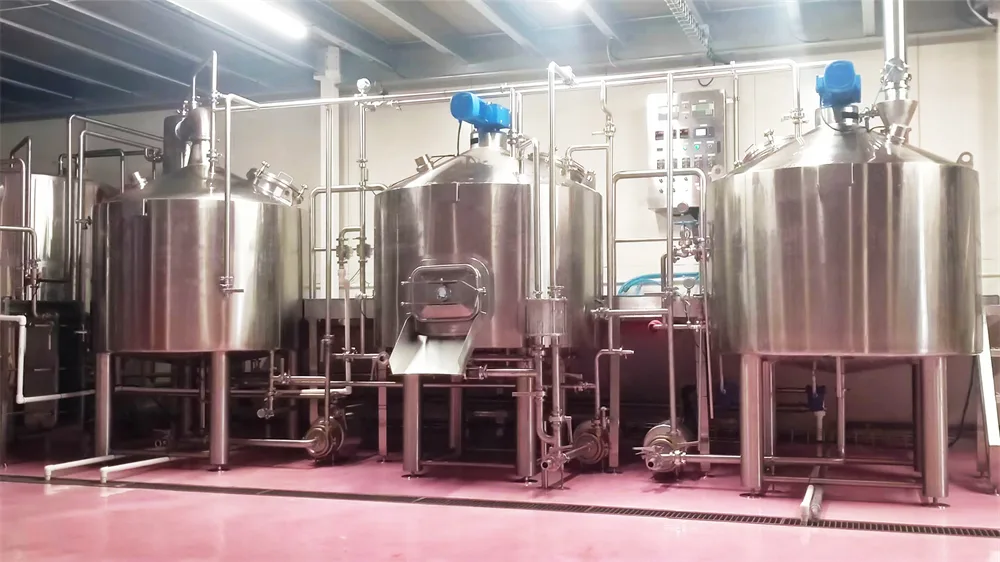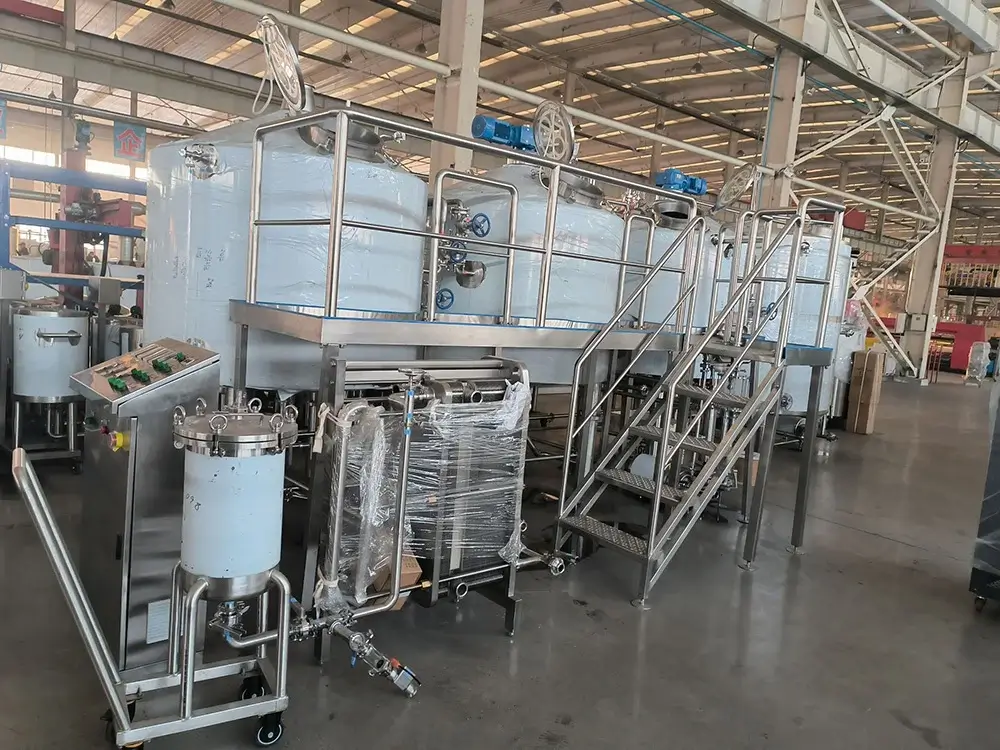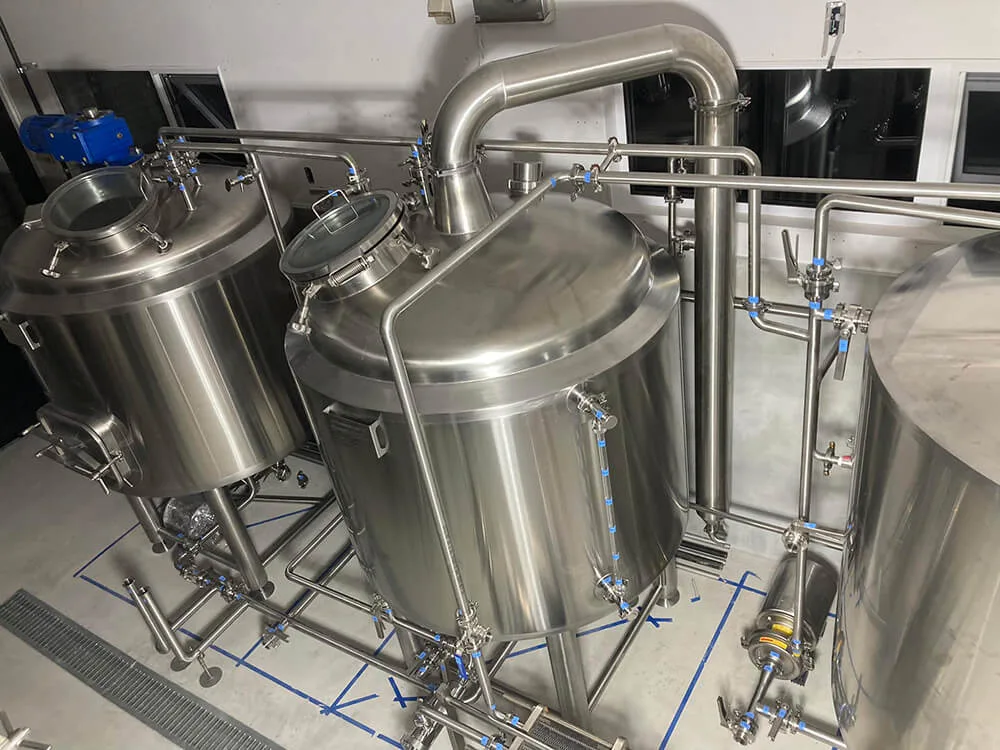
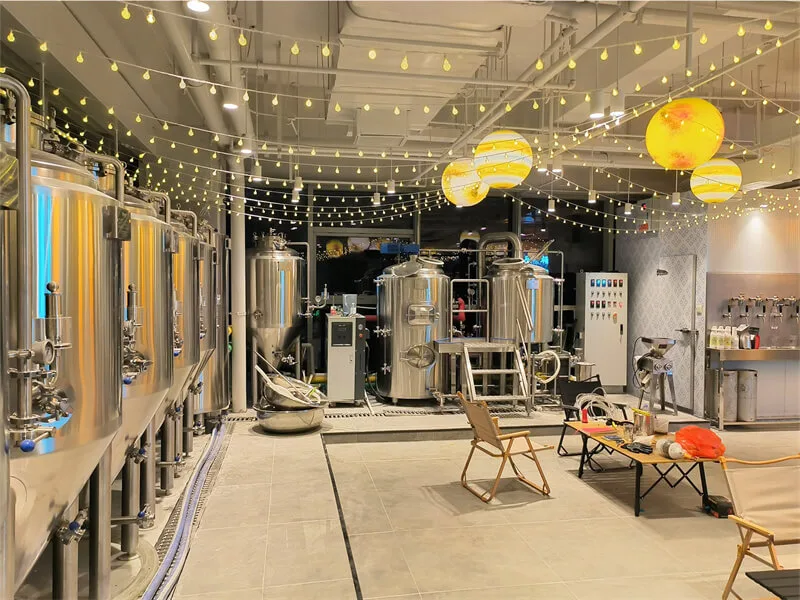
Um sistema de fabrico de cerveja de 300L é uma das gamas de capacidade mais clássicas e práticas na indústria da cerveja artesanal.
Oferece um forte equilíbrio entre capacidade comercial e investimento gerível, tornando-a especialmente popular para cervejarias, cervejarias em fase de arranque, fabrico de cerveja piloto e utilização educativa.
No entanto, antes de tomar uma decisão de compra, a maioria dos compradores faz as mesmas perguntas:
O 300L é adequado para o meu projeto? Como deve ser configurado? E pode crescer com o meu negócio?
Este artigo responde a essas questões de forma clara e prática.
1. Para quem é adequado um sistema de fabrico de cerveja de 300L?
Um sistema 300L não é um "equipamento pequeno" - é uma solução comercial séria de nível de entrada, mais adequada para projectos com um caso de utilização claro.
✅ Ideal para:
- Fábricas de cerveja, salas de cerveja e fabrico de cerveja em bares
- Empresas de cerveja artesanal em fase de arranque
- Restaurantes ou bares que lançam a sua própria marca de cerveja
- Escolas cervejeiras, centros de formação e fábricas-piloto de cerveja
- Cervejeiras que passam de 100-200L para a produção comercial
Não é ideal para:
- Cervejeiras centradas na distribuição grossista de grande volume
- Projectos que exigem uma produção rápida e em grande escala desde o primeiro dia
👉 Em suma:
Se o seu objetivo é controlar o risco, validar o mercado e deixar espaço para o crescimento, um sistema de 300L é um excelente ponto de partida.
2. Aquecimento elétrico ou aquecimento a vapor: Qual deve escolher?
Esta é uma das perguntas mais frequentes.
O aquecimento elétrico é adequado se:
- A alimentação eléctrica é estável e suficiente
- A cervejaria está localizada num bar, num centro comercial ou num ambiente urbano
- O orçamento inicial é limitado
- A instalação rápida e o funcionamento simples são prioridades
O aquecimento a vapor é melhor se:
- É necessária uma estabilidade de produção a longo prazo
- O controlo preciso da mistura e da fervura é importante
- A expansão futura já está planeada
- A eficiência energética e a consistência dos lotes são importantes
📌 Conselhos práticos:
Se espera atualizar para 500L ou 1000L no futuro, o aquecimento a vapor oferece um melhor valor a longo prazo.
Para a produção de cerveja em bares ou expositores, o aquecimento elétrico é normalmente mais do que suficiente.
3. Quantas pessoas são necessárias para operar uma fábrica de cerveja de 300 litros?
Em condições normais:
- Uma pessoa pode tratar das operações diárias de fabrico de cerveja
- Durante o esmagamento, o carregamento e a limpeza, é ideal a presença de 1-2 pessoas
Com caraterísticas como:
- Controlo automático da temperatura
- Comutação automatizada de bombas
- Controlo de processos baseado em receitas
Os requisitos de mão de obra podem ser ainda mais reduzidos - uma das principais razões pelas quais os bares de cerveja preferem sistemas semi-automatizados.
4. Configuração da sala de brassagem: sistemas de 2 recipientes vs. sistemas de 3 recipientes
Sistema de 2 recipientes
(Tina de brassagem/Lauter Tun + Chaleira/Whirlpool)
- Pegada compacta
- Menor custo de investimento
- Muito adequado para cervejarias e empresas em fase de arranque
- Funcionamento simples e eficiente
Sistema de 3 vasos
(Tina de brassagem + Tina de Lauter + Caldeira/Whirlpool)
- Maior flexibilidade de processos
- Maior eficiência na produção de cerveja
- Mais adequado para vários estilos de cerveja
- Produção mais fácil de escalar
📌 Orientações para a seleção:
- Espaço limitado / fabrico de cerveja em barra → Sistema de 2 recipientes
- Maior produção ou diversos estilos de cerveja → Sistema de 3 recipientes
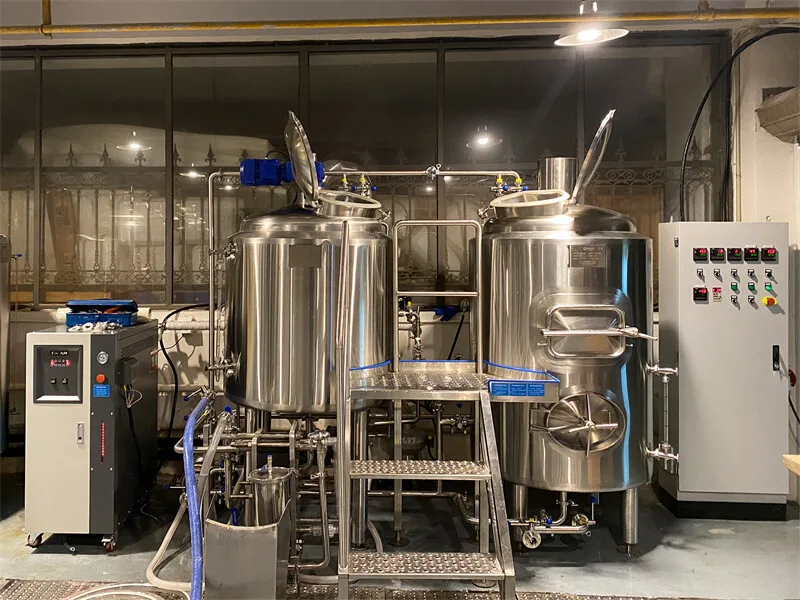
5. Quantos tanques de fermentação devem ser emparelhados com um sistema de 300L?
Esta decisão afecta diretamente a capacidade de produção global.
Configuração típica:
- Sala de brassagem de 300L
- 3-6 tanques de fermentação (600L cada)
Porquê maiores e mais tanques?
- Os ciclos de fermentação são muito mais longos do que os ciclos de fabrico de cerveja
- Mais tanques aumentam a utilização da sala de brassagem
- Permite a produção simultânea de vários estilos de cerveja
Conselhos comuns do sector:
"A adição de tanques de fermentação proporciona normalmente um melhor retorno do que a atualização da própria sala de brassagem."
6. Como escolher o sistema de arrefecimento correto?
Uma fábrica de cerveja padrão de 300L inclui normalmente:
- Depósito de glicol ou de água gelada
- Unidade de refrigeração industrial
Principais factores de seleção:
- Número previsto de cubas de fermentação
- Condições de temperatura ambiente
- Considerações sobre a expansão futura
Recomendamos reservar a capacidade de arrefecimento 20-30% para além das necessidades actuais, de modo a suportar o crescimento futuro.
7. É necessário um sistema CIP para uma fábrica de cerveja de 300L?
A resposta é sim - altamente recomendável.
Mesmo a 300L:
- A limpeza manual é morosa
- A consistência da limpeza é difícil de controlar
- Uma limpeza deficiente afecta diretamente a estabilidade e a qualidade da cerveja
Quer se trate de:
- Uma unidade CIP móvel
- Um sistema CIP semi-automático
Melhora significativamente:
- Normas sanitárias
- Eficiência operacional
- Vida útil do equipamento
8. Quão automatizado deve ser o sistema de controlo?
As opções de controlo mais comuns incluem:
- Controlo manual (custo mais baixo)
- Controlo semi-automático (temperatura + automação da bomba)
- Controlo totalmente automático (receitas, registo de dados, repetibilidade)
📌 Melhores práticas:
- Cervejarias e brewpubs em fase de arranque → Os sistemas semi-automáticos oferecem o melhor ROI
- Instalações de formação e I&D → Os sistemas totalmente automatizados melhoram a consistência e a documentação
9. Como é que uma fábrica de cerveja de 300L pode ser melhorada para 500L ou 1000L?
Um dos maiores pontos fortes de um sistema 300L é a sua escalabilidade - se planeado corretamente desde o início.
Um caminho de atualização suave inclui:
- Aumentar primeiro o volume da cuba de fermentação
- Sobredimensionamento do sistema de arrefecimento durante a instalação inicial
- Conceção de tubagens para caudais mais elevados
- Utilização de sistemas de controlo escaláveis
- Escolha de vapor e utilidades que suportem uma expansão futura
O facto de o sistema original ter sido concebido tendo em conta a expansão determina se as actualizações são fáceis - ou dispendiosas.
Conclusão
Um sistema de fabrico de cerveja de 300L é muito mais do que uma configuração piloto - é uma solução de fabrico de cerveja comercial totalmente capaz.
Com uma configuração adequada e um design inovador, pode apoiar o seu percurso desde o primeiro lote até uma operação de cervejaria artesanal escalável.
Se estiver a planear um projeto de cervejaria ou de uma pequena cervejaria, podemos adaptar uma solução de fabrico de cerveja de 300 L com base no seu espaço, orçamento e objectivos a longo prazo. Sinta-se à vontade para contactar-nos para orientação profissional.