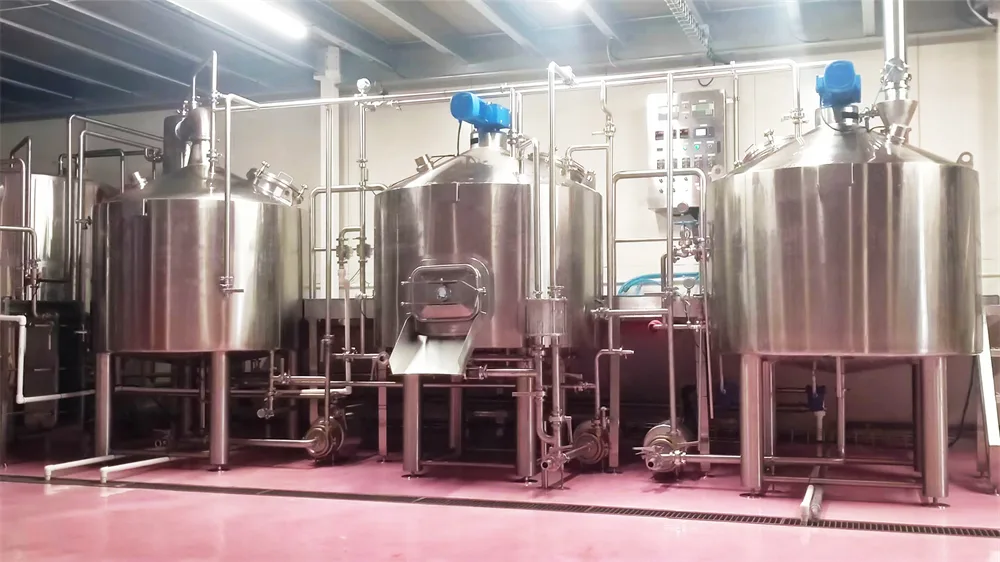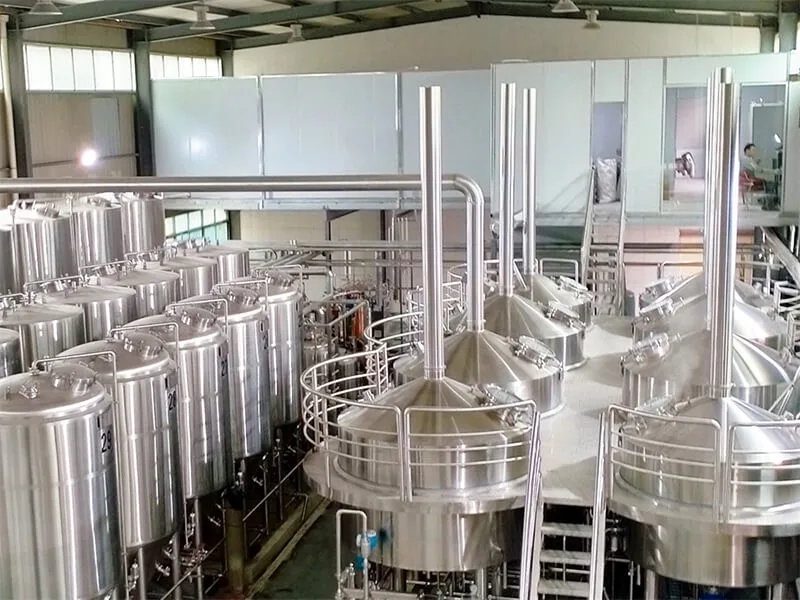
For breweries of any size—whether a start-up microbrewery or an expanding regional facility—the brewhouse system is the core engine that determines brewhouse efficiency, flavor consistency, and long-term production capability.
1. What Is a brewhouse System?
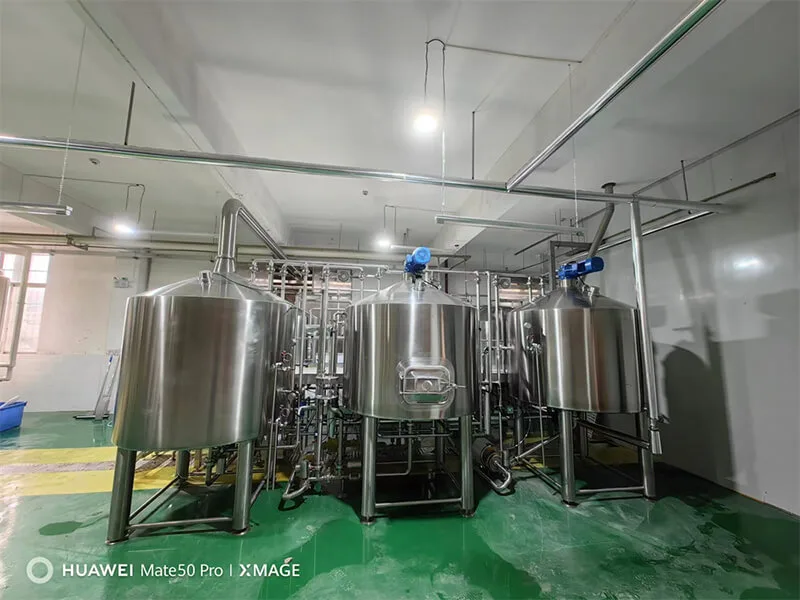
A brewhouse system is a set of vessels and process controls used to convert malted barley starches into fermentable sugars. It typically includes:
- Mash Tun / Mash Kettle
- Lauter Tun
- Brew Kettle
- Whirlpool
- Heat exchanger and transfer pump
- Control system (manual, semi-automatic, or fully automatic)
The design and configuration directly influence wort quality, brewhouse efficiency, and energy consumption.
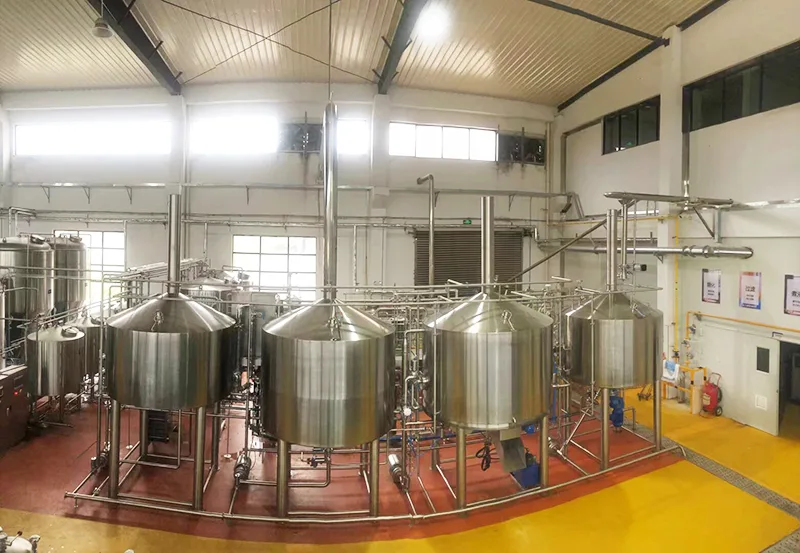
2. Brewers’ Most Common Questions About Cervejaria Sistemas
Q1: What brewhouse configuration should I choose—2-vessel, 3-vessel, 4-vessel or 5/6-vessel?
This is the most frequently searched question globally.
2-Vessel System (Mash/Lauter + Kettle/Whirlpool)
- Best for small craft breweries and brewpubs.
- Lower cost and smaller footprint.
- Suitable for 1–2 batches/day.
3-Vessel System (Mash Tun + Lauter Tun + Kettle/Whirlpool)
- Most popular choice for micro and craft breweries.
- Higher brewhouse efficiency and faster turnaround.
- Ideal for 2–4 batches/day.
4-Vessel System (Mash Tun + Lauter Tun + Kettle + Whirlpool)
- High-production, commercial breweries.
- Maximum efficiency and parallel processes.
- Suitable for 4–8 batches/day.
5-Vessel System (Mash Tun + Lauter Tun +Pre-run Tank+ Kettle + Whirlpool)
- Designed for medium to large craft breweries aiming for higher daily output.
- Wort collection can proceed while boiling is ongoing, reducing idle time.
- Improved lauter efficiency and wort clarity due to dedicated vessels.
- Suitable for 2–6 batches/day depending on brewhouse size.
6-Vessel System (Pre-Mash Tun+Mash Tun + Lauter Tun +Pre-run Tank+ Kettle + Whirlpool)
- Ideal for high-volume commercial production requiring maximum parallel processes.
- Pre-mash tun accelerates mash-in, improves grain hydration, and boosts extract yield.
- Allows true continuous brewing with all stages operating simultaneously.
- Suitable for 8–12 batches/day or more under industrial conditions.
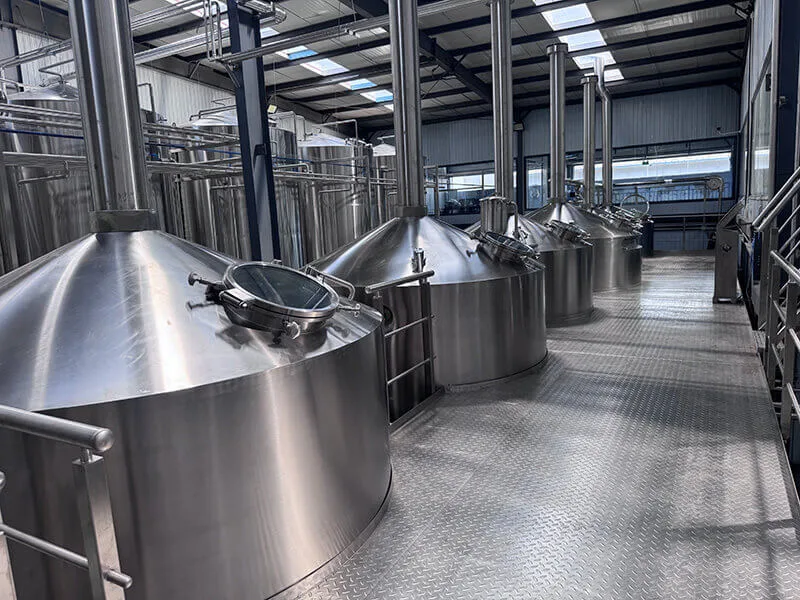
Q2: What heating method is best—steam, electric, or direct fire?
Aquecimento a vapor
- Most stable temperature control.
- Recommended for professional breweries (300L and above).
- Supports step mashing and high gravity brewing.
Aquecimento elétrico
- Suitable for nano and pilot systems.
- Small footprint and easy installation.
- Higher electricity consumption at large scale.
Direct Fire Heating
- Lower upfront cost.
- Less common due to uneven heating and combustion requirements.
Q3: What features improve mashing efficiency and wort clarity?
Brewers commonly search for technologies that reduce stuck mash and increase extraction yield. Key engineering features include:
- Raker & agitator design
Prevents hot spots and ensures uniform enzyme activation. - Laser-cut false bottom plates (0.8–1.0 mm slot width)
Improves filtration speed while maintaining clarity. - V-wire or wedge-wire screen options
Used for high-gravity brewing and fast lautering. - VFD-controlled mash and wort pumps
Enables fine control of lautering, recirculation, and transfer. - Optimized lautering piping (under-letting & vorlauf)
Ensures stable wort recirculation and prevents channeling.
3. Core Components of a Professional Cervejaria Sistema
Pre-Mash Tun / Cereal Cooker
- Used for pre-mashing adjuncts such as rice, corn, or high-starch ingredients
- Independent steam jackets for rapid heating and precise gelatinization
- High-torque agitator to prevent burning and ensure even starch mixing
- Enables multi-step temperature profiles for optimal enzyme activation
- Improves extract efficiency and allows breweries to expand raw material flexibility
Mash Tun / Mash Kettle
- Steam or electric heating jackets
- Agitator with variable speed
- Insulated tank for heat retention
- Internal CIP spray ball
Lauter Tun
- Precision false bottom
- Variable-speed rakes with lifting function
- Spent grain outlet (manual or pneumatic)
- Sight glass and wort collection ring
Pre-Run Tank / Wort Holding Tank
- Designed to collect clarified wort from the lauter tun before entering the kettle
- Prevents production downtime when the kettle is still occupied
- Improves overall brewhouse throughput during multi-batch brewing
- Maintains stable wort flow, gravity, and temperature before boiling
- Insulated design with CIP spray balls for sanitation and product safety
Brew Kettle
- High-efficiency steam jackets or chimney exhaust
- Vigorous boiling capability for DMS removal
- Tangential inlet for wort circulation
Whirlpool
- Designed for strong trub separation
- Welded inlet angle for consistent vortex formation
4. Automation Options: Manual, Semi-Auto, Full PLC
Brewers often search for the differences between control systems:
Manual
- Valves operated manually
- Suitable for low-budget startups
Semi-Automatic
- Pneumatic valves + digital temperature control
- Ideal balance of price and efficiency
Full PLC Automation
- Touchscreen control with pre-set recipes
- Automated mash steps, lautering, pumping sequences
- Improves repeatability and operator safety
5. How to Size a Brewhouse System for Your Brewery?
International buyers often search for sizing guidelines:
| Brewhouse Size | Ideal para | Daily Capacity |
|---|---|---|
| 100-300L | nano brewery, taproom | 1–2 batches |
| 500–1000L | craft brewery | 2–4 batches |
| 1500–3000L | regional brewery | 4–8 batches |
| 5000L+ | commercial production | 8+ batches |
Considerations:
- Expected monthly output
- Number of beer styles
- Batch frequency
- Utility conditions (steam, water, power)
6. Materials & Sanitation: Why Stainless Steel Grade Matters
Foreign users often search: “304 vs 316 stainless steel—what’s the difference?”
SUS304
- Standard for all brewery vessels
- Excellent corrosion resistance
SUS316
- Higher chloride resistance
- Used for acidic wort and high-end applications
- More expensive but longer lifespan
All tanks should feature:
- TIG welding with pure argon
- Internal polishing ≤0.4–0.6 µm
- Complete CIP and passivation
7. Tips for Choosing the Right Cervejaria System Supplier
Overseas brewers frequently ask how to evaluate manufacturers. Consider:
- Actual engineering experience (not just trading)
- Customization capability
- Real brewing cases or references
- After-sales support and spare parts supply
- Clear piping diagrams, P&ID, and BOM documentation
- Compliance with CE, UL, or local electrical standards
Conclusão
Um sistema de sala de brassagem é mais do que um conjunto de recipientes - é a base da qualidade da cerveja, da eficiência da sala de brassagem e do crescimento da produção a longo prazo. Ao compreender o design dos recipientes, as opções de aquecimento, a eficiência do lauter, os sistemas de controlo e os requisitos de dimensionamento, as fábricas de cerveja podem tomar decisões informadas que correspondem aos seus objectivos técnicos e comerciais.
Se tiver alguma questão sobre a produção de cerveja, não hesite em contactar-nos Equipamento Meto.