O movimento global da cerveja artesanal transformou o sector da restauração e da hotelaria. Cada vez mais estabelecimentos estão a instalar sistemas de fabrico de cerveja no local para oferecer cerveja fresca e distinta que melhora a identidade da marca e a experiência do cliente.
If you’re considering adding a brewing system to your restaurant, understanding the essential Restaurant Beer Brewing Equipment and how it integrates into your operation is the first step.
What Is Restaurant Beer Brewing Equipment?
Restaurant beer brewing equipment refers to a compact, commercial brewing system designed to produce beer directly inside a restaurant, bar, brewpub, or hotel.
Unlike large industrial breweries, these systems are optimized for:
- On-site production
- Space efficiency
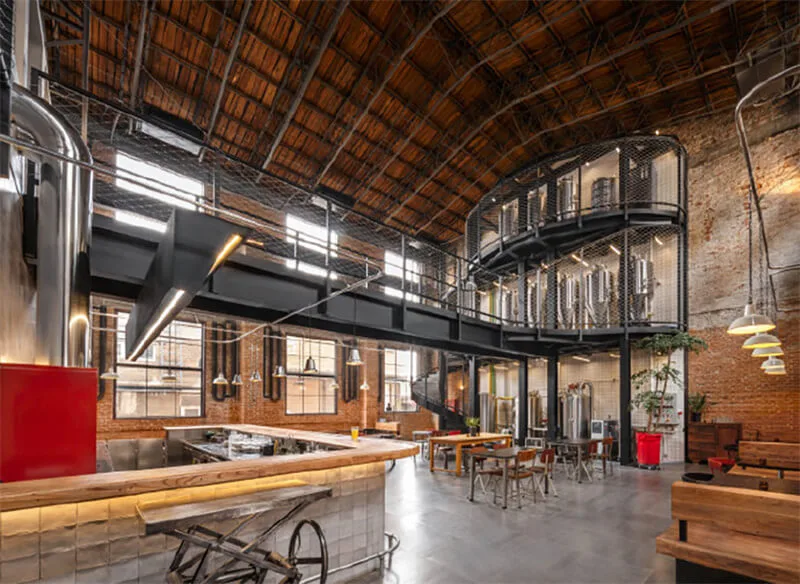
- Visual appeal (often installed in open or glass display areas)
- Flexible batch sizes
- High product freshness
These systems allow hospitality businesses to brew small to medium batches while maintaining full control over flavor and quality.
Core Components of Brewery Equipment
A complete brewing setup typically includes the following systems:
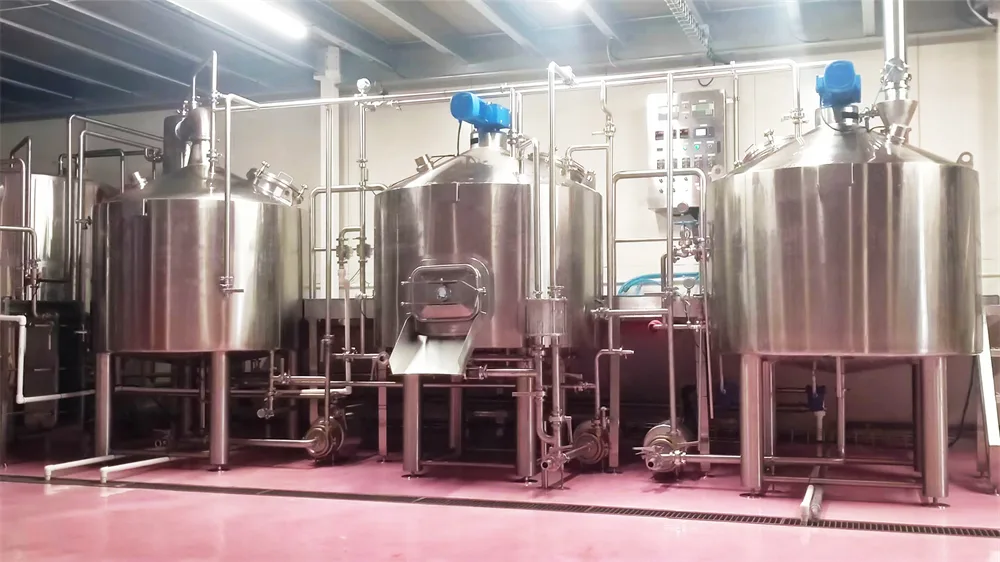
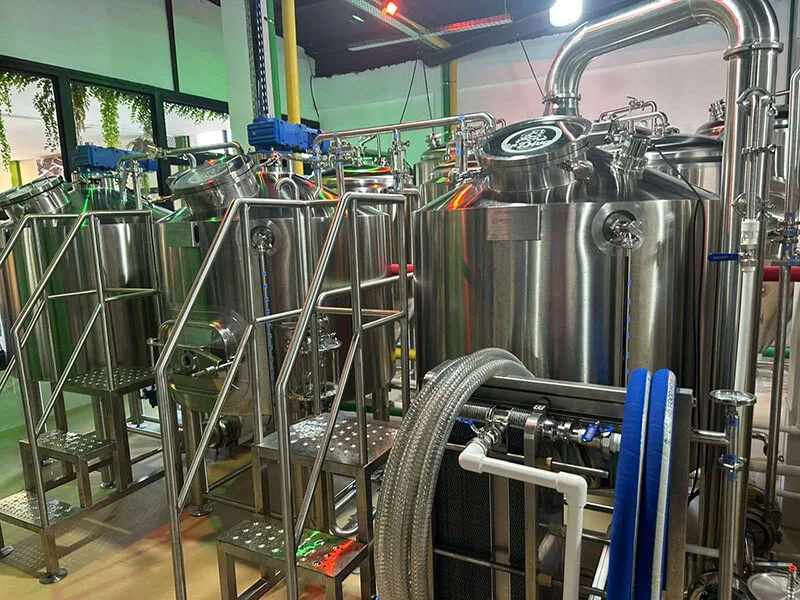
1. Sistema da sala de brassagem
The brewhouse is where beer production begins. It usually consists of:
- Mash Tun – Mixes milled malt with hot water to extract sugars
- Lauter Tun – Separates liquid wort from spent grains
- Brew Kettle – Boils wort and adds hops for bitterness and aroma
- Whirlpool Tank – Removes solids after boiling
Depending on production scale, these vessels may be combined into a 2-vessel or 3-vessel configuration.
Heating options typically include electric, steam, or direct fire systems.
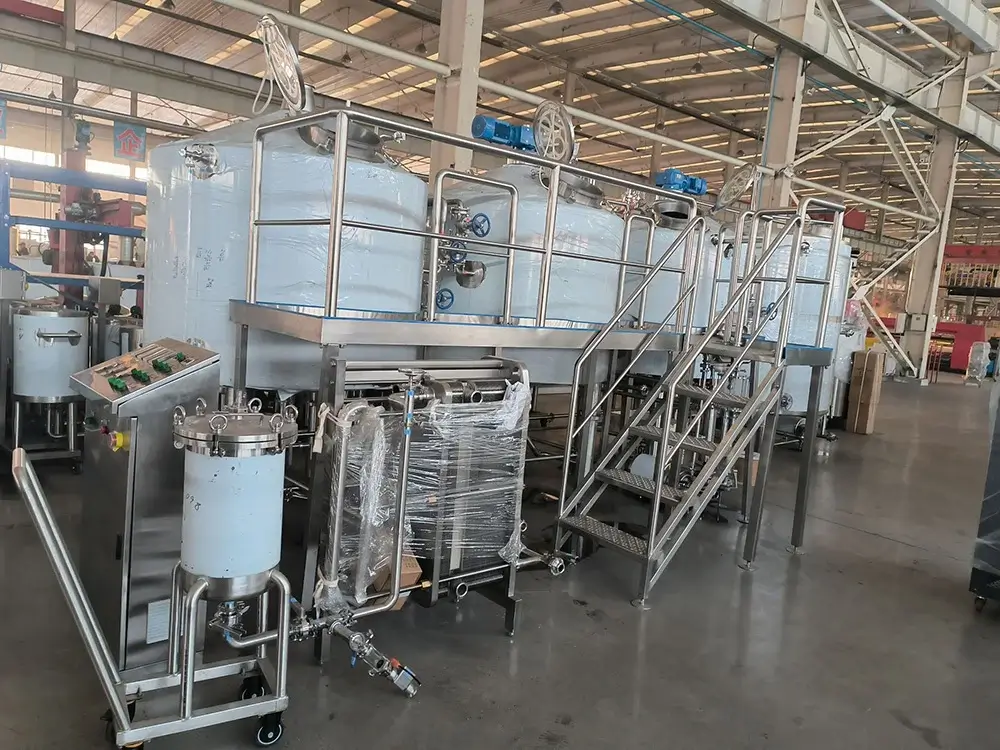
2. Fermentation System
After boiling, wort is transferred to fermentation tanks where yeast converts sugars into alcohol.
Key equipment includes:
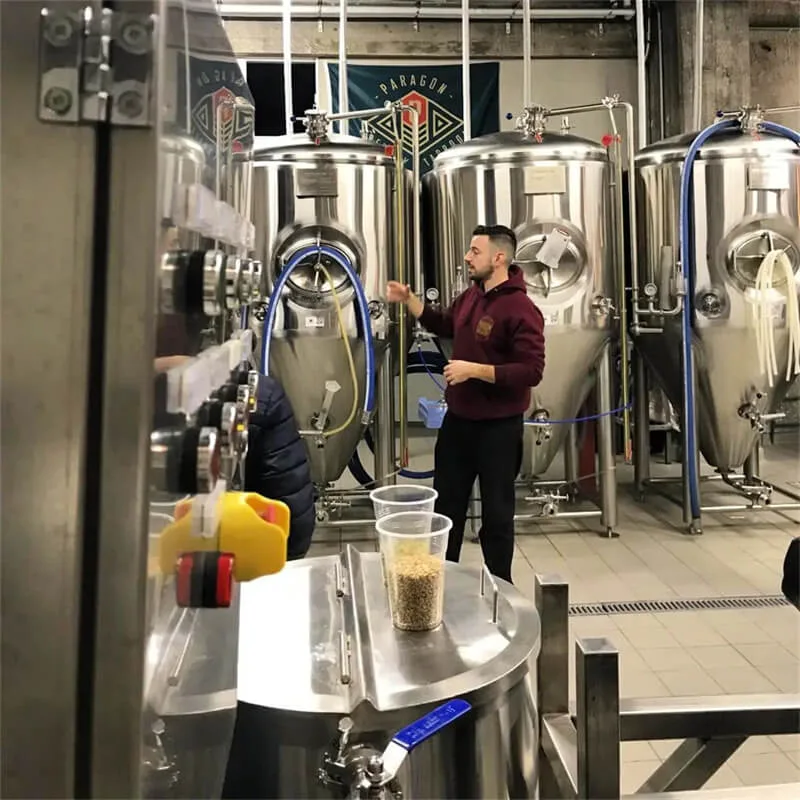
- Conical Fermenters – Temperature-controlled stainless steel tanks
- Brite Beer Tanks – Used for conditioning, carbonation, and clarification
- Glycol Cooling System – Maintains precise fermentation temperature
Temperature stability is critical for flavor consistency and yeast health.
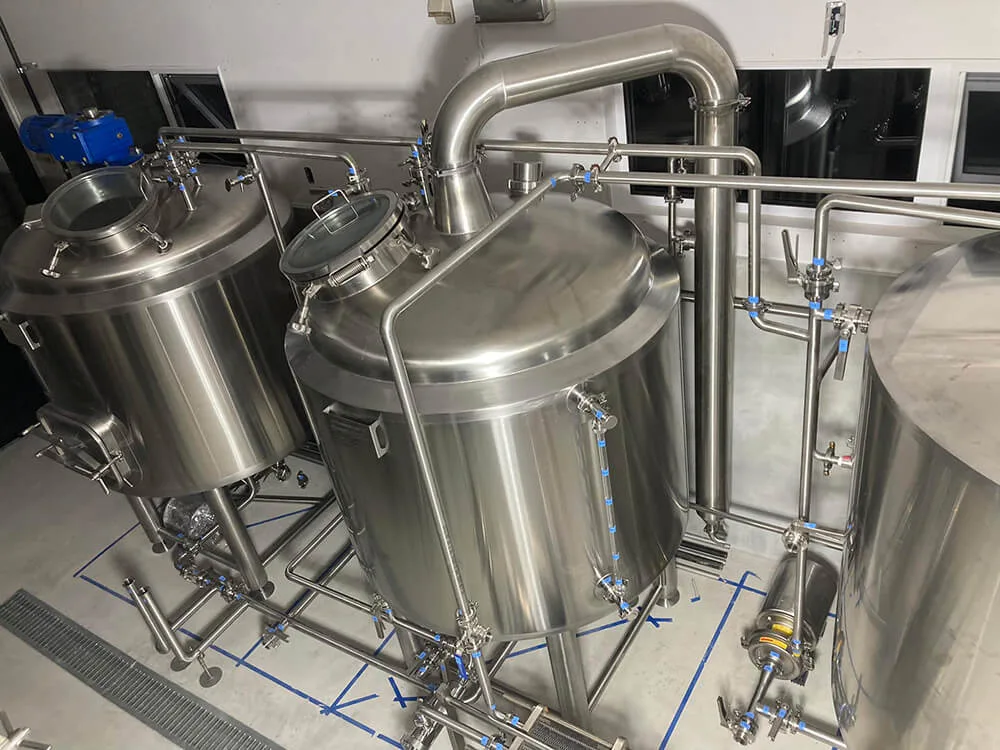
3. Transfer & Piping System
Efficient liquid movement ensures product quality and sanitation.
Components include:
- Stainless steel piping
- Sanitary pumps
- Flexible food-grade hoses
- Valves and fittings
A well-designed flow system reduces contamination risk and improves operational efficiency.
4. Control & Automation System
Modern brewery equipment may include:
- PLC control panels
- Touchscreen interfaces
- Digital temperature controllers
- Automated pump sequencing
Automation improves repeatability, reduces labor intensity, and enhances brewing precision.
5. Cleaning & Sanitation System
Hygiene is fundamental in brewing.
Typical equipment includes:
- CIP (Clean-In-Place) systems
- Chemical dosing tanks
- Spray balls and sanitary fittings
- Basic lab testing tools (pH meter, hydrometer, refractometer)
Consistent cleaning protocols protect beer quality and meet food safety standards.
6. Draft & Dispensing System
To complete the on-site experience, restaurants integrate professional draft systems:
- Tap towers
- Beer faucets
- CO₂ regulators
- Draft line cooling systems
Proper draft design ensures optimal serving temperature, foam control, and flavor retention.
Key Considerations When Selecting Brewery Equipment
When planning your system, evaluate the following:
Capacidade de produção
Estimate daily and weekly output requirements.
Available Space
Measure ceiling height, floor layout, and utility access.
Requisitos de utilidade pública
Confirm electrical load, water supply, drainage, and ventilation.
Expansão futura
Choose a modular system that allows additional fermenters or tank upgrades.
Equipment Material
Food-grade stainless steel (typically SUS304 or SUS316) ensures durability and sanitation.
Why Restaurants Invest in On-Site Brewing
Installing restaurant beer brewing equipment offers several advantages:
- Fresher beer served directly from tank to tap
- Stronger brand identity
- Unique customer experience
- Greater menu differentiation
- Higher perceived product value
On-site brewing turns beer from a simple beverage into a central part of the dining experience.
Considerações finais
Restaurant beer brewing equipment bridges craftsmanship and hospitality. With the right brewery equipment configuration, restaurants can produce high-quality beer while creating a visually engaging and memorable environment for guests.
If you’re planning a new project or upgrading your brewing setup, careful system design and equipment selection will directly impact your long-term success.
contact the Meto team to visit and start your craft beer journey!