Building a 30,000 HL craft brewery requires careful planning of the brewery equipment, production workflow, and facility layout. This production scale represents a balance between industrial brewing efficiency and craft beer flexibility, making it ideal for regional beer brands supplying supermarkets, restaurants, bars, and distributors.
With an annual output of 30,000 hectoliters (3 million liters), a brewery at this scale can produce approximately 45–50 million bottles of beer per year, depending on packaging formats and beer styles.
A professional brewery equipment solution typically includes brewery planning, brewing system design, equipment manufacturing, installation, and brewing technology training. With the right brewing infrastructure, breweries can achieve stable product quality, efficient production, and long-term scalability.
Brewery Planning for a 30,000 HL Craft Brewery
Facility Layout for Efficient Brewery Production
An efficient craft brewery layout improves production efficiency, ensures food-grade hygiene, and reduces energy consumption. A well-planned brewery typically includes the following zones:
- Raw material storage area
- Brewing and wort production area
- Fermentation and conditioning cellar
- Utility and energy supply section
- Packaging workshop
- Finished product warehouse
- Office and administrative facilities
Separating these functional areas helps prevent contamination and ensures smooth production flow throughout the brewery.
Optimizing Production Flow in a Brewing System
In modern brewery design, brewery equipment is arranged according to the brewing process. Equipment placement follows the natural workflow of beer production:
Milling → Mashing → Lautering → Boiling → Fermentation → Filtration → Packaging
This compact process layout offers several advantages:
- Reduced production time
- Menor consumo de energia
- Improved process efficiency
- Simplified operational control
Many breweries also integrate automation systems to improve production consistency and reduce labor costs.
Flexible Brewery Equipment Design for Future Expansion
The craft beer market changes rapidly, so brewery systems should be designed with flexibility and scalability in mind.
Modern brewing systems often reserve space for:
- Additional fermentation tanks
- Expanded packaging lines
- Increased cold storage capacity
- New beer style production
This flexible design allows breweries to scale production without major facility reconstruction.
Brewing Process Design for Craft Beer Production
Multi-Style Craft Beer Production
A 30,000 HL craft brewery can produce a wide range of beer styles, enabling breweries to meet diverse consumer demand.
Typical beer styles include:
- Lager beer
- Wheat beer
- Dark beer and stout
- Fruit-flavored beer
- Tea-infused beer
- Low-alcohol or alcohol-free beer
- Specialty craft beer styles
This diversified product portfolio helps breweries strengthen brand identity and expand market share.
Complete Brewing System Process Engineering
Professional brewing system design covers every stage of beer production, including:
- Raw material selection and formulation
- Mash temperature control and enzymatic conversion
- Fermentation parameter management
- Beer clarification and stabilization
- Flavor addition and blending
- Oxygen control during filling
Precise process control ensures consistent beer flavor, stable shelf life, and high production efficiency.
Production Capacity Planning for a 30,000 HL Brewery
Proper production planning ensures that the brewery equipment capacity matches the brewery’s annual output target.
Core Production Parameters
- Annual production capacity: 30,000 HL
- Operating days: 330 days per year
- Production schedule: 3 shifts / 24 hours
- Average daily production: 90 HL
- Daily brewing batches: 6 batches
- Brewhouse capacity: 15 HL per batch
These parameters allow the brewery to maintain stable production while optimizing energy consumption.
Brewhouse Configuration
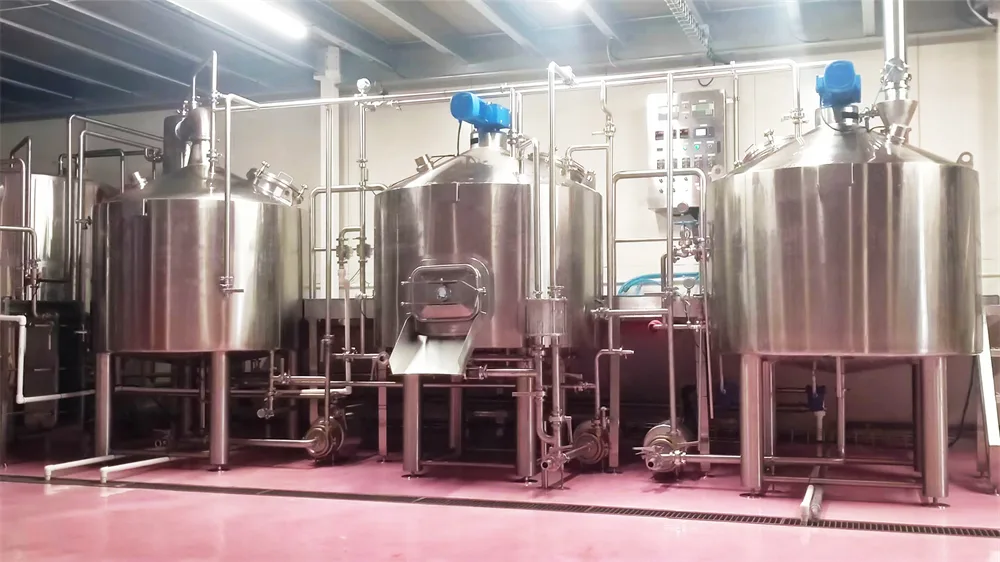
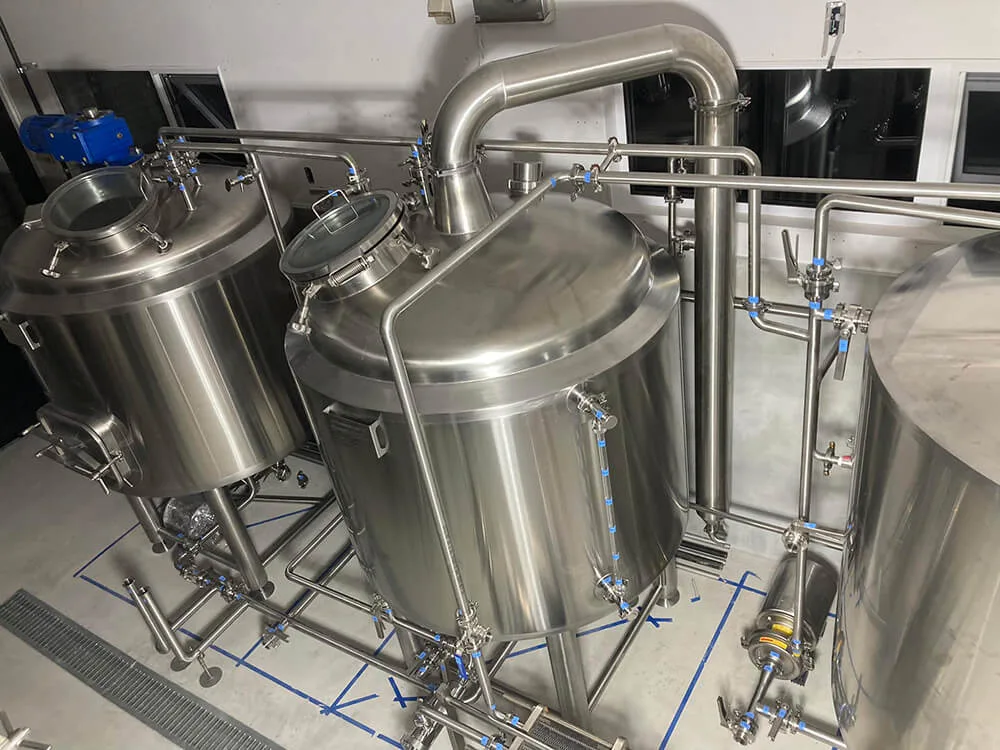
The brewing system brewhouse is typically designed as a five-vessel brewing system, including:
- Mash tun
- Lauter tun
- Temporary wort tank
- Boiling kettle
- Whirlpool tank
This configuration allows efficient wort production while maintaining flexibility for different beer recipes.
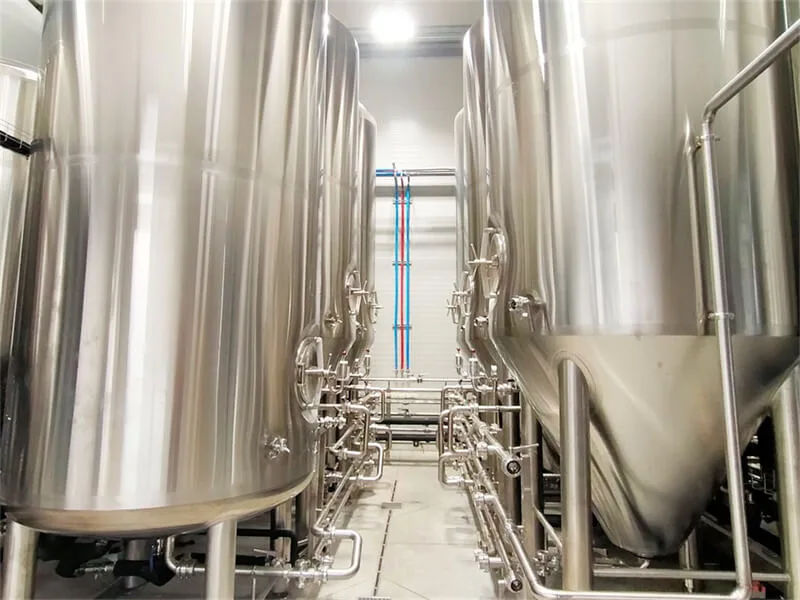
Fermentation System Design
Fermentation capacity determines the maximum brewing output of a craft brewery.
Typical configuration for a 30,000 HL brewery includes:
- Average fermentation cycle: 20 days
- Total fermentation capacity: 1,800 HL
Fermenter configuration example:
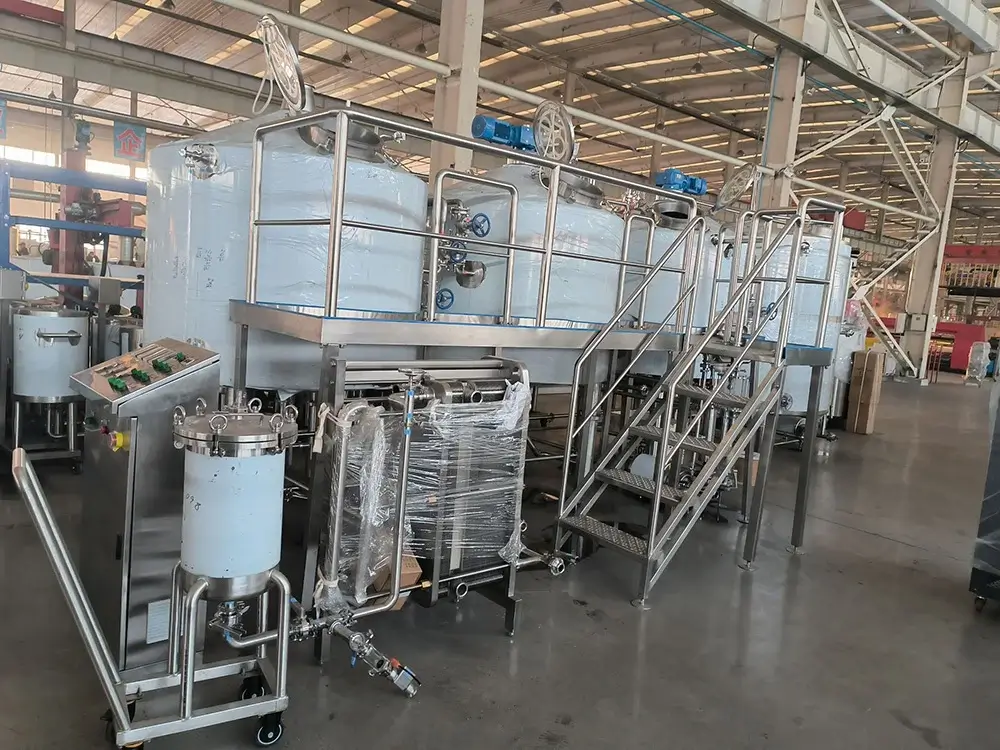
- 30 HL fermentation tanks × 10
- 60 HL fermentation tanks × 10
- 90 HL fermentation tanks × 10
This mixed-capacity configuration allows breweries to produce both high-volume flagship beers and small-batch craft beers.
Bright Beer Tanks and Filtration
Bright beer tanks are used for conditioning beer before packaging.
Typical configuration includes:
- 30 HL bright beer tank × 1
- 60 HL bright beer tank × 1
- 90 HL bright beer tank × 1
Filtration capacity:
- Maximum filtration time: 6 hours
- Filtration capacity: 15 HL/hour
These systems ensure stable beer clarity and packaging efficiency.
Core Brewery Equipment List
Raw Material Handling Equipment
Raw material processing equipment includes:
- Malt silo system (50 m³ ×1, 100 m³ ×2)
- Wet malt milling system (>15 tons/hour)
- Rice milling system (>9 tons/hour)
These systems ensure efficient preparation of brewing ingredients.
Brewing and Fermentation Equipment
Main brewery equipment includes:
- Fully automated 15 HL brewhouse system
- Spent grain handling system
- Fermentation tank system (1,800 HL total)
- Yeast recovery and pitching system (3000 L ×2)
- Yeast propagation system (500 L)
Additional processing equipment:
- Centrifugal filtration system (>15 HL/hour)
- Instant pasteurization system (>15 HL/hour)
Brewing Utility Systems
Reliable utility systems are essential for brewery operations.
Key support systems include:
- Hot water supply system (50 m³/hour)
- Cold water supply system (50 m³/hour)
- Refrigeration system
- Brewing water treatment system
- Deoxygenated water supply system
- High-gravity dilution system
These systems support stable brewing and efficient energy use.
Brewery CIP Cleaning System
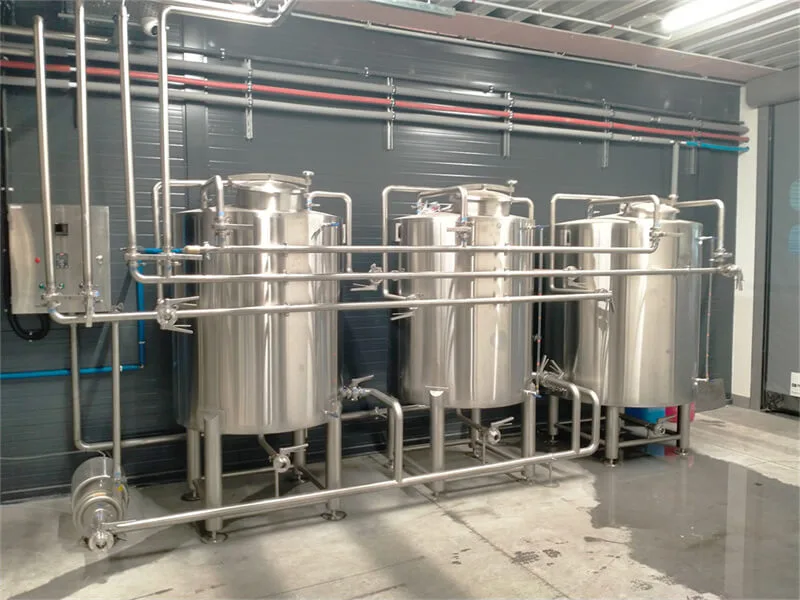
Hygiene management is essential in beer production. Modern breweries use CIP (Clean-in-Place) systems to clean brewing tanks and pipelines.
Typical CIP configuration includes:
Brewhouse CIP System
- 3000 L hot caustic tank
- 3000 L hot water tank
Fermentation CIP System
- 8000 L hot caustic tank
- 8000 L acid tank
- 8000 L sterilization tank
- 8000 L hot water tank
These automated systems ensure efficient sanitation and reduce labor requirements.
Brewery Utility Engineering Systems
A large craft brewery brewing system also requires reliable infrastructure.
Typical systems include:
- Water treatment system (25 m³/hour)
- Steam boiler system (500 kg/h ×1, 1 ton/h ×1)
- Compressed air system (2.4 m³/min, 15 kW)
- CO₂ storage system (20 m³ liquid CO₂ tank)
- Electrical power distribution system
- Pipe bridge and pipeline support system
These engineering systems ensure stable energy supply for brewery operations.
Packaging Line for Craft Breweries
The packaging workshop is responsible for preparing finished beer for market distribution.
Typical packaging equipment includes:
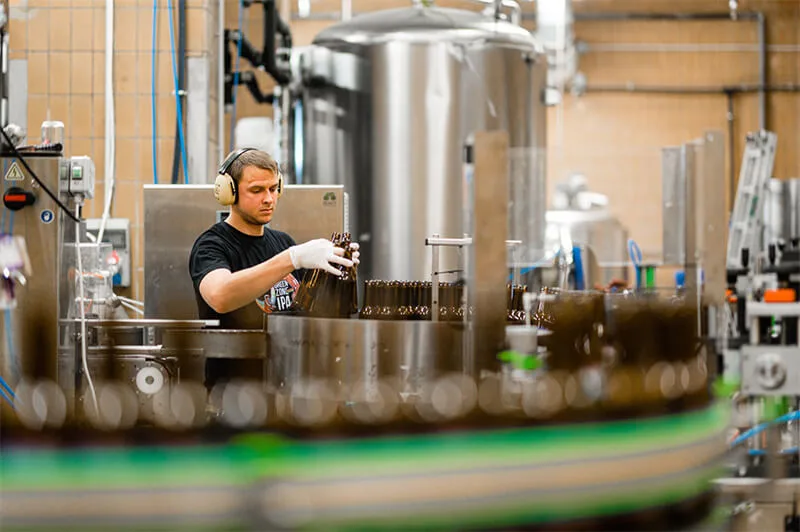
- Glass bottle filling line
- Aluminum can filling line
- Automatic keg washing and filling line
Multiple packaging formats allow breweries to supply bars, restaurants, retail stores, and distributors efficiently.
Conclusion: A Scalable Craft Brewery Solution
A 30,000 HL craft brewery represents an ideal solution for regional beer brands looking to expand production while maintaining craft brewing flexibility.
With advanced brewery equipment, efficient brewing systems, and well-planned production processes, breweries can achieve:
- Stable product quality
- High production efficiency
- Reduced operational costs
- Sustainable long-term growth
A complete brewery solution that integrates brewing technology, equipment engineering, and facility planning provides a solid foundation for building a successful modern craft brewery.
If you are planning to build a brewery, feel free to contact us for our equipment list.