Kombucha fermentation requires a different approach to tank design compared with conventional beer fermentation. Although both beverages rely on microbial activity to transform fermentable ingredients, their fermentation environments and oxygen requirements are fundamentally different.
Traditional beer fermentation is generally conducted in closed vessels to limit oxygen exposure and protect product quality. Kombucha fermentation, however, involves a symbiotic culture of bacteria and yeast (SCOBY). While yeast converts sugars into ethanol and carbon dioxide, acetic acid bacteria use oxygen to oxidize ethanol into organic acids.
This makes oxygen management one of the most important considerations in commercial kombucha equipment design.
For manufacturers planning a commercial kombucha production facility, three main fermentation tank configurations are worth evaluating: open fermentation tanks, closed fermentation tanks, and controlled-aeration fermentation tanks.
Each design offers different advantages in terms of oxygen transfer, contamination prevention, process control, cleaning requirements, and production scalability.
This article examines how these three systems differ in structure and operation, how to select the appropriate configuration, and what engineering factors should be considered when designing a commercial kombucha fermentation system.
1. Why Kombucha Fermentation Requires Different Tank Design
The primary fermentation of kombucha involves two groups of microorganisms: yeast and acetic acid bacteria.
Yeast converts sugars into ethanol and carbon dioxide. Acetic acid bacteria then use oxygen to oxidize ethanol and produce acetic acid and other organic acids.
Because acetic acid bacteria are aerobic microorganisms, oxygen availability directly influences fermentation performance.
This creates an important engineering requirement: a kombucha fermentation tank must provide an appropriate oxygen environment while maintaining sanitary production conditions.
Three process factors determine the tank design:
Oxygen Transfer
Oxygen must be available to support acetic acid bacteria. The required oxygen transfer rate depends on the culture, fermentation conditions, liquid depth, and production method.
Microbial Protection
Although oxygen is required, uncontrolled exposure to the surrounding environment can introduce unwanted microorganisms, insects, dust, and other contaminants.
Fermentation Consistency
Commercial production requires repeatable fermentation conditions across different batches. Temperature, oxygen availability, liquid composition, and fermentation time must be managed consistently.
These requirements explain why conventional closed beer fermenters cannot automatically be considered suitable for primary kombucha fermentation without modification.
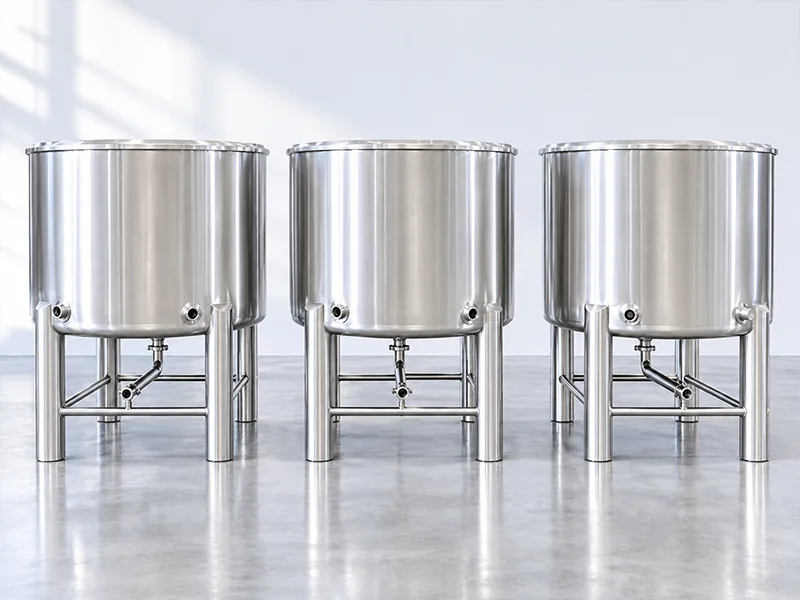
2. Open Fermentation Tanks: Traditional Oxygen-Accessible Design
Open fermentation is one of the traditional methods used in kombucha production.
In this configuration, the fermentation liquid is exposed to the surrounding air through an open vessel or a large breathable opening. A SCOBY may develop at the liquid surface, forming a cellulose-based pellicle.
Structural Design
A commercial open fermentation tank generally consists of:
- Food-grade stainless steel tank body.
- Wide upper opening or removable cover.
- Breathable protective covering or suitable hygienic ventilation arrangement.
- Temperature monitoring and control components where required.
- Product sampling and discharge connections.
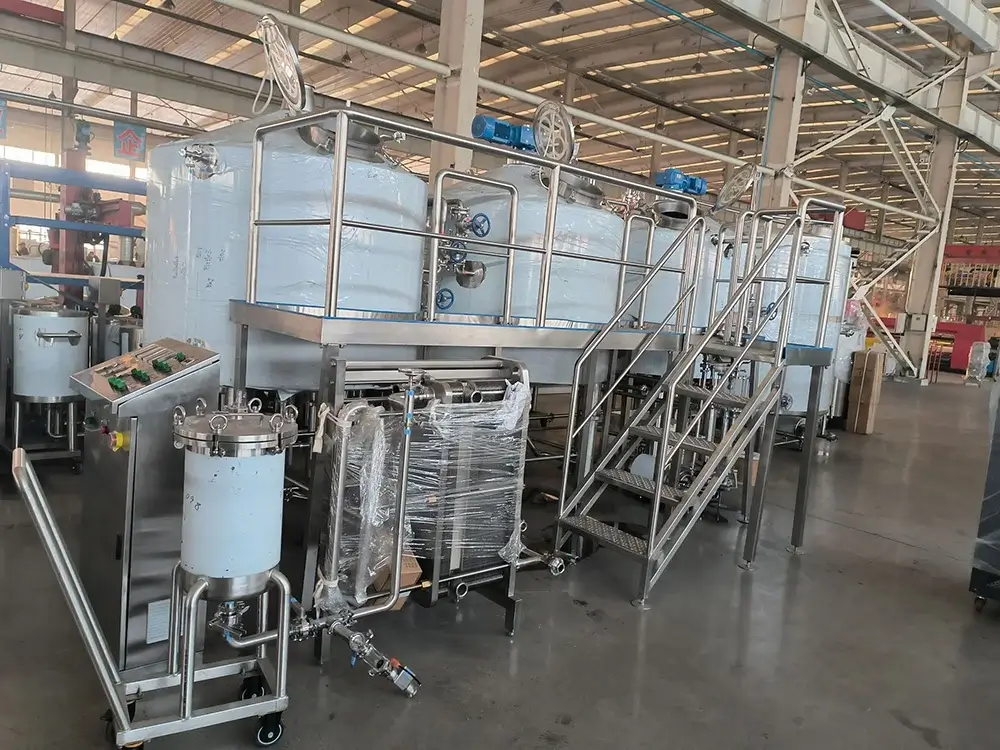
- Supporting structure and access platform for larger vessels.
Unlike conventional beer fermentation tanks, an open kombucha vessel does not require a fully sealed pressure-resistant configuration for its primary fermentation function.
Tank geometry is particularly important.
A relatively large diameter and suitable liquid surface area can support gas exchange between the fermentation liquid and surrounding air. The vessel’s diameter-to-height ratio should therefore be considered together with working volume and fermentation depth.
酸素管理
Oxygen enters primarily through the exposed liquid surface.
The actual oxygen transfer rate depends on the liquid surface area, temperature, natural or forced air movement, and the physical characteristics of the fermentation liquid.
A breathable cover can help reduce contamination risks while allowing gas exchange. However, it does not provide precise control over oxygen supply.
メリット
Open fermentation tanks offer a relatively simple structure and are suitable for traditional kombucha processes.
Their main advantages include:
- Direct oxygen access.
- Simple equipment configuration.
- Compatibility with surface pellicle formation.
- Relatively straightforward operation.
- Lower equipment complexity compared with engineered aeration systems.
Limitations in Commercial Production
The main challenge is the difficulty of controlling environmental exposure.
As tank capacity increases, maintaining consistent fermentation conditions becomes more complicated. Dust, airborne microorganisms, temperature fluctuations, and variations in air circulation may affect different batches.
Large open vessels also require careful attention to cleaning access, cover design, operator safety, and environmental hygiene.
For this reason, open fermentation can be appropriate for certain traditional production processes, but large-scale facilities should evaluate whether a more controlled oxygen management system is necessary.
3. Closed Fermentation Tanks: Sealed Vessel Configuration
Closed fermentation tanks are commonly used in beer, wine, and other beverage production processes.
In kombucha manufacturing, closed vessels may be used for secondary fermentation, blending, maturation, and certain primary fermentation processes where oxygen is supplied through a separately engineered system.
Structural Design
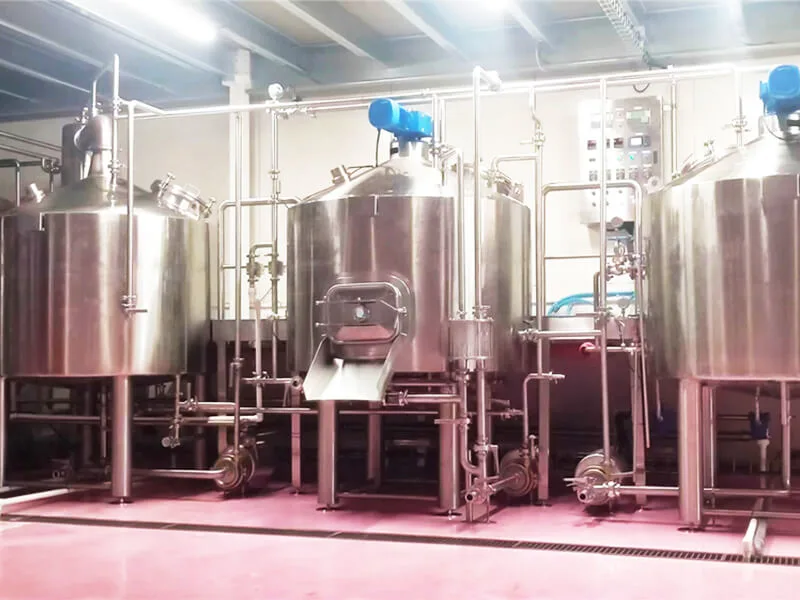
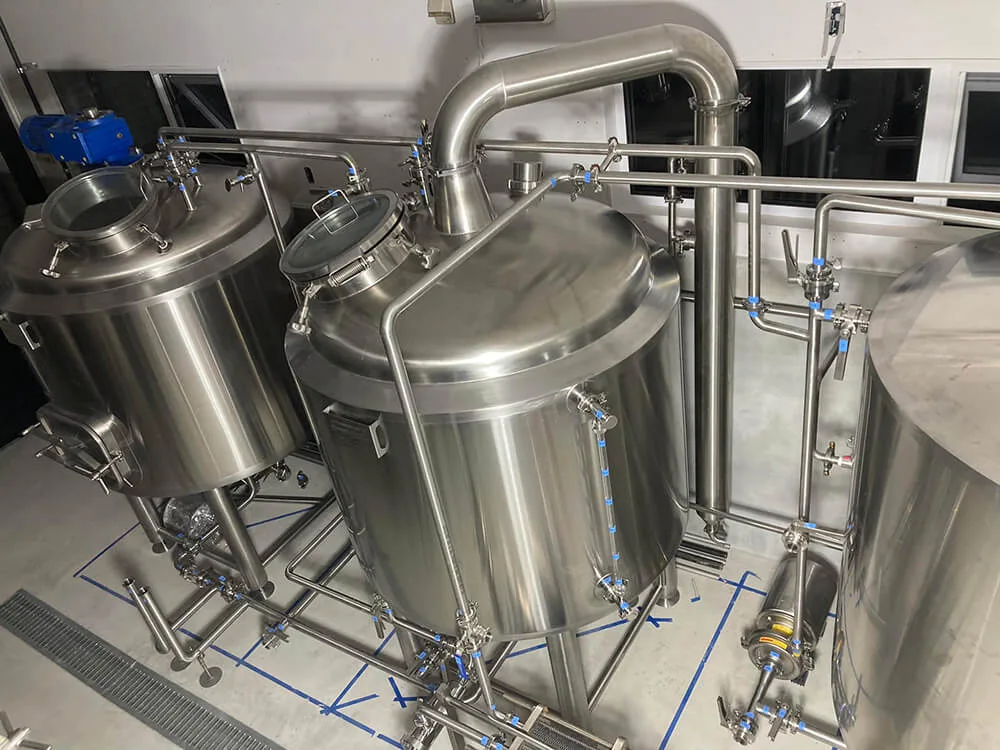
A typical closed fermentation tank includes:
- Cylindrical stainless steel vessel body.
- Dished or conical bottom.
- Sealed manway.
- Sanitary product inlet and outlet connections.
- Sampling valve.
- CIP spray device.
- Temperature sensor.
- Pressure and vacuum protection where applicable.
- Optional cooling jacket and insulation.
These components allow the tank to operate as a more enclosed production environment.
Depending on the process, the vessel may also include a gas inlet, exhaust connection, and additional instrumentation.
酸素管理
A conventional sealed tank limits direct oxygen exposure.
For primary kombucha fermentation, this can restrict the oxygen supply required by acetic acid bacteria unless a suitable oxygen transfer system is incorporated.
For this reason, an ordinary closed beer fermenter should not be selected for aerobic primary kombucha fermentation simply because its volume and cooling configuration appear suitable.
However, closed tanks can be useful for secondary fermentation and other stages where oxygen exposure needs to be minimized.
For processes requiring oxygen during primary fermentation, a closed vessel can be redesigned with controlled aeration.
メリット
Closed tanks offer several advantages for commercial production:
- Better protection against external contamination.
- Easier integration with sanitary pipelines.
- Compatibility with automated CIP systems.
- More convenient temperature management.
- Reduced direct environmental exposure.
- Easier integration into enclosed production facilities.
制限事項
The main limitation is insufficient oxygen availability when the tank is operated as a conventional sealed vessel during aerobic primary fermentation.
A closed tank also requires appropriate pressure and vacuum protection based on its actual operating conditions. Carbon dioxide generation, aeration, venting, and cleaning operations must all be considered during engineering design.
A pressure-rated vessel is not automatically suitable for every kombucha process. Its pressure rating and protection devices must match the intended operating mode.
4. Controlled-Aeration Fermentation Tanks: A More Flexible Commercial Solution
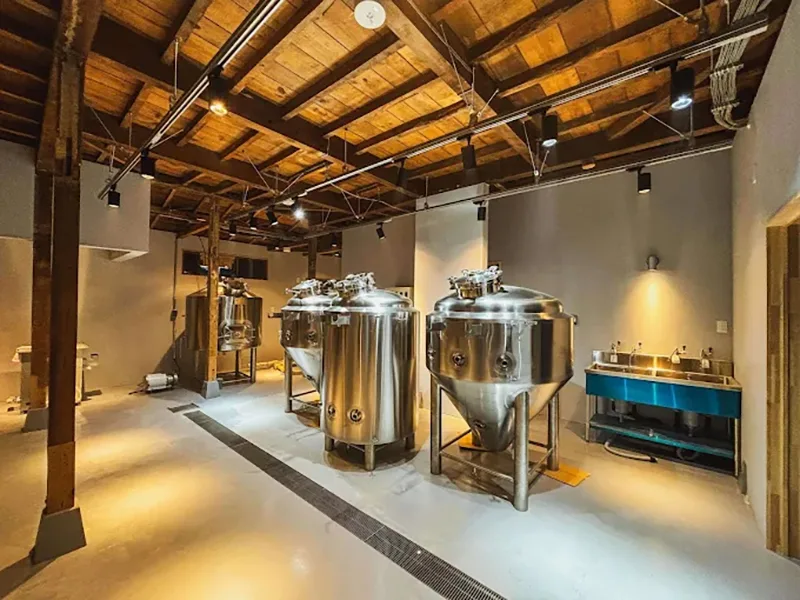
Controlled-aeration fermentation tanks combine the enclosed structure of a stainless steel vessel with an engineered oxygen supply system.
Rather than relying entirely on ambient air exposure, the tank introduces filtered air through dedicated connections and manages exhaust through an appropriate gas-handling arrangement.
This configuration can provide greater control over oxygen delivery while maintaining a more protected fermentation environment.
For commercial kombucha manufacturers, controlled aeration is an option worth evaluating when production consistency, process monitoring, and equipment integration become important priorities.
Structural Design
A controlled-aeration fermentation tank may include:
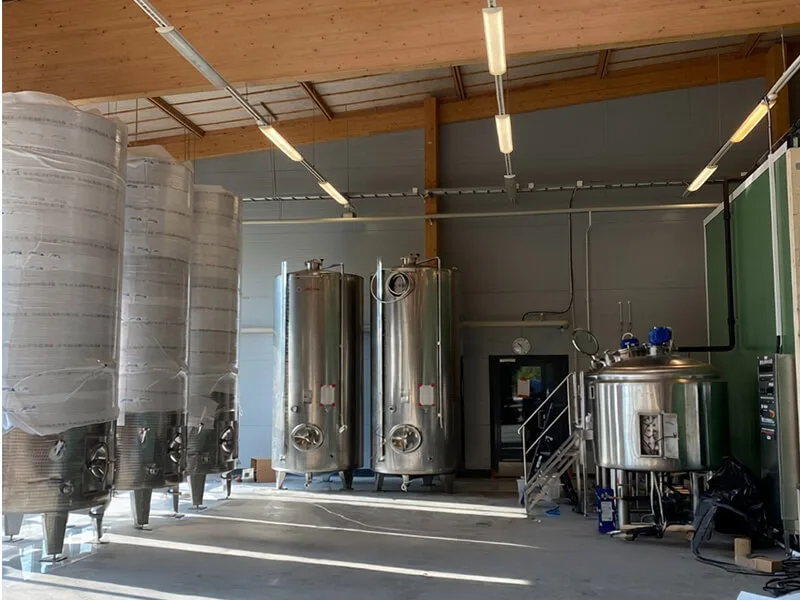
- SUS304 or SUS316L stainless steel vessel.
- Cooling or heating jacket.
- Thermal insulation.
- Filtered air inlet.
- Air distribution pipeline.
- Suitable diffuser or sparging device, if validated for the process.
- Exhaust gas outlet.
- Sampling and inspection ports.
- Temperature and process monitoring instruments.
- PLC-based control system.
- CIP spray device and cleaning connections.
The final configuration should be developed according to the fermentation method and the required oxygen transfer performance.
Air Supply and Filtration
Compressed air or another suitable air source can be introduced through a sanitary air treatment system.
The air supply arrangement may include:
- Air compressor or central air supply.
- Air filtration and treatment equipment.
- Pressure regulation.
- Flow measurement or control.
- Sanitary pipeline.
- Tank air distribution connection.
The filtration specification should be determined through the plant’s hygiene risk assessment and process validation.
The air supply must also be suitable for contact with the beverage. Oil carryover, moisture, particles, and unwanted contaminants should be controlled.
Oxygen Distribution
There are different ways to introduce air into a fermentation tank.
Surface Aeration
Air is supplied above the liquid surface or through a controlled ventilation arrangement.
This approach maintains oxygen exchange without necessarily introducing bubbles directly into the fermentation liquid.
Subsurface Aeration
Air is introduced below the liquid surface through a suitable distribution device.
This can increase gas-liquid contact, but its effectiveness depends on bubble size, flow rate, liquid depth, and vessel geometry.
Subsurface aeration should be carefully evaluated because excessive aeration can cause foaming, alter fermentation behavior, and increase volatile compound losses.
The aeration method should therefore be selected through process trials rather than relying solely on equipment specifications.
Temperature and Process Monitoring
Controlled-aeration systems can be integrated with temperature sensors, airflow monitoring, and PLC controls.
Depending on the production requirements, the control system may manage:
- Fermentation temperature.
- Air supply flow.
- Aeration operating periods.
- Exhaust conditions.
- Cooling and heating cycles.
- Alarm notifications.
Additional pH and acidity monitoring can help operators evaluate fermentation progress.
However, pH alone does not fully represent the acid profile or fermentation endpoint. Titratable acidity and other product quality indicators should also be considered.
Advantages for Commercial Production
Controlled-aeration tanks offer several engineering advantages:
- More consistent air supply conditions.
- Reduced dependence on uncontrolled ambient exposure.
- Better integration with automated production systems.
- Flexible adjustment of oxygen delivery.
- Improved batch monitoring.
- Greater compatibility with enclosed production layouts.
The main considerations are higher equipment complexity, additional air treatment requirements, and the need for process validation.
5. Open vs. Closed vs. Controlled-Aeration Tanks: Key Differences
The three configurations serve different production requirements.
| Design Factor | Open Tank | Closed Tank | Controlled-Aeration Tank |
|---|---|---|---|
| Oxygen Supply | Ambient exposure | Limited unless modified | Engineered air supply |
| Environmental Protection | Depends on cover and room hygiene | Enclosed vessel | Enclosed vessel with filtered air |
| Oxygen Control | 限定 | Limited without aeration | Adjustable through system design |
| Surface Pellicle | Supports formation | Depends on process | Depends on process |
| 温度管理 | Optional jacket | Jacket available | Jacket available |
| オートメーション | Basic to moderate | Moderate to high | High integration potential |
| CIP Integration | Requires specific design | Straightforward integration | Straightforward integration with air-system considerations |
| 代表的な用途 | Traditional primary fermentation | Secondary fermentation and storage | Controlled primary fermentation |
There is no universally superior configuration.
Open systems may be appropriate for traditional processes that depend on surface exposure. Closed systems are useful when oxygen exposure should be minimized. Controlled-aeration systems offer a middle ground for manufacturers seeking a more engineered approach to aerobic fermentation.
The final selection should be based on the fermentation culture, product characteristics, production scale, and validated operating conditions.
6. How Tank Geometry Influences Oxygen Transfer
Tank geometry is one of the most important factors in kombucha fermentation equipment design.
It influences liquid depth, gas-liquid contact, temperature distribution, cleaning accessibility, and the way oxygen reaches the microorganisms.
Diameter-to-Height Ratio
For open fermentation tanks, a larger liquid surface area relative to working volume may support oxygen exchange.
For controlled-aeration systems, tank geometry also influences bubble distribution, mixing patterns, and oxygen transfer efficiency.
An excessively tall vessel may create differences in dissolved oxygen between different liquid depths, while a very wide vessel requires more floor space.
The optimal geometry depends on whether oxygen enters through the surface or is supplied through an engineered aeration system.
Working Volume and Headspace
Tank capacity should be calculated according to usable working volume rather than nominal volume alone.
Adequate headspace is necessary for gas release, foam management, and operational flexibility.
The required headspace depends on the fermentation characteristics, aeration method, and expected foaming behavior.
Bottom Structure
The bottom design should support complete product discharge and efficient cleaning.
A sloped or dished bottom can help reduce liquid retention and improve drainage.
For vessels containing surface cultures or suspended biological material, the discharge arrangement should also minimize unwanted product losses.
7. Temperature Control, Material Selection, and Hygienic Design
Regardless of the selected fermentation configuration, the vessel must meet the material and sanitary requirements of commercial beverage production.
Stainless Steel Material
SUS304 is widely used in food and beverage equipment because of its corrosion resistance, fabrication properties, and cost effectiveness.
SUS316L may be considered for more demanding chemical exposure conditions.
Because kombucha becomes acidic during fermentation, material selection should consider product acidity, cleaning chemicals, temperature, and exposure time.
Surface Finish and Welding
Internal surface quality directly affects cleaning performance.
Important manufacturing considerations include:
- Smooth product-contact surfaces.
- Properly finished internal welds.
- Hygienic nozzle and connection design.
- Appropriate surface treatment.
- Minimized product retention areas.
The required surface roughness should be specified according to the project’s hygienic design requirements.
Jacket and Insulation
A cooling or heating jacket can help maintain fermentation temperature.
Common jacket configurations include dimple jackets and half-pipe jackets.
Polyurethane insulation may be added to reduce heat exchange with the environment.
The cooling or heating capacity should be calculated according to tank volume, product temperature, ambient conditions, and the desired temperature recovery time.
CIP and Sanitation
CIP systems can improve cleaning consistency in commercial facilities.
A typical arrangement includes a cleaning tank, circulation pump, supply and return pipelines, and appropriately positioned spray devices.
For controlled-aeration vessels, the air inlet, exhaust line, and gas distribution components must also be included in the cleaning and sanitation strategy.
A sanitary air system and a validated CIP procedure are both important. One cannot replace the other.
8. Engineering a Commercial Kombucha Fermentation System
Selecting the correct tank structure is only one part of designing a commercial kombucha production facility.
The complete process should coordinate tea preparation, fermentation, blending, cooling, cleaning, and packaging.
A typical production configuration may include:
1. Tea Extraction and Preparation System
Tea preparation tanks extract tea components and allow controlled mixing with sugar and water.
2. Primary Fermentation Tanks
Open or controlled-aeration vessels are selected according to the fermentation method.
3. Secondary Fermentation and Blending Tanks
These tanks support flavor adjustment, ingredient mixing, and further fermentation where required.
4. Cooling and Storage Tanks
Used to control product temperature and prepare the beverage for downstream processing.
5. CIP System
Provides cleaning circulation for fermentation tanks, blending vessels, and process pipelines.
6. Filling and Packaging System
Completes production through bottle, can, or keg filling.
The capacity of each module should be coordinated with the fermentation cycle and packaging schedule.
Example: Designing a 5,000L per Day Kombucha Production Facility
Assume a facility targets 5,000L of finished kombucha per day and has an average primary fermentation cycle of 8 days.
The theoretical minimum working fermentation volume is:
5,000L × 8 days = 40,000L
This calculation does not include cleaning downtime, batch overlap, process losses, or additional capacity requirements.
If the selected tanks have a nominal capacity of 5,000L and an illustrative working fill ratio of 80%, each tank provides 4,000L of working volume.
The theoretical number of tanks required is:
40,000L ÷ 4,000L = 10 tanks
In practice, additional capacity or scheduling flexibility may be needed.
A multi-tank arrangement allows staggered inoculation, independent batch monitoring, and planned cleaning cycles.
This is particularly important when production must continue while other tanks are being emptied or cleaned.
9. Why Choose METO for Customized Kombucha Fermentation Tanks?
Selecting the right fermentation tank requires more than choosing a vessel from a standard product catalog. The tank must be designed around the actual fermentation process and integrated into the complete production system.
METO is a brewery and fermentation equipment manufacturer integrating engineering design, equipment manufacturing, project delivery, installation, and commissioning.
With manufacturing experience in beverage processing equipment and industrial fermentation vessels, METO provides customized stainless steel tank solutions for different production requirements.
Our manufacturing and engineering capabilities include:
- SUS304 and SUS316L stainless steel tank fabrication.
- Customized open and closed vessel configurations.
- Jacketed heating and cooling systems.
- Polyurethane insulation.
- Hygienic pipelines, valves, and fittings.
- CIP cleaning system integration.
- Filtered air supply and aeration connection design.
- PLC-based temperature and process monitoring options.
For kombucha projects, tank geometry, oxygen management, ventilation configuration, and cleaning accessibility can be evaluated together during the engineering stage.
Rather than applying conventional beer fermenter designs directly to kombucha production, METO can develop equipment configurations according to the customer’s fermentation method and production objectives.
As a trade and manufacturing integrated supplier, METO supports customers from equipment selection and technical communication through fabrication, factory inspection, installation, and commissioning.
This approach helps ensure that the supplied equipment matches the intended production process and the practical requirements of the manufacturing facility.
結論
Open, closed, and controlled-aeration fermentation tanks each serve different purposes in kombucha production.
Open fermentation tanks provide direct oxygen access and support traditional surface fermentation. Closed tanks offer better environmental protection and are suitable for secondary fermentation and other processes where oxygen exposure should be limited. Controlled-aeration tanks combine an enclosed vessel structure with engineered oxygen delivery, making them an option for commercial producers seeking greater process control.
The most suitable design depends on the fermentation culture, oxygen transfer requirements, production capacity, sanitation strategy, and automation objectives.
For commercial kombucha manufacturers, tank design should be considered as part of a complete production engineering project rather than an isolated equipment purchase.
METO provides customized stainless steel fermentation tanks and integrated beverage processing solutions to support reliable and scalable kombucha production.