A kombucha brewery is more than just a beverage production facility; it acts as a laboratory for microorganisms. At its core, it utilizes a Symbiotic Culture of Bacteria and Yeast (SCOBY) to transform sweet tea into a fermented drink rich in probiotics, carbonation, and organic acids.
For home enthusiasts: It might simply be a kitchen corner equipped with glass jars and breathable cloths.
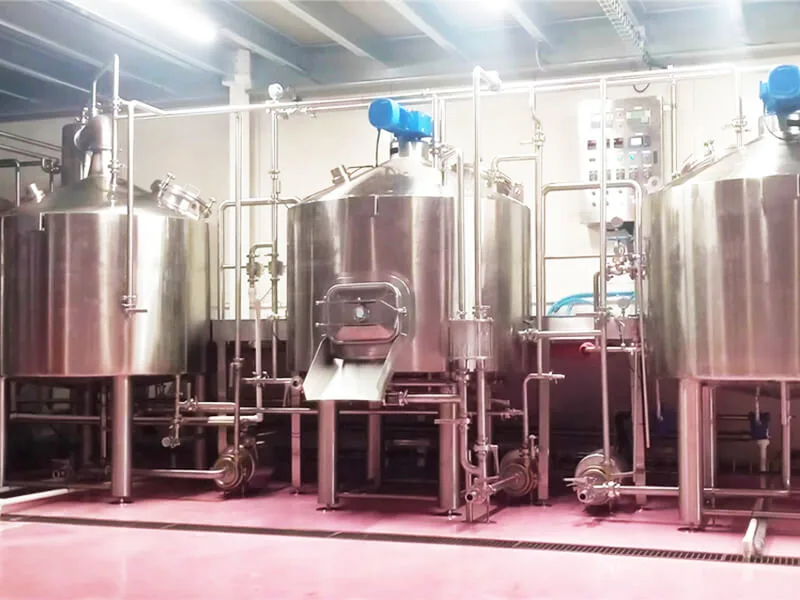
For commercial breweries: It is a complete industrial system encompassing raw material processing, primary fermentation, secondary fermentation, bottling, and cold chain storage.
Market Research: Finding Your Niche
Before investing in equipment, you must gain insight into market trends. According to industry observations, the kombucha market is evolving towards low-sugar, functional beverages (such as sleep-aid or beauty-boosting), and “Hard Kombucha” (alcoholic versions).
It is recommended to study the flavor profiles of major brands like GT’s as well as local craft breweries. Additionally, familiarize yourself with local food safety and alcoholic beverage regulations in advance, as the fermentation process inevitably produces trace amounts of alcohol.
Brewing Basics: Choosing Your Tea and Sugar
As emphasized in many beginner guides, the cornerstone of brewing lies in the sweet tea base. The quality of ingredients directly determines the health of your SCOBY and the final taste.
1. Choosing Your Tea
The SCOBY requires nitrogen and minerals found in the Camellia sinensis plant.
- Black Tea: The first choice. It is nutrient-rich, promotes robust SCOBY growth, and offers a full-bodied flavor (e.g., Ceylon or Assam).
- Green Tea: A great option for a refreshing taste and high antioxidant content (e.g., Sencha or Jasmine).
- Oolong Tea: Offers complex flavor layers, suitable for advanced blending.
Note: Avoid using herbal teas or teas with essential oils (like Earl Grey) during Primary Fermentation (F1), as the oils can damage the SCOBY. Save these for flavoring during the second fermentation.
2. Choosing Your Sugar
Sugar is the “fuel” that feeds the SCOBY, not for sweetness.
- Best Options: White granulated sugar or organic cane sugar. These are easily broken down by yeast, ensuring stable fermentation.
- Advanced Options: Raw honey, maple syrup, or coconut sugar. Be aware that honey has antibacterial properties that might stress the SCOBY.
- Avoid: Artificial sweeteners (like erythritol or sucralose). The SCOBY cannot metabolize them, and fermentation will not occur.
Essential Kombucha Equipment List
Depending on your brewing scale, the equipment configuration varies. Here is the core checklist:
Home Brewing Starter Kit
- Fermentation Vessel: Wide-mouth glass jar (1 gallon / approx. 3.8 liters+). Avoid metal, as acidic liquid can corrode it.
- Cover: Coffee filter, cheesecloth, or paper towel secured with a rubber band (must be breathable, never sealed tight).
- Bottling Bottles: Pressure-resistant glass bottles (such as swing-top bottles) for carbonation during secondary fermentation.
- Auxiliary Tools: Non-metal stirring spoon and pH test strips (ensure acidity is between 2.5–3.5 for safety).
Commercial Brewery Core Equipment
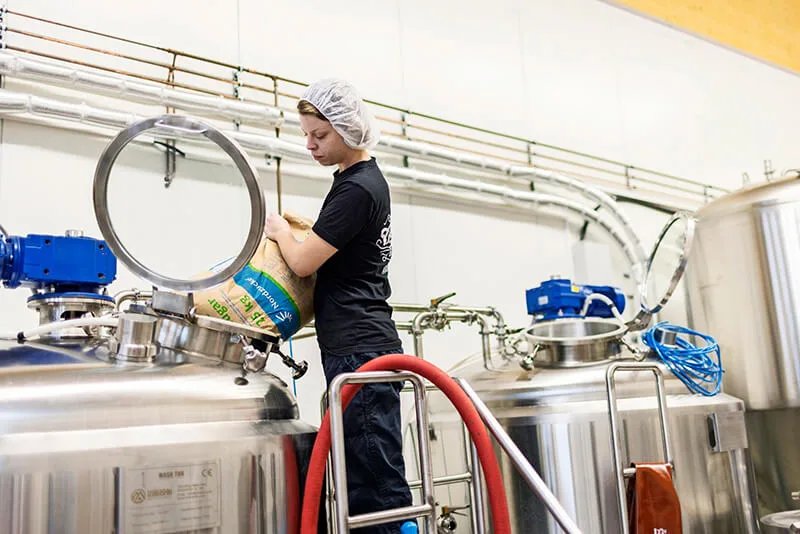
- Large-scale Tea Brewing System: Stainless steel boilers for efficient tea extraction.
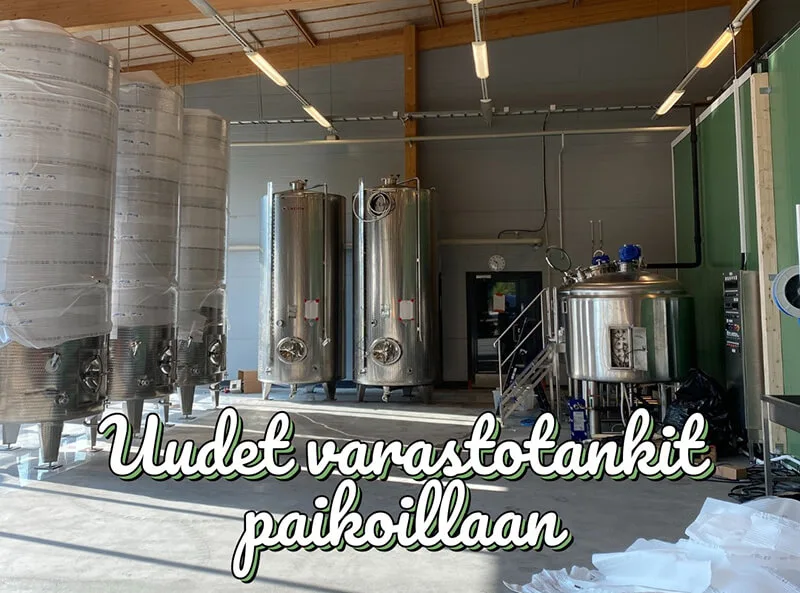
- 発酵タンク: Stainless steel conical bottom tanks (1000L+) with cooling jackets for precise temperature control.
- Filtration & Bottling Line: Automated equipment for cleaning, filling, and capping.
Commercial Brewery Location and Layout
If your goal is commercialization, your facility must comply with Good Manufacturing Practices (GMP).
- Raw Material Area: For washing and boiling water, tea, and sugar.
- Primary Fermentation Area: The core zone. Must be maintained at 20°C – 27°C (68°F – 80°F), protected from direct light, and well-ventilated.
- Secondary Fermentation & Bottling: For adding fruits/spices and aseptic bottling.
- Cold Chain Storage: Refrigeration is essential to halt fermentation and maintain consistent flavor.
Step-by-Step Kombucha Brewing Process
According to standard brewing guides, the process is divided into two critical stages.
Stage 1: Primary Fermentation – Making the Base
Step 1: Brew Your Sweet Tea
Boil about 1 liter of filtered water. Remove from heat and add tea bags, steeping for 5–10 minutes. Longer steeping increases tannins, which benefits SCOBY health but may make the tea more astringent. Remove tea bags and stir in sugar while hot until fully dissolved.
Step 2: Cool the Tea (Crucial Step!)
Add remaining cold filtered water to lower the temperature. Never add the SCOBY to hot liquid. Temperatures above 35°C (95°F) will damage or kill the culture. Your target is room temperature, ideally 20–25°C (68–77°F). Patience is key here.
Step 3: Add SCOBY and Starter Liquid
Pour the cooled sweet tea into a clean glass jar. Add the starter liquid first to acidify the environment and prevent contamination. Then, gently place the SCOBY on top. It may sink, float sideways, or do something unexpected—this is normal.
Step 4: Check pH Levels
If you have pH strips, test the liquid. The starting pH should be 4.5 or lower. This acidity prevents harmful bacteria from competing with your SCOBY. If the pH is too high, add more starter liquid or a splash of distilled white vinegar.
Step 5: Cover and Ferment
Cover the jar tightly with a breathable cloth and secure it with a rubber band. Place it in a location that is:
- Warm: Ideally 20–27°C. Below 18°C slows fermentation; above 30°C may cause off-flavors.
- Dark: Away from direct sunlight (UV damages the culture).
- Clean: Away from strong odors (kombucha absorbs smells) and undisturbed.
Note: Temperature is the biggest variable. In a hot summer, fermentation may finish in 5 days; in winter, it can take up to 14 days.
Step 6: Taste and Test
Start tasting after 7 days using a clean straw. You are looking for a balance of sweet and sour—not too sweet (under-fermented) and not too vinegary (over-fermented). Most batches finish between 7 to 21 days. Trust your palate over the clock.
What to Expect During Fermentation
- New SCOBY forming: A thin, light, semi-transparent layer on top. A sign of health.
- Brown stringy bits: Yeast strands floating in the liquid. Completely normal.
- Original SCOBY darkening: Normal aging.
- Slight fizz: Carbon dioxide release. A good sign.
- Vinegary smell: Healthy kombucha aroma.
When to Worry: Signs of Contamination
- Fuzzy Mold: Any color (black, green, white, and fuzzy) on the surface. Discard everything.
- Unusual Odors: Rotten, sulfurous, or strong chemical smells (like nail polish remover).
- Pink/Abnormal Colors: Unless explained by added fruit, this indicates contamination.
Note: A flat, smooth, white film is often Kahm Yeast. Unpleasant but harmless.
Stage 2: Secondary Fermentation – Carbonation & Flavor
Step 1: Remove the SCOBY
With clean hands, remove the SCOBY layers (original and new). Place them in a clean bowl with 1–2 cups of kombucha to serve as starter liquid for your next batch.
Step 2: Bottle the Kombucha
Pour the kombucha into clean glass bottles, leaving about 2–3 cm of headspace. This space is critical for carbonation buildup without exploding the bottle.
Step 3: Add Flavorings
Add your desired flavorings directly to each bottle—fruits, juices, herbs, or spices. Seal the bottles tightly.
Step 4: Secondary Fermentation at Room Temperature
Leave sealed bottles at room temperature for 1 to 4 days. Residual yeast will consume the added sugars and create carbonation.
Important: “Burp” your bottles daily by briefly opening and resealing them. This releases excess pressure and helps you gauge carbonation levels to prevent explosions.
Step 5: Refrigerate and Enjoy
Once carbonation reaches your liking, move the bottles to the fridge. Cold temperatures halt fermentation and stabilize the flavor. Kombucha can be stored in the fridge for 1 to 3 months, with flavors developing and intensifying over time.
By following these detailed steps, you can brew safe, delicious kombucha and build a solid foundation for scaling from a home hobby to a commercial business. Happy brewing!
You can tell us your requirements for the brewery, and we will provide you with a turnkey solution within 24 hours.