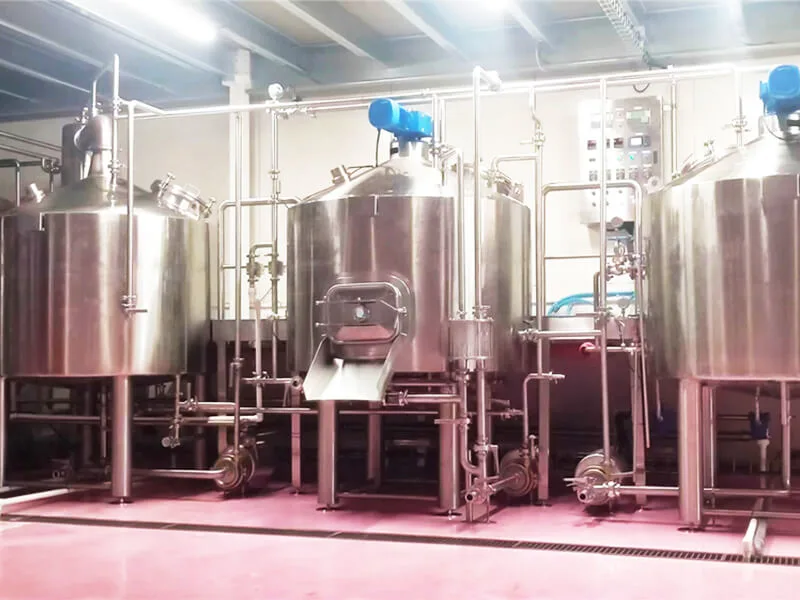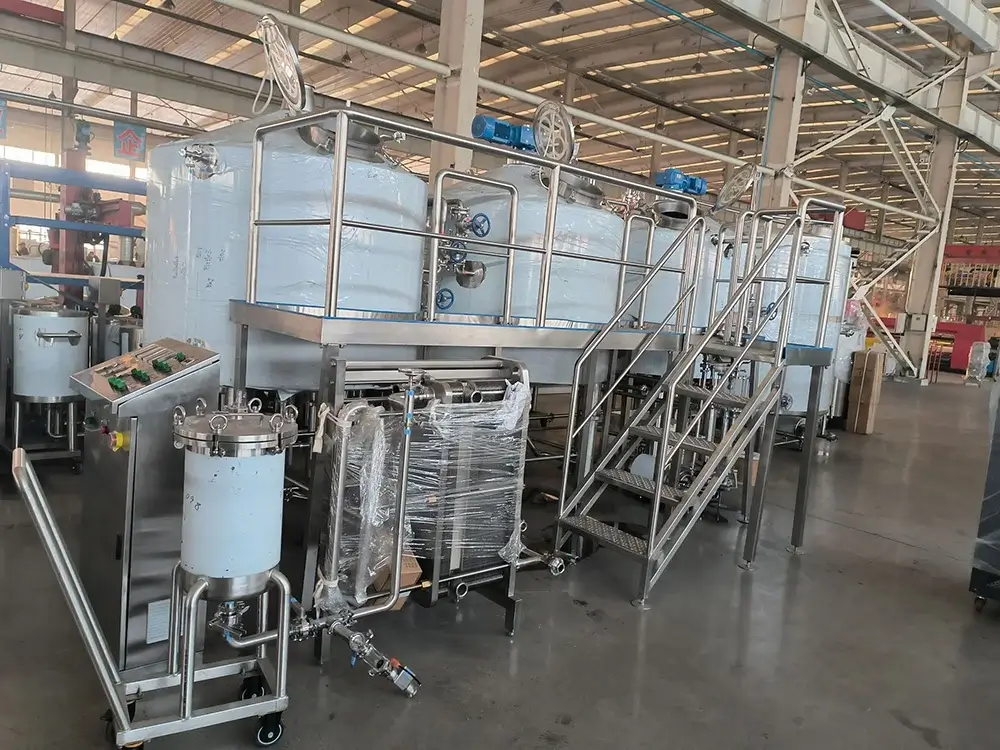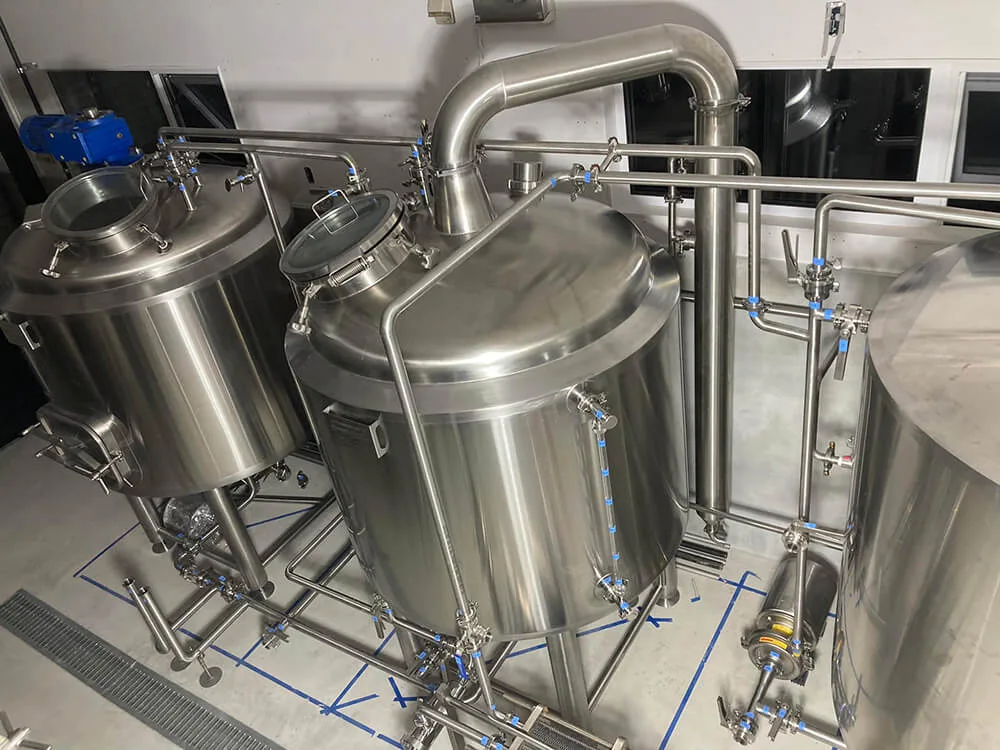
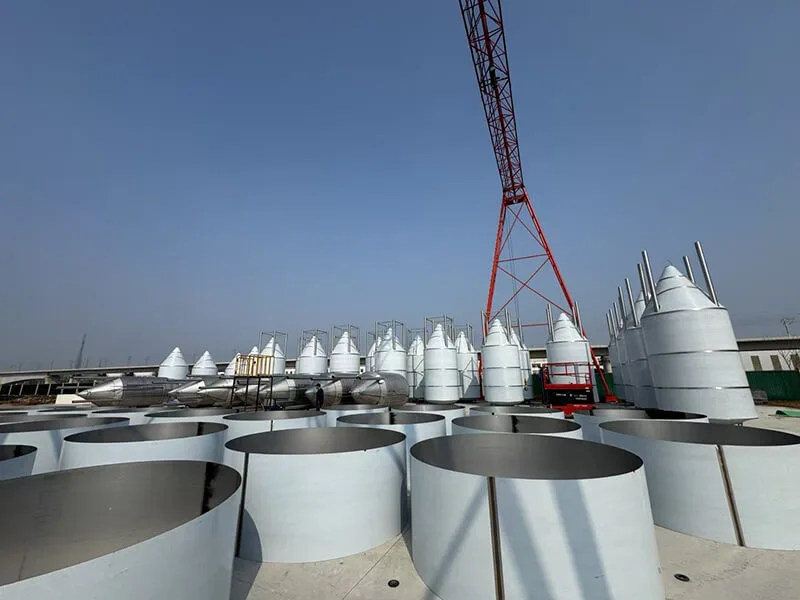
Commercial brewery equipment must do more than hold liquids and withstand daily operation. It must support consistent brewing processes, efficient cleaning, reliable temperature control, and long-term production needs. For breweries investing in a new system, understanding how equipment is manufactured can help them evaluate suppliers and make better purchasing decisions.
The manufacturing process involves several stages, including engineering design, stainless steel preparation, cutting, forming, welding, surface finishing, inspection, and final assembly. Each stage affects the equipment’s quality, functionality, and suitability for its intended application.
As a brewery equipment manufacturer, METO understands the importance of connecting engineering design with practical production requirements. This guide explains how commercial brewery equipment is manufactured and what buyers should look for when evaluating a manufacturer.
1. Engineering Design and Production Planning
Brewery equipment manufacturing begins long before stainless steel is cut. The first step is to translate the customer’s brewing requirements into an equipment design and production plan.
The design process typically considers several factors:
- Brewhouse capacity: The required batch volume and expected brewing frequency.
- Brewing process: The configuration of the mash tun, lauter tun, kettle, whirlpool, and other process vessels.
- Fermentation requirements: Tank capacity, fermentation schedules, temperature control, and the number of tanks needed.
- Heating and cooling: The selected heating method and the requirements for wort cooling and fermentation temperature control.
- Cleaning and sanitation: CIP connections, drainage, internal surface accessibility, and cleaning procedures.
- Installation conditions: Available floor space, ceiling height, utility connections, and equipment access.
For example, a 500L brewery designed for a brewpub has different operational priorities from a larger commercial brewery supplying multiple distribution channels. The equipment configuration should reflect the actual production plan rather than capacity alone.
Once the main requirements are confirmed, the manufacturer develops equipment drawings, vessel layouts, connection details, and other technical documents needed for production.
What buyers should check: Ask whether the manufacturer can provide drawings for review before fabrication begins. Confirm that the equipment configuration, connections, utilities, and installation requirements match your project.
2. Selecting Stainless Steel for Brewery Equipment
Stainless steel is widely used in commercial brewing because of its corrosion resistance, cleanability, durability, and suitability for food and beverage processing applications.
However, stainless steel grades are not interchangeable in every application. Material selection should consider the product, cleaning chemicals, operating conditions, and expected service life.
SUS304ステンレス鋼
SUS304 is commonly used for brewery vessels, fermentation tanks, piping, and other equipment where its corrosion resistance and mechanical properties are suitable for the application.
It is often a practical choice for many standard brewing processes.
SUS316L ステンレス鋼
SUS316L contains molybdenum, which generally improves resistance to certain forms of corrosion, particularly in chloride-containing environments. It may be appropriate for applications with more demanding material requirements.
The choice between SUS304 and SUS316L should be based on the actual process conditions rather than assuming that one grade is always necessary.
Material Traceability and Verification
Professional manufacturing requires the material grade to match the approved design and purchase specifications.
Depending on the project, buyers may request material certificates, heat-number traceability, or material identification testing. The availability and scope of these documents should be agreed upon before production.
What buyers should check: Confirm the specified stainless steel grade for each major component and clarify how the manufacturer verifies material compliance.
3. Stainless Steel Cutting and Plate Preparation
After the material is approved, stainless steel sheets and tubes are prepared according to the engineering drawings.
Cutting accuracy is important because vessel dimensions, openings, connection positions, and component alignment depend on the quality of the prepared material.
Manufacturers may use laser cutting, mechanical cutting, or other suitable methods depending on the material thickness, component geometry, and production requirements.
Typical preparation work includes:
- Cutting stainless steel plates to the required dimensions.
- Preparing openings for manways, nozzles, and process connections.
- Cutting tubes and structural components.
- Removing burrs and preparing edges for forming and welding.
- Checking dimensions before the next manufacturing stage.
Laser cutting can provide accurate, repeatable cuts for suitable components. However, the final quality also depends on the cutting parameters, edge preparation, material handling, and subsequent fabrication work.
Poorly prepared edges or inaccurate openings can create difficulties during assembly and welding. Careful inspection at this stage helps reduce rework later.
What buyers should check: Ask how the manufacturer controls cutting dimensions and verifies component conformity with the approved drawings.
4. Forming and Fabricating Tank Components
Stainless steel plates must be formed into the shapes required for the vessel design.
Depending on the equipment configuration, manufacturing may involve rolling cylindrical shells, forming conical bottoms, preparing dished heads, and fabricating support structures.
For a conical-bottom fermentation tank, the shell and cone must be formed to the specified geometry before they are joined. The manufacturer must also account for openings, fittings, support legs, cooling jackets, and other design features.
The fabrication process requires careful dimensional control. Incorrect geometry can affect component alignment, connection positioning, and the fit between the tank shell and its bottom section.
For jacketed vessels, the jacket design and fabrication sequence must also follow the approved engineering drawings. The design depends on the required heat-transfer arrangement and the specified operating conditions.
At this stage, manufacturers typically check component dimensions and alignment before welding.
What buyers should check: Confirm that the tank geometry, nozzle positions, support arrangement, and jacket configuration correspond to the approved drawings.
5. Welding Stainless Steel Brewery Equipment
Welding is one of the most important stages in stainless steel vessel manufacturing.
A weld must provide the required structural integrity while meeting the applicable process, hygiene, and surface-finish requirements. Weld quality depends on joint preparation, material compatibility, welding procedures, operator skills, and process control.
Manufacturers may use TIG welding, plasma welding, laser welding, or other suitable techniques depending on the component and design.
Welding the Tank Shell and Bottom
The cylindrical shell, vessel bottom, and other major components are joined according to the approved welding procedure.
The manufacturer must control joint alignment, heat input, distortion, and weld consistency. Excessive distortion can affect vessel geometry and make subsequent assembly more difficult.
Welding Process Connections
Nozzles, manways, pipe connections, and fittings must be positioned and welded according to the engineering drawings.
For brewery equipment, these connections also affect drainage, cleaning access, and integration with the process piping.
Welding Cooling Jackets and Other Components
Where cooling jackets or other auxiliary structures are included, their fabrication must meet the applicable design requirements.
The welding method should be selected for the specific component rather than assuming that one process is ideal for every joint.
Weld Inspection
Weld inspection may include visual examination, dimensional checks, and additional examination methods where required by the design, applicable standards, or project specifications.
Not every weld requires the same inspection method. The inspection plan should reflect the equipment’s intended service and relevant acceptance criteria.
What buyers should check: Ask about welding procedures, welder qualifications where applicable, weld inspection records, and the manufacturer’s process for correcting defects.

6. Surface Finishing, Polishing, and Passivation
The internal surface of brewery equipment is important because it comes into contact with wort, beer, yeast, or cleaning solutions.
Surface finishing can influence cleanability, residue retention, and maintenance requirements. However, surface roughness alone does not determine whether a tank is hygienic. Weld quality, geometry, drainage, and cleaning procedures also matter.
Mechanical Polishing
Mechanical polishing is used to achieve the specified surface finish on suitable internal or external surfaces.
The required finish depends on the equipment design, product-contact requirements, and project specification. Buyers should avoid assuming that every brewery vessel requires the same polishing level.
Weld Finishing
Where specified, product-contact welds may require grinding, smoothing, or polishing to remove unacceptable irregularities and achieve the required finish.
The objective is to meet the agreed surface requirements without compromising the weld or surrounding material.
Cleaning and Passivation
Fabrication can leave contaminants or residues on stainless steel surfaces. Appropriate cleaning removes these residues, while passivation treatments can help restore a suitable passive surface under the specified process conditions.
Passivation is not a substitute for proper welding, material selection, or surface finishing.
The exact finishing and treatment procedures should be selected according to the material, equipment application, and customer requirements.
What buyers should check: Confirm the specified surface finish, how it is measured, whether product-contact welds receive the required treatment, and what cleaning or passivation records are available.
7. Quality Inspection and Testing
Quality control should take place throughout manufacturing rather than only after the equipment is complete.
The inspection plan depends on the vessel design, pressure rating, applicable regulations, and contractual requirements.
Typical inspection activities may include the following.
Dimensional Inspection
Major dimensions, connection positions, vessel geometry, and component alignment are checked against the approved drawings.
Material Verification
Material documents and, where required, identification testing are used to verify that the specified materials have been supplied and used correctly.
Weld and Surface Inspection
Welds and finished surfaces are examined against the applicable acceptance criteria. Additional non-destructive examination may be required for particular components or projects.
Pressure and Leak Testing
Where applicable, vessels, jackets, piping, and associated components undergo the specified pressure or leak tests.
The test method, medium, pressure, duration, and acceptance criteria must follow the approved design, applicable code, and project requirements. Pressure testing should not be treated as a one-size-fits-all procedure.
Functional Inspection
Equipment with pumps, valves, instruments, control panels, or automation may require functional checks to verify the specified operation and interfaces.
For projects involving several interconnected systems, the manufacturer should also confirm which tests are completed at the factory and which activities must be performed during site commissioning.
What buyers should check: Request an agreed inspection and test plan before production. Clarify which inspection reports, test records, and compliance documents will be delivered with the equipment.
8. Component Installation and Final Assembly
After fabrication and inspection, the equipment proceeds to assembly.
The assembly scope varies by project. It may include the installation of valves, fittings, instruments, pumps, control components, insulation, exterior cladding, and other accessories.
For a complete brewery system, assembly and integration may also involve:
- Brewhouse vessels and their process connections.
- Fermentation and conditioning tanks.
- Wort cooling equipment.
- Glycol cooling equipment and associated piping.
- CIP equipment and cleaning connections.
- Pumps, valves, and process instrumentation.
- Electrical controls and automation interfaces.
The manufacturer must verify that components are installed in the correct positions and that connections match the approved design.
For automated systems, the scope may include control-panel checks, instrument verification, and selected functional tests. The exact level of testing depends on the contract and the equipment configuration.
A factory assembly check can help identify interference, missing components, or connection problems before shipment.
However, factory assembly does not eliminate the need for proper installation, utility connections, and commissioning at the customer’s site.
What buyers should check: Confirm the assembly scope, supplied accessories, electrical requirements, utility connections, and division of responsibilities between the manufacturer and the installation team.
9. Final Inspection, Packaging, and Shipment
Before shipment, the manufacturer should verify that the equipment and accompanying documentation meet the agreed delivery requirements.
Final preparation may include:
- Checking the completed equipment against the purchase specification.
- Confirming that required inspection and test records are available.
- Verifying accessories and loose-supplied components.
- Protecting polished surfaces, openings, and connections.
- Securing equipment for the planned transportation method.
- Preparing packing lists, identification labels, and shipping documents.
Packaging requirements depend on the size of the equipment, transportation route, shipping method, and destination.
Large tanks may require special transport planning, while smaller components and accessories may need separate packing to prevent loss or damage.
For overseas projects, buyers should confirm the shipping scope, delivery terms, packing responsibilities, and any required export or compliance documentation before dispatch.
What buyers should check: Request confirmation of the packing method, shipment contents, documentation package, and procedures for reporting transportation damage.
10. How to Choose a Reliable Brewery Equipment Manufacturer
Understanding the manufacturing process helps buyers ask more useful questions when comparing suppliers.
A competitive quotation is important, but price alone cannot establish whether the equipment is suitable for long-term operation.
Consider the following areas when evaluating a brewery equipment manufacturer.
Engineering capability
Can the supplier develop equipment drawings and configure the system around your brewing process, production capacity, and installation conditions?
Manufacturing capability
Does the company have the facilities, production equipment, and technical personnel required for the proposed manufacturing scope?
Material and fabrication control
Can the manufacturer explain how materials are verified, dimensions are checked, welding is controlled, and surfaces are finished?
Quality documentation
Can the supplier provide the inspection records, test reports, and compliance documents agreed upon for your project?
System integration
Can the manufacturer coordinate vessels, cooling equipment, piping, CIP, controls, and other systems included in the supply scope?
Installation and after-sales support
Does the quotation clearly identify installation responsibilities, commissioning support, spare parts, warranty conditions, and technical assistance?
A reliable manufacturer should be able to explain not only what equipment it supplies, but also how the equipment is designed, produced, inspected, and prepared for operation.
Why Work with METO for Brewery Equipment Manufacturing?
METO provides brewery and fermentation equipment solutions for different production requirements, from smaller brewing systems to larger commercial installations.
As a manufacturer with integrated design, production, sales, installation, commissioning, and after-sales capabilities, METO can support customers throughout the equipment project lifecycle.
Our manufacturing scope covers brewery systems, stainless steel fermentation tanks, and associated equipment for brewing applications. Depending on the project, equipment configuration and technical specifications can be discussed according to the customer’s production process, facility conditions, and operating requirements.
When planning a brewery project, it is important to establish the required capacity, brewing schedule, fermentation needs, utilities, automation scope, and installation conditions before finalizing the equipment configuration.
Working through these requirements with the manufacturer helps create a more practical equipment proposal and reduces uncertainty during project implementation.
Frequently Asked Questions
How long does it take to manufacture brewery equipment?
Manufacturing lead time depends on equipment size, system complexity, customization, material availability, production scheduling, inspection requirements, and the scope of supply. Ask the manufacturer for a project-specific production schedule rather than relying on a general estimate.
Which stainless steel is commonly used for brewery equipment?
SUS304 is widely used for many brewery applications, while SUS316L may be suitable where additional corrosion resistance is required. The correct choice depends on the process conditions, cleaning chemicals, and equipment specifications.
How can buyers verify brewery equipment quality before shipment?
Buyers can review the approved drawings, material documentation, inspection records, weld examination results where applicable, and required pressure or leak test reports. A factory acceptance test can also be arranged when included in the project scope.
Is all brewery equipment manufactured and assembled in the same factory?
Not necessarily. The manufacturing and supply scope varies between companies and projects. Buyers should clarify which components are fabricated in-house, which are sourced externally, and where final assembly and testing take place.
Can brewery equipment be customized?
Yes. Depending on the manufacturer’s capabilities, equipment can be configured around the required batch capacity, vessel arrangement, heating method, cooling system, automation, installation space, and applicable technical requirements. Final specifications should be confirmed before fabrication.
What information should I provide when requesting a brewery equipment quotation?
Provide your planned production capacity, expected brewing frequency, beer styles, fermentation requirements, heating preference, available utilities, installation location, automation needs, and budget range if available. A floor plan and preferred equipment configuration can also help the manufacturer prepare a more relevant proposal.
結論
Brewery equipment manufacturing is a coordinated process that combines engineering design, material selection, precision fabrication, welding, surface finishing, quality inspection, and final assembly.
Each stage contributes to the equipment’s suitability for its intended brewing application. For overseas buyers, understanding these processes makes it easier to compare manufacturers, evaluate technical proposals, and identify the documentation needed before shipment.
If you are planning a new brewery or upgrading an existing production facility, METO can help you discuss equipment configurations and manufacturing requirements based on your project needs.
お問い合わせ to discuss your brewery equipment project and request a customized proposal.