In the heart of a picturesque German town, where tradition meets innovation, a renowned craft brewery is redefining the local beer culture. Known for its commitment to organic ingredients and a healthier dining experience, this brewery faced a pivotal challenge : how to scale production without compromising the delicate craftsmanship that defined their brand. The solution lay in a strategic partnership with METO, integrating state-of-the-art brewery equipment designed to meet the rigorous demands of the European market.
The Challenge: Scaling Organic Craftsmanship
As the region’s first organic brewery, the client’s reputation was built on purity and quality. From classic pale lagers to complex fruit beers, every drop needed to reflect their eco‑conscious ethos. However, their existing infrastructure limited their ability to meet growing demand. They required a system that offered not just capacity, but absolute control over the brewing process.
After evaluating several international suppliers, the brewery chose METO for our adherence to CE standards and our ability to deliver a customized, turnkey solution. The goal was clear: install a robust 2000L commercial brewing system that could handle diverse recipes while maintaining the highest hygiene and efficiency standards.
The Heart of the Brewery: A 2000L Four-Vessel System
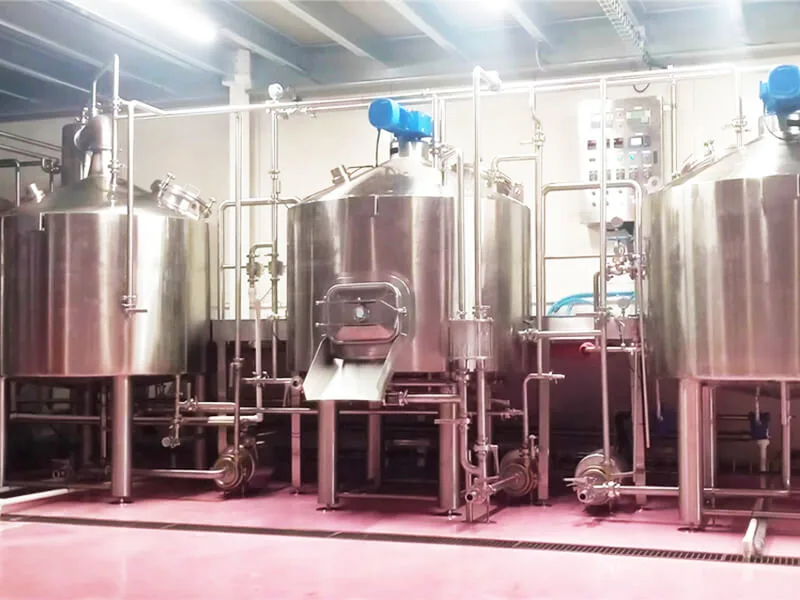
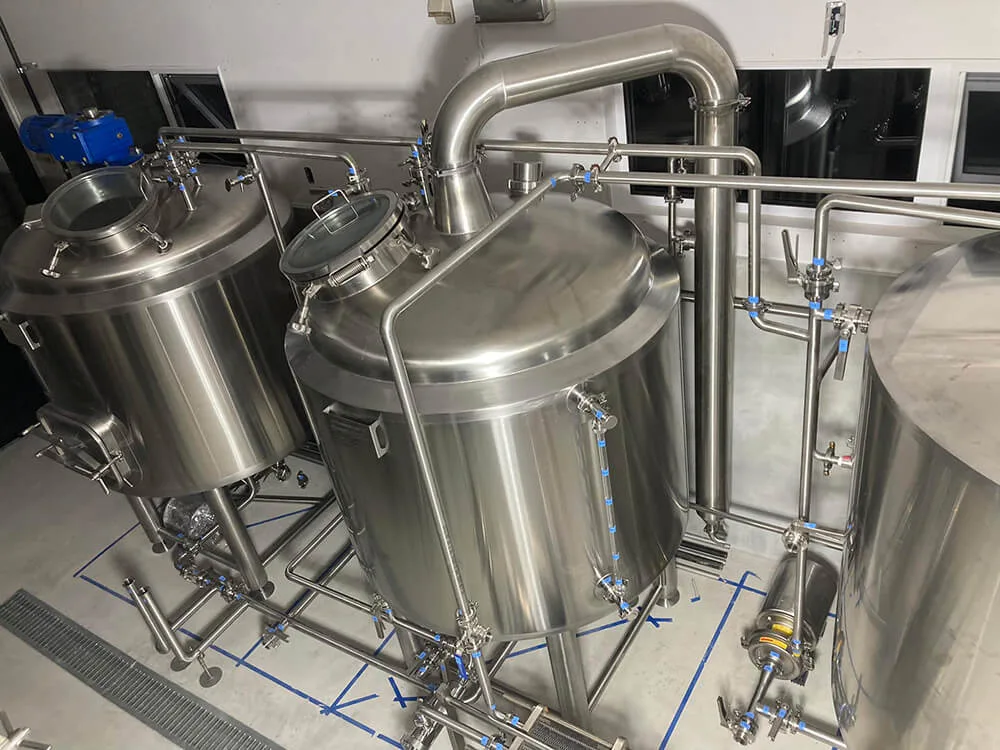
At the core of this installation is a sophisticated 2000L brewhouse, featuring a four‑vessel configuration: Mash Tun, Lauter Tun, Brew Kettle, and Whirlpool. For a professional brewer, separating these vessels is not a luxury—it is a necessity for precision.
This configuration allows for independent control of every stage. During the mashing phase, the brewer can strictly regulate temperature curves to activate specific enzymes, a critical factor for organic grains. The Lauter Tun is equipped with a variable‑speed rake system, ensuring the grain bed remains porous for efficient filtration without “stuck sparges.” Furthermore, the integration of a high‑efficiency steam boiler (200 kg/h, CE certified) ensures consistent thermal energy, allowing for vigorous boiling that effectively removes unwanted volatiles while preserving the wort’s delicate character.
Detailed Technical Advantages of the Four‑Vessel System
In commercial brewing, equipment configuration directly defines process boundaries. The 2000L four‑vessel system (Mash Tun, Lauter Tun, Brew Kettle, Whirlpool – each independent) offers irreplaceable advantages over two‑ or three‑vessel combinations.
1. Mash Tun – Precise enzyme control
Equipped with a dual‑layer steam jacket, the heating rate is adjustable to support multi‑step infusion mashing. This is especially critical for organic malts, preventing lautering difficulties or haze caused by insufficient protein rest. A medium‑speed agitator ensures mash temperature uniformity within ±0.5°C.
2. Lauter Tun – High‑efficiency separation and clogging resistance
The false bottom consists of stainless steel wedge‑wire screens that form a stable filter bed. A variable‑speed rake system operates at low speed during lautering to maintain bed porosity, and speeds up during spent grain discharge. The wort recirculation system pumps initial turbid wort back to the top of the grain bed until clarity reaches <5 EBC before transferring to the brew kettle.
3. Brew Kettle – Efficient volatiles removal and protein coagulation
Internal steam boiling ensures vigorous wort movement. A vortex separator at the top prevents foam carryover.
4. Whirlpool – Removal of trub and hop residues
The outlet is positioned tangentially at the bottom side of the vessel to avoid disturbing the cone sediment. A central drain port at the bottom allows online flushing.
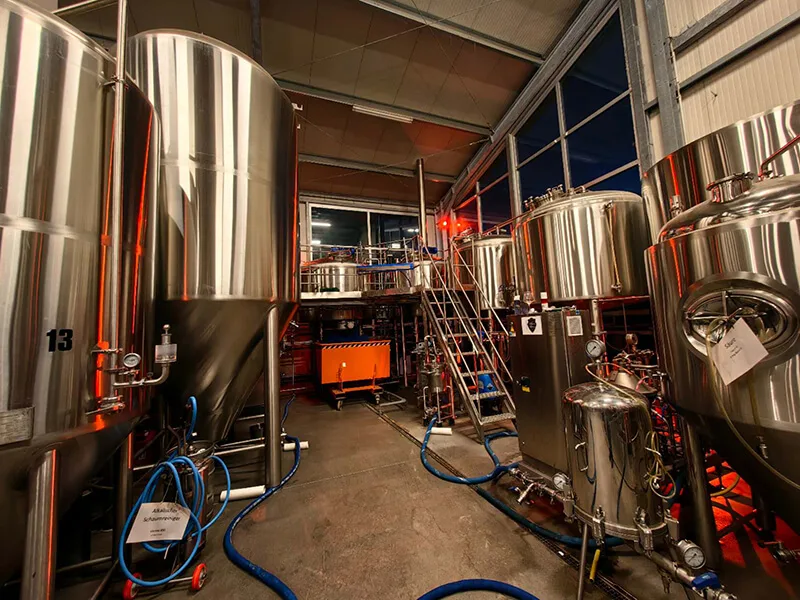
Mastering Fermentation: The Role of the Fermentation Tank
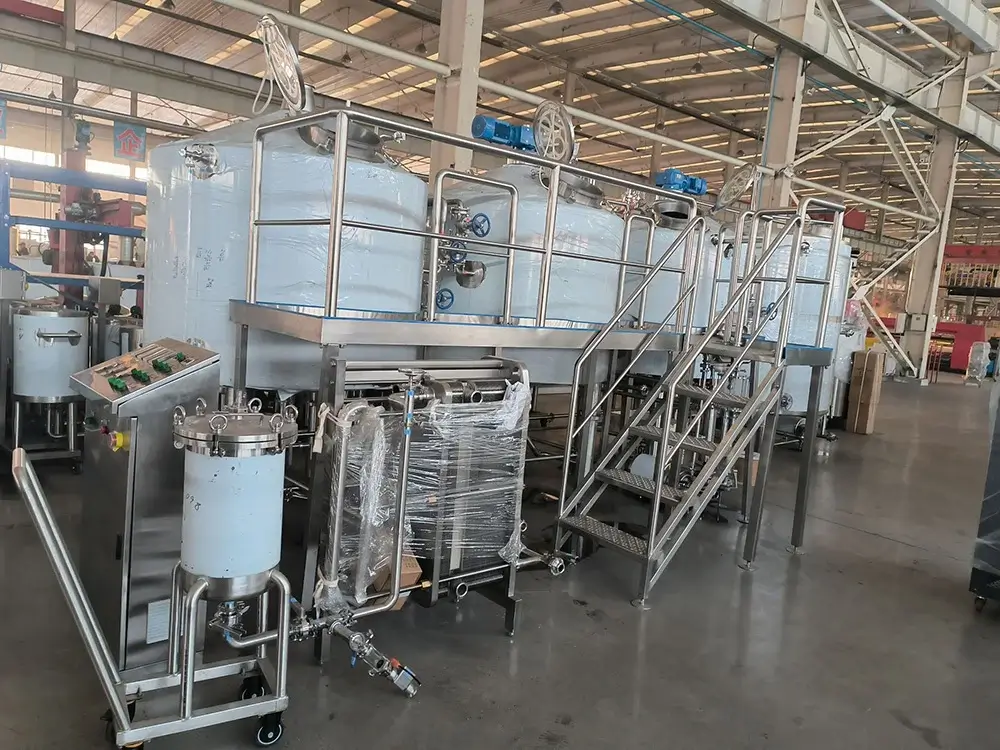
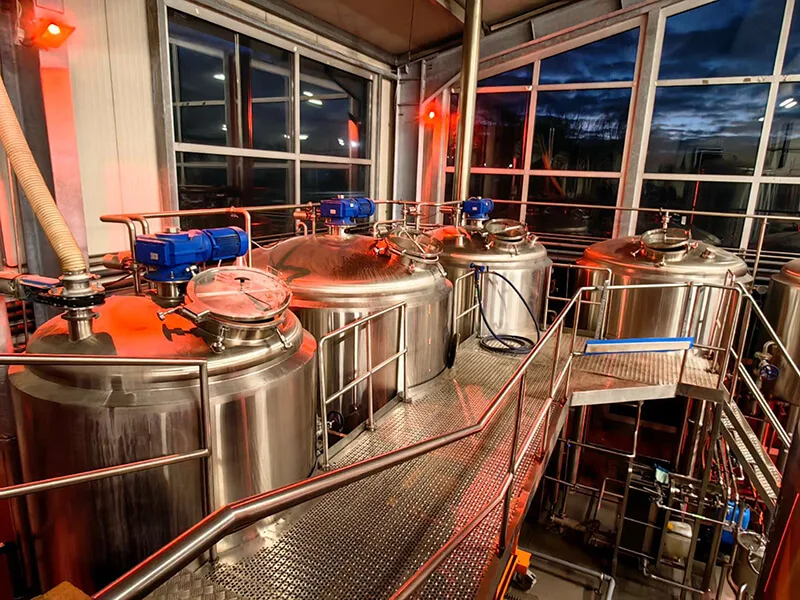
While the brewhouse extracts the flavor, the fermentation tank is where the beer’s soul is forged. METO supplied a versatile array of tanks—ten 2000L units and two 4000L units—crafted from high‑grade SUS304 stainless steel.
For this German brewery, the specific design of the fermentation tank was paramount. Each unit features a dimple jacket cooling system, which works in tandem with a 2×5HP chiller and an ice water tank. This setup guarantees precise temperature control (±0.1°C), which is non‑negotiable for brewing crisp German lagers or temperature‑sensitive ales.
Moreover, the tanks are designed with the modern craft brewer in mind. Equipped with top manways and pressure‑rated dry hop ports, they facilitate anaerobic dry hopping. This allows the brewer to introduce late‑addition hops without opening the vessel, preserving volatile aromatics and preventing oxidation—a key feature for their popular hop‑forward styles.
Engineering for Hygiene and Efficiency
European breweries operate under strict food safety regulations. METO’s equipment addresses this through superior manufacturing techniques. All vessels undergo acid passivation and mirror polishing (Ra ≤ 0.4μm) on the interior surfaces. This smooth finish prevents yeast and bacteria from adhering to the steel, ensuring that the Clean‑In‑Place (CIP) system can effectively sanitize the equipment after every batch.
Additionally, the system was designed with energy efficiency in mind. By optimizing the thermal exchange between the hot water tank and the brewing process, the brewery significantly reduced its energy footprint, aligning with their organic and sustainable business model.
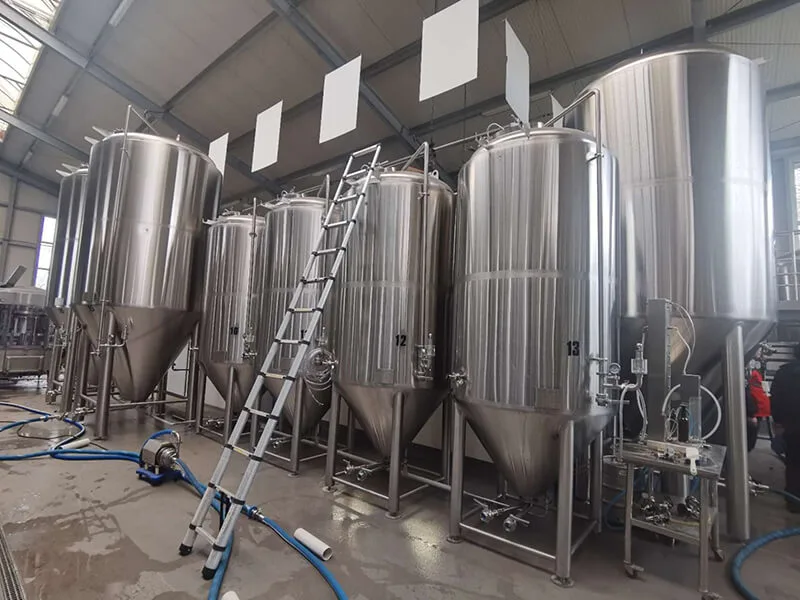
Hygienic Design & EHEDG Compliance
A key differentiator for European brewing equipment is compliance with EHEDG (European Hygienic Engineering & Design Group) guidelines. METO’s equipment follows these standards throughout.
1. Surface finish – Minimizing microbial adhesion
All surfaces in contact with wort, beer or CIP solutions are mechanically polished (graduated abrasive belts) and then acid‑passivated (20% nitric acid at 40°C for 30 minutes). While EHEDG requires Ra ≤ 0.8μm for food contact surfaces, METO achieves Ra ≤ 0.4μm, which reduces bacterial adhesion by approximately 70%.
2. Dead‑angle‑free design – Welds, connections and seals
- Welds: All internal welds are full‑penetration TIG welded, ground flush with the parent material, and electropolished to eliminate heat‑affected zone discoloration. No pits, cracks or incomplete fusion remain.
- Connections: Nozzle‑to‑shell junctions feature a fillet radius ≥3.2 mm, replacing traditional right‑angle welds to eliminate residue traps.
- Hygienic seals: Manways, sight glasses and sampling valves use silicone O‑rings (food grade). The seal groove is designed with a rounded bottom to avoid crevices.
3. Drainability and self‑emptying
According to EHEDG Doc.10, equipment must be fully drainable. METO’s tank bottoms use a 120° cone or elliptical head, with the outlet at the lowest point and a slope ≥3%. Residual liquid volume is ≤0.05% of tank capacity without external assistance. All horizontal pipes have a minimum slope of 1% and are equipped with low‑point hygienic drain valves.
4. CIP compatibility and spray coverage validation
- Spray balls: Each fermenter and brewhouse vessel is fitted with fixed or rotary spray balls. Coverage angle ≥360° is verified by CFD simulation. At 2.5–3 bar, flow rate is 10–15 m³/h.
- Coverage test: Fluorescent tracer or sticky syrup coating (per EHEDG Doc.20) confirms that all internal surfaces are wetted within 30 seconds, with no blind spots.
- Typical CIP cycle: Pre‑rinse (40°C water, 5 min) → Alkaline wash (2% NaOH, 75°C, 30 min) → Intermediate rinse (60°C water, 5 min) → Acid wash (1% HNO₃, 65°C, 15 min) → Final rinse (pure water, 20°C, 10 min). Final rinse conductivity ≤10 µS/cm, and residual alkalinity is verified neutral with phenolphthalein.
5. EHEDG documentation and compliance
Every vessel supplied for this project includes:
- Welding records and non‑destructive test reports (DIN EN ISO 17635, VT/PT/MT level B)
- Material certificate EN 10204 3.1 (SUS304 composition)
- Surface roughness measurement report (contact profilometer, sampling length 4 mm)
- PED declaration of conformity (Module H or G, depending on volume)
Thanks to this hygienic design, the brewery has reduced single‑batch CIP water consumption by about 30%. Since commissioning in 2019, there has been no microbial infection (e.g., Lactobacillus, Pediococcus), and internal ATP bioluminescence readings have consistently remained below 10 RLU (acceptable limit 30 RLU) – solid proof of EHEDG‑based reliability.
A Partnership Built on Quality
Since the commissioning of the METO system , the brewery has successfully expanded its production capacity while elevating product consistency. The professional brewer can now fully utilize their skills, relying on the precision of the equipment to execute complex recipes batch after batch.
This project stands as a testament to METO’s capability to serve the European market. With over 20 technology patents and certifications including ISO 9001 and CE, we don’t just manufacture brewery equipment; we engineer the foundation for our clients’ success. Whether it is the precise geometry of a fermentation tank or the automation of the brewhouse, METO delivers “Made in China, built to European standards” excellence.
For more information about METO’s brewery solutions, please contact our sales team.