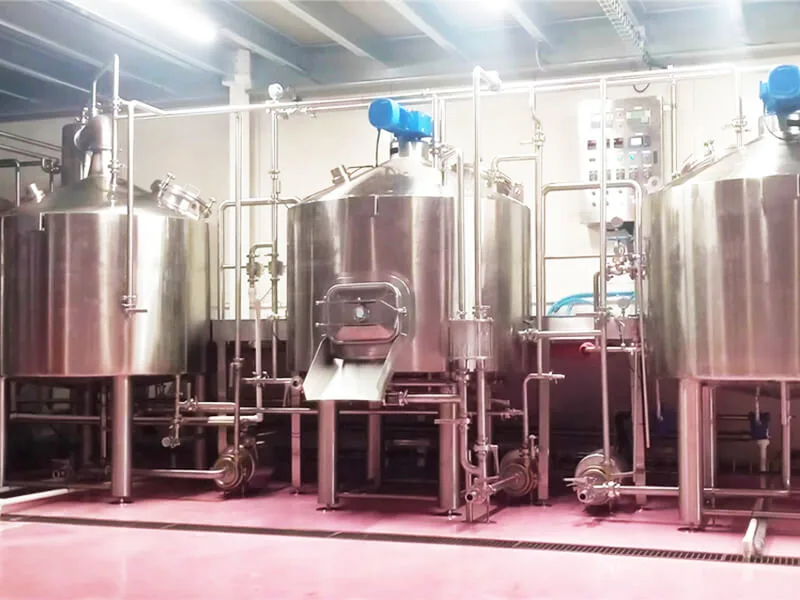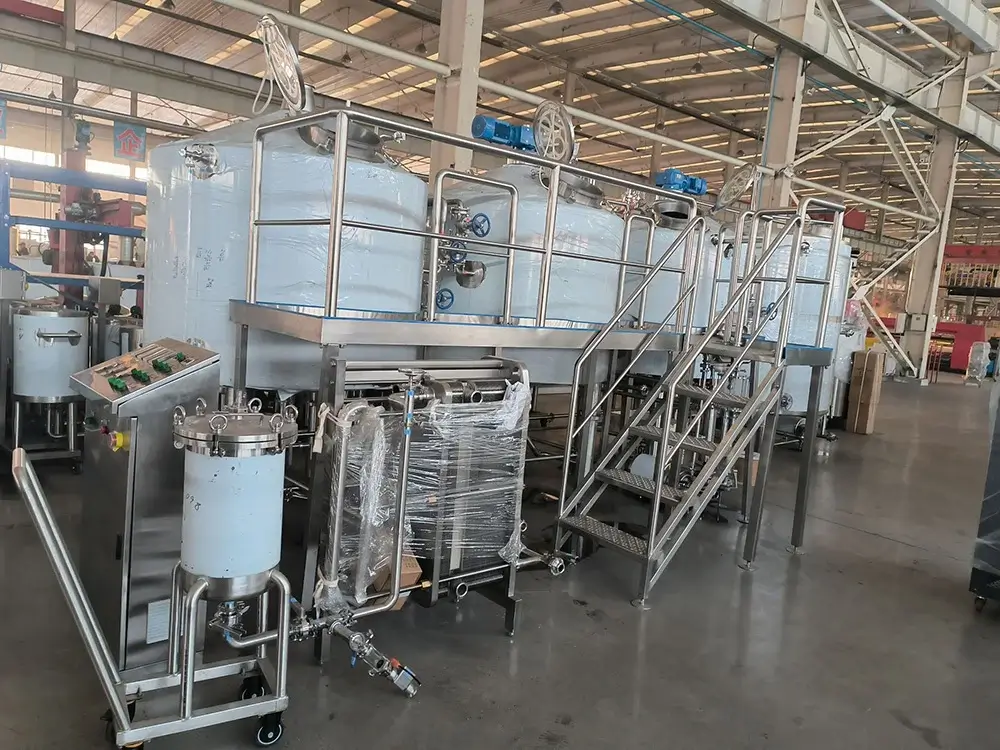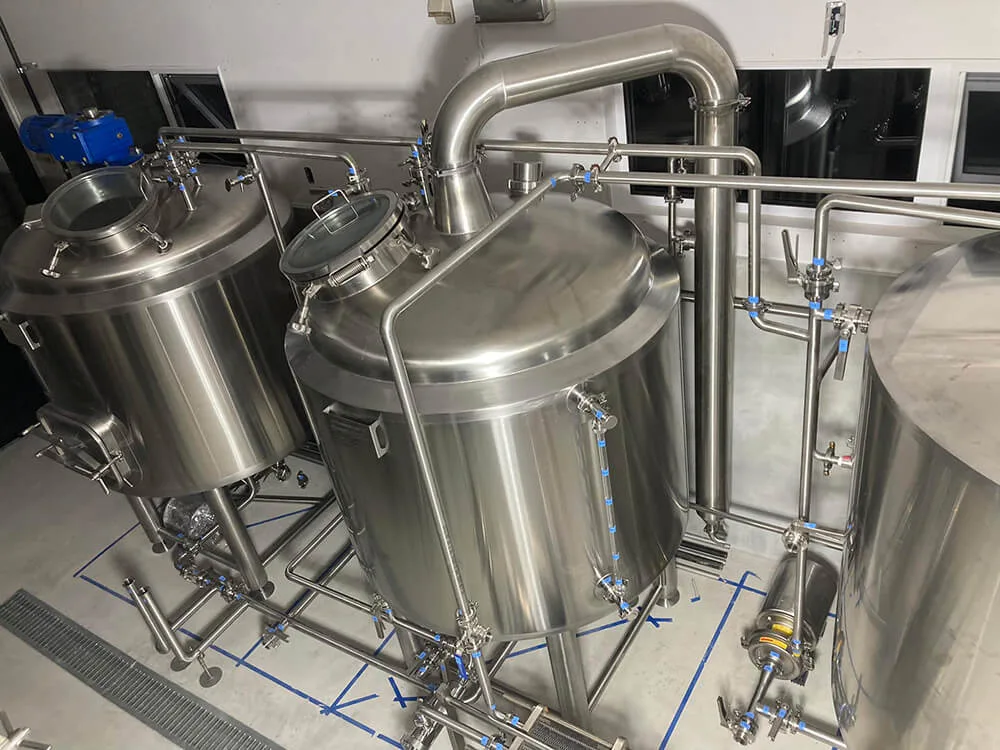
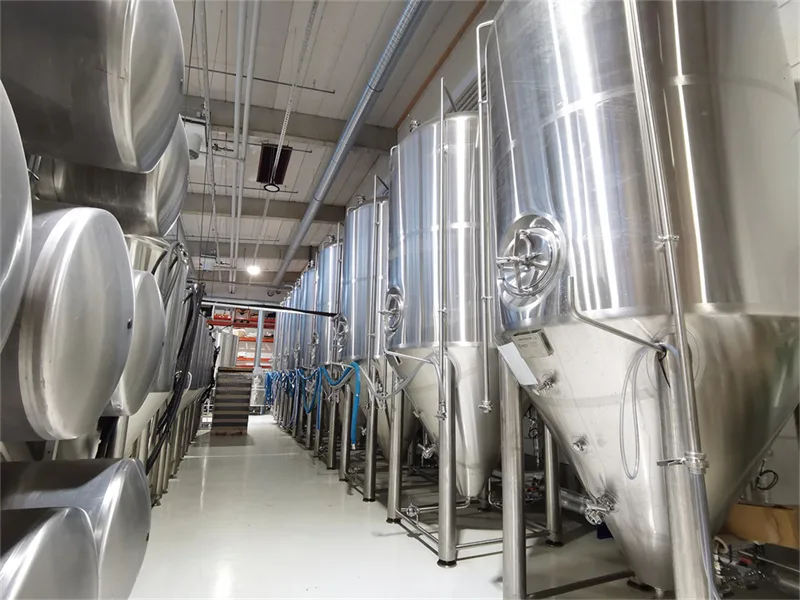
Most craft breweries leave 30–50% of their potential annual output on the table—not because of bad beer or weak sales, but because their fermentation cellar is scheduled like a afterthought. The math is straightforward: a brewhouse touches wort for a few hours, while a fermenter holds that beer for one to five weeks. The vessel that stays occupied longest is the one that actually limits your growth.
Here’s how to size, design, and scale your fermentation cellar for real-world output—not theoretical brewhouse capacity.
Why Tank Days Matter More Than Brewhouse Size
Walk into most brewery planning meetings, and the first question is about brewhouse size. That’s the wrong place to start.
A brewhouse can easily run 3–5 turns per day on a single shift. A fermenter, by contrast, is occupied for:
- 10–14 days per ale batch
- 21–35 days per lager batch
Your fermenter holds the beer roughly 20 to 30 times longer than your brewhouse touches it. The real output ceiling, therefore, isn’t the kettle—it’s the number of tank days you have available.
The Tank-Day Formula
Tank days = number of fermenters × operational days per year
Divide that by the average occupancy per batch (in days), and you get your real annual batch count. Multiply by working volume, and you get real annual barrelage.
Worked example: 8 fermenters × 350 operational days = 2,800 tank days/year
| Product Mix | Avg. Occupancy | Annual Batches | Annual Output (15 BBL/tank) |
|---|---|---|---|
| All ale | 12 days | 233 | ~3,500 BBL |
| Mixed | 18 days | 155 | ~2,325 BBL |
| All lager | 25 days | 112 | ~1,680 BBL |
Same 8 fermenters. Same brewhouse. Dramatically different output—driven entirely by product mix, not equipment size. Brewers who plan around brewhouse size alone end up rationing releases in year two.
Anatomy of a Commercial Jacketed Conical Fermenter
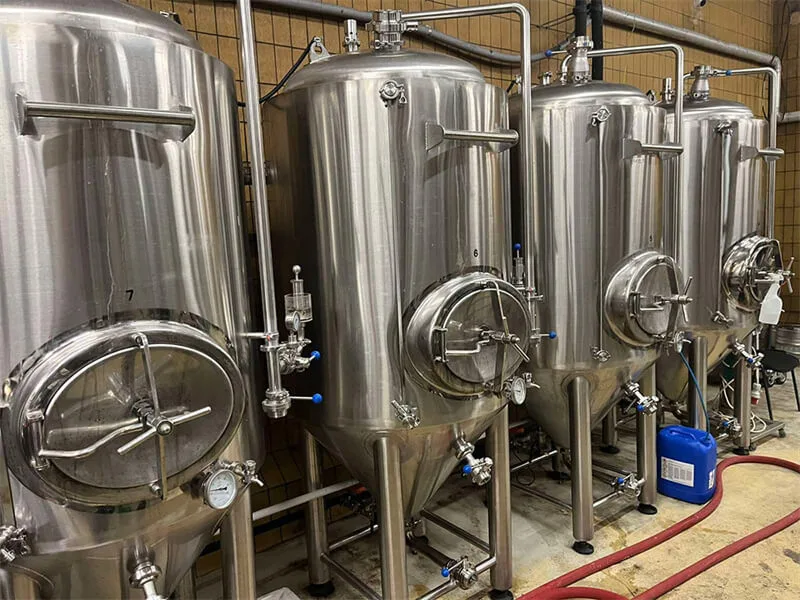
Before you sign a purchase order, understand what you’re actually buying. A commercial-grade jacketed conical fermenter consists of eight functional components:
- Cylindrical shell – Food-grade stainless steel (SUS304 standard; 316 upgrade for high-chloride water or sour programs). Wall thickness typically 3–4 mm.
- Conical bottom – Standard 60° cone angle allows yeast and trub to settle for easy harvesting. Shallower angles risk compaction; steeper angles add headroom without payoff.
- Dimpled glycol jacket – Covers the cylinder and sometimes the cone. Two or three independently valved zones enable precise control during primary fermentation, diacetyl rest, and cold crash.
- Insulation – 80–100 mm polyurethane foam under stainless cladding. Without it, glycol demand roughly doubles.
- Access opening – Top manway (common on 30 BBL+ tanks) or side-mounted for smaller units.
- Racking arm – Rotatable, so you draw beer from above the yeast sediment.
- CIP spray ball – Fixed sanitary spray ball for automated cleaning. Validate coverage against all internal fittings during factory acceptance.
- Pressure fittings – PRV, vacuum relief, sample port, thermowell, CO₂ vent, and carb stone port (on unitank configurations).
Unitank vs. dedicated fermenter: A unitank is pressure-rated (15–30 psi working) and can both ferment and carbonate. It saves capital early on. A dedicated brite tank still delivers better packaging quality once volume justifies the split.
Sizing Strategy: Single-Batch vs. Double-Batch
Fermenter size should be a logical multiple of brewhouse working volume. Two dominant strategies exist:
- Single-batch (1×): One brew fills one fermenter. Simplest logistics. Best for taproom-focused breweries with high SKU variety.
- Double-batch (2×): Two brews fill one fermenter within 24 hours. Higher capital efficiency, less floor space, half the CIP cycles. Best for distribution-focused breweries with a few flagship SKUs.
| ファクター | Single-Batch (1×) | Double-Batch (2×) |
|---|---|---|
| Fermenter count | より高い | より低い |
| Floor space per BBL | More | Less |
| CIP cycles per BBL | More | Fewer |
| Best fit | Seasonal / SKU-heavy | Flagship-heavy |
| Cooling complexity | よりシンプルに | More complex (upper zones must be active) |
| Risk on partial fills | 低い | Higher (upper jackets can’t reach beer) |
Critical caveat: If a double-batch fermenter is only half full, upper cooling zones can’t reach the beer—temperature control suffers. Match zone layout to actual batch plans, or the CapEx efficiency evaporates.
Headspace rule: Add 20–25% headspace for krausen. A 15 BBL working volume needs ~19 BBL total capacity. Skimping here means beer and yeast blowing out the vent during peak fermentation.
How Many Fermenters? The Math Nobody Runs
Rule-of-thumb ratios that actually hold up in practice:
- Ale-focused program: 6–8 fermenters per brewhouse
- Lager-heavy program: 10–14 fermenters per brewhouse
- Mixed program: 8–10 fermenters as a starting point
But shortcuts are risky. The real formula works backward from your annual barrel target:
Required fermenters = (Annual BBL target × Avg. occupancy days) ÷ (Fermenter working volume × Operational days)
Worked example: 4,000 BBL/year, 15 BBL fermenters, 350 operational days, mixed ale-lager at 18 days avg. occupancy:
- 4,000 × 18 = 72,000 BBL-days needed
- 15 × 350 = 5,250 BBL-days per fermenter
- 72,000 ÷ 5,250 = 13.7 → 14 fermenters
A 15 BBL brewhouse with 14 fermenters looks unusual—but it’s mathematically correct. Most brewers seeing this number rebalance: switch to 6 × 30 BBL fermenters (double-batching) instead of 12 × 15 BBL singles. Same output, half the floor space, half the CIP cycles.
Fermentation Room Infrastructure
Fermenters don’t run in isolation. The cellar’s utilities determine whether you hit theoretical output.
Glycol chiller sizing: Rough guide: 1–1.5 tons of refrigeration per 10 BBL of fermenter capacity for a mixed ale-lager operation. A 10 × 15 BBL cellar (150 BBL total) needs 15–22 tons plus a buffer tank. Undersize by 20%, and cold-crash operations back up—cascading into scheduling delays.
Floor drainage: Every fermenter needs drainage under sample and dump valves. Trench drains with sanitary grating handle CIP water. Undersized drainage floods the cellar on CIP day—a problem that shows up six months after concrete pour.
Clearance and access: Minimum 45–60 cm between tanks. Overhead clearance sized for the tallest tank you plan to add later—not just today’s purchase. If expansion is on the roadmap, lay out drain lines and glycol manifolds for the full count from day one.
Ventilation and CO₂ safety: A 15 BBL ale batch generates about 3–4 kg of CO₂ during active fermentation. Cellar ventilation is a life-safety requirement, not an option. Install CO₂ monitors at breathing height.
Fermenter Specifications at a Glance (Micet Craft Line)
Micet Craft manufactures fermenters across a wide capacity range for beer, wine, cider, and kombucha—from 500L to 60 BBL, with published spec pages for 500L, 600L, 700L, 800L, 1000L, 2000L, 2500L, 40 BBL, 50 BBL, and 60 BBL.
Standard construction:
- Shell: SUS304 (316 upgrade available)
- Interior finish: Mirror polish, sanitary standard
- コンフィギュレーション: Cylindrical-conical with standard 60° cone
- Jacket: Dimpled glycol with independent zones on larger sizes
- フィッティング: PRV, CIP nozzle, racking arm, sample port, sight glass, thermowell, CO₂ vent
Certifications: Micet Craft’s fermenter range is covered under Verification of Conformity ICR/VC/HM2507146 (valid to July 2030), with PED 2014/68/EU scope and EN 1626:2008, EN 10204:2004 as applied standards. For EU imports, that certificate number is what customs brokers and inspectors will request.
Pricing: Not published as list prices—quotes are configured against each brewery’s cellar plan and returned within 48 hours of spec sheet submission.
Adding Fermenters vs. Rebuilding the Brewhouse: ROI
When a brewery hits its production ceiling, the instinct is often to buy a bigger brewhouse. Usually, that’s the wrong CapEx decision.
If your brewhouse is running 4 turns per week or less, the bottleneck isn’t the brewhouse—it’s tank days. Adding fermenters costs roughly 40–60% of a brewhouse rebuild, and can be commissioned in 60–90 days versus 4–6 months for a full swap.
ROI math for adding one 1000L fermenter to an ale-focused cellar:
- Batch cycle recovered: ~12 days
- Additional batches/year: ~29 (350 ÷ 12)
- Additional BBL/year: ~245 (at 8.5 BBL working volume)
That’s before the second-order gains: reduced scheduling stress, buffer capacity for special releases, and room to add SKUs without displacing flagships.
Adding fermenters is usually the correct move until the brewhouse itself can’t turn fast enough to feed them—typically 8–10 turns per week for a 2-vessel system. Past that ceiling, a brewhouse rebuild makes sense.
Common Fermenter Design Mistakes
Four patterns show up repeatedly in cellar audits:
- Cooling zones sized for average batches, not partial fills. A double-batch fermenter with a single zone loses control at half-fill. Specify at least two independently valved zones on any 2× brewhouse fermenter.
- Undersized racking arm. Pulls below the yeast cake and muddies beer into the BBT. The fix isn’t a shorter arm—it’s a rotatable one that lifts above settled yeast.
- No vacuum relief. A fermenter cooled rapidly with a closed CO₂ line pulls a vacuum. Without relief, the shell dishes inward—a several-thousand-dollar repair that a $50 valve prevents.
- CIP spray ball placement that misses the racking arm. The most common CIP failure. Validate coverage during factory acceptance testing—not after the tank ships.
General principle: Fermenter design fails at the fittings and controls interface, not at the shell. Ask for CAD drawings of all wetted surfaces before order confirmation.
Frequently Asked Questions
Q: What’s the ideal fermenter-to-brewhouse ratio?
A: 6–8 per brewhouse for ale-focused; 10–14 for lager-heavy. But derive the actual number from tank-day math against your annual BBL target and product mix—not a rule of thumb.
Q: Single-batch or double-batch fermenters?
A: Single-batch for SKU variety and taproom focus. Double-batch for distribution-focused flagships. Many breweries use a mix—60–70% double-batch tanks plus a few single-batch units for seasonals.
Q: How much headspace does a fermenter need?
A: 20–25% of total tank volume. A 15 BBL working volume needs about 19 BBL total capacity.
Q: What’s the difference between a unitank and a dedicated fermenter?
A: A unitank is pressure-rated (usually 15 psi working) and can serve both fermentation and carbonation. A dedicated fermenter hands off to a brite tank. Unitanks save CapEx early; dedicated BBTs win on packaging quality once volume justifies the split.
Q: 304 or 316 stainless steel?
A: 304 is standard and suits most brewing water. Choose 316 if source water has chloride above 250 ppm, if you brew sour styles, or if you produce kombucha in the same cellar.
Q: How long does a jacketed conical fermenter last?
A: With proper CIP, passivation, and gasket replacement: 15–25 years. Failure modes are almost always fittings-related, not shell-related.
Q: How do I calculate glycol chiller capacity?
A: Start with 1–1.5 tons of refrigeration per 10 BBL of fermenter capacity for a mixed ale-lager operation. Confirm with a refrigeration engineer once final tank count and cellar ambient temperature are known.
Q: Do fermenters need CE or PED certification for import to Europe?
A: Pressurized fermenters (any unitank) above certain volume-pressure thresholds require PED 2014/68/EU documentation for EU import. Confirm the certificate number and issuing body before shipment—self-declared CE without third-party verification is often rejected at customs.
まとめ
Your brewhouse gets the attention. Your fermenters determine the output. Plan around tank days, size for your actual product mix, and invest in infrastructure that scales. When capacity tightens, resist the urge to rebuild the brewhouse—add fermenters first. The math, the timeline, and your gross margin will thank you.
For a configured quotation against your specific cellar plan, submit your spec sheet—returns within 48 hours.