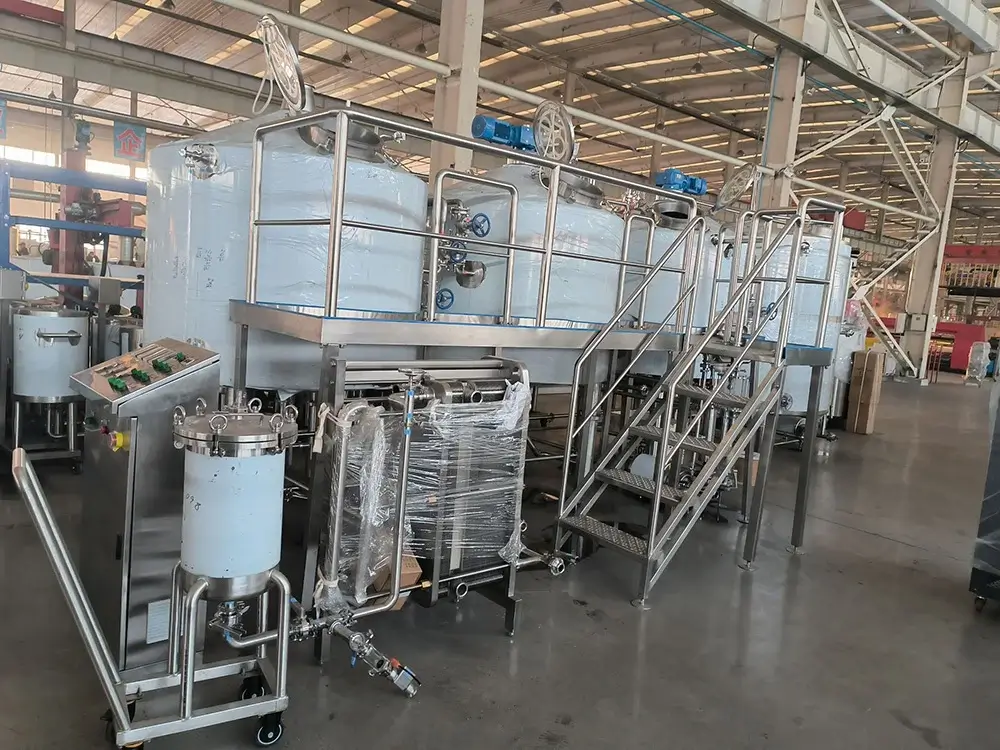
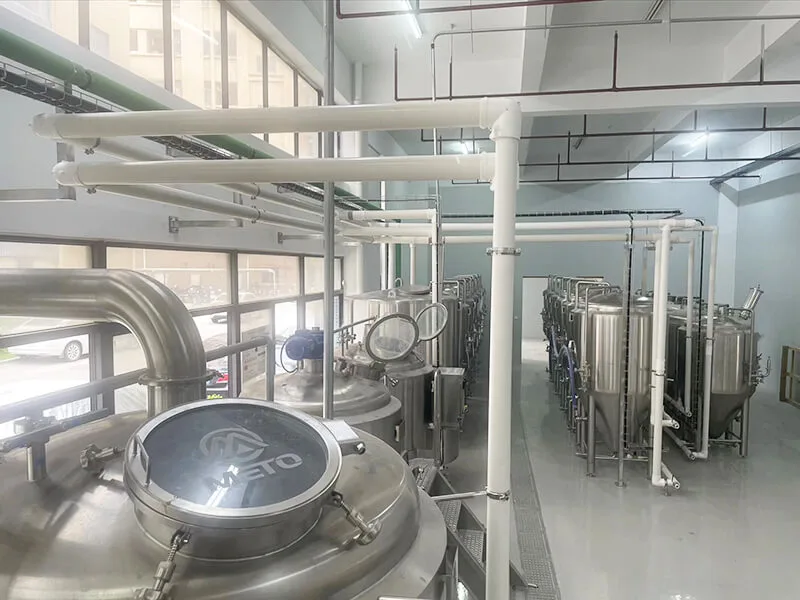
In the world of craft beer, passion is the starting point, but to guide every drop flawlessly from malt to glass, you need a seamlessly connected, complete solution. Whether you are planning to expand your brewery or build one from scratch, this guide will walk you through every critical link — from tank capacity calculations and packaging line philosophy to future automation layouts.
What does a true “complete solution” include?
Many brewers think that buying the best mash tuns and fermentation tanks is the whole story. In reality, a complete brewery equipment solution should cover: process design, equipment manufacturing, automation integration, hygienic assurance, sustainability planning, packaging aesthetics, and full life-cycle technical support. It is not a shopping list of equipment; it is an ecosystem that ensures your investment today can keep producing high-quality beer for the next decade.
How to calculate brewery, vessel, and tank capacities
Before ordering your first fermenter, you need to answer one core question: what is my annual production target, and how many batches will I brew to reach it?
The simple formula: annual output ÷ annual working days ÷ batches per day = cold wort volume per batch.
Take an annual output of 1000 tonnes, 300 working days per year, and 2 batches per day as an example: your brewhouse needs to handle approximately 1.7 tonnes of raw materials per batch, corresponding to about 10 hectoliters of wort. The fermentation tank volume must reserve at least a 20% headspace for foam rise, so you should choose vessels of 12 hectoliters or larger. Moreover, the total capacity of bright beer tanks should match the fermentation capacity and account for the time beer stays in tank before packaging to avoid a production bottleneck. Precise capacity planning is the first step to prevent wasted investment and production delays.
Brewery and processing equipment: mashing, kettles, and heat transfer
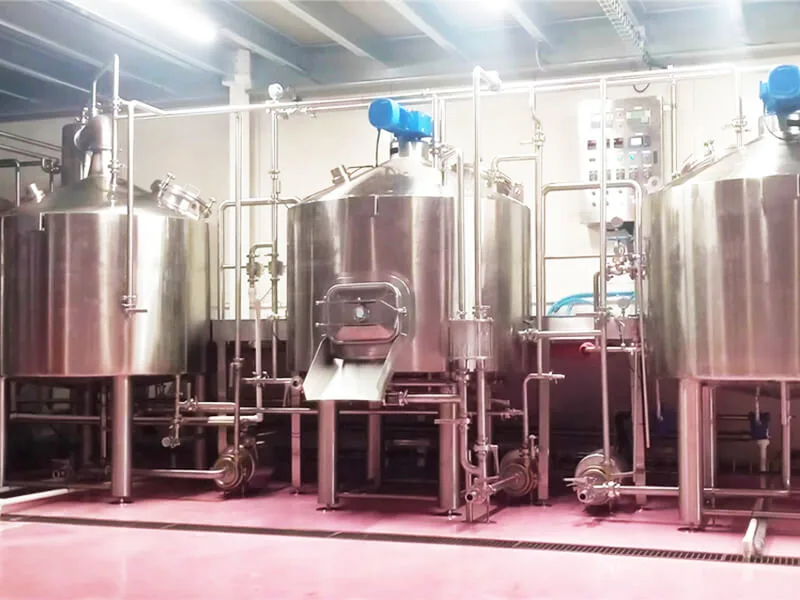
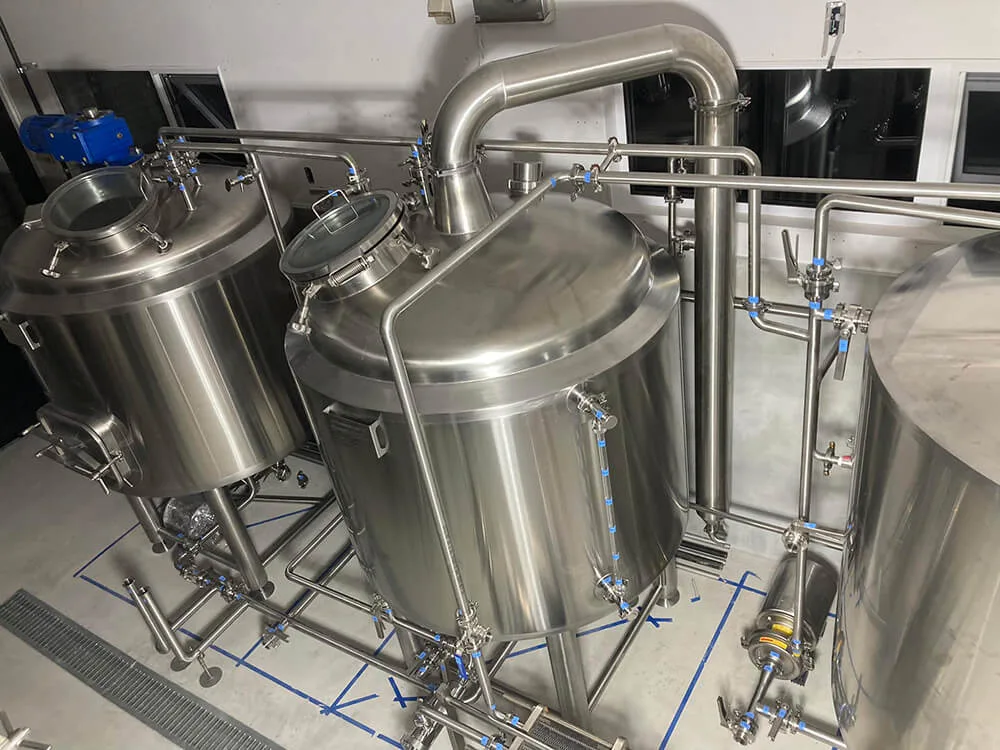
This is the heart of the brewery. A well-designed processing setup should not only look good, but must also deliver high heat transfer efficiency and process flexibility.
- Mash tun and lauter tun: From traditional rakes to highly efficient mash filter-style lauter systems, attention must be paid to wort clarity and lautering time. Well-designed raking mechanisms and variable-frequency stirring can significantly improve extract efficiency.
- Boil kettle: The thermal convection design, whether using an internal or external calandria, determines the boil intensity (typically an 8–10% evaporation rate), which directly affects protein coagulation and hop isomerization efficiency. Forced circulation heating not only saves energy but also prevents localized scorching.
- Heat transfer media: Steam is the cleanest and most efficient heat transfer method, but requires a boiler investment; smaller breweries can opt for electric heating or hot water loops. Note that the layout of steam jackets determines both heating dead zones and cleaning difficulty.
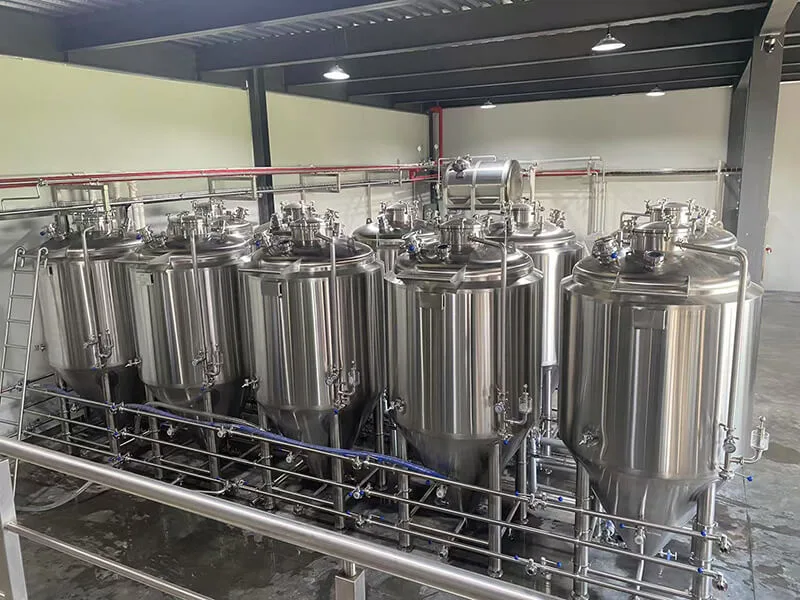
Fermentation conditions, pressure vessels, and cellar performance
Fermentation is far more than yeast consuming sugar. Your fermenters and bright beer tanks must be precision pressure vessels.
- Temperature control precision: The cooling zone design of conical fermenters (cone, middle, and body jackets) must accurately cover the yeast’s working temperature bandwidth, with temperature variance controlled within ±0.5°C. Excellent cellar performance means an efficient glycol distribution network and proper insulation.
- Pressure management: In modern fermentation, controlling tank pressure via a back-pressure valve enables natural carbonation, suppresses higher alcohol formation, and creates a rounder mouthfeel. Vessels must meet pressure vessel regulations and be equipped with accurate pressure/vacuum relief valves and CIP pressure-relief devices — this is the bottom line for both safety and quality.
Automation, control systems, and brewery software — how much do you need?
“Automation” is not an on/off switch; it’s a staircase from semi-automatic to fully automatic.
- Basic level: Digital temperature display and manual valve control, suitable for very small scale operations that rely heavily on the brewer’s personal experience.
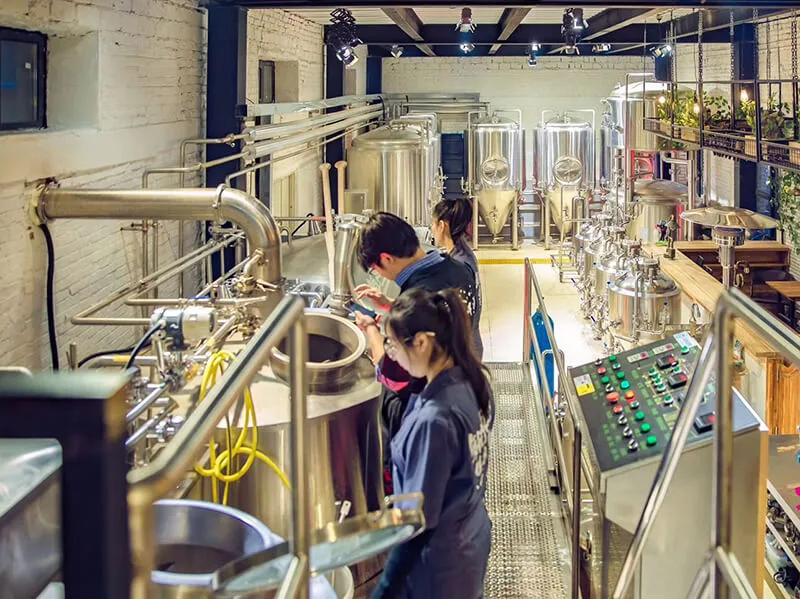
- Advanced level: PLC control with touchscreen operation, allowing you to pre-set mash temperature profiles and automatically call up CIP programs. This guarantees batch-to-batch consistency and frees people from night shifts.
- Fully integrated level: Introducing brewery management software that digitally manages everything from raw material purchasing, recipe management, fermentation tracking, and inventory, all the way to quality reports. How much do you need? When your labor costs rise, or you start supplying supermarket chains that require strict traceability, a fully automated and digital traceability system becomes your indispensable “other head brewer”.
Hygiene, CIP, and cleaning solutions that protect quality
Fully 90% of beer stability failures are killed by contamination. A well-designed Clean-In-Place system is more reliable than ten workers scrubbing manually.
- CIP station: Should integrate acid, caustic, and recovery water tanks, executing cleaning through the golden combination of flow, temperature, concentration, and time. Rotating spray balls at the top of the tank must provide full coverage to all interior walls.
- Hygienic design details: Piping slope, dead-leg-free valves, sanitary flange gaskets, and clean steam generators — these invisible details define your level of microbiological control. Remember, microbes don’t care about your brand slogan; they only care about warm residual wort.
Packaging that respects both the beer and the brand
The packaging line is where contradictions in a brewery are most concentrated: it must be extremely hygienic to keep the beer fresh, while using exquisite packaging design to express the soul of the brand.
- Respecting the beer: Whether can, glass bottle, or keg, the core of the filling process is controlling total oxygen pickup. Double-chamber filling valves, CO₂ back-pressure, and vacuum evacuation technologies can push dissolved oxygen pickup down to microgram levels, protecting the beer’s shelf-life flavor.
- Respecting the brand: The texture of the label, the tactile feel of the can, and even the stacking design of the outer cases all form the consumer’s first impression. Treat packaging as your handshake moment with the consumer, choosing solutions that both preserve freshness and present your aesthetic vision.
Sustainability, optimization, and operational efficiency
Green brewing is not a trend; it’s real money. A comprehensive sustainability plan includes:
- Energy recovery: Condensing and recovering secondary steam from the boil kettle can save 15–20% of your thermal energy; using hot wort through a plate heat exchanger to heat brewing water instantly saves significant cooling and heating costs.
- Water optimization: Recovering the final rinse water from CIP for the initial pre-rinse can push the water-to-beer ratio down to 3:1 or even lower.
- By-product management: Rapid cooling and truck-ready loading of spent grain, CO₂ capture, purification, and reuse — these are not only an environmentally friendly image but also diversified revenue streams.
Maintenance, installation, and service: the quiet engine of uptime
Nothing is more heartbreaking than shutting down during peak season. Preventive maintenance far outweighs emergency repairs. A trustworthy partner is not only responsible for installation but should also provide:
- Remote support like a lifeline: Through remote diagnostics, engineers can view fault codes in real time; often, the problem is solved before you even pick up a wrench.
- Original spare parts stock: Guaranteeing zero-delay supply of consumable parts such as valve gaskets and pump mechanical seals.
- Annual health checks: Regular on-site revisits to measure heat exchanger efficiency, calibrate sensors, and keep the entire brewery equipment running at its optimal curve.
Case study: how process technology and training helped a brewery increase output
A mid-sized brewery was once facing a fermenter turnover bottleneck, with annual output stuck at 800 tonnes. After our team stepped in, we did not immediately suggest buying new tanks but resolved the issue through a process audit and personnel training.
We optimized the mashing recipe, reducing lauter time by 15%, and customized an advanced training module for cellar operators, emphasizing pressure-controlled techniques to boost yeast vitality. Ultimately, by standardizing the cold crash and diacetyl rest stages, the fermentation cycle was shortened by a full 3 days. Without adding any new tanks, annual output broke through to 1,000 tonnes. True capacity is often hidden in process details and human capability.
Supply chain, one-stop support, and the right partner
In today’s volatile global supply chain environment, you need a partner who can secure delivery and take full responsibility from piling to the first beer. Choose a team that is willing to crouch down in your cellar to discuss cooling jacket design, but can also stand up and plan a ten-year expansion roadmap with you. The best collaboration is this: you focus on beer flavor and your brand, while we ensure every drop is born with precision, hygiene, and efficiency.
Frequently Asked Questions
Q: When building a new brewery, should I buy all tanks at once?
A: Not necessarily. We generally recommend a “phased investment” strategy, starting with the core configuration while reserving pipe galleries, energy interfaces, and space. This allows you to start production quickly while avoiding large amounts of capital being tied up.
Q: How do I know if my brewery is ready for automation?
A: If you meet both of the following two points: 1) regular customers begin to question batch-to-batch consistency; and 2) it is becoming harder to train a skilled brewer. Then it is time to introduce an automation control system to lock in your process.
Q: Why does CIP always fail to clean dead legs and elbows?
A: Usually, it’s not a problem with the cleaning solution but a failure of fluid dynamics. You need to check for sudden pipe diameter changes, whether the pump flow velocity reaches turbulent flow (>1.5 m/s), and whether there are any blind pipes that the cleaning solution cannot reach. This requires a professional piping design review.
Q: Is a one-stop supplier more expensive than purchasing equipment separately?
A: Looking at the total lifecycle cost, it is often cheaper. With separate purchases, interface coordination between components is time-consuming and error-prone, and later troubleshooting often results in finger-pointing among suppliers. A one-stop supplier provides proven system compatibility, single-source accountability, and overall efficiency optimization.
A successful brewery is a symphony composed of precise capacity, sophisticated brewery equipment, automation intelligence, ironclad hygiene discipline, and a profound craft culture. Are you ready to conduct this performance and let your brand bloom in the glass?
お問い合わせ to discover how our brewery equipment and commercial craft brewing equipment can power your next brewery.