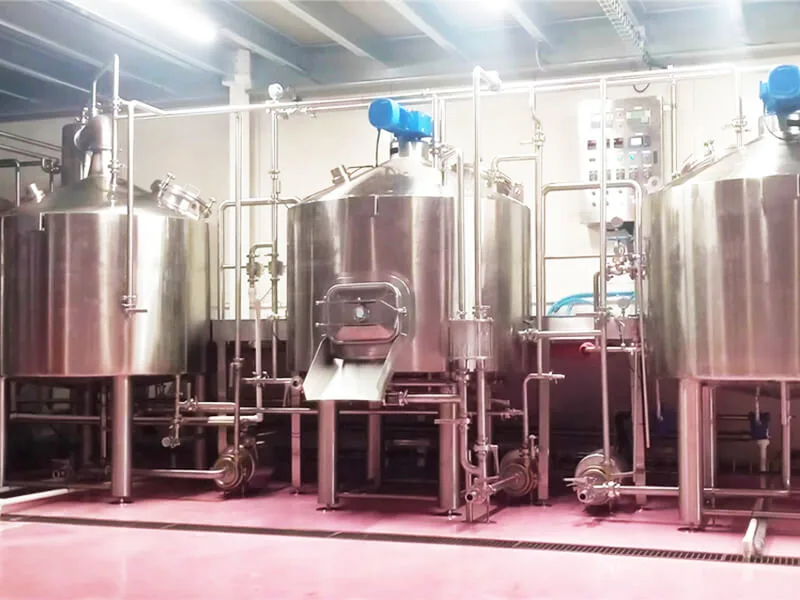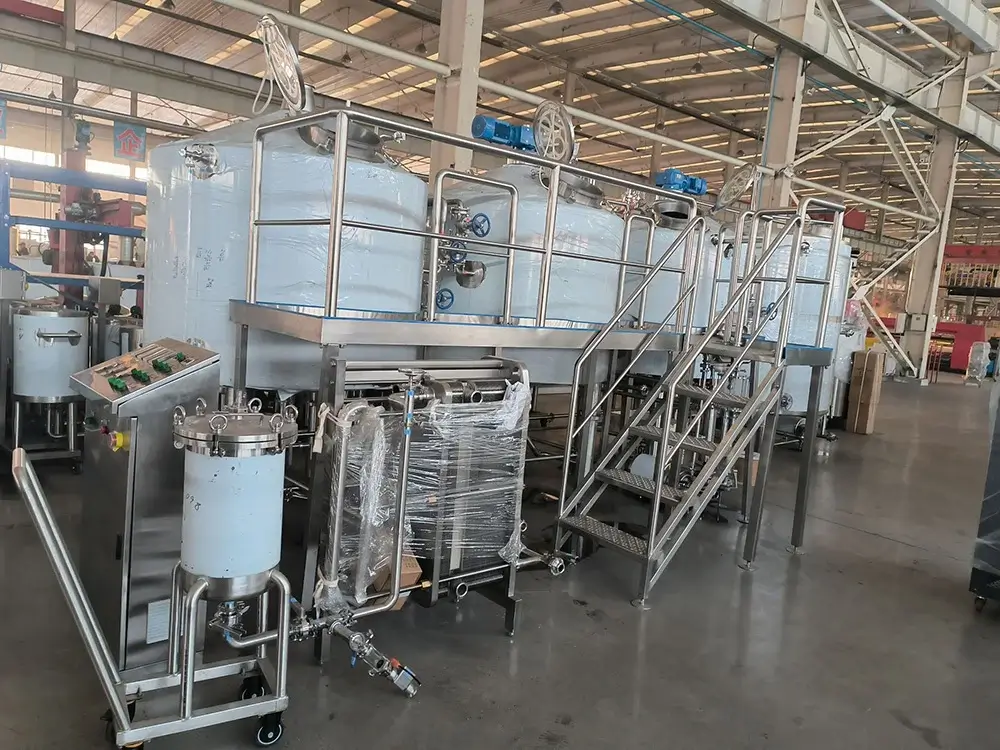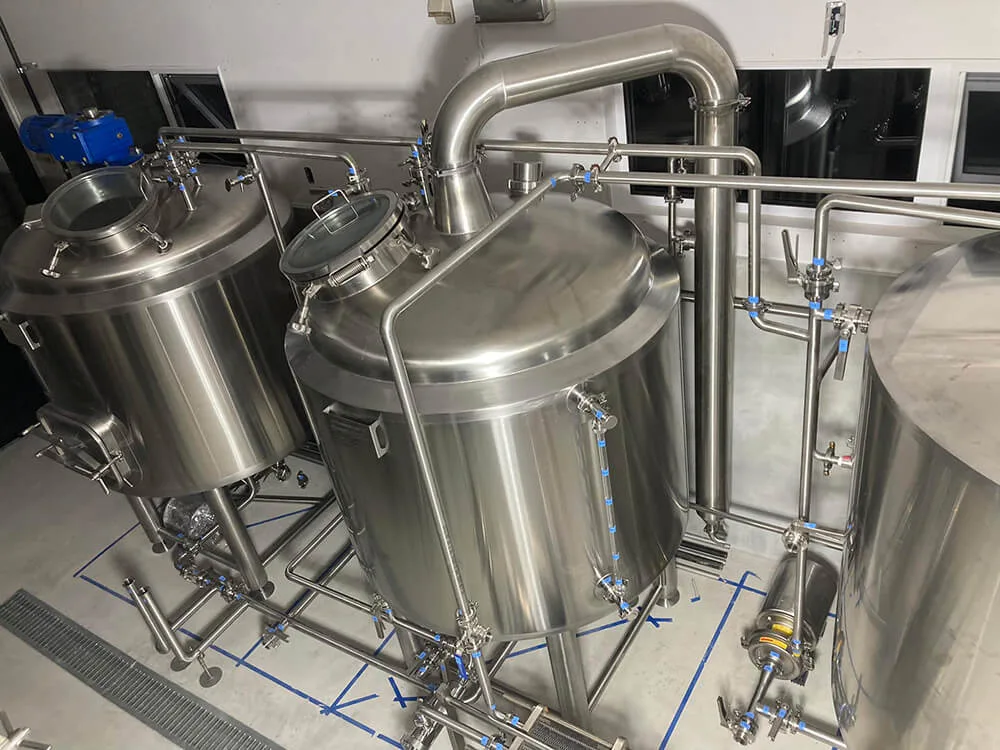

When a brewery buyer evaluates a new brewhouse, fermentation tank or complete brewing system, the final appearance is only one part of the equation.
The quality of brewery equipment is determined much earlier—starting with material selection, fabrication, welding and surface treatment, and continuing through pressure testing, electrical inspection and factory acceptance testing.
For overseas brewery projects, understanding the manufacturing process is particularly important. The equipment may travel thousands of kilometers before installation, and correcting a manufacturing problem after delivery can be considerably more difficult than identifying it at the factory.
A professional brewery equipment manufacturing process should therefore combine material traceability, controlled fabrication, hygienic welding, testing and documented final inspection.
This article explains the main manufacturing stages used to produce stainless steel brewery equipment, from raw material inspection to Factory Acceptance Testing (FAT).
1. Engineering Comes Before Manufacturing
The manufacturing process starts with engineering, not with cutting stainless steel.
Before production begins, the manufacturer needs to define the equipment’s technical requirements.
Depending on the project, these may include:
- Equipment capacity
- Working volume
- Design pressure
- Working pressure
- Design temperature
- Stainless steel grade
- Tank dimensions
- Jacket configuration
- Insulation
- Internal surface finish
- Connections and fittings
- CIP requirements
- 冷却要件
- Electrical specification
- Control requirements
- Applicable standards
- Customer-specific requirements
For a complete brewery, engineering also needs to consider how individual systems interact.
例えば、こうだ:
Brewhouse → Heat Exchanger → Fermenters → Bright Beer Tanks → Packaging
At the same time:
Glycol System → Cooling Jackets
そして
CIP System → Process Tanks and Piping
A technically good individual tank is not enough if the complete system has incompatible connections, insufficient cooling capacity or an impractical process layout.
Engineering Drawings
Before fabrication, the manufacturer normally develops drawings such as:
- General arrangement drawings
- Tank fabrication drawings
- Piping diagrams
- Nozzle and connection layouts
- Platform drawings
- Electrical schematics
- Control system diagrams
These drawings establish the basis for manufacturing and later inspection.
For customized brewery projects, design approval before fabrication can reduce costly changes later in production.
2. Stainless Steel Material Selection
Stainless steel is one of the most important materials in brewery equipment.
Common grades include 304 stainless steel and 316L stainless steel, with the appropriate selection depending on the application, process conditions and customer requirements.
Material selection should consider:
- 耐食性
- Product contact
- Cleaning chemicals
- 温度
- Pressure
- Mechanical requirements
- Welding characteristics
- Surface finish
Different components of a brewery may also have different material requirements.
For example, a standard atmospheric water tank may have different requirements from a pressure-rated fermentation vessel or a tank exposed regularly to aggressive cleaning chemicals.
Material selection should therefore be based on engineering requirements rather than simply choosing the most expensive stainless steel grade.
3. Material Inspection and Traceability
Before fabrication, stainless steel sheets, pipes and other important components should be checked against the purchasing specification.
Depending on project requirements, inspection may include:
- Material grade
- Thickness
- Dimensions
- Surface condition
- Heat number
- Material certificate
- Quantity
- Supplier information
Material Test Certificates, commonly referred to as MTCs, can provide information about the material’s chemical composition and mechanical properties.
For projects requiring stronger material traceability, the heat number can be recorded during manufacturing and linked to the relevant material documentation.
This creates a traceability chain:
Raw Material → Production → Component → Finished Equipment → Documentation
This becomes particularly valuable for pressure vessels and projects with specific customer inspection requirements.
4. Laser Cutting and Plate Preparation
Once the material has passed inspection, stainless steel plates can be prepared for fabrication.
Modern laser cutting equipment can provide accurate cutting of:
- Tank shells
- Tank heads
- Flanges
- Openings
- Nozzles
- Platforms
- Structural components
Accurate cutting is important because dimensional errors at this stage can affect subsequent rolling, welding and assembly.
For brewery equipment with multiple tanks or repeated components, controlled cutting also helps maintain consistency between units.
5. Plate Rolling and Tank Forming
For cylindrical tanks, stainless steel plates are rolled into the required diameter.
The rolling process needs to control:
- Tank diameter
- Roundness
- Plate alignment
- Edge preparation
- Shell length
The required tank diameter is determined during engineering.
Fermentation tanks, bright beer tanks, hot liquor tanks and other vessels can have different diameter-to-height ratios depending on capacity, process requirements, available space and customer preferences.
Dimensional control at this stage is important because inaccurate shell forming can make later welding and assembly more difficult.
6. Welding Is a Critical Manufacturing Stage
Welding is one of the most important processes in stainless steel brewery equipment manufacturing.
A brewery tank needs to provide both structural integrity and a hygienic internal surface.
Depending on the component and project, welding may involve:
- TIG welding
- Argon arc welding
- Plasma welding
- Laser welding
- Automated welding
- Manual welding
The selected welding process depends on material thickness, component geometry, production requirements and applicable standards.
Why Internal Weld Quality Matters
The inside of a brewery tank comes into contact with wort, beer, water or cleaning solutions.
Poor internal welds can create:
- Crevices
- Rough surfaces
- Product buildup
- Cleaning difficulties
- Potential contamination points
For hygienic process equipment, welds should therefore be properly formed, finished and inspected according to the equipment specification.
Welding Documentation
For projects with specific quality or pressure-vessel requirements, welding documentation may include:
- Welding procedures
- Welder qualifications
- Filler material information
- Welding inspection records
- Weld identification
- Nondestructive examination records where required
The exact requirements depend on the applicable design code and customer specification.
7. Tank Assembly
After the main components are fabricated, the tank is assembled.
This may include:
- Tank shell
- Top head
- Bottom cone or dished head
- Manway
- Ports
- Valves
- Thermowells
- Pressure gauges
- Safety valves
- CIP devices
- サンプリングバルブ
- Carbonation stones
- 冷却ジャケット
- Support legs
For conical fermentation tanks, the cone angle and outlet configuration are important to both yeast collection and cleaning.
The location of fittings should also be considered from an operational and maintenance perspective.
8. Cooling Jacket Manufacturing
Fermentation tanks and bright beer tanks commonly use cooling jackets to control product temperature.
The jacket design depends on:
- Cooling medium
- Heat-transfer requirement
- Tank diameter
- Tank volume
- Operating pressure
- Cooling zone arrangement
The cooling jacket needs to be properly fabricated and tested because leaks can affect insulation, cooling performance and equipment service life.
The manufacturer should also ensure that jacket connections are correctly positioned for the brewery’s glycol piping system.
9. Surface Treatment and Polishing
Surface treatment is important for both hygiene and appearance.
The internal surface of product-contact equipment may be mechanically polished or otherwise finished according to the specified surface condition.
The target finish depends on the application and customer requirements.
For brewery equipment, buyers may specify an internal surface roughness requirement such as Ra ≤ 0.8 μm for particular hygienic applications.
However, the required surface finish should be defined in the equipment specification rather than assumed to be identical for every component.
Surface treatment may include:
- Internal polishing
- External brushing
- Mechanical finishing
- Weld polishing
- Pickling where applicable
- Passivation where specified
Why Passivation Matters
Stainless steel forms a protective passive oxide layer naturally, but fabrication processes such as cutting, grinding and welding can affect the surface condition.
Appropriate cleaning and passivation procedures can help restore the desired corrosion-resistant surface condition where required.
10. Insulation and External Cladding
For hot or cold process equipment, insulation can improve energy efficiency and protect operators.
Fermentation tanks may require insulation to reduce heat gain from the surrounding environment.
Hot water tanks and other heated vessels may also require insulation to reduce heat loss.
Typical construction may include:
Inner Tank → Insulation → External Stainless Steel Cladding
The insulation thickness depends on the equipment application and required thermal performance.
The external cladding also protects the insulation and provides a clean industrial appearance.
11. Installing Valves, Fittings and Instruments
After the tank body is completed, process components are installed.
Depending on the equipment, this may include:
- Butterfly valves
- Pneumatic valves
- Pressure gauges
- 温度センサー
- Level sensors
- Sight glasses
- サンプリングバルブ
- Safety valves
- CIP spray balls
- Manways
- CO₂ fittings
- Sanitary pipe connections
The connection standard should be confirmed during engineering.
Depending on the target market and customer specification, brewery equipment may use different sanitary connection standards such as DIN, ISO or SMS.
Compatibility is important because changing fittings after delivery can create additional cost and installation work.
12. Pressure Testing
Pressure testing is particularly important for pressure-rated brewery equipment.
Fermentation tanks and bright beer tanks, for example, may operate under pressure during fermentation, carbonation or beer storage.
The test procedure should be based on:
- Equipment design
- Design pressure
- Applicable code
- Customer specification
- Local requirements
Depending on the equipment, testing may include hydrostatic testing, leak testing or other specified inspection methods.
Pressure testing should be documented where required.
The test record can identify:
- Equipment number
- Test medium
- Test pressure
- Test duration
- Test result
- Inspection date
- Inspector
The exact test pressure should not be assumed to be the same for every brewery vessel. It must be established according to the applicable engineering and testing requirements.

13. Electrical and Control System Assembly
For an automated brewery, mechanical fabrication is only part of the manufacturing process.
The electrical and control system must also be assembled and tested.
A typical automated brewery control system may include:
- PLC
- HMI
- VFDs
- Circuit protection
- Relays
- Contactors
- 温度調節器
- 流量計
- Level sensors
- Solenoid valves
- Control cabinet
The control system should correspond to the actual process sequence.
例えば、こうだ:
Water Filling → Mashing → Lautering → Boiling → Whirlpool → Wort Cooling → Fermentation
The control logic should also account for safety interlocks and equipment protection.
Electrical Documentation
Depending on the project, documentation may include:
- Electrical schematics
- Component list
- Wiring diagrams
- Terminal diagrams
- PLC program information
- HMI screens
- Motor information
- Control cabinet drawings
For international projects, electrical specifications should be confirmed before production because voltage, frequency and local requirements can vary between markets.
14. Factory Quality Inspection
Before FAT, the manufacturer should conduct internal quality inspection.
The inspection scope can include:
Dimensional Inspection
Check:
- Tank diameter
- Overall height
- Connection positions
- Platform dimensions
- Nozzle locations
Visual Inspection
Check:
- Surface condition
- Weld appearance
- Polishing
- Cladding
- Fittings
- Labels
Functional Inspection
Check:
- Pumps
- Valves
- Sensors
- モーター
- 制御システム
- 暖房
- 冷却
Leak and Pressure Inspection
Check the applicable pressure-containing components according to the project specification.
The goal is to identify manufacturing issues before the customer conducts the final inspection.
15. Factory Acceptance Testing — FAT
Factory Acceptance Testing is one of the final quality-control stages before shipment.
FAT allows the buyer to verify that the equipment has been manufactured according to the agreed technical specification.
Depending on the project, FAT can cover:
- Equipment appearance
- Dimensions
- Tank configuration
- Weld quality
- Surface finish
- Pressure or leak testing
- ポンプの運転
- Valve operation
- Electrical system
- PLC functions
- HMI functions
- 温度制御
- Safety devices
- Piping connections
For a complete brewery system, the customer may participate in FAT remotely or visit the factory for inspection.
Why FAT Matters for Overseas Buyers
International equipment projects have an obvious logistical challenge: the customer cannot easily return a large stainless steel tank after delivery.
FAT provides an opportunity to identify and resolve issues before shipment.
A typical workflow is:
Manufacturing Complete
→ Internal Inspection
→ Testing
→ FAT
→ Customer Approval
→ Packing
→ Shipment
This provides a stronger quality-control point before the equipment leaves the factory.
16. Packing and Shipment Preparation
After FAT approval, equipment is prepared for international transportation.
Packaging depends on the equipment type and shipping method.
Typical protection may include:
- Protective film
- Plastic wrapping
- Wooden cases
- Steel frames
- Pallets
- Shock protection
- Moisture protection
Large tanks may require specially designed supports or frames for container loading.
The manufacturer should also prepare a detailed packing list showing:
- Equipment name
- Package number
- Quantity
- Dimensions
- Net weight
- Gross weight
- Volume
This information helps the freight forwarder and customer plan transportation and unloading.

17. Documentation Package
The final documentation package should match the actual equipment shipped.
Depending on the project, it may include:
- Commercial invoice
- Packing list
- 機器の仕様
- General arrangement drawings
- Electrical drawings
- Piping diagrams
- Operation manuals
- Material certificates
- Pressure test reports
- Inspection records
- Certificates or declarations where applicable
- 予備部品リスト
The exact documentation depends on the destination market and project requirements.
For regulated equipment, documentation should be prepared as part of the engineering and manufacturing process rather than assembled at the last minute.
What Should Brewery Buyers Ask a Manufacturer?
Before placing an order, buyers can ask the manufacturer several practical questions.
About Materials
- What stainless steel grades are used?
- Can material certificates be provided?
- Is material traceability available?
- What is the specified internal surface finish?
About Welding
- Which welding processes are used?
- Are welders qualified for the applicable requirements?
- Are welding procedures documented?
- Is weld inspection available?
About Testing
- How are pressure vessels tested?
- Are leak tests performed?
- Is FAT available?
- Can customers inspect the equipment before shipment?
About Documentation
- Are technical drawings included?
- Are electrical schematics provided?
- Are material certificates available where required?
- Are testing and inspection records supplied?
About Manufacturing
- Is the equipment manufactured in-house?
- Which fabrication processes are controlled internally?
- What equipment is used for cutting and welding?
- How is final quality inspection performed?
These questions can reveal much more about a supplier’s manufacturing capability than a general statement such as “high-quality brewery equipment.”
Why Manufacturing Capability Matters in Brewery Equipment
Brewery equipment is not simply a collection of stainless steel tanks.
The performance of the final system depends on many connected factors:
素材
→ Fabrication
→ Welding
→ Surface Treatment
→ Pressure Integrity
→ Process Components
→ 制御システム
→ Testing
→ Installation
A manufacturer with engineering and fabrication capabilities can control more of these stages directly.
This can make it easier to coordinate customized dimensions, tank configurations, piping, automation and quality documentation.
How METO Controls the Brewery Equipment Manufacturing Process
METO’s brewery equipment manufacturing process covers engineering, stainless steel fabrication, welding, surface treatment, assembly, testing and final inspection.
Depending on the project, manufacturing can involve equipment such as:
- Laser cutting equipment
- Plate and tube processing equipment
- Leveling and shearing equipment
- Laser welding equipment
- Automated plasma welding equipment
- TIG welding equipment
- Spectrometers
- X-ray inspection equipment
The actual inspection and testing scope is determined according to the equipment type, project specification and applicable standards.
For customized brewery projects, this integrated manufacturing approach allows the equipment configuration to be developed around the customer’s production capacity, process requirements, installation conditions and target market.
From Stainless Steel to FAT: A Controlled Manufacturing Chain
A professional brewery equipment manufacturing process can be summarized as:
Engineering
↓
素材の選択
↓
Material Inspection
↓
Laser Cutting
↓
Plate Rolling
↓
Tank Fabrication
↓
Welding
↓
Jacket Manufacturing
↓
Surface Treatment
↓
Insulation
↓
Fittings & Instrumentation
↓
Pressure / Leak Testing
↓
Electrical & Control Testing
↓
Final Inspection
↓
FAT
↓
Packing
↓
Shipment
Each stage affects the performance of the final brewery system.
For buyers, the most important question is therefore not simply “How does the finished tank look?”
A better question is:
“Can the manufacturer demonstrate how the equipment was engineered, fabricated, tested and documented?”
That is the information that helps turn a stainless steel vessel into reliable production equipment.
Planning a Brewery Equipment Project?
Whether you are purchasing a 300L microbrewery, a 1000L craft brewing system or a larger commercial brewery, the manufacturing process should be considered together with equipment selection.
Before requesting a quotation, provide:
- Target brewing capacity
- 発酵槽の数
- Beer styles
- Heating method
- 冷却要件
- 自動化レベル
- Packaging requirements
- Destination country
- Required standards or certifications
- Available installation space
METO can then develop the equipment configuration around the actual production requirements and provide the corresponding technical and documentation scope.
Looking for a brewery equipment manufacturer for your next project? お問い合わせ with your requirements and discuss the engineering, manufacturing and FAT process before production begins.