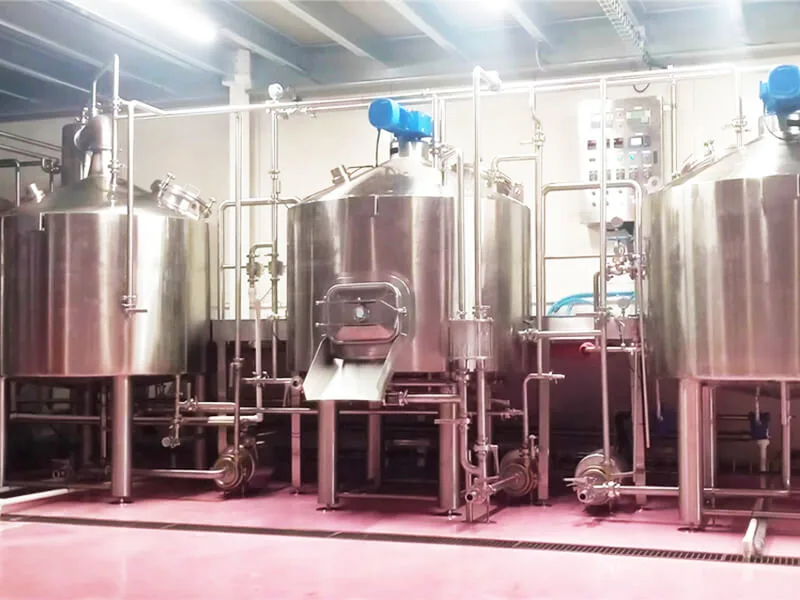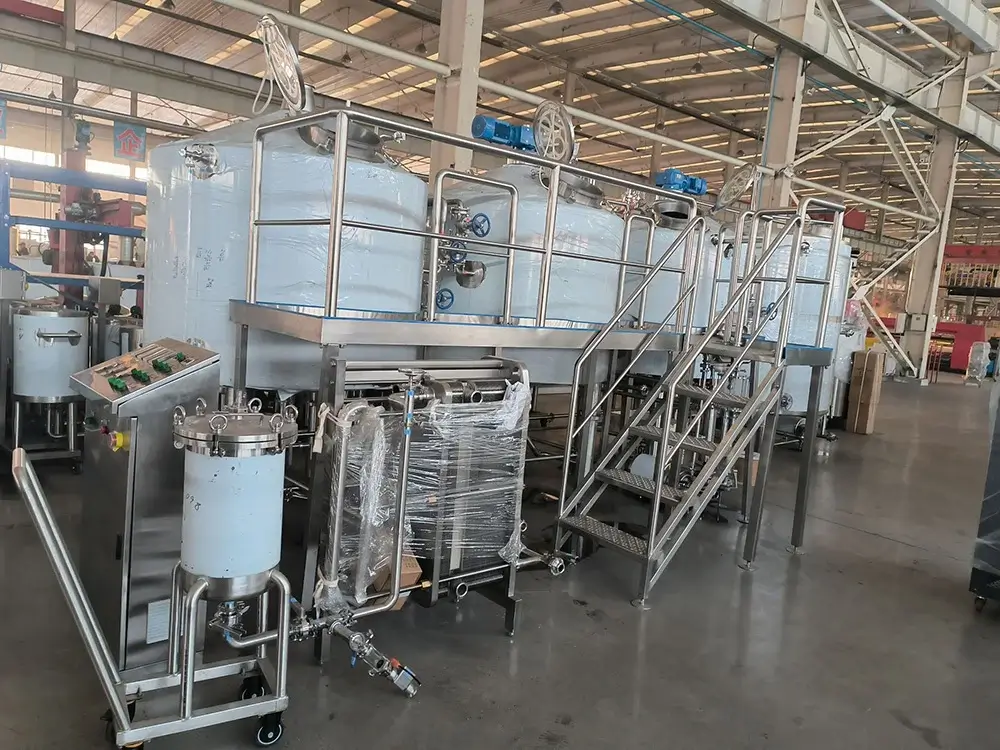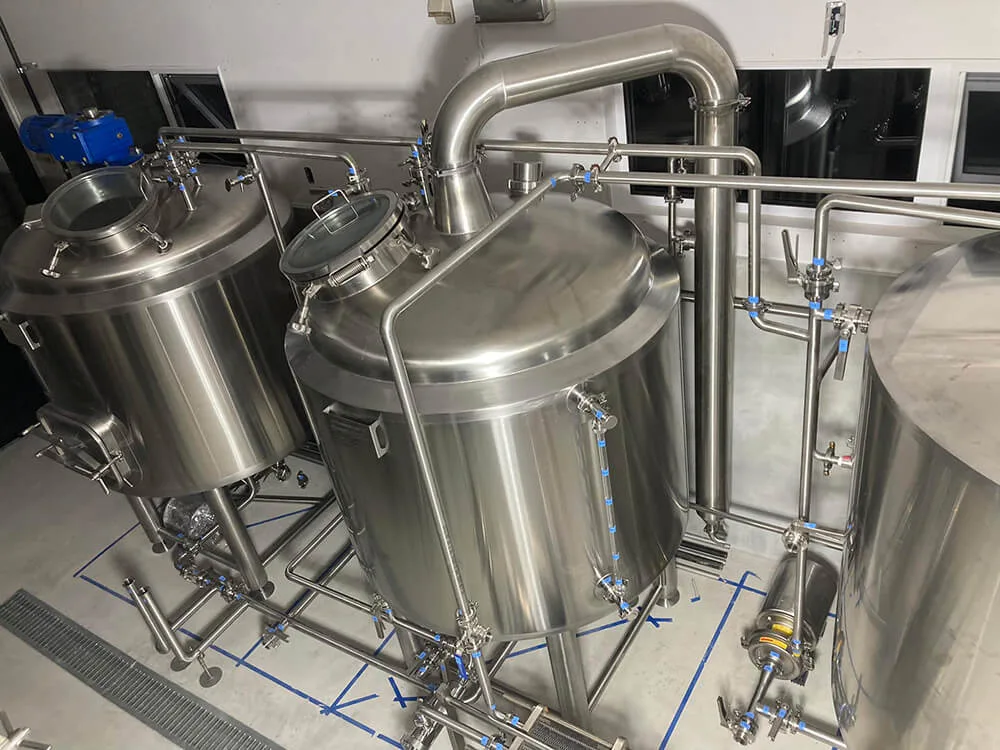
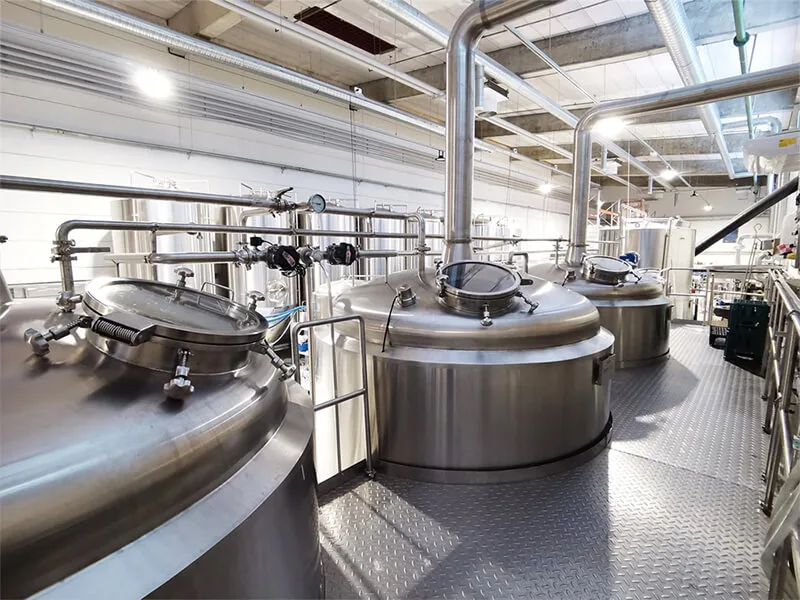
The brewhouse system is the core section of beer production in any brewery or microbrewery. It is responsible for four critical brewing processes: mashing, lautering, wort boiling, and whirlpool separation. The performance of the brewhouse system directly affects wort quality, brewing efficiency, production costs, and final beer consistency.
The main purpose of the brewing process is to convert starches in malt and adjuncts into fermentable sugars, creating high-quality wort for fermentation. Therefore, the configuration, structural design, and performance of a brewhouse system are essential for large-scale, standardized, and high-quality beer production.
This article explains standard brewhouse configurations, key equipment selection points, and the most important factors when choosing a brewery brewhouse system.
Standard Configuration of a Brewhouse System
Brewhouse configurations vary significantly depending on brewery production scale. Small microbrewery systems often use compact multifunctional vessels, while industrial breweries require fully specialized brewing vessels.
Functional Roles of Brewhouse Equipment
The mash tun and cereal cooker are two important brewing vessels with similar structures but different functions.
The mash tun is the main brewing vessel used for protein rests, starch conversion, and mash temperature control. It also mixes adjunct mash with malt mash to ensure complete enzymatic conversion.
The cereal cooker is mainly used in industrial brewery production lines where rice, corn, or other adjuncts are added. It gelatinizes and liquefies adjunct starches before they enter the mash tun. Breweries using 100% malt recipes may not require this vessel.
Brewhouse Configurations for Different Brewery Sizes
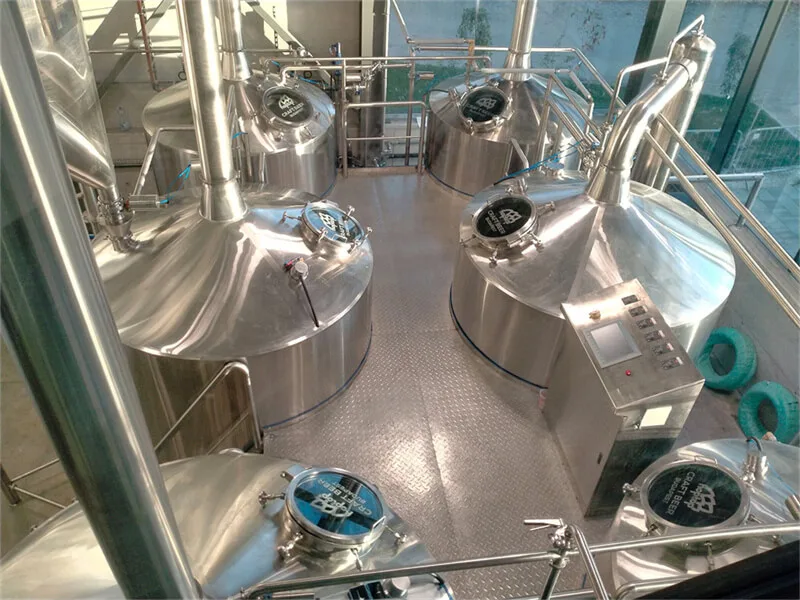
A microbrewery typically uses a compact 2-vessel or 3-vessel brewhouse system that combines multiple brewing functions into integrated tanks. This design is ideal for small-batch and multi-style beer production.
Large-scale breweries generally adopt a professional multi-vessel brewhouse system consisting of:
- マッシュタン
- Cereal cooker
- もっと積極的に取り組む
- Wort kettle
- Whirlpool tank
This configuration supports continuous and high-capacity beer production.
To improve brewing efficiency and increase daily brew cycles, large breweries may also add a wort buffer tank for temporary wort storage while the kettle is occupied.
Brewhouse Vessel Capacity Standards
All brewhouse vessel capacities must match the brewery’s production volume and brewing process requirements.
When selecting a brewhouse system, breweries should carefully evaluate:
- Total vessel volume
- Effective working volume
- Stainless steel thickness
- Pump flow capacity
- Pipeline sizing
Improper sizing can lead to unstable brewing performance and reduced production efficiency.
Key Equipment Selection Points for a Brewery Brewhouse System
Each brewhouse vessel performs a unique brewing function. Equipment selection should focus on the most critical technical parameters.
Cereal Cooker (Optional Equipment)
The cereal cooker is optional for breweries that do not use adjuncts.
Key selection factors include:
- Steam jacket heating efficiency
- Heating speed stability
- Agitator mixing performance
- Prevention of scorching and uneven gelatinization
Efficient mixing ensures uniform temperature distribution and complete starch gelatinization.
マッシュ・タン
The mash tun is one of the most important vessels in any brewhouse system because it determines wort quality and mash conversion efficiency.
Important selection criteria include:
- Stable and uniform heating performance
- 正確な温度制御
- Low-speed agitator with complete mash circulation
- Elimination of dead zones inside the vessel
The mash transfer pump must also provide sufficient flow capacity to move mash efficiently to the lauter tun within the required process time.
ラウター・タン
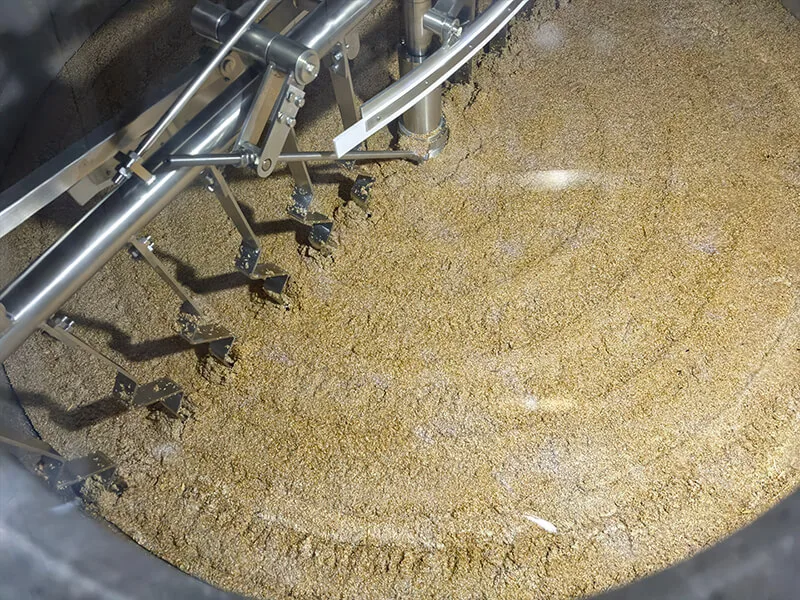
The lauter tun directly affects wort clarity and raw material utilization efficiency.
Breweries should evaluate the following factors:
- Lautering speed
- 麦汁の澄み度
- Residual sugar level after sparging
- Grain discharge cleanliness
The rake system should operate smoothly and evenly to ensure stable filtration and sparging.
The diameter-to-height ratio of the lauter tun should also match the grain bed thickness to prevent slow filtration, cloudy wort, and high residual extract loss.
Wort Buffer Tank (Optional)
The wort buffer tank is an optional vessel used mainly in breweries with multiple daily brew cycles.
Two common types include:
- Insulated storage tanks
- Heated wort buffer tanks
Heated buffer tanks help maintain wort temperature stability during continuous brewery operation.
Wort Kettle
The wort kettle performs wort boiling, sterilization, concentration, and hop isomerization.
Safety and evaporation performance are the two most important selection standards.
The kettle should provide enough free space to prevent wort overflow during boiling.
Industry-standard wort evaporation rates are typically maintained between 8% and 13%, which directly impacts wort gravity and flavor stability.
For pressurized boiling systems, breweries should also confirm:
- Rated working pressure
- Steam exhaust safety
- Steam jacket area
- Boiler steam capacity
All steam system components must be properly matched.
ワールプールタンク
The whirlpool tank separates hot trub and hop particles from boiled wort before heat exchange.
Key selection points include:
- Tangential inlet angle design
- Whirlpool separation efficiency
- Pump flow matching
The whirlpool pump capacity must coordinate with:
- Plate heat exchanger capacity
- Wort cooling temperature
- Cold liquor tank capacity
- Brewing water temperature
Proper system matching ensures stable wort transfer and excellent trub separation.
Core Performance Requirements for a Brewhouse System
The overall performance of a brewery brewhouse system determines beer quality, production efficiency, energy consumption, and long-term operational stability.
Heating and Insulation Performance
Efficient heating improves mash conversion speed and process consistency.
Industry standards generally require a mash heating rate of approximately 2°C per minute.
High-quality brewhouse systems should also achieve insulation efficiency above 95%, reducing heat loss and brewery energy costs.
Stable temperature retention ensures consistent mash reactions and improved beer flavor stability.
Filtration Precision and Efficiency
The filtration system directly affects wort purity and final beer taste.
A high-performance lauter system can achieve filtration accuracy above 99.9%, effectively removing grain particles and trub residues.
The filtration area must also match brewery production capacity to maintain efficient brewing cycles.
Durability and Long-Term Cost Efficiency
Brewhouse durability depends on:
- Stainless steel material quality
- Structural design
- Fabrication standards
- Installation quality
A well-built brewery brewhouse system reduces downtime, extends equipment lifespan, and lowers maintenance costs.
Many breweries report maintenance cost reductions of more than 30% after upgrading to high-quality brewing equipment.
Advantages of the Meto Brewhouse System
Miller Plate Steam Jacket Heating
The mash tun uses a Miller plate steam jacket design that provides rapid heating and uniform heat distribution.
Large-Area Turbulent Low-Speed Agitator
The mash agitator supports both lifting and pressing mixing actions, reducing mash clumping and minimizing oxygen pickup while ensuring uniform mixing.
Lauter Tun Center Recirculation Technology
The lauter tun supports center recirculation technology, shortening wort clarification time and improving filtration efficiency.
Low-Oxygen Sparging System
The sparging water system uses close-range surface spraying to eliminate dead zones, improve grain washing efficiency, and significantly reduce oxygen absorption.
Internal Circular Tube Wort Heater
The wort kettle uses a circular internal tube heater with high heat transfer efficiency and uniform heating performance.
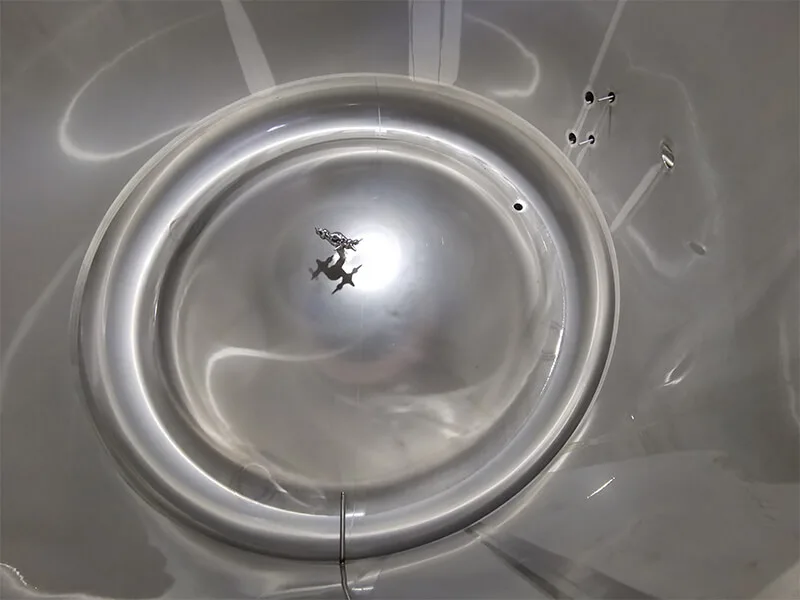
Dome-Bottom Whirlpool Design
The whirlpool tank features a dome-bottom structure that improves hot trub concentration and complete discharge.
The rotating CIP spray system ensures no residue remains after cleaning, improving wort clarity and brewery hygiene standards.
結論
Selecting the right brewhouse system for a brewery or microbrewery requires balancing production scale, brewing process requirements, equipment performance, energy efficiency, and operational safety.
Breweries should first determine vessel configuration and production capacity based on brewing volume. Then, each core vessel should be evaluated according to heating efficiency, mixing performance, filtration capability, evaporation control, and whirlpool separation effectiveness.
A properly designed brewhouse system helps breweries achieve:
- Stable brewing performance
- High wort quality
- 生産効率の向上
- Lower energy consumption
- Reduced maintenance costs
For modern breweries and microbreweries, investing in a high-performance brewhouse system is essential for long-term growth and consistent beer quality.
Have questions about your brewery equipment project? You can tell us your requirements for the brewery, and we will provide you with a turnkey solution within 24 hours.