Cold brew coffee isn’t just another café trend—it’s a global shift in how consumers enjoy coffee. Praised for its naturally sweet, smooth profile and low acidity, cold brew has evolved from a niche offering to a core beverage category in cafés, roasteries, and ready-to-drink manufacturing lines. As demand accelerates, scaling production becomes a priority. But one thing is clear:
Not all brewing equipment is capable of producing high-quality cold brew at volume.
That’s where purpose-built commercial stainless steel cold brew systems come in—engineered to deliver consistency, efficiency, and uncompromised flavor at industrial scale.
Why Cold Brew Requires Specialized Equipment
Cold brew extraction is fundamentally different from hot brewing. Instead of high temperatures, the process relies on time—typically 12 to 24 hours—to bring out flavor from coarse-ground coffee in cold or room-temperature water (1.7–24°C / 35–80°F). This slow method:
- Minimizes bitterness
- Reduces acidity
- Enhances fruity, floral, and chocolate notes
But reproducing that delicate extraction across hundreds or thousands of liters demands precise control, sanitary design, and optimized agitation—features generic tanks simply cannot provide.
Repurposed vessels originally designed for beer, milk, or fermentation often fall short in:
- Temperature stability
- Drainage and hygiene
- Uniform extraction
- Operator access and cleaning
To maintain quality at scale, cold brew production requires equipment engineered specifically for the beverage.
Essential Features of a True Commercial Cold Brew System
Industrial cold brew systems are built from the ground up with one mission:
consistent, high-quality cold brew—every single batch.
1. Precise Temperature Control
A jacketed tank connected to a glycol cooling system ensures stable, controlled temperatures throughout the brewing cycle. This is critical for:
- Flavor consistency
- Food safety
- Shelf stability
Temperature fluctuations introduce sourness, microbial risk, and inconsistency. A dedicated system keeps conditions steady from start to finish.
2. Uniform Extraction and Maximum Yield
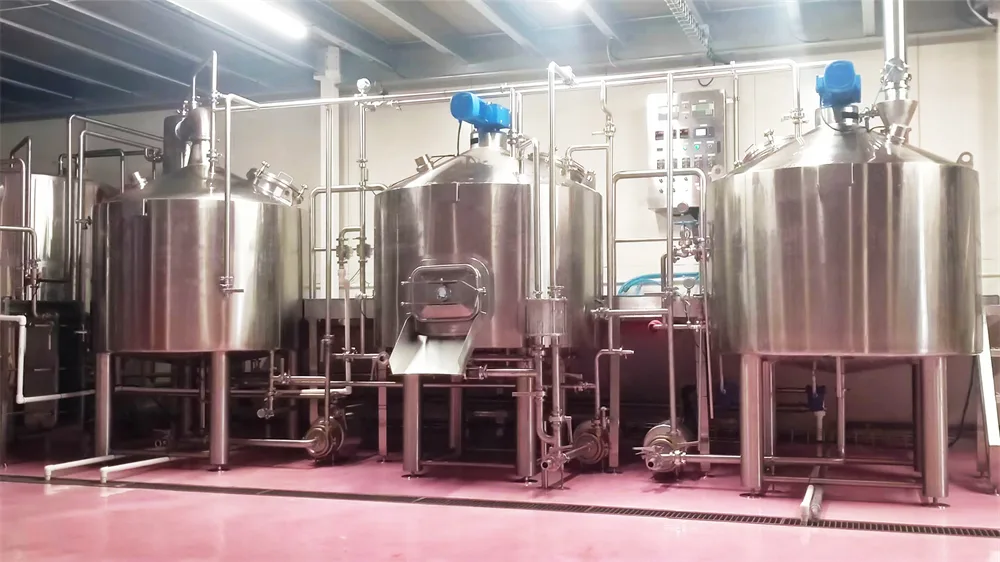
Cold water extraction is sensitive to agitation. A 1.5 kW variable-speed agitator with rake-style blades ensures:
- Full immersion of coffee grounds
- Prevention of channeling
- Faster, more uniform extraction
- Higher concentrate yield with less coffee waste
This means richer, smoother cold brew while optimizing ingredient costs.3. Hygienic, Food-Grade Construction
True cold brew systems prioritize sanitation. Key features include:
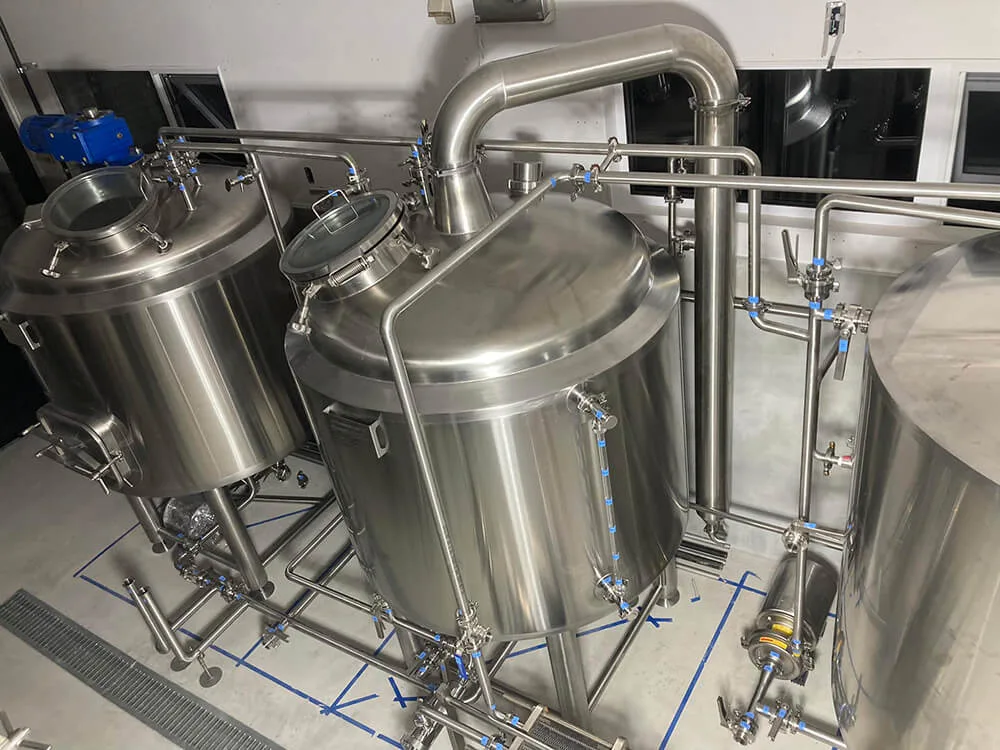
- SUS304 stainless steel with 3.0 mm thickness
- 360° CIP (Clean-in-Place) spray ball for automated sanitation
- 10° sloped bottom for complete drainage
- No dead zones, no residue, no cross-contamination
These elements support both daily cleaning and long-term compliance with food production standards.
4. Built for Real-World Operation
Thoughtful engineering makes production easier and safer:
- Top manhole (300×400 mm) for loading coffee grounds
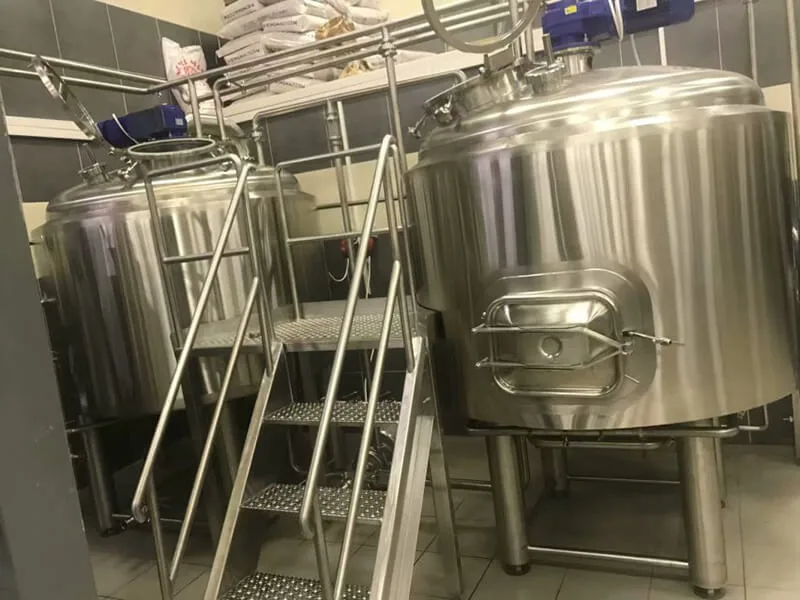
- Side manhole (330×430 mm) with sight glass for visual monitoring
- Optional self-sealing ports for flavor infusions or yeast additions
- Stainless steel ventilation ring for controlled aeration
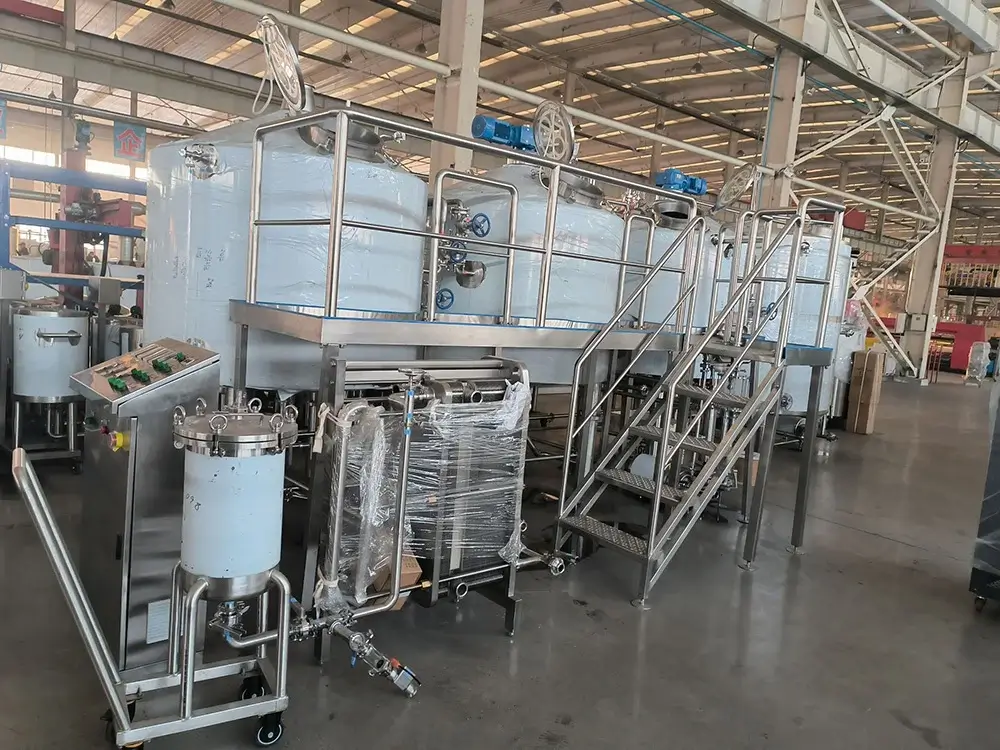
- Customizable capacities: 500L, 1000L, 2000L, or larger
Whether you’re producing daily café batches or running a full RTD line, the system scales to your workflow.
Cold Brew vs. Hot Brew: The Technical Differences
| アスペクト | Cold Brew | Traditional Hot Brew |
|---|---|---|
| Flavor | Smooth, naturally sweet, low acidity | Sharper, sometimes bitter, higher acidity |
| Extraction Method | Slow, cold steeping | Rapid extraction with high heat |
| Energy Usage | Low (no heating required) | High (continuous heating) |
| Shelf Life | Longer, ideal for RTD | Shorter due to oxidation |
| Market Appeal | Premium, modern, highly visual | Standard, expected |
For companies entering the RTD market, these differences translate into real advantages—higher product stability, cleaner flavor profiles, and more efficient production.
Who Should Invest in Purpose-Built Cold Brew Equipment?
A commercial system is ideal for:
- Specialty coffee roasteries expanding into wholesale or RTD
- Beverage co-packers supporting premium coffee brands
- Cafés scaling their house-made cold brew offerings
- Hybrid breweries and distilleries experimenting with coffee-infused beverages
If your business needs consistency, efficiency, and predictable quality, purpose-built equipment is a long-term investment in production stability.
最終的な感想
Cold brew’s momentum continues to grow worldwide. But producing it at scale requires more than repurposed brewing vessels. Purpose-built cold brew systems offer:
- Stable temperatures
- Precision extraction
- Hygienic, food-grade design
- Operator-friendly features
- Scalable production capacity
In short, they don’t just make cold brew—they help future-proof your business for a rapidly expanding market.
Ready to take your cold brew to the next level?
Let’s brew something extraordinary—consistently, cleanly, and at scale.
☕ Because great cold brew starts long before it reaches the cup.
醸造に関するご質問は、下記までお気軽にどうぞ。 お問い合わせ メト装備。