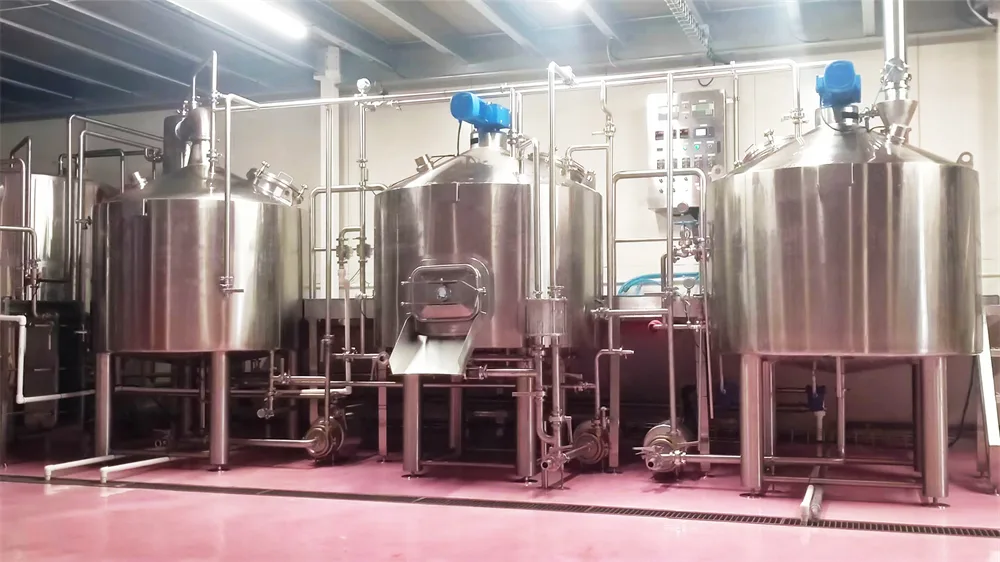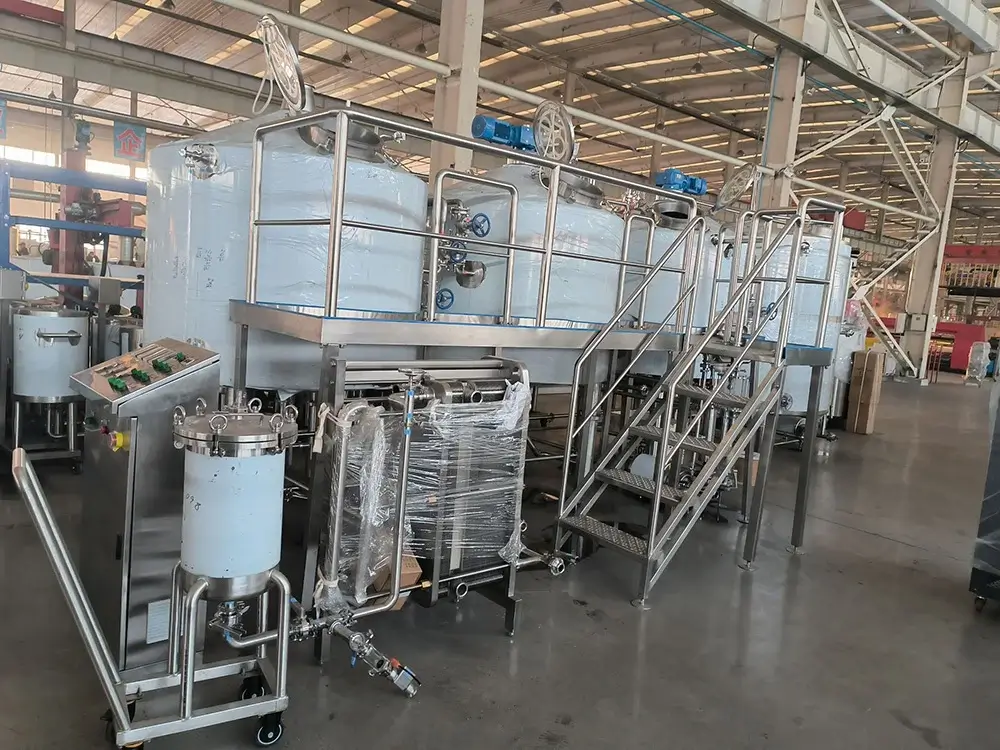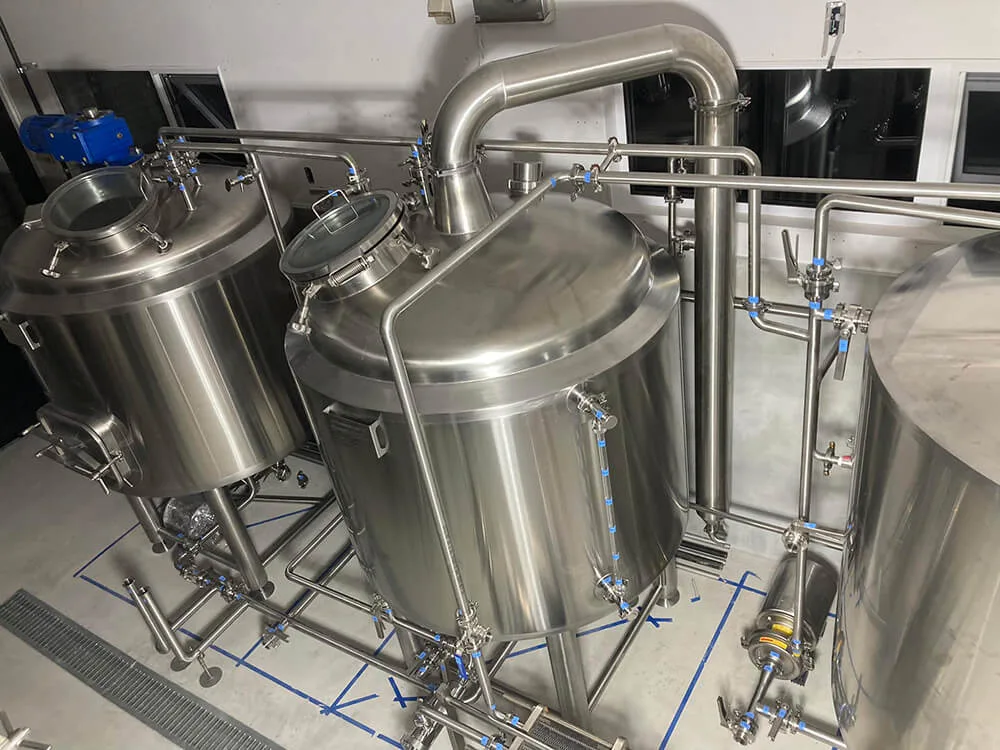
Distillation equipment plays a vital role in both craft and industrial brewing. It allows brewers to separate, purify, and concentrate specific components from a liquid mixture — most notably, alcohol. By heating the liquid to evaporation and condensing the vapor back into liquid form, distillation produces beverages with refined flavor, clarity, and consistency.
In a brewery or distillery setting, the design, material, and performance of the distillation system directly influence product quality, efficiency, and safety.
The Role of Distillation in the Brewing Industry
Distillation is widely used to extract alcohol from fermented liquids, refine aromas, or improve overall beverage quality. Beyond brewing, the same process is essential across multiple industries:
- Food and Beverage: Extracting alcohol from beer or spirits and recovering essential oils from botanicals.
- Chemical and Pharmaceutical: Separating solvents and purifying active compounds.
- Environmental Protection: Recovering reusable materials and purifying wastewater.
For a brewery, choosing the right distillation system ensures not only consistent output but also a product that meets desired purity and flavor standards.
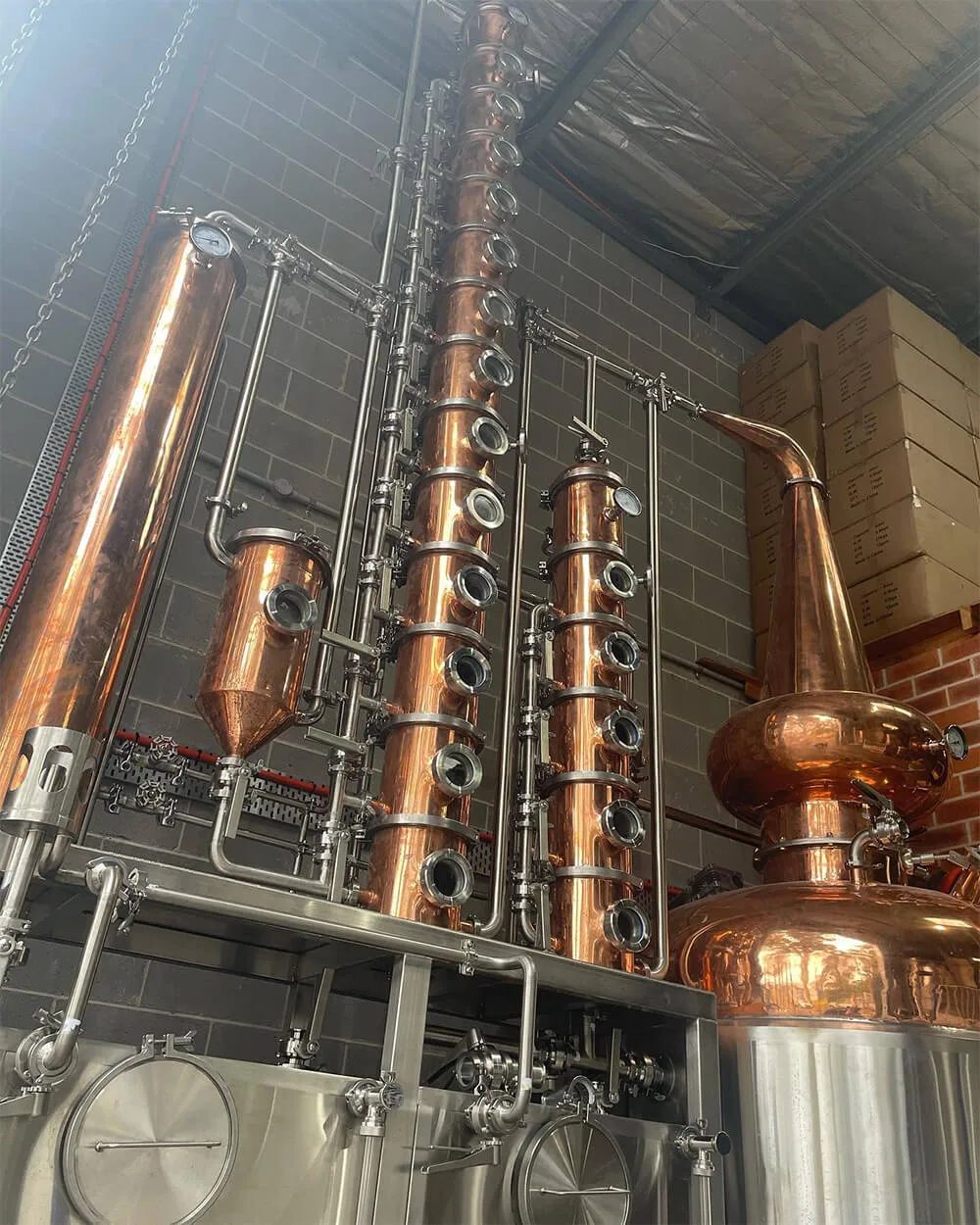
Key Components of a Distillation System
A complete distillation setup consists of several critical components, each contributing to process stability and final product quality:
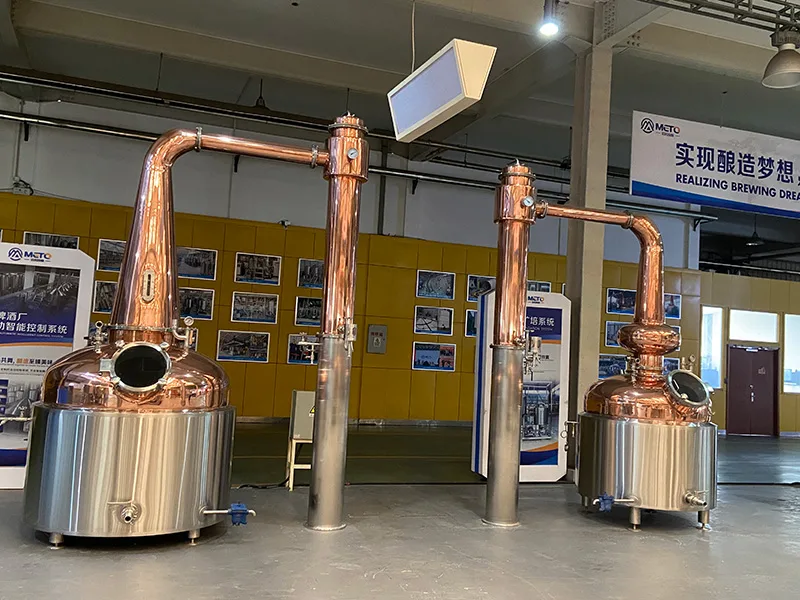
1. Distillation Pot (Still)
The still is the heart of the system, where fermented liquid is heated. It’s usually made of stainless steel or copper. Multiple heat zones inside the pot help achieve precise temperature control and efficient separation.
2. Condenser
The condenser cools vapor back into liquid form. In pot stills, the vapor passes through a coil submerged in cooling water; in column stills, it often integrates into the column itself. Copper condensers are favored because they remove sulfur compounds, enhancing flavor purity.
3. Distillation Column
This vertical column performs fractional separation. It often contains plates or packing material to increase contact between vapor and reflux, improving efficiency and purity.
4. Vacuum Pump
Used in vacuum distillation systems, the pump lowers internal pressure to reduce boiling points. This method is ideal for heat-sensitive materials or low-temperature alcohol recovery.
5. Reflux System
By returning part of the condensed liquid back into the column, the reflux system enhances purity and separation efficiency through repeated vaporization and condensation.
6. Pressure Control System
Maintaining stable internal pressure ensures consistent results and safe operation. Reduced-pressure (vacuum) distillation allows for gentler processing and better flavor retention.
7. Collection System
Different distillation fractions — such as heads, hearts, and tails — are separated and collected in designated vessels. Proper separation prevents impurities and off-flavors.
8. Heating Element
Heating may be electric, steam-based, or via a jacketed design. Consistent, controllable heat ensures efficiency and prevents flavor degradation.
Common Types of Distillation Equipment
Different distillation systems are used depending on the product goals and process requirements:
- Simple Distillation Units: Basic systems for separating components with large boiling-point differences.
- Fractional Columns: Designed for fine separation of closely boiling components.
- Steam Distillation: Ideal for extracting volatile or heat-sensitive compounds such as essential oils.
- Vacuum Distillation: Used for delicate ingredients to prevent thermal damage and preserve aroma.

Essential Equipment in a Brewery or Distillery Setup
A well-planned production line integrates several interconnected systems:
- Storage Tanks: Used for holding raw materials or intermediate liquids.
- Mash or Wort Kettles: Prepare the fermentable base before distillation.
- Serbatoi di fermentazione: Convert sugars into alcohol before the distillation stage.
- Stills (Pot or Column): The main distillation unit — pot stills preserve more flavor, while column stills provide higher purity.
Tips for Choosing Distillation Equipment for Breweries
- Define Your Production Goals:
Choose between flavor retention (pot stills) and high-purity yield (column stills). - Pay Attention to Material:
Copper components enhance flavor by removing sulfur compounds. - Control Temperature and Pressure Precisely:
Inaccurate heating can damage flavor and reduce yield. - Plan for Scalability:
Modular systems allow easy expansion as your production grows. - Design for Workflow Efficiency:
Align the distillation unit with fermentation, storage, and bottling systems to minimize energy loss. - Consider Maintenance and Cleaning:
Easy-to-clean, sanitary-grade designs extend equipment life and ensure consistent product quality.
Conclusione
La distillazione non è solo un processo tecnico: è l'arte di affinare il mestiere del birraio. La giusta combinazione di design dell'alambicco, controllo della temperatura e ingegneria di precisione può trasformare una buona bevanda in una bevanda eccezionale. Per i birrifici che desiderano espandersi nel settore degli alcolici o migliorare il recupero dell'alcol, investire in apparecchiature di distillazione efficienti è un passo fondamentale verso una qualità costante e una redditività a lungo termine.
If you are also interested in our brewing equipment , please feel free to contattateci Attrezzatura Meto.