In 2026, the craft beer industry is undergoing a profound transformation. With the release of the Guidelines for Upgrading the Brewing Industry (2026–2030), digitalization and intelligent manufacturing have shifted from optional upgrades to essential strategies.
As consumer expectations for flavor precision and consistency continue to rise, brewers can no longer rely solely on traditional experience. Instead, they are embracing data-driven control, closed-loop optimization, and intelligent decision-making.
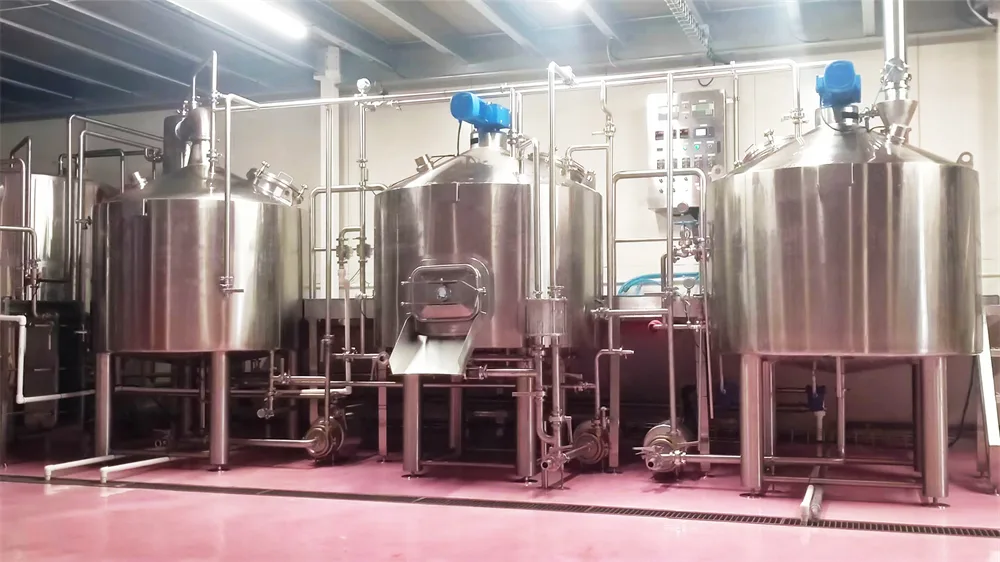
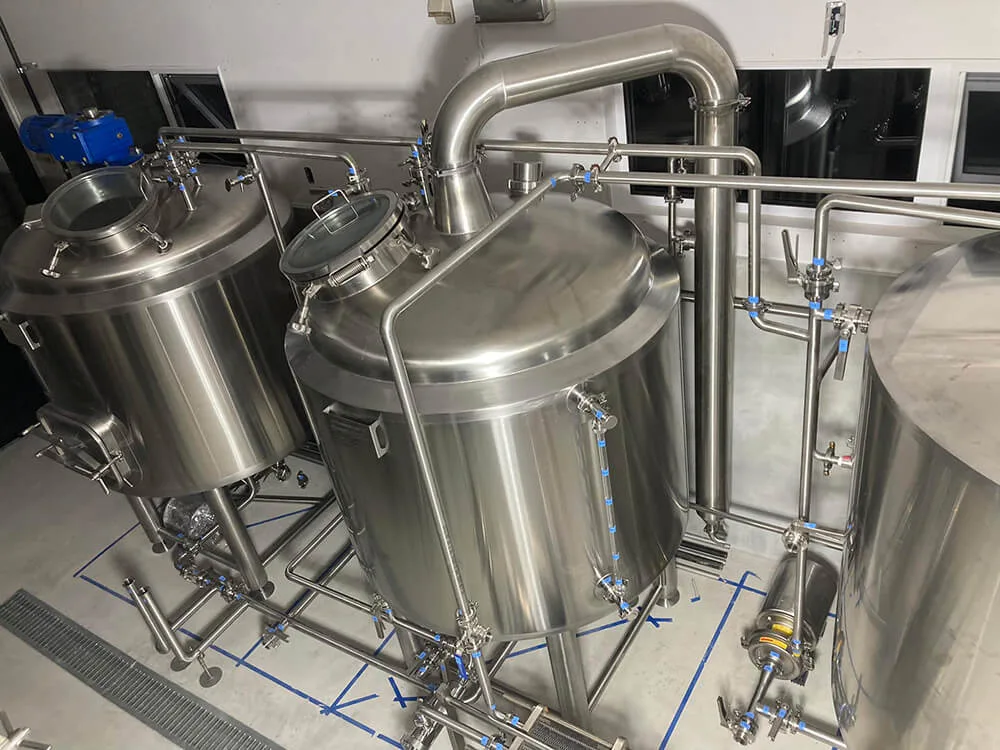
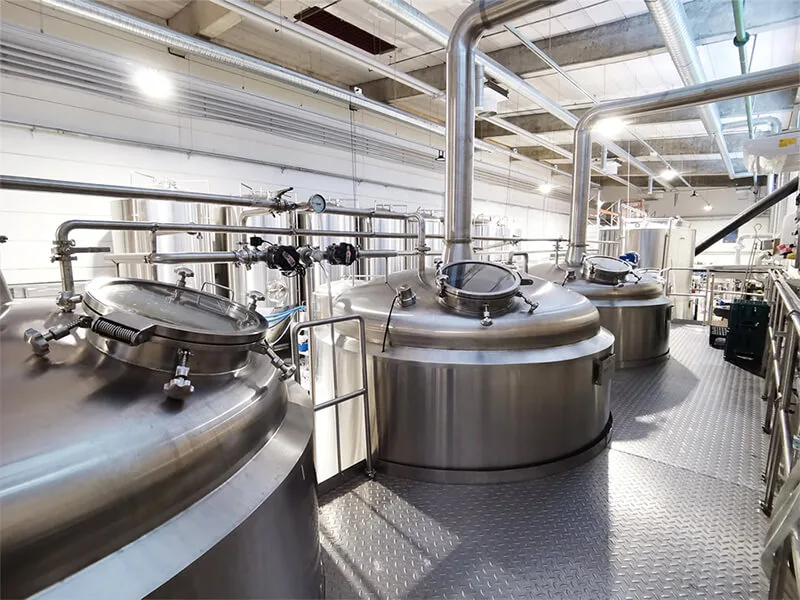
At the center of this transformation lies the brewhouse mash system—the “heart” of beer production. Its level of optimization directly determines wort quality, flavor consistency, and production efficiency. This guide explores how to build a world-class mash system through process optimization and advanced automation.
Part 1: Deep Optimization of the Mash Process
Precision Control Over Every Degree and Every Drop
The goal of mash optimization is to maximize enzyme activity, improve extract efficiency, and ensure flavor consistency.
1. Raw Material Preparation: Building a Strong Foundation
Dynamic Fine Milling
Replace traditional fixed milling with intelligent roller mills that adjust gap settings (0.3–0.5 mm) based on malt type. The goal is “husk intact, endosperm exposed,” ensuring efficient enzymatic conversion while preserving filtration performance.
Conditioned Milling Technology
Introduce warm water conditioning (35–40°C) for adjunct-heavy recipes or fragile malts. This reduces dust risk and improves husk integrity, increasing lautering speed by over 20%.
2. Multi-Step Temperature Control & pH Optimization
Adaptive Step Mashing
- Protein Rest (45–55°C): Enhances clarity and foam stability, especially for under-modified malts or high wheat/oat recipes.
- Dual Saccharification Strategy:
- 62–65°C activates β-amylase → highly fermentable sugars (ideal for IPA)
- 68–72°C activates α-amylase → dextrins for body (ideal for stout)
Advanced Strategy
Adopt linear ramping or dynamic holding instead of fixed schedules. Adjust rest duration based on real-time sugar conversion rates.
pH Control in the Optimal Range (5.2–5.4)
Maintain mash pH within 5.2–5.4 to maximize enzyme efficiency, suppress microbial activity, and improve polyphenol precipitation. Use lactic acid or acidulated malt for precise adjustment.
3. Lautering & Sparging Efficiency Revolution
Smart Rake Control
Automatically activate rake systems based on flow rate and pressure differential to prevent channeling and compaction.
Temperature Control Red Line (76–78°C)
Strictly control sparge water temperature to avoid tannin and silicate extraction, ensuring clean flavor and clarity.
Dual Endpoint Detection
Combine residual sugar monitoring with sparge volume tracking to avoid over-dilution and unnecessary energy consumption during boiling.
Part 2: Advanced Automation
Building a “Thinking” Brewhouse System
Modern automation in 2026 goes beyond traditional PLC systems, integrating predictive algorithms, sensor fusion, and cloud intelligence.
1. From PID to Model Predictive Control (MPC)
Traditional PID control struggles with raw material variability. MPC (Model Predictive Control) introduces:
- Overshoot Prevention
Predicts thermal behavior and reduces heating power in advance, improving accuracy from ±0.5°C to ±0.1°C. - Viscosity-Based Agitation Control
Adjusts agitation speed dynamically using motor load or viscosity data—higher torque during gelatinization, lower speed during saccharification. - Closed-Loop Enzyme Feedback
Using NIR (Near-Infrared Spectroscopy), systems monitor fermentable sugar production in real time and adjust temperature or rest duration accordingly.
2. Sensor Layer Upgrade: Multi-Dimensional Data Fusion
3D Temperature Mapping
Deploy multiple PT1000 sensors to create a real-time thermal map, eliminating hot or cold spots.
Inline Quality Monitoring
- pH sensors for automatic acid dosing
- Turbidity/color sensors for wort clarity control
- Radar level sensors for precise liquid measurement unaffected by foam
3. Architecture Evolution: Edge Computing & Digital Twin
Edge Computing Gateway
Processes high-frequency data locally, ensuring system stability even offline while reducing cloud bandwidth usage.
Digital Twin Technology
Create a virtual replica of the mash system to simulate recipes before production. Predict filtration bottlenecks and energy peaks—reducing trial-and-error costs to near zero.
Cloud-Based Collaboration
Brewers can deploy recipes remotely, while manufacturers perform predictive maintenance (e.g., scaling detection in heating elements).
4. Green Brewing: Energy & Data Intelligence
Automated Heat Recovery
Capture secondary steam energy from boiling and reuse it for preheating brewing water—reducing energy consumption by up to 20%.
Blockchain-Level Traceability
Record complete mash curves, raw material batches, and water profiles to create immutable “quality passports” for premium market transparency.
Part 3: Implementation Roadmap
| Phase | Timeline | Focus Areas | Expected Benefits |
|---|---|---|---|
| Short-Term | 1–6 months | Multi-point temperature sensors, inline pH, advanced PID/MPC | 50% less temp fluctuation, improved consistency |
| Mid-Term | 6–18 months | Edge computing, viscosity & sugar feedback control | 15% higher mash efficiency, 80% less manual intervention |
| Long-Term | 18+ months | Digital twin, cloud AI integration, energy optimization | 20% energy savings, move toward autonomous brewery |
Conclusion: Brewing the Future with Intelligence
In 2026, leading craft breweries are not just creators of flavor—they are masters of data.
By combining deep mash process optimization with intelligent automation systems, the brewhouse evolves from a simple vessel into a self-optimizing bioreactor—capable of sensing, learning, and improving continuously.
This transformation is not just about efficiency—it is about building a long-term competitive advantage through consistent quality and technological leadership.
Embrace smart brewing. Shape the future of craft beer.
👉 Contact us today for a custom brewhouse system design tailored to your production goals, budget, and future expansion plans.