With the growing popularity of craft beer, choosing the right brewery equipment is critical for hobbyists opening small breweries, restaurants serving house-brewed draft beer, and large-scale manufacturers building branded beer production lines. Equipment directly determines production capacity, beer quality consistency, operating costs, and future expansion potential. This article systematically covers the classification of brewing systems, core component functions, equipment selection methods, and daily operation and maintenance tips, helping you avoid common pitfalls and brew high-quality beer with ease.
1. Types and Core Features of Brewing Systems
Brewery equipment is divided into four main categories based on production capacity, application scenarios, and configuration levels: home/mini brewery , micro commercial brewery, medium-scale craft, and large-scale industrial systems. Each type serves different needs with unique advantages and limitations.
1.1 Home/Mini Brewing Equipment (50L-200L per batch)
This equipment is compact and portable, designed for home brewers, hobbyists, and small tasting rooms. It features a simple structure, low learning curve, and an all-in-one integrated design that takes up minimal space. Powered by electric heating, it requires no complex infrastructure and involves low upfront investment.
Core Features: Small footprint, easy installation, straightforward operation, and low cost. Limitations include extremely low output, heavy manual operation, limited precision in temperature control and mixing, and inability to support mass production—only suitable for personal use and small-scale tasting.
1.2 Brewpub/Micro Commercial Brewing Equipment (300L-2000L per batch)
This is the most popular model on the market, ideal for pubs, restaurants, brewpubs, and small craft breweries, balancing practicality and cost-effectiveness. The equipment adopts a modular, detachable design, supporting electric or steam heating, with moderate automation and stable brewing performance.
Core Features: Production capacity matches daily retail demand of catering venues, moderate space requirement, semi-automatic operation to save labor, controllable beer quality supporting various craft flavors, reasonable investment, and a controllable payback period. It is the top choice for small and micro entrepreneurs.
1.3 Medium-Scale Craft Brewing Equipment (2000L-5000L per batch)
Suitable for craft breweries with stable sales channels aiming to build regional brands, this equipment offers higher capacity and complete configurations, supporting mass production and simultaneous brewing of multiple beer varieties. It mostly uses steam heating, with complete supporting modules for filtration, bright beer storage, and filling, as well as high automation and precise process control.
Core Features: Ample production capacity for bulk supply, high automation for consistent batch quality, compatibility with complex brewing processes for various beers (Pilsner, wheat beer, IPA, etc.), complete supporting facilities, and expandable design. Drawbacks include high upfront investment, requirement for professional workshops and skilled operators.
1.4 Large-Scale Industrial Brewing Equipment (Over 5000L per batch)
Designed for large breweries and national branded manufacturers, this full production line operates fully automatically, integrating raw material handling to finished product filling. It features massive production capacity for nationwide distribution, strict brewing processes, and supporting systems for quality inspection, aseptic filling, and wastewater treatment, complying with food safety production standards.
Core Features: Ultra-high production capacity, full intelligent automation, uniform beer quality, and strong compliance. Limitations include extremely high upfront investment, large land occupation, high infrastructure costs, and demand for a professional operation and maintenance team, making it unsuitable for small and medium entrepreneurs.
Additional Classification by Heating Method
Besides capacity grading, heating method is another key differentiator of brewery equipment:
- Electric Heating: Low cost, easy installation, precise temperature control, ideal for small-scale equipment and indoor venues, with no need for a steam boiler.
- Steam Heating: Uniform heating, fast temperature rise, suitable for medium and large-scale equipment, delivering more stable beer flavor and higher efficiency. However, it requires a supporting boiler and stricter approval and installation procedures.
2. Core Components and Functions of Brewery Equipment
A complete brewery equipment line consists of six core modules: raw material handling, mashing, fermentation, filtration and bright beer, cleaning-in-place (CIP), and filling. Each module plays an irreplaceable role in the brewing process.
2.1 Raw Material Handling System
The first step of brewing is raw material pretreatment, with the malt mill as the core equipment.
Malt mills are divided into dry and wet types. Dry milling is simple in structure and easy to clean, commonly used in small and medium-sized equipment. Wet milling keeps the malt husk intact, reduces oxygen absorption, and improves wort quality, making it suitable for high-end craft beer. Supporting screw conveyors and silos realize dust-free closed conveying to prevent raw material contamination.
2.2 Brewhouse System (Core Brewing Unit)
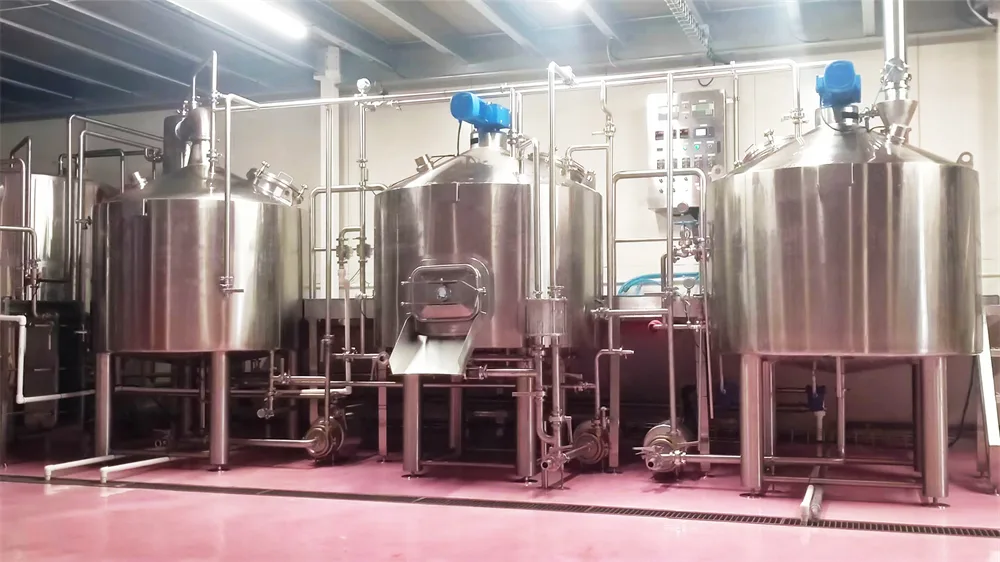
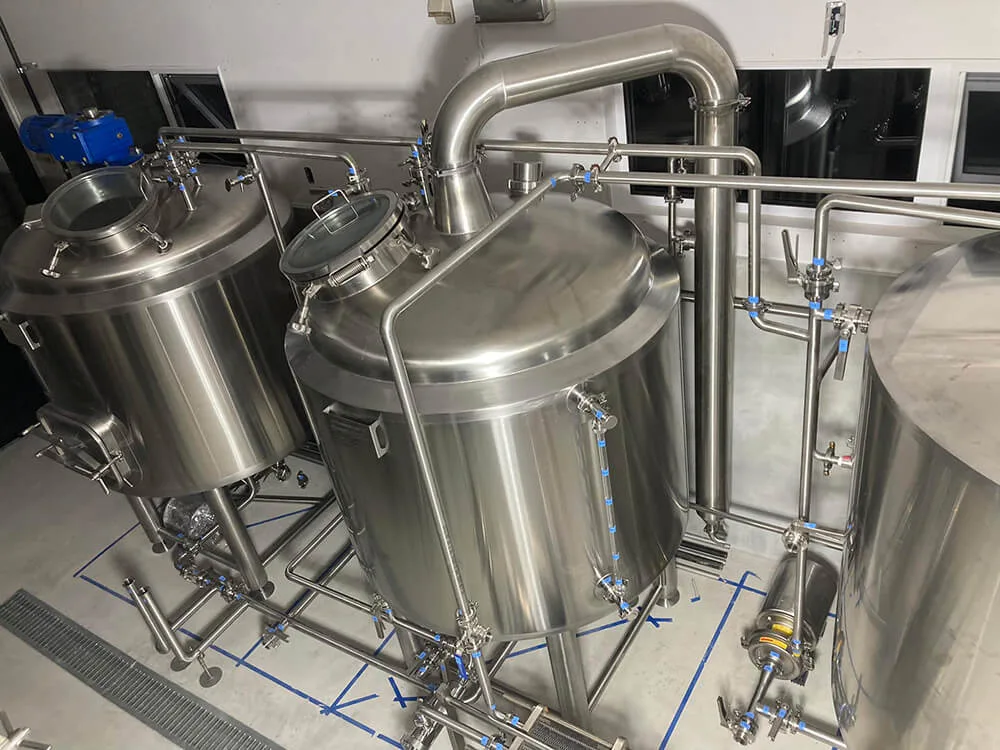
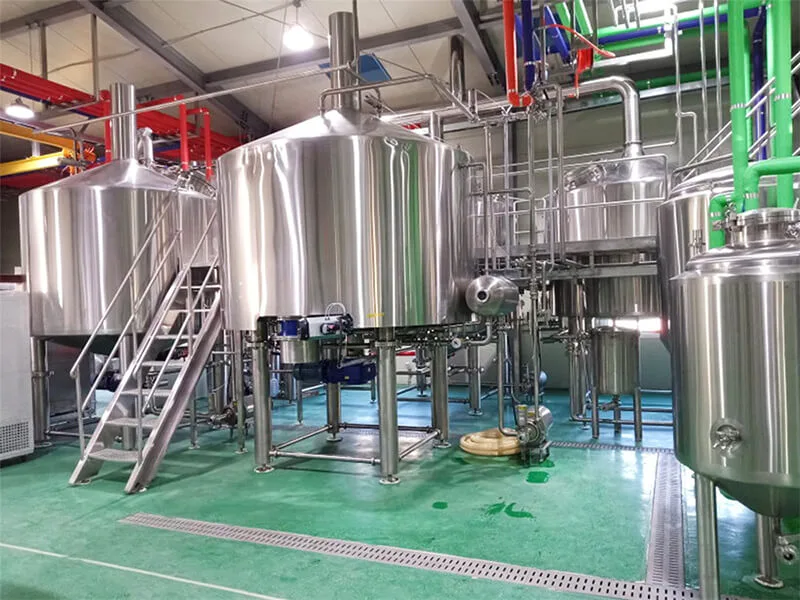
Mashing is the key process converting starch into fermentable sugar, determining the beer’s sweetness, body, and flavor. It mainly includes a mash tun, lauter tun, brew kettle, and whirlpool tank.
- Mash Tun: Mixes crushed malt with hot water and stirs at a constant temperature to complete saccharification.
- Lauter Tun: Separates wort from spent grain and recovers residual sugar through sparging to improve yield.
- Brew Kettle: Boils wort, adds hops, sterilizes, removes impurities, and concentrates flavor.
- Whirlpool Tank: Settles hop residues and hot coagulum to clarify wort and ensure transparent beer.
2.3 Fermentation System
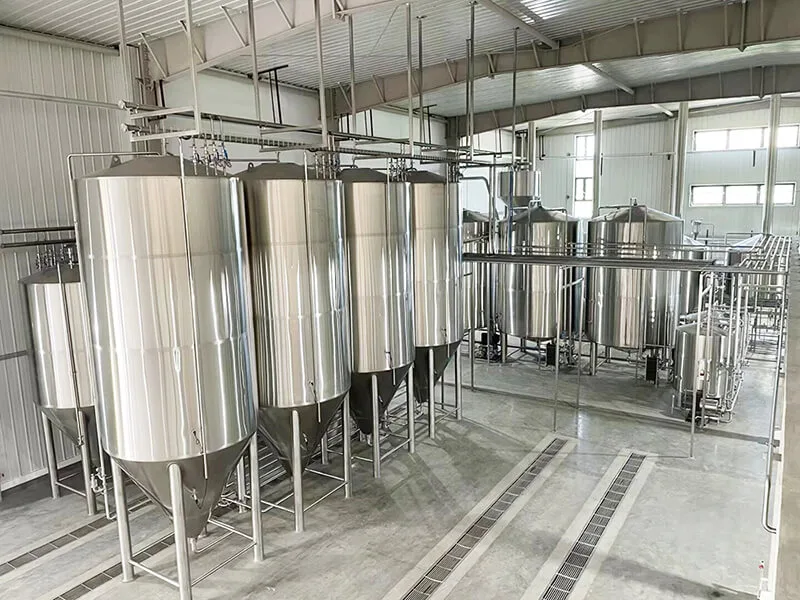
The core process turning wort into beer, centered on the serbatoio di fermentazione—mostly conical stainless steel vessels.
Functions: Temperature-controlled fermentation to convert sugar into alcohol and carbon dioxide via yeast; integrated primary fermentation, conditioning, and clarification; equipped with pressure gauges, safety valves, and sampling valves to ensure fermentation safety and facilitate quality monitoring.
2.4 Filtration and Bright Beer System
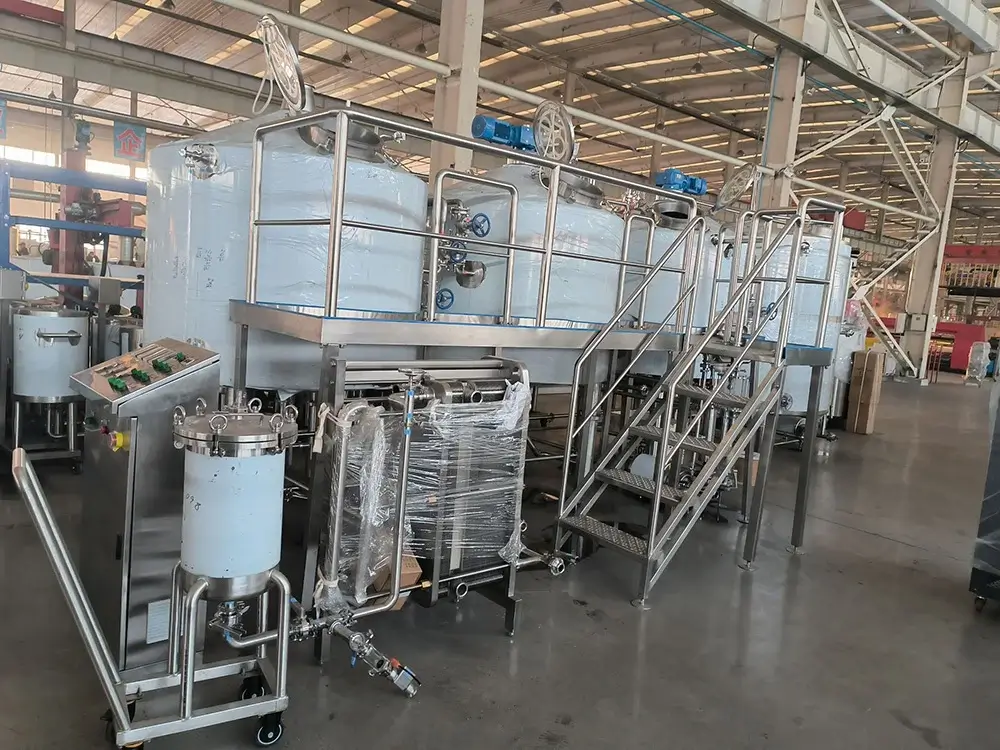
After fermentation, this module improves beer clarity, taste, and shelf life. Common equipment includes diatomite filters, plate and frame filters, and membrane filters.
- Diatomite Filtration: Traditional and efficient, suitable for mass production to remove yeast and impurities.
- Plate and Frame Filtration: Fine filtration equipment to further enhance beer clarity.
- Membrane Filtration: Aseptic filtration for draft beer, preserving fresh and lively flavor.
Supporting bright beer tanks are used for temporary beer storage, carbonation, pressure stabilization, and preparation for filling.
2.5 CIP System
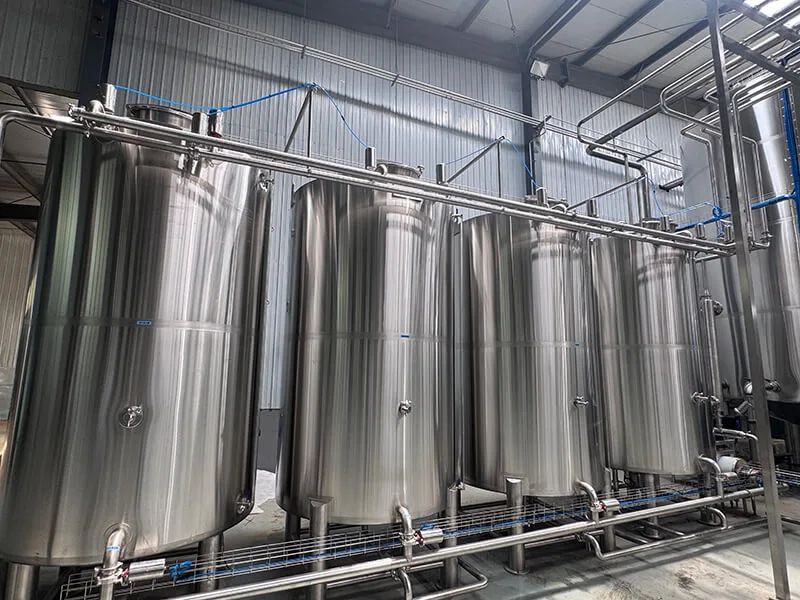
Hygiene is the bottom line of food production. The CIP system cleans tanks and pipelines through spraying and circulating flushing without disassembly, thoroughly removing residual beer, yeast, and impurities to prevent bacterial contamination and ensure safe and stable beer quality in every batch.
2.6 Filling System
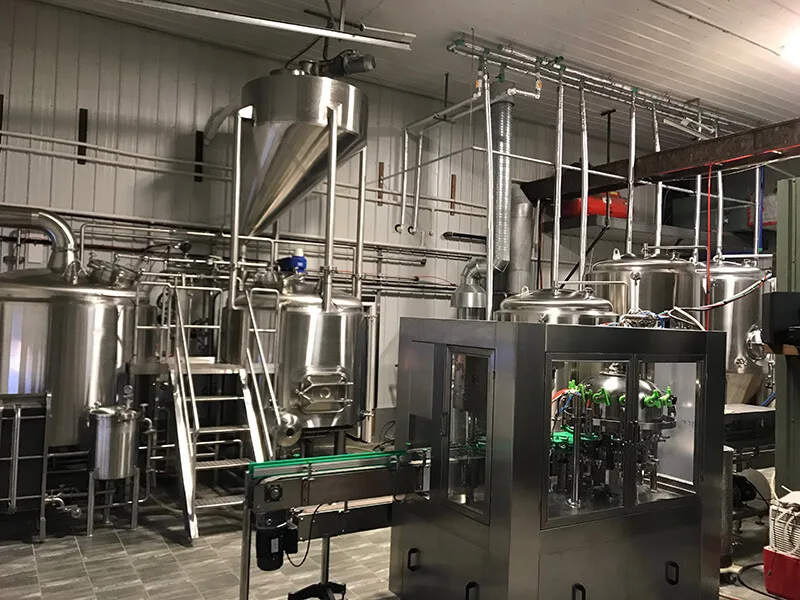
The final step of finished product processing, divided into bottle filling, can filling, and keg filling lines according to packaging formats. Small-scale equipment can be equipped with simple filling machines, while medium and large-scale lines match integrated systems for bottle washing, inspection, filling, sterilization, and labeling to improve efficiency and product appearance.
3. How to Choose the Right Brewery Equipment
Equipment selection should not be based solely on price or blind imitation. It requires comprehensive consideration of actual conditions. Choosing the wrong equipment leads to wasted funds, inefficient space use, unstable beer quality, and low productivity. Keep these seven core factors in mind to avoid common selection mistakes.
3.1 Production Scale and Goals
First, clarify the application scenario and purpose—household use, pub in-house brewing, or commercial mass production—and determine equipment capacity and automation level accordingly. Choose small-capacity micro equipment for personal use and tasting; select small to medium commercial equipment for catering and brewpubs; adopt medium to large production lines for bulk supply and brand building. Matching equipment to actual scale avoids idle capacity or insufficient output.
3.2 Budget and Return on Investment
Budgeting should cover not only upfront equipment costs but also installation, infrastructure renovation, consumables, maintenance, and utility expenses. Automated and high-precision equipment costs more upfront but boosts productivity, ensures consistent flavor, reduces labor costs, and minimizes losses in the long run. Beginners and small workshops can opt for cost-effective models to control initial investment and calculate a reasonable payback period.
3.3 Site Conditions
Accurately measure the length, width, and height of the venue before purchase, leaving ample space for equipment placement, operation, and maintenance. Check the availability of adequate power, water supply, drainage, and ventilation. Electric heating equipment has lower circuit requirements, while steam heating systems require a boiler and relevant approvals to meet operational standards.
3.4 Beer Types and Process Complexity
Equipment compatibility must align with planned beer styles. Basic beer varieties with simple processes can be brewed with standard equipment. For diverse craft styles such as IPA, stout, sour beer, and wheat beer, which demand precise processes, select systems with accurate temperature control, stable fermentation environments, and strong versatility to maintain authentic flavors.
3.5 Material and Craftsmanship Quality
All parts in contact with beer must be made of food-grade 304 or 316L stainless steel. This material is corrosion-resistant, rust-proof, easy to sanitize, and free of beer contamination. Additionally, inspect welding and polishing quality: the inner tank should be smooth, seamless, and free of dead corners, with tight seals to prevent bacterial growth and meet food safety standards.
3.6 Automation and Scalability
Automation level directly affects operation difficulty and product consistency. Manual equipment is low-cost but labor-intensive, relying heavily on experience. Semi-automatic or fully automatic systems feature intelligent temperature and mixing control, reducing human error and ensuring stable output. Prioritize modular equipment, which allows capacity expansion by adding extra fermentation tanks, filtration, or filling modules without replacing the entire line, cutting expansion costs.
3.7 Supplier Support and After-Sales Service
Brewery equipment is professional machinery, so reliable after-sales support is vital. Choose qualified, reputable manufacturers that offer on-site installation, technical training, long-term warranties, and spare parts supply. Quick technical support for malfunctions and operational issues prevents production delays and ensures uninterrupted operation.
4. Equipment Operation and Maintenance Tips for Longer Lifespan and Stable Quality
The durability of brewery equipment and beer quality stability depend on standardized daily operation and regular maintenance. Follow these practices to reduce costs and troubles.
4.1 Strict Cleaning and Sanitization Protocols
Clean tanks and pipelines immediately with the CIP system after each brewing cycle: first use alkaline detergent to remove organic residues, then acid detergent for descaling, and rinse thoroughly with clean water before drying. Never leave leftover beer or spent grain, as it breeds bacteria and mold and contaminates subsequent batches.
Regularly disassemble and deep clean valves, sealing rings, and spray balls, replacing worn parts to maintain sealing and cleaning efficiency.
4.2 Standardized Operation and Strict Process Control
- Strictly follow recipe settings for mashing and fermentation temperatures; avoid fluctuations that affect flavor and fermentation progress.
- Crush malt to be “broken but not pulverized” to keep husks intact for smooth lautering.
- Maintain positive pressure inside fermentation tanks to block air intake, preventing oxidation and souring.
- Operate valves gently to avoid damage to seals and components from rough handling.
4.3 Regular Inspection and Maintenance
- Check the accuracy of pressure gauges, thermometers, and sensors daily, and calibrate them regularly.
- Inspect pipelines and valves weekly for leaks and check for worn sealing rings.
- Lubricate mixing motors and water pumps monthly, and inspect electrical circuits for hazards.
- Conduct a full equipment overhaul annually, polish welds, repair scratches, and replace wearing parts.
4.4 Proper Storage and Protection
Place equipment in a dry, ventilated, and dust-free area to prevent rust and corrosion. For long-term downtime, thoroughly clean, dry, and seal tanks to keep out dust. In winter, take anti-freezing measures to avoid cracking pipelines and tanks.
4.5 Trained and Certified Operators
Assign dedicated operators with professional training, who are familiar with brewing processes, equipment principles, and emergency procedures. Prohibit uncertified or irregular operation to reduce human error, ensure production safety, and maintain stable beer quality.
Conclusione
There is no absolute “best” brewery equipment—only the most suitable one for your needs. Beginners can start with small-capacity, cost-effective models and expand gradually. Commercial breweries and manufacturers should prioritize stability, hygiene standards, and scalability. Combining proper equipment selection with standardized operation and maintenance ensures high-quality beer, lowers operating costs, and sustains long-term brewing success.
If you are planning to purchase brewery equipment, clarify your capacity, site, and budget priorities first, then compare material, after-sales, and automation features. This approach will help you avoid pitfalls and choose the ideal equipment for your operation.
👉 Contact us today for a custom brewhouse system design tailored to your production goals, budget, and future expansion plans.