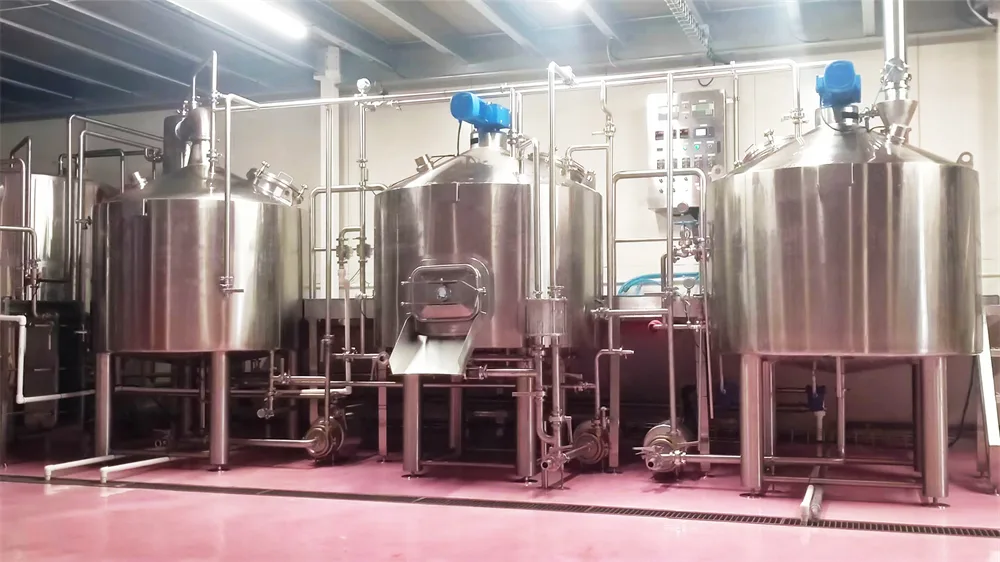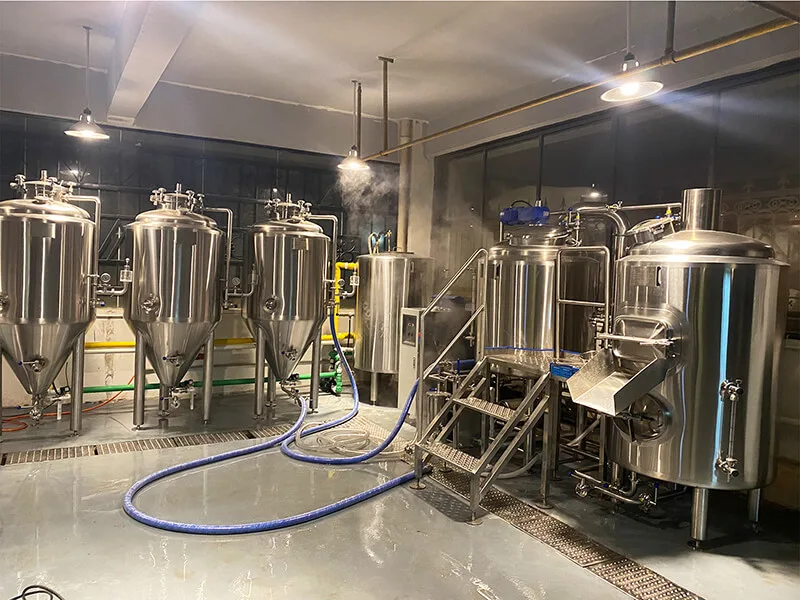
Choosing the right brewhouse configuration is a critical decision that directly impacts brewing efficiency, beer quality, production capacity, and long‑term scalability. This page provides a technical overview of 2‑vessel, 3‑vessel, and 4‑vessel brewhouse systems, highlighting their functional design, operational advantages, and typical applications.
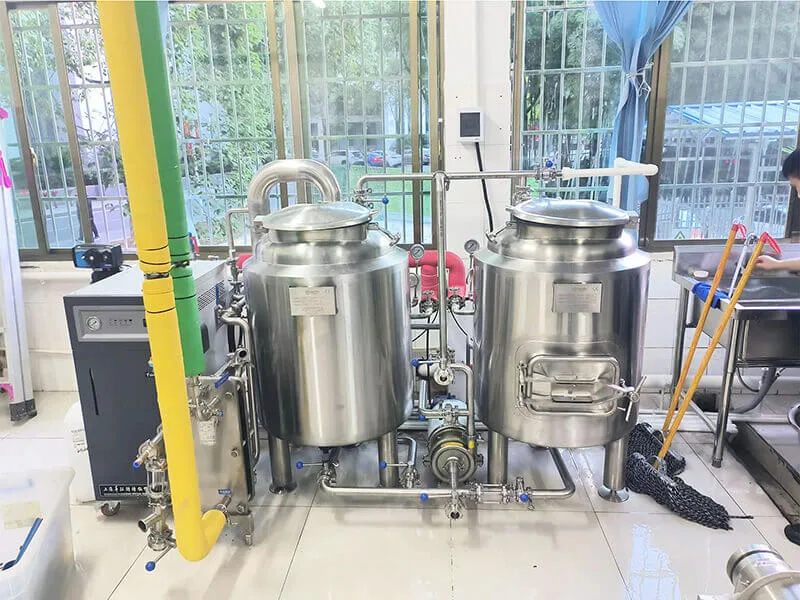
2‑Vessel Brewhouse System
Typical Configuration
- Mash / Lauter Tun (MT/LT)
- Kettle / Whirlpool Tank (BK/WT)
Technical Characteristics
- Mashing and lautering are combined in a single vessel
- Boiling and whirlpooling are performed in one tank
- Compact layout with simplified piping and controls
Key Advantages
- Lower initial investment cost
- Minimal space requirement
- Simplified operation and faster installation
- Suitable for standard single‑infusion mash programs
Technical Limitations
- Mash and lautering share the same vessel, limiting process optimization
- Restricted parallel brewing capability
- Less flexibility for complex mash schedules
- Limited brewhouse expansion potential
Recommended Applications
- Brewpubs and small craft breweries
- Pilot systems and startup breweries
- Facilities with limited floor space
3‑Vessel Brewhouse System
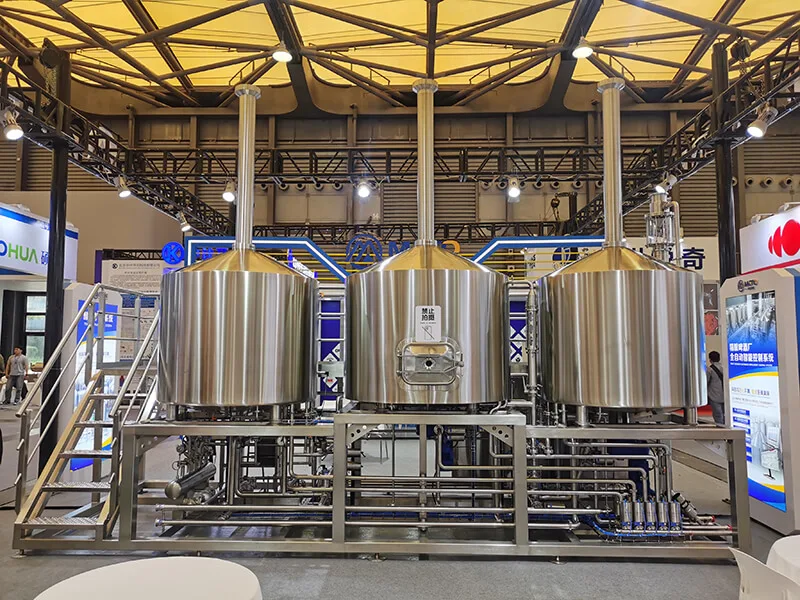
Typical Configuration
- Mash Tun (MT)
- Lauter Tun (LT)
- Kettle / Whirlpool Tank (BK/WT)
Technical Characteristics
- Full separation of mashing and lautering processes
- Each vessel is optimized for a specific brewing function
- Improved temperature control and lautering stability
Key Advantages
- Higher and more consistent extract efficiency
- Reduced risk of stuck mash
- Better suitability for step mashing and traditional lager brewing
- Improved process repeatability and control
- Strong foundation for future capacity expansion
Technical Limitations
- Higher capital investment than 2‑vessel systems
- Larger footprint and more complex piping
- Increased automation and control requirements
Recommended Applications
- Production‑oriented micro breweries
- Breweries focusing on consistent quality and repeatability
- Breweries planning medium‑term expansion
4‑Vessel Brewhouse System
Typical Configuration
- Mash Tun (MT)
- Lauter Tun (LT)
- Boiling Kettle (BK)
- Whirlpool Tank (WT)
Technical Characteristics
- Complete separation of all brewhouse processes
- Maximum flexibility for parallel and multi‑batch brewing
- Dedicated vessel design for each process stage
Key Advantages
- Highest brewhouse efficiency and throughput
- Excellent control of wort boiling and trub separation
- Ideal for high‑gravity brewing and multiple daily batches
- Superior scalability for large‑volume production
- Optimized for automation and advanced process control
Technical Limitations
- Highest investment and installation cost
- Largest space and utility requirements
- Requires experienced technical operation and management
Recommended Applications
- Large craft breweries
- Regional and industrial breweries
- High‑volume production facilities

Technical Comparison Summary
| Caratteristica | 2‑Vessel | 3‑Vessel | 4‑Vessel |
|---|---|---|---|
| Process separation | Limited | High | Full |
| Brewing flexibility | Moderate | High | Very high |
| Production efficiency | Moderate | High | Maximum |
| Expansion potential | Limited | Good | Eccellente |
| Investment level | Low | Medium | High |
| Operational complexity | Low | Medium | High |
How to Choose: 2‑Vessel vs 3‑Vessel vs 4‑Vessel Brewhouse
Choosing the right brewhouse configuration is not about selecting the most complex system, but the one that best matches your production goals, beer styles, and growth strategy.
Choose a 2‑Vessel Brewhouse if:
- You are starting a new brewery or brewpub with limited space
- Batch sizes are relatively small and flexibility is prioritized
- Single‑infusion mashing meets your recipe requirements
- Investment control and fast installation are key considerations
Choose a 3‑Vessel Brewhouse if:
- You require stable, repeatable production quality
- Step mashing or traditional lager brewing is part of your portfolio
- You want better extract efficiency and lautering control
- Medium‑term expansion is planned, but space and budget are still important
Choose a 4‑Vessel Brewhouse if:
- High throughput and multiple brews per day are required
- You plan to scale production significantly over time
- Automation, process separation, and consistency are top priorities
- The brewery operates in a high‑volume or regional production environment
Selecting the Right Brewhouse Configuration
The optimal brewhouse system depends on:
- Target production capacity
- Beer styles and mash complexity
- Available space and utilities
- Budget and investment plan
- Long‑term expansion strategy
Each configuration offers distinct technical benefits. Selecting the right system ensures stable operation, consistent beer quality, and sustainable growth.
Conclusione
From compact 2‑vessel systems to fully separated 4‑vessel brewhouses, system design directly shapes brewing performance. A well‑matched brewhouse configuration enables efficient production, precise process control, and long‑term scalability for professional breweries.
👉 Get your custom turnkey solution from Meto—designed by brewers, for brewers.
Request Your Free Consultation & System Quote