Choosing the right brewhouse size is one of the most critical decisions when building or expanding a craft brewery. Among all available options, 1000L, 2000L, and 3000L brewing systems are the most commonly compared capacities—each serving a very different business stage and production strategy.
This guide provides a practical, side-by-side comparison of 1000L, 2000L, and 3000L craft brewery equipment to help you determine which system best fits your brewery’s goals, budget, and growth plans.
1. Understanding the Role of Brewhouse Size in Brewery Growth
Brewhouse size affects far more than batch volume. It directly influences:
- Annual production capacity
- Capital investment level
- Staffing requirements
- Operating efficiency
- Scalability and long-term cost per liter
Choosing the wrong size often results in:
- Overproduction and cash flow pressure
- Under-capacity systems that limit growth
- Expensive upgrades sooner than expected
That’s why capacity selection should be based on business strategy, not just current demand.
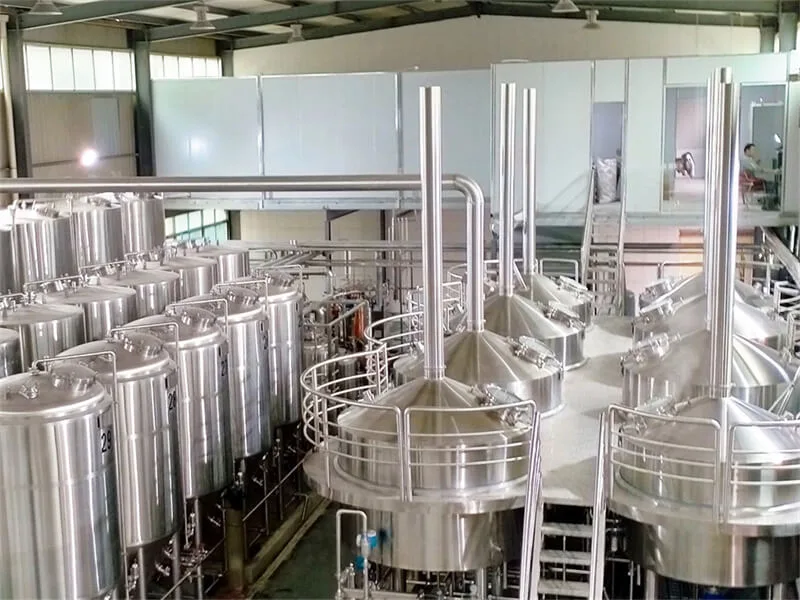
2. 1000L Craft Brewery Equipment: Entry-Level Commercial Production
Who Is a 1000L System Designed For?
A 1000L (10 hL) brewing system is typically suited for:
- Startup craft breweries
- Brewpubs with limited distribution
- Pilot-to-commercial transition projects
- Markets with cautious demand forecasts
Typical Production Range
- Approx. 600–1,200 hL per year
- 2–4 brews per week
- Limited core brands with seasonal rotation
Key Advantages
- Lower initial investment
- Smaller footprint and utility requirements
- Easier to operate with minimal staff
- High flexibility for recipe experimentation
Key Limitations
- Higher cost per liter of beer
- Limited scalability without frequent brewing
- Fermentation cellar fills up quickly
- Often outgrown within 1–2 years if sales grow
Lo mejor para: First-time brewery founders testing the market.
3. 2000L Craft Brewery Equipment: The Balanced Growth Solution
Who Is a 2000L System Designed For?
A 2000L (20 hL) brewing system is ideal for:
- Growing craft breweries expanding from smaller systems
- Regional breweries supplying multiple sales channels
- Established brewpubs shifting toward production brewing
- Founders seeking efficiency without industrial complexity
Typical Production Range
- Approx. 1,500–3,000 hL per year
- 3–5 brews per week
- Stable core brands plus seasonal releases
Key Advantages
- Strong balance between output and flexibility
- Lower labor cost per liter compared to 1000L
- More efficient use of fermentation space
- Easier double-batch brewing strategies
- Suitable for long-term growth without immediate upgrades
Key Considerations
- Higher engineering and utility requirements
- Requires more disciplined production planning
- Greater importance of professional system design
Lo mejor para: Breweries entering stable commercial production and regional distribution.
4. 3000L Craft Brewery Equipment: High-Volume Craft Production
Who Is a 3000L System Designed For?
A 3000L (30 hL) system typically suits:
- High-demand regional craft breweries
- Production-focused breweries with distribution contracts
- Investors with clear volume-driven strategies
- Breweries with strong sales forecasts and logistics capacity
Typical Production Range
- 3,000–6,000 hL+ per year
- Multi-brew days
- Focus on fewer, high-volume SKUs
Key Advantages
- Lowest cost per liter at craft scale
- High daily output efficiency
- Better suited for packaging-focused operations
- Strong economies of scale
Key Challenges
- Higher capital investment
- Larger facility and higher ceiling requirements
- Reduced flexibility for small-batch innovation
- Greater risk if market demand fluctuates
Lo mejor para: Mature breweries with proven demand and strong distribution networks.
5. Side-by-Side Comparison Overview
| Factor | 1000L System | 2000L System | 3000L System |
|---|---|---|---|
| Typical Users | Startups, Brewpubs | Growing Breweries | Regional Producers |
| Annual Output | 600–1,200 hL | 1,500–3,000 hL | 3,000–6,000+ hL |
| Investment Level | Bajo | Medium | Alta |
| Cost per Liter | Alta | Balanced | Lowest |
| Escalabilidad | Limitado | Strong | Industrial-like |
| Recipe Flexibility | Alta | Medium–High | Baja |
| Staffing Needs | Minimal | Moderate | Más alto |
| Risk Level | Bajo | Controlled | Más alto |
6. Fermentation Cellar Impact: Often Overlooked
Brewhouse size alone does not define capacity—the fermentation cellar does.
- 1000L systems often require 6–10 tanks to stay productive
- 2000L systems typically operate efficiently with 6–12 tanks
- 3000L systems demand large-volume, high-pressure fermenters
A common mistake is upgrading the brewhouse without resizing the cellar, creating bottlenecks and underutilized capacity.
7. Utilities and Engineering Differences
As system size increases, so do engineering demands:
Heating
- 1000L: Electric or small steam systems
- 2000L: Steam heating strongly recommended
- 3000L: Industrial-grade steam systems required
Cooling
- Larger glycol systems with higher peak loads
- More complex piping and flow balancing
Automatización
- Manual/semi-automatic at 1000L
- PLC-based systems common at 2000L
- Advanced automation and data tracking at 3000L
Engineering quality becomes increasingly critical from 2000L upward.
8. Cost vs Risk: Why Many Breweries Choose 2000L
One reason 2000L systems are so popular is risk balance.
- 1000L systems reduce entry risk but often limit growth
- 3000L systems maximize efficiency but increase financial exposure
- 2000L systems offer:
- Manageable investment
- Room to scale
- Sustainable production economics
For many breweries, 2000L represents the most forgiving and flexible growth platform.
9. How to Choose the Right System for Your Brewery
Pregúntatelo a ti mismo:
- What is my realistic sales volume in 12–24 months?
- How many core beers vs seasonal releases do I plan?
- Do I have secured distribution or taproom demand?
- Can my facility support future expansion?
Choosing capacity is not about today—it’s about where your brewery is going.
Reflexiones finales
There is no universally “best” brewhouse size—only the right system for your business stage.
- 1000L systems are ideal for cautious entry and experimentation
- 2000L systems offer the best balance of efficiency, flexibility, and scalability
- 3000L systems suit volume-driven breweries with proven demand
By aligning equipment size with your production strategy, market reality, and growth vision, you set the foundation for long-term success in the craft brewing industry.