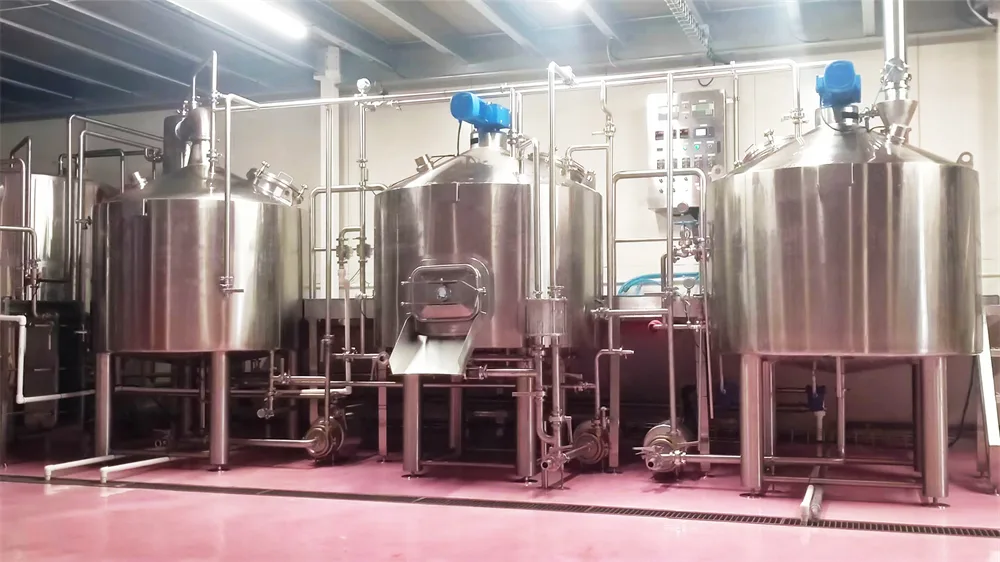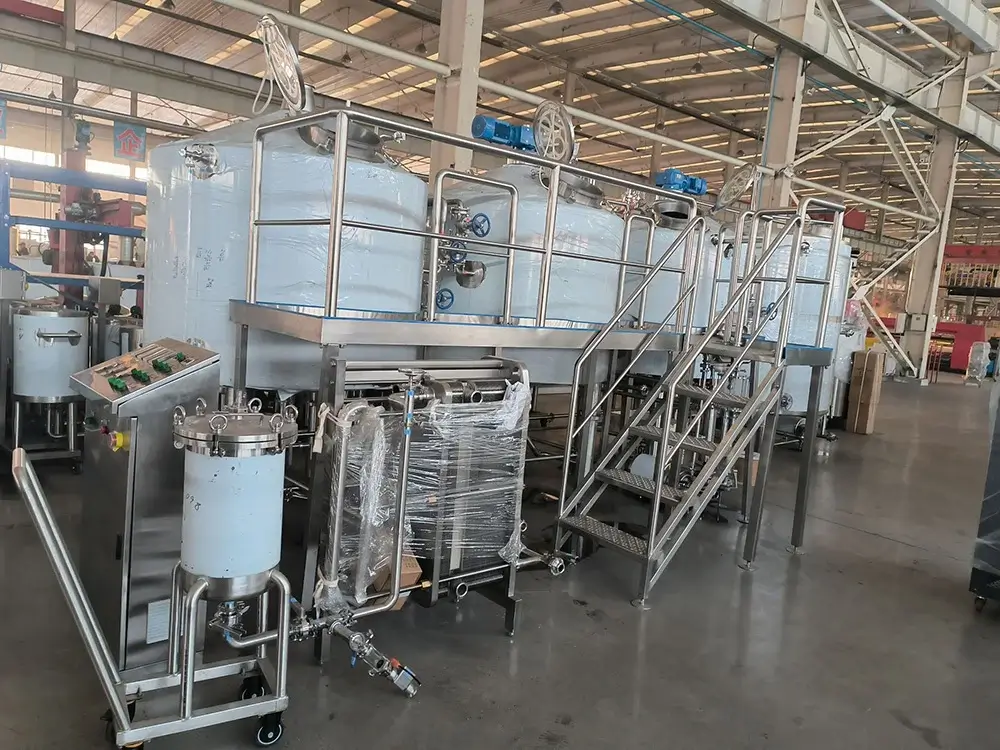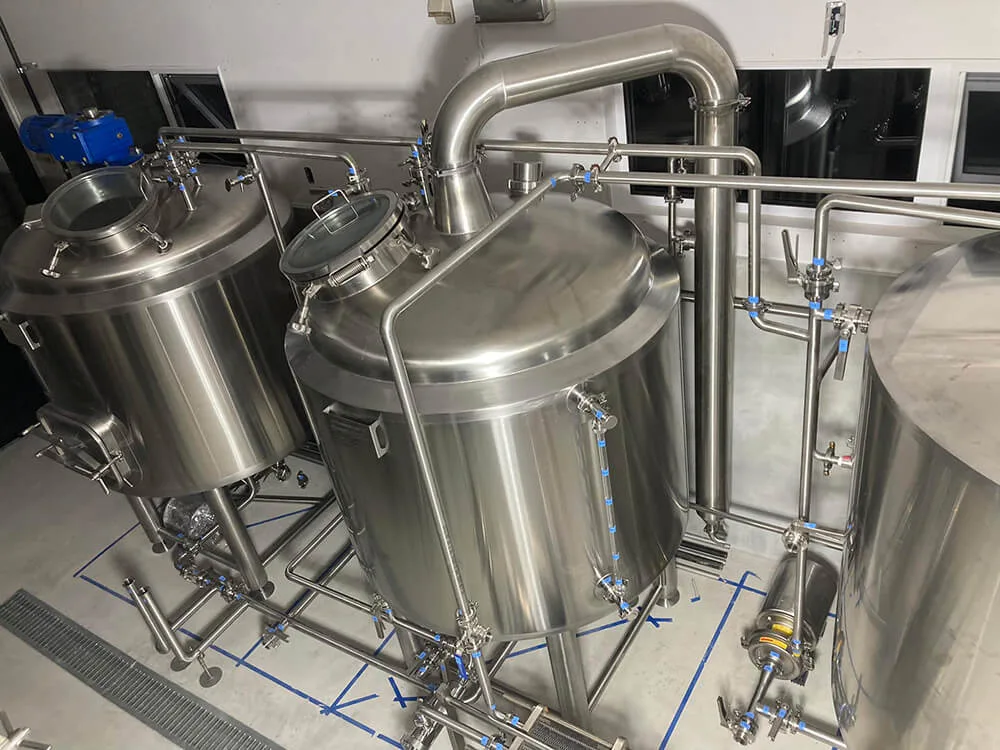
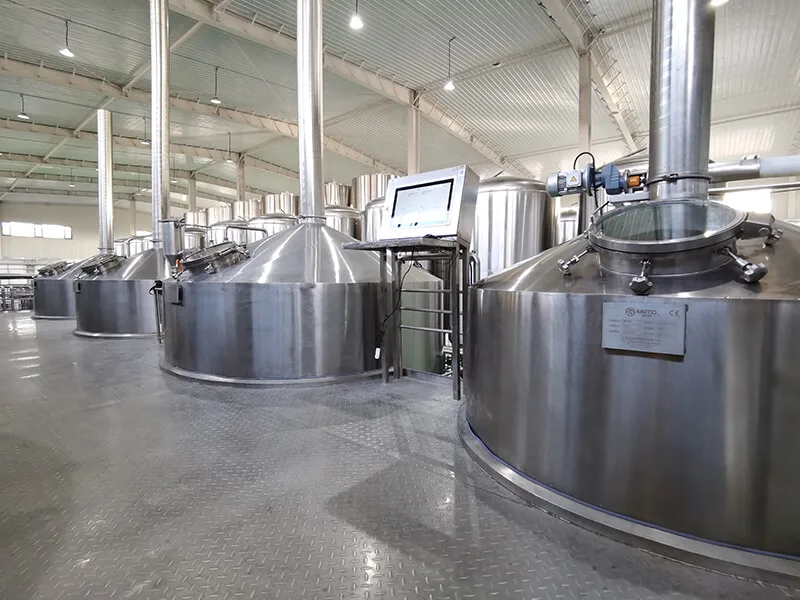
In the world of craft beer, two vessels often look nearly identical but serve very different purposes: the mash tun and the lauter tun. Both handle malted grains and hot water, but their roles, design, and impact on your wort are distinct.
Understanding the differences is essential for optimizing efficiency, maximizing sugar extraction, and producing clean, consistent wort. Whether you’re setting up a nano brewery or scaling a commercial operation, choosing the right equipment starts with knowing what each vessel truly does.
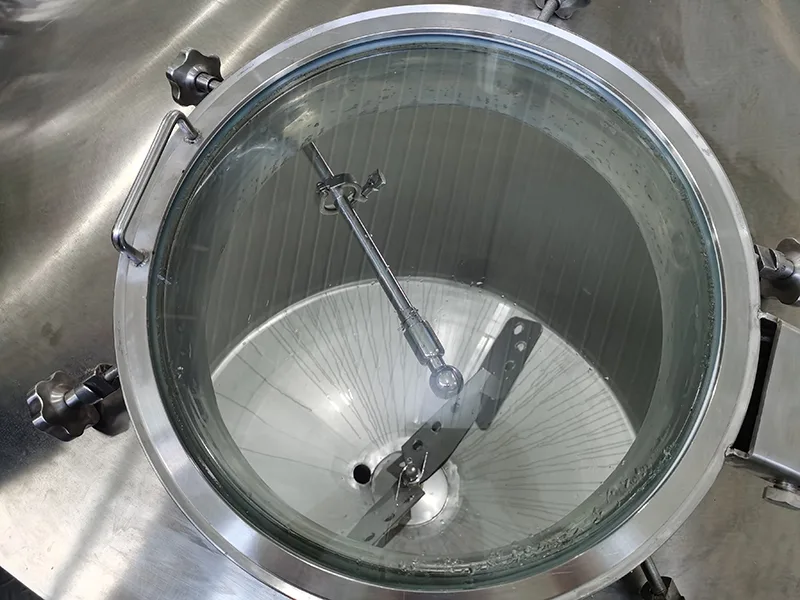
What Is a Mash Tun?
The mash tun is where brewing begins in earnest. Its primary function is to mix crushed malted grains with hot water—a process called mashing—activating enzymes that convert starches into fermentable sugars, primarily maltose. This stage is critical for both the flavor profile and the efficiency of sugar extraction.
Key Features of a Mash Tun
- Precise temperature control: Typical mash temperatures range from 63–72°C (145–162°F). Different temperatures favor different enzymes—lower temperatures promote beta-amylase activity (more fermentable sugars), while higher temperatures favor alpha-amylase (more body and malt complexity).
- False bottom or filter plate: Supports the grain bed while allowing liquid circulation. Coarser perforations are used to prevent clogging while maintaining free flow.
- Agitation system (optional): Step-mashing or temperature ramping requires gentle stirring to avoid hot spots and ensure uniform enzymatic activity.
- Insulation: Many mash tuns are insulated to maintain stable temperatures for longer mash periods, reducing energy usage and improving consistency.
Practical Tip: The mash tun is also the ideal place to perform mash rests—specific temperature holds that influence body, mouthfeel, and fermentability. Some advanced systems allow programmable multi-step mashing for precise control.
What Is a Lauter Tun?
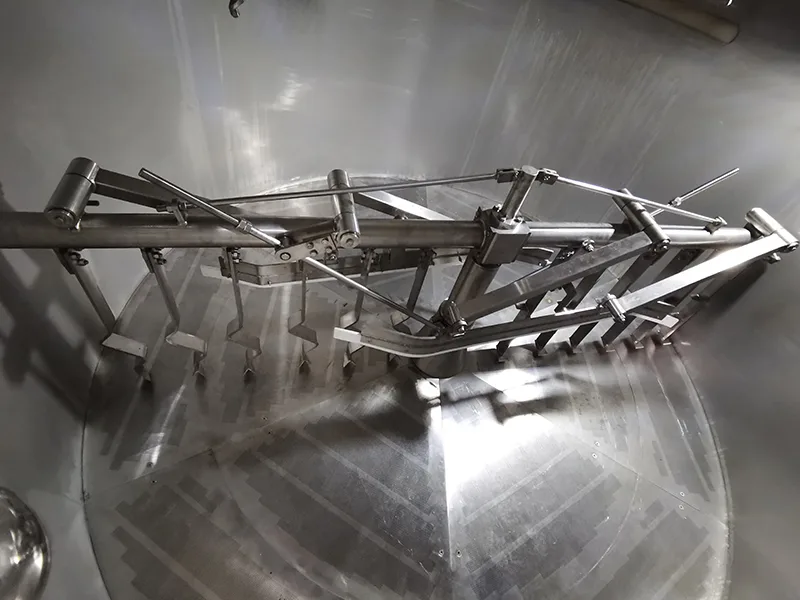
After mashing, the sweet wort must be separated from the spent grains. This process, called lautering, takes place in the lauter tun. Efficient lautering ensures that you extract as much sugar as possible without picking up unwanted solids that can affect clarity and flavor.
Key Features of a Lauter Tun
- Finer false bottom or slotted plate: Prevents grain particles from entering the wort while allowing liquid to flow freely.
- Sparging system: Hot water (~77°C / 170°F) is sprayed evenly over the grain bed to rinse out residual sugars. Proper sparging improves yield without over-extracting tannins, which can add bitterness.
- Raking system (optional in larger systems): Gently stirs the grain bed to prevent channeling, where water finds the path of least resistance, leaving sugars trapped in the bed.
- Drainage design: Sloped bottoms or perforated sections ensure consistent runoff and reduce stuck sparges.
Practical Tip: Maintaining a consistent sparge flow rate is crucial. Too fast can compact the grain bed; too slow reduces efficiency. Many modern lauter tuns allow adjustable flow and automated rakes to optimize extraction.
Mash Tun vs. Lauter Tun: Quick Comparison
| Característica | Mash Tun | Lauter Tun |
|---|---|---|
| Primary Function | Convert starches to fermentable sugars | Separate wort from spent grain |
| Stage in Process | Mashing | Lautering (post-mash) |
| False Bottom | Coarser openings | Fine mesh for filtration |
| Sparging Arm | Not needed | Essential for rinsing |
| Control de la temperatura | Multi-step precise control | Stable high temperature only |
| Agitation | Often included | Rarely used (avoid disturbing grain bed) |
| Impact on Beer | Determines sugar composition and body | Influences wort clarity and extraction efficiency |
Separate Vessels or Combined Systems?
Combined Mash/Lauter Tun
- Ideal for small breweries, pilot systems, and homebrewers.
- Space- and cost-efficient.
- Modern systems allow automated transitions from mashing to lautering without manual intervention.
- Limitations: Flow rates and wort clarity may not match a dedicated lauter tun in larger batches.
Dedicated Mash Tun + Lauter Tun
- Preferred for medium to large commercial breweries.
- Allows simultaneous mashing and lautering, increasing throughput.
- Offers faster runoff and higher wort clarity, critical for consistency in high-volume production.
- Easier to integrate with CIP (clean-in-place) systems, reducing downtime.
Advanced Considerations
- Grain Bill and Vessel Design: Heavier grain bills or adjuncts (like wheat or oats) may require larger or more robust false bottoms to avoid stuck sparges.
- Automation: Many modern breweries use automated mash/lauter systems to control temperature ramps, flow rates, and sparge cycles for precise repeatability.
- Yield Optimization: Proper mash pH (typically 5.2–5.6) and sparge temperature are crucial to maximize sugar extraction while minimizing tannin pickup.
Reflexiones finales
Though often placed side by side, the mash tun and lauter tun serve very different functions:
- Mash tun: Builds flavor, determines fermentable sugar profile.
- Lauter tun: Refines wort, ensures clarity, and maximizes sugar recovery.
Understanding each vessel’s purpose and selecting the right configuration is key to improving efficiency, yield, and beer quality.
Ready to design your brewhouse? At Meto, we specialize in custom-engineered brewing systems—from 100L nano setups to 10,000L commercial lines. Share your vision, and we’ll deliver a turnkey solution in 24 hours.