Choosing the right distillation equipment is one of the most critical decisions for any craft distillery. Among all options, the debate usually comes down to pot stills vs column stills. Each system has its own strengths, limitations, and ideal use cases.
So, which one is better for craft distilleries?
The answer depends on your spirit type, production scale, flavor goals, and future expansion plans. This article breaks down the key differences to help you make a practical, informed decision.
Understanding the Basics
What Is a Pot Still?
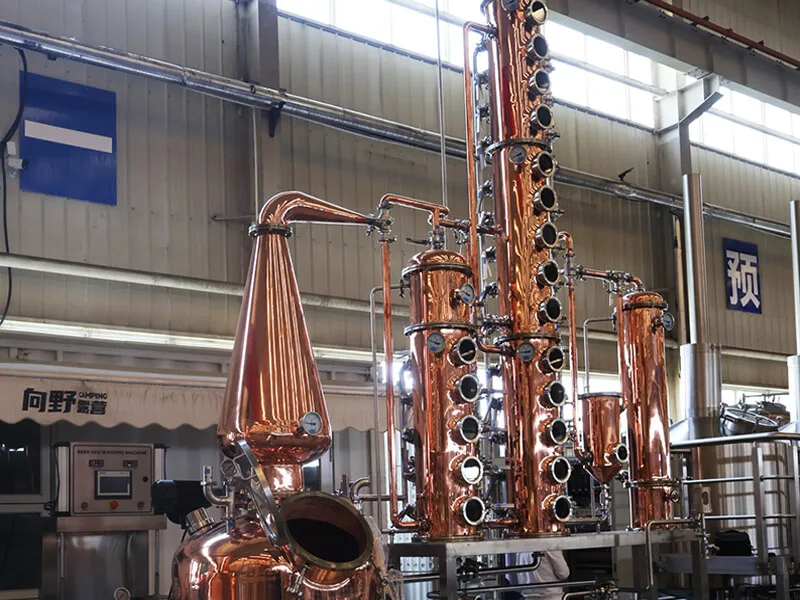
A pot still is the most traditional form of distillation equipment. It typically consists of:
- A pot (boiler)
- A swan neck or lyne arm
- A condenser
Pot stills operate in batch mode, meaning each distillation run is loaded, distilled, emptied, and cleaned before the next batch.
They are widely used for:
- Whisky
- Brandy
- Ron
- Craft gin (often paired with a gin basket)
What Is a Column Still?
A column still (also known as a continuous still) consists of:
- A boiler
- One or more vertical columns with internal plates or packing
- A condenser and reflux control system
Column stills allow continuous or semi-continuous distillation, achieving higher alcohol purity in a single run.
They are commonly used for:
- Vodka
- Neutral spirit
- Industrial or high-efficiency alcohol production
Key Differences at a Glance
| Aspecto | Alambique | Columna Still |
|---|---|---|
| Distillation Mode | Batch | Continuous / Semi-continuous |
| Flavor Retention | Alta | Lower (cleaner spirit) |
| Alcohol Purity | Lower per run | Higher per run |
| Production Speed | Slower | Faster |
| Operational Complexity | Simple | More complex |
| Ideal for Craft Scale | Yes | Depends on scale |
| Typical ABV Output | 60–80% | 90–96% |
Flavor vs Efficiency: The Core Trade-Off
Pot Stills: Designed for Flavor
Pot stills excel at preserving congeners and character from the fermented mash. This makes them ideal for spirits where depth, mouthfeel, and complexity matter.
For craft distilleries focused on:
- Terroir
- Small-batch identity
- Aged spirits
pot stills are often the preferred choice.
Column Stills: Built for Efficiency and Purity
Column stills are engineered for maximum alcohol separation. Through reflux control and multiple plates, they strip out most flavor compounds, producing a clean and neutral spirit.
This is ideal for:
- Vodka
- Base alcohol for flavored spirits
- Facilities prioritizing volume and consistency
However, excessive neutrality may be undesirable for craft producers aiming for distinctive profiles.
Production Scale Considerations
For most small to medium craft distilleries (500L–2000L):
- Pot stills offer flexibility, lower initial investment, and simpler operation.
- Column stills make more sense when production volumes increase significantly or when neutral spirit output is a core business model.
Many modern craft distilleries adopt a hybrid system:
- A pot still combined with a short rectification column
- Optional gin basket integration
This approach balances flavor control with operational efficiency.

Cost and Investment Comparison
Pot Still Investment Characteristics
- Lower equipment cost
- Easier installation
- Lower maintenance complexity
- Ideal for startups and pilot distilleries
Column Still Investment Characteristics
- Higher upfront cost
- More complex controls and safety requirements
- Higher throughput per hour
- Better suited for scalable production
For first-time distillery owners, pot stills usually represent a lower-risk entry point.
Which Still Is Better for Craft Distilleries?
Choose a Pot Still If:
- You produce whisky, rum, brandy, or craft gin
- Flavor and character are your priority
- You operate at small to medium scale
- You want flexibility for experimentation
Choose a Column Still If:
- Your main product is vodka or neutral spirit
- High purity and output efficiency are essential
- You have experienced operators
- You plan larger-scale or continuous production
Final Recommendation
There is no universal “better” option—only the right system for your production goals.
For most craft distilleries, especially startups and independent producers, pot stills or hybrid systems provide the best balance of flavor, control, and investment efficiency. Column stills become advantageous as production volumes grow or when neutral spirit production is central to the business.
A professional distillery equipment supplier should help you evaluate:
- Spirit style
- Batch size
- Energy source
- Expansion potential
- Local regulatory requirements
before finalizing your still selection.
Need Help Choosing the Right Distillation System?
Every craft distillery is different. A customized equipment configuration ensures the best balance between quality, efficiency, and long-term growth.
Póngase en contacto con nosotros to discuss your distillery goals and receive a tailored distillation equipment solution.