
Why Distillation Systems Define Whisky Flavor
In the world of whisky, flavor differences between distilleries are not random—they are engineered through the distillation system. The contrast between The Macallan and Glenmorangie, or between Yamazaki and Chita, is ultimately rooted in how each distillery designs and operates its distillation system.
A distillation system is far more than a production tool. It controls alcohol strength, impurity removal, reflux behavior, and ultimately the structure of the spirit. Whether a distillery chooses a pot still or a column still will directly determine whether the whisky is rich and complex or light and clean.
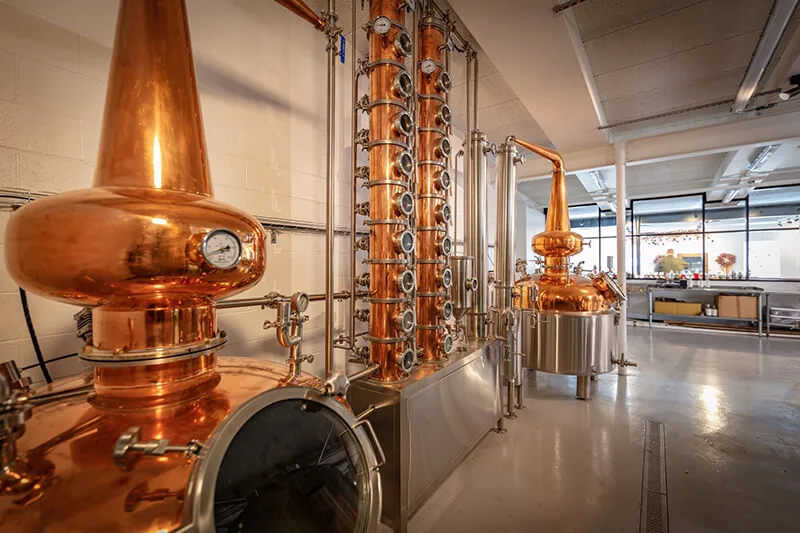
Pot Still Distillation System: Built for Flavor Complexity
A pot still distillation system is fundamentally designed to preserve flavor. Unlike continuous systems, a pot still operates in batches, meaning each distillation run is individually controlled. This slower and more hands-on process allows the distiller to retain a wide range of congeners, which are responsible for aroma and taste complexity.
Because a pot still distillation system typically produces spirit at a lower ABV, more esters, oils, and heavier compounds remain in the final product. This is why pot still whisky is often described as full-bodied, rich, and layered. Distilleries like The Macallan rely on this type of distillation system to create dense, sherried flavor profiles, while Yamazaki uses pot stills to build depth and complexity.
The design of the pot still itself further refines flavor. Taller stills increase reflux and produce lighter spirits, while shorter or wider stills reduce reflux and allow heavier compounds to pass through. This is why Glenmorangie, known for its exceptionally tall stills, produces a lighter and more floral whisky compared to richer styles.
Column Still Distillation System: Designed for Efficiency and Purity
In contrast, a column still distillation system is built for continuous operation, efficiency, and consistency. Unlike a pot still, a column still runs non-stop, making it ideal for large-scale production. This type of distillation system can reach much higher alcohol concentrations, often up to 94% ABV, which significantly reduces impurities.
As a result, whisky produced in a column still distillation system tends to be lighter, cleaner, and more neutral in character. This makes it especially suitable for grain whisky and blended whisky production, where consistency is critical. Chita is a strong example of how a column still system can produce a smooth, refined base spirit.
The advantage of a column still distillation system lies in its ability to deliver stable quality at scale. For distilleries targeting global markets, this level of control and repeatability is essential.
Combining Pot Still and Column Still in Modern Distillation Systems
Many leading distilleries no longer rely on a single distillation system. Instead, they combine pot still and column still systems to achieve both complexity and efficiency. Suntory is a classic example of this approach.
At Yamazaki, pot still distillation is used to create rich and complex malt whisky. At Chita, a column still distillation system produces clean grain whisky. These different spirits are then blended into products like Hibiki, where balance becomes the defining characteristic.
This hybrid distillation system strategy reflects a broader industry trend: using engineering design to control flavor outcomes with precision.
Heating Methods and Their Impact on Distillation Systems
Beyond the choice between pot still and column still, heating methods also influence how a distillation system shapes flavor. Direct fire heating can introduce subtle caramelized or toasted notes, adding depth but requiring careful control. Steam coil heating, now widely used in modern distillation systems, provides a more stable and even heat source, resulting in a cleaner flavor profile.
Some distilleries deliberately maintain traditional heating techniques to preserve distinctive character. For example, Yoichi uses direct coal-fired pot stills, which contribute to its bold and slightly smoky profile. This demonstrates how even within the same distillation system category, process details can significantly affect the final spirit.
The Rise of Automated Distillation Systems
As the industry evolves, the distillation system is becoming increasingly automated. An automated distillation system integrates heating, separation, condensation, and control into a unified process, significantly improving consistency and efficiency.
Modern distillation systems are equipped with PLC-based control systems that monitor temperature, pressure, and alcohol concentration in real time. This level of precision allows distillers to make accurate cuts between heads, hearts, and tails, ensuring both quality and safety. Compared to traditional manual operation, an automated distillation system reduces human error and ensures repeatable results across batches.
In addition, automated distillation systems continuously collect production data. This data can be used to optimize processes, improve traceability, and meet regulatory requirements. Over time, distillation systems are evolving from manual craft tools into data-driven production platforms.
Business Value of Upgrading Your Distillation System
Investing in a modern distillation system—whether a pot still, column still, or hybrid setup—has significant commercial benefits. A well-designed distillation system improves product consistency, which strengthens brand reputation in competitive markets. It also reduces labor costs and energy consumption through automation and process optimization.
More importantly, a flexible distillation system allows distilleries to respond quickly to market demand. Producers can scale output, adjust flavor profiles, and develop new products more efficiently. In today’s global spirits industry, the distillation system is not just a production asset—it is a strategic advantage.

Conclusion: Choosing the Right Distillation System
The choice between a pot still and a column still distillation system ultimately defines both flavor and business direction. A pot still distillation system emphasizes richness, individuality, and craftsmanship, while a column still distillation system focuses on efficiency, purity, and scalability.
In modern distilling, the most successful producers understand how to combine these systems and optimize them through automation. As distillation systems continue to evolve with IoT and AI technologies, the ability to engineer flavor with precision will become an even more powerful competitive edge.
👉 Contact us today for a custom brewhouse system design tailored to your production goals, budget, and future expansion plans.