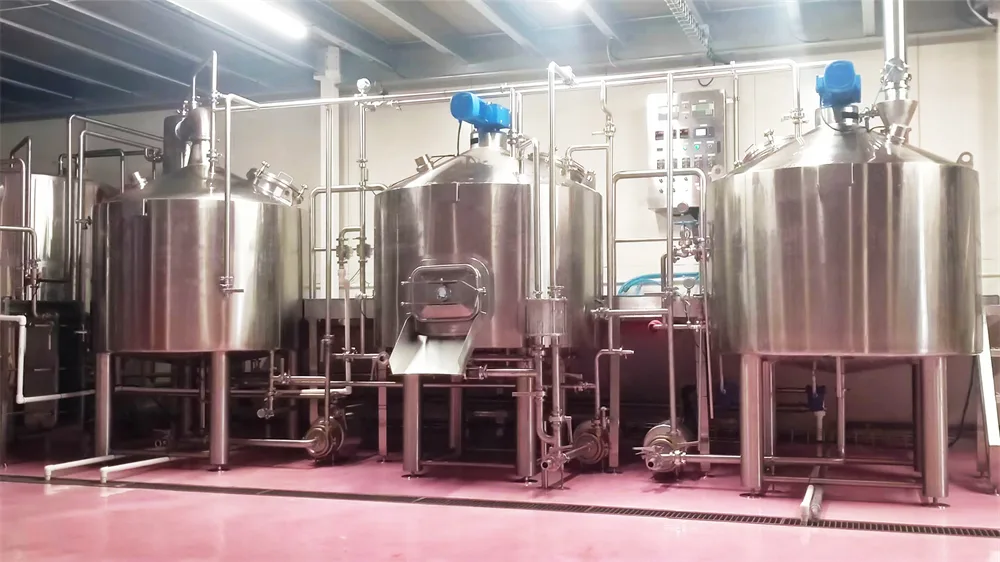
In micro distilleries or large-scale spirits production, proper cleaning and maintenance of distillation equipment not only affect equipment lifespan but also directly impact flavor consistency, production efficiency, and food safety compliance.
This article systematically explains how to efficiently maintain distillation equipment from the perspectives of cleaning frequency, key components, correct cleaning methods, and daily maintenance practices.
1. Why Is Distillation Equipment Maintenance So Important?
During long-term operation, distillation systems are prone to the following issues:
- Scale, protein residue, and mash deposits
- Oxidation and sulfide buildup on copper surfaces
- Reduced heat-exchange efficiency and increased steam consumption
- Off-flavors and unwanted aromas affecting spirit purity
A proper maintenance program helps you to:
- Maintain consistent and repeatable spirit quality
- Extend the service life of stills, columns, and condensers
- Reduce energy consumption and unplanned downtime
- Meet food-grade and export compliance standards
2. Daily Cleaning Procedures (After Each Use)
1️⃣ Allow Equipment to Cool Before Cleaning
Never disassemble or rinse equipment while it is still hot. This prevents burns and avoids damage caused by thermal expansion and contraction.
2️⃣ Disassemble Cleanable Components
This includes condensers, receiving vessels, distillation heads, and fittings.
Use a soft brush (such as a tube brush) with warm water and mild detergent to gently clean all surfaces.
3️⃣ Remove Scale (For Copper and Stainless Steel Equipment)
If hard water is used, scale may form inside heating chambers.
Soak components in white vinegar (5–10% acetic acid solution) or citric acid solution for several hours, then rinse thoroughly with clean water.
⚠️ Avoid strong acids (such as hydrochloric acid) or chlorine-based cleaners, as they can corrode metal surfaces.
4️⃣ Drying and Storage
Ensure all components are completely air-dried or wiped dry with lint-free cloths to prevent mold growth and oxidation.
Store equipment in a dry, well-ventilated area and avoid stacking parts in a way that may cause deformation.
3. Deep Maintenance (Monthly or Quarterly)
1️⃣ Inspect Seals and Gaskets
Silicone or rubber seals can age and crack over time. Replace them regularly to maintain airtight performance.
2️⃣ Check Welds and Connections
Inspect for leaks, corrosion, or looseness—especially at welded joints on copper distillation equipment.
3️⃣ Condenser Water Flow Test
Ensure cooling water flows smoothly. If necessary, use compressed air or a thin wire to remove small blockages.
4️⃣ Calibrate Thermometers and Pressure Gauges (If Equipped)
Accurate readings are critical for precise control of the distillation process.
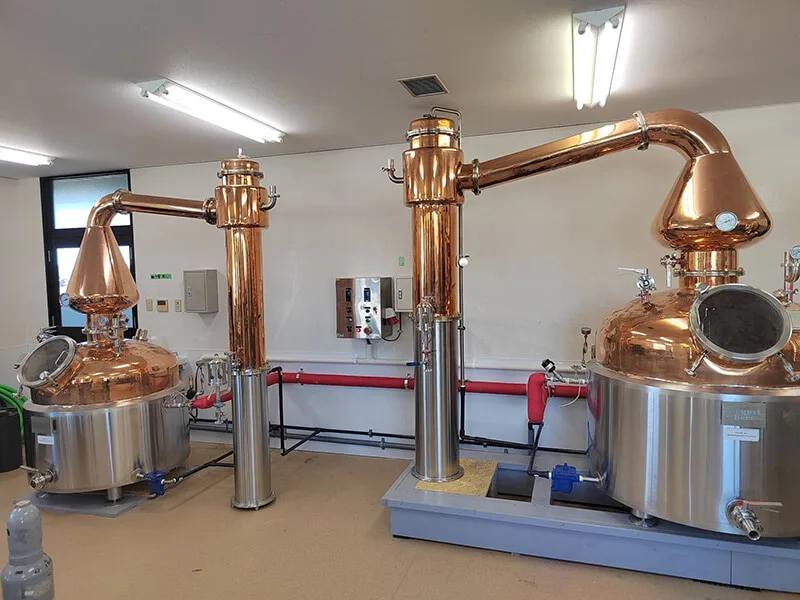
4. Proper Cleaning Methods for Key Distillation Equipment Components
1️⃣ Still (Kettle) Cleaning
Recommended steps:
- Rinse with hot water to remove mash and large residues
- Circulate food-grade alkaline detergent
- Rinse thoroughly with clean water
- Perform mild acid neutralization if necessary to prevent scale buildup
⚠️ Avoid highly corrosive chemicals to protect SUS304 stainless steel and copper materials.
2️⃣ Copper Column and Reflux Column Maintenance
Copper components play a critical role in removing sulfur compounds but oxidize easily:
- Use dedicated copper cleaners or citric acid solutions
- Control soaking time to prevent over-corrosion
- Rinse thoroughly and dry completely after cleaning
💡 Small distilleries are advised to perform deep copper maintenance once per month.
3️⃣ Condenser and Heat Exchange System Cleaning
Reduced condensation efficiency is often caused by internal scaling:
- Perform regular reverse flushing
- Use low-concentration acid solutions to remove scale
- Check cooling water inlet and outlet for blockages
5. Application of CIP Systems in Distillation Equipment
Modern micro distillery equipment increasingly integrates CIP (Clean-in-Place) systems.
Entre sus principales ventajas figuran:
- Reduced manual disassembly
- Improved cleaning consistency
- Shorter downtime
- Lower risk of cross-contamination
Recommended CIP sequence:
Alkaline wash → Hot water rinse → Acid wash → Final rinse
Regularly inspect CIP pumps, spray balls, and sealing components to ensure reliable operation.
6. Daily Maintenance and Inspection Checklist
✔ Inspect gaskets (EPDM / PTFE) for aging or damage
✔ Ensure flanges and tri-clamp connections are secure
✔ Verify accuracy of pressure gauges and thermometers
✔ Lubricate valves and moving components regularly
✔ Keep equipment dry and well-ventilated during shutdown
7. Pro Tip: Establish a Cleaning Log
It is recommended to record each cleaning date, cleaning agents used, observed issues, and corrective actions.
A cleaning log helps track equipment condition and enables quick troubleshooting when problems arise.
Conclusión
Well-maintained distillation equipment can operate reliably for many years while ensuring every batch is clean, efficient, and safe.
Spending 10 minutes on proper cleaning is far more cost-effective than spending hours repairing equipment or reprocessing a failed batch.
We hope this guide becomes a practical reference for your daily distillation operations.
If you are using a specific type of distillation equipment—such as alcohol stills, essential oil distillers, or laboratory short-path distillation units—feel free to leave a comment. We’d be happy to provide tailored maintenance recommendations.
Si tiene alguna pregunta sobre la elaboración de cerveza, no dude en Contacto Equipo Meto.