Choosing the right distillation equipment is one of the most critical decisions when starting or expanding a craft spirits distillery. The equipment you select will directly impact product quality, production efficiency, operating costs, and long-term scalability.
Whether you plan to produce whiskey, gin, vodka, brandy, or other distilled spirits, understanding the differences between distillation systems—and how they align with your production goals—is essential.
This guide explains the key factors to consider when selecting distillation equipment for craft spirits production.
1. Define Your Spirits Style and Production Goals
Before selecting any equipment, clearly define what you want to produce and how you plan to grow.
Key questions to ask:
- Which spirits will you produce? (Whiskey, gin, vodka, brandy, rum, etc.)
- Will you focus on handcrafted flavor or high-volume neutral spirits?
- What is your initial production capacity?
- Do you plan to scale up in the future?
Different spirits require different distillation approaches. For example:
- Whiskey and brandy typically favor pot stills to retain flavor complexity.
- Vodka often requires column stills for higher purity.
- Gin may require hybrid systems with botanical baskets.
2. Pot Still vs Column Still: Understanding the Difference
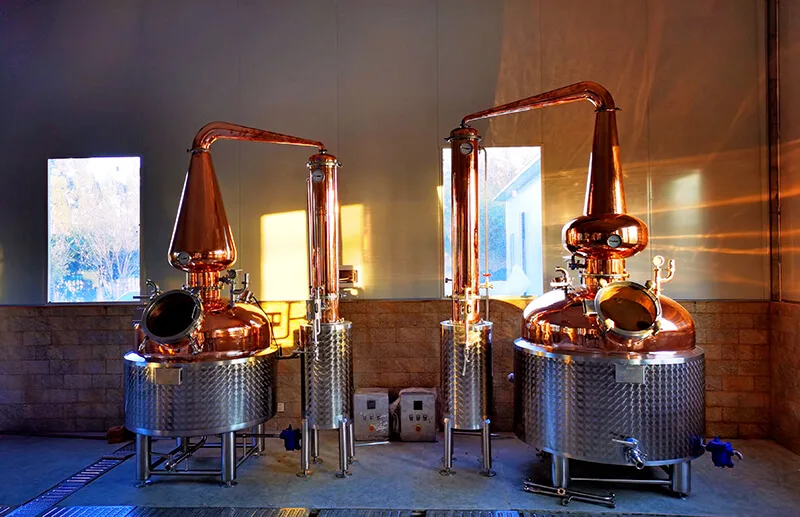
Alambique
Pot stills are traditionally used for flavorful spirits such as whiskey, rum, and brandy.
Ventajas:
- Richer flavor retention
- Traditional distillation process
- Ideal for small-batch craft production
Considerations:
- Lower alcohol purity per run
- More manual operation
- Lower output efficiency
Columna Still
Column stills (also called rectification stills) are designed for higher alcohol purity and continuous or semi-continuous operation.
Ventajas:
- Higher alcohol concentration
- Greater production efficiency
- Consistent output quality
Considerations:
- Less flavor retention
- Higher initial investment
- More complex system design
Hybrid Systems
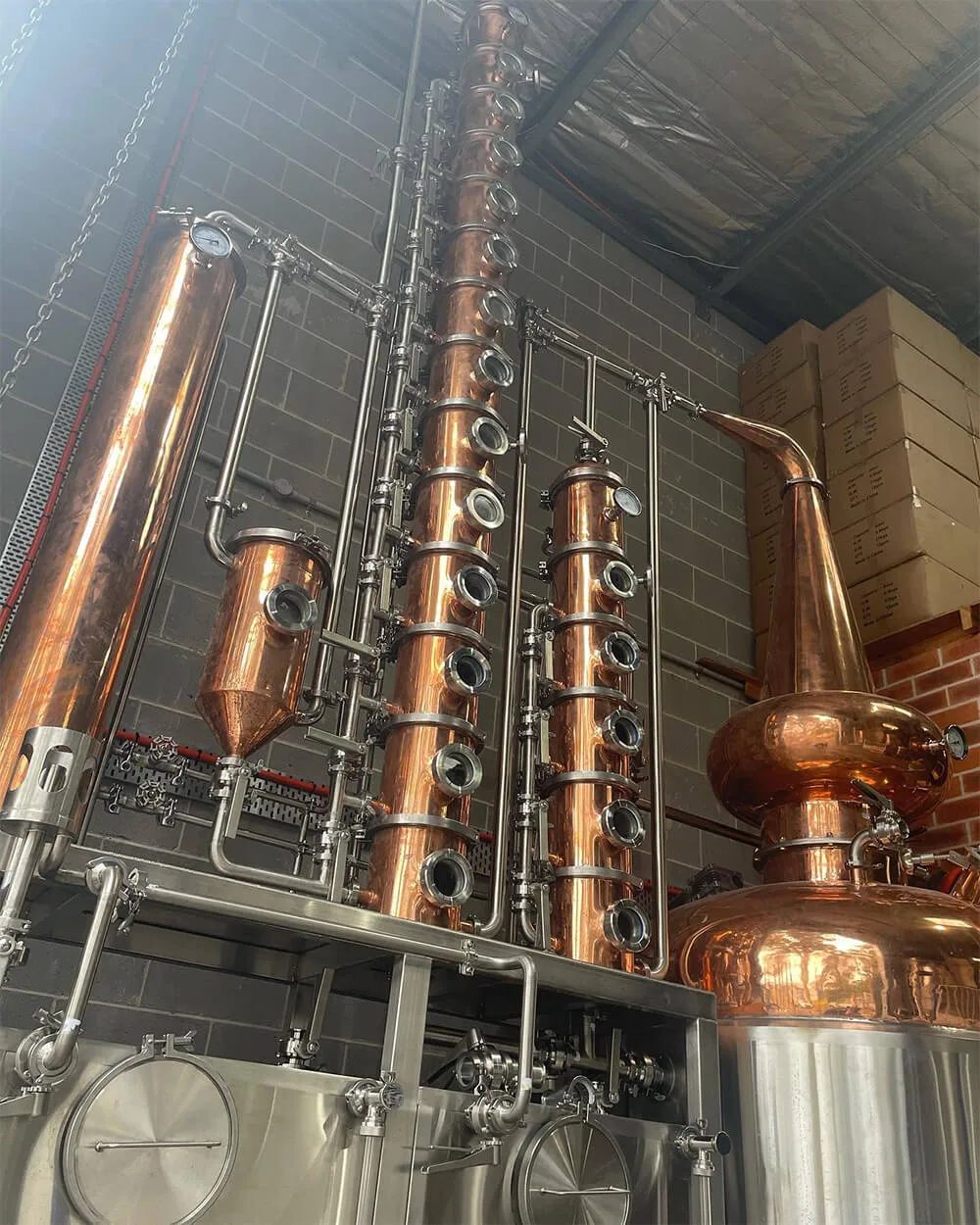
Many craft distilleries choose hybrid distillation systems, combining pot stills with column sections to balance flavor control and efficiency. This offers flexibility for producing multiple spirit styles.
3. Choosing the Right Capacity
Selecting the correct still size is crucial for operational efficiency and cost control.
Common craft distillery sizes include:
- 100–300L: Pilot production, R&D, small craft batches
- 500L: Entry-level commercial production
- 1000L and above: Scaled commercial operations
When choosing capacity, consider:
- Fermentation tank volume
- Daily or weekly production targets
- Local regulations and licensing limits
- Future expansion plans
Oversizing too early can increase costs, while undersizing may limit growth.
4. Complete Distillation System Configuration
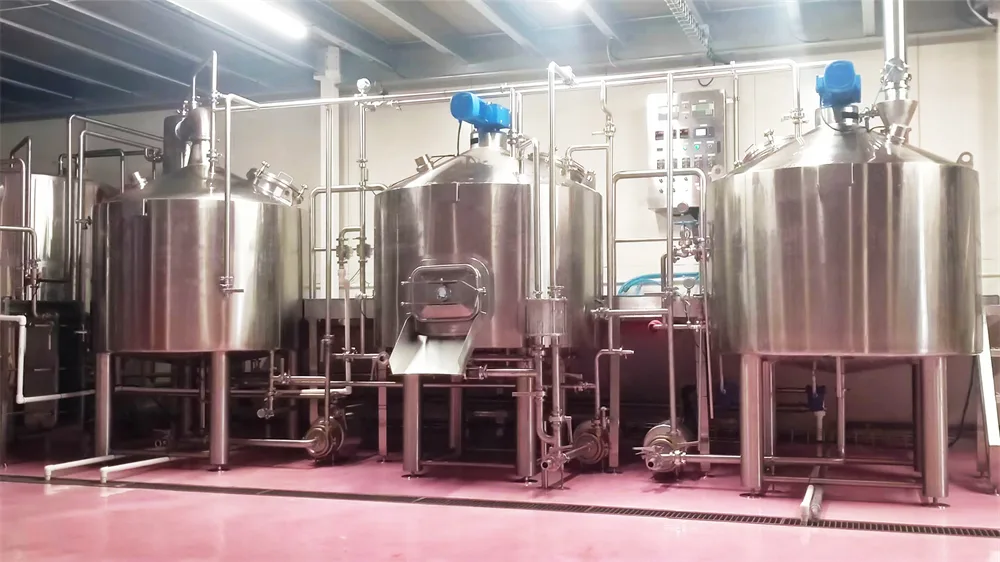
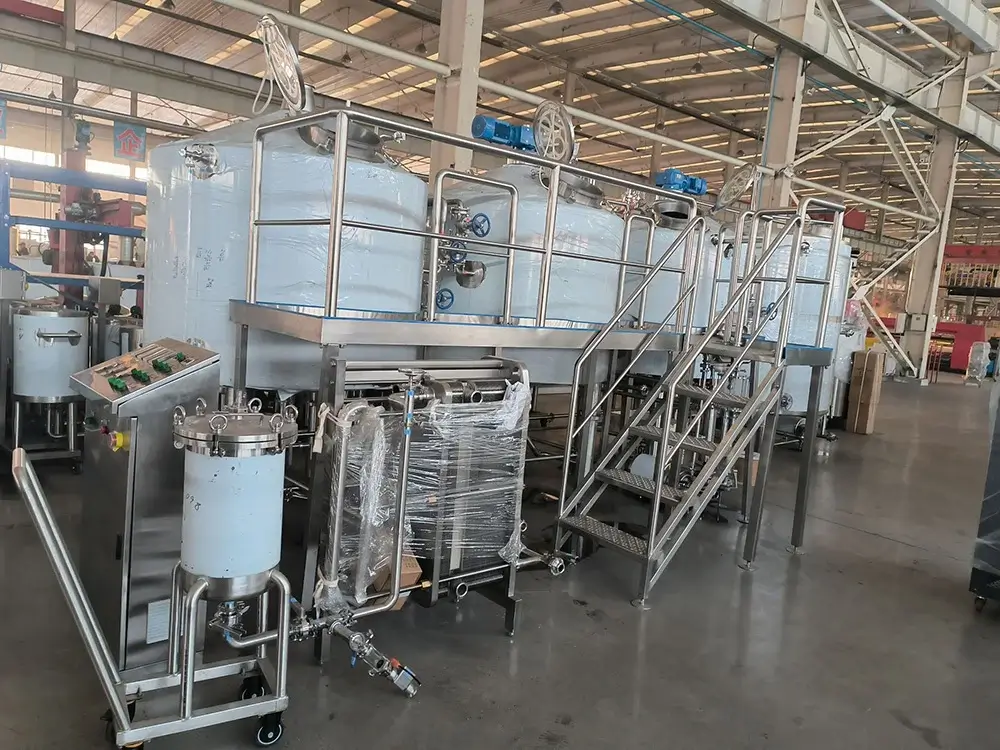
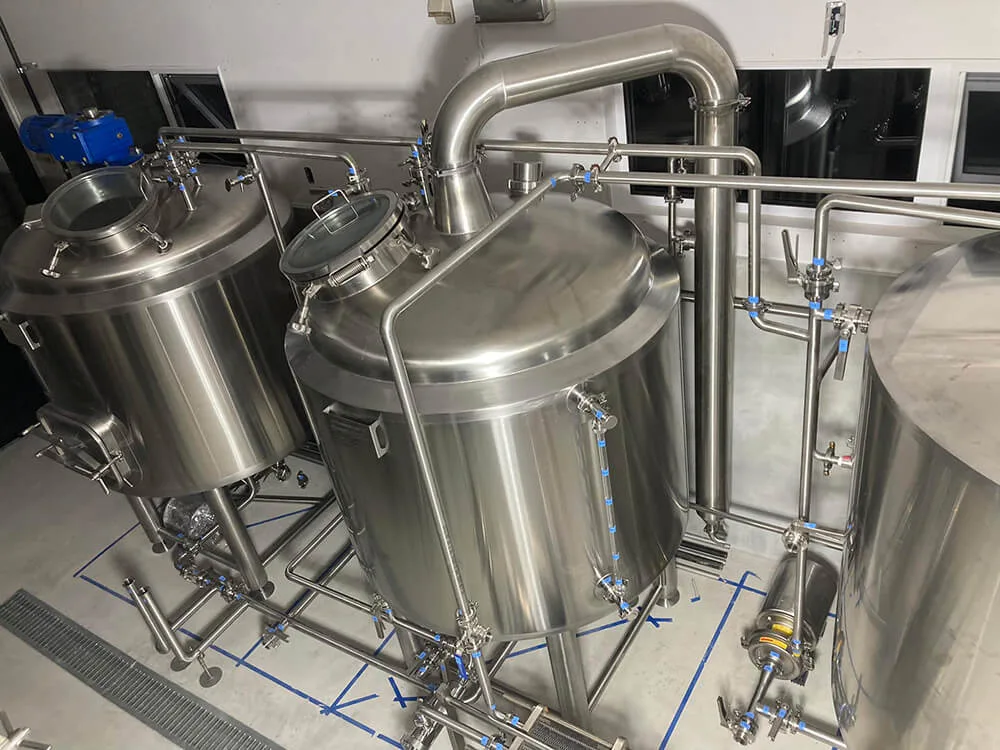
A distillation still is only one part of a complete spirits production system. A professional setup typically includes:
- Milling and mashing equipment
- Tanques de fermentación
- Distillation still (pot, column, or hybrid)
- Condensers and cooling system
- Heating system (electric, steam, or gas)
- Sistema de limpieza CIP
- Control and monitoring system
Choosing a one-stop equipment supplier helps ensure system compatibility, safety, and long-term reliability.
5. Automation, Safety, and Compliance
Modern craft distilleries increasingly adopt automated or semi-automated systems.
Características clave a tener en cuenta:
- PLC control for temperature and flow
- Precise alcohol cut control
- Energy-efficient heating design
- Explosion-proof electrical components
- Compliance with local safety standards (CE, UL, ASME, etc.)
Automation improves repeatability, reduces labor costs, and enhances safety—especially for commercial-scale operations.
6. Customization and Long-Term Support
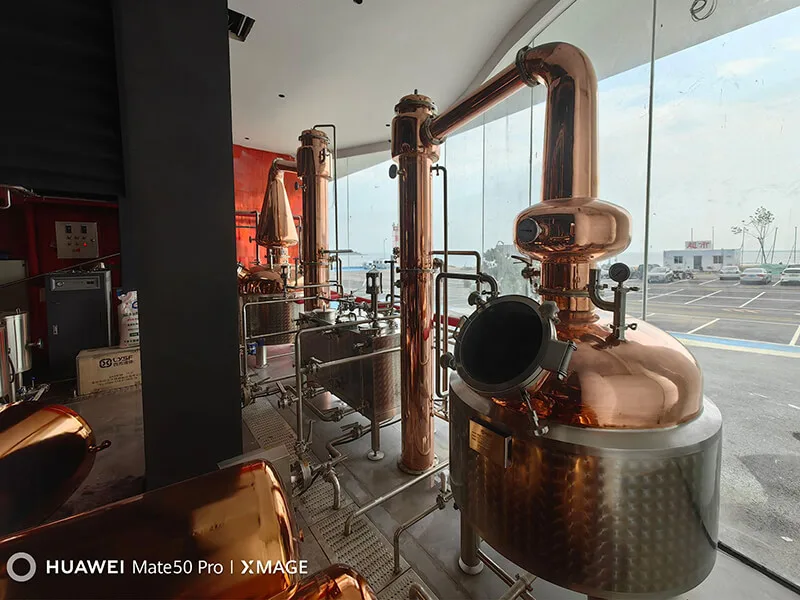
Every distillery is unique. Custom-designed distillation equipment ensures:
- Optimal layout for your space
- Compatibility with your recipes
- Flexibility for future product development
Equally important is after-sales support, including installation guidance, commissioning, and technical training.
Conclusión
La elección del equipo de destilación adecuado para la producción de bebidas espirituosas artesanales requiere una comprensión clara de su estilo de bebida espirituosa, sus objetivos de producción y su visión a largo plazo. Desde alambiques de pote hasta alambiques de columna, desde pequeños sistemas piloto hasta configuraciones a escala comercial, el equipo adecuado sienta las bases para una calidad constante y un crecimiento sostenible.
Working with an experienced distillation equipment manufacturer ensures your system is designed for performance, safety, and future expansion.
Llamamiento a la acción
Looking to build or upgrade your craft distillery?
Our engineering team specializes in custom distillation equipment for whiskey, gin, vodka, and other craft spirits.
👉 Póngase en contacto con nosotros for a tailored distillery solution within 24 hours.