For brewery founders, fermentation tanks are not just brewing equipment—they are long-term business assets. The right fermentation tank solution directly affects product consistency, operational efficiency, and how smoothly a brewery can grow.
This guide is written specifically for brewery founders and owners, focusing on practical decision-making rather than technical jargon, and helping you choose fermentation tanks that support both your beer quality and your business goals.
1. Why Fermentation Tanks Matter More Than You Think
Many founders invest heavily in brewhouse equipment but underestimate fermentation capacity. In reality, fermentation tanks determine:
- How much beer you can sell each month
- How flexible your production schedule can be
- How fast you can respond to market demand
- Whether expansion will be smooth or disruptive
From a founder’s perspective, fermentation is often the real production limit, not the brewhouse.
2. Start with Business Goals, Not Tank Sizes
Before selecting fermentation tanks, founders should clearly define:
- Target annual production
- Core beer styles vs. seasonal releases
- Packaging strategy (draft, cans, bottles)
- Expected growth in the next 3–5 years
A practical rule of thumb is to plan fermentation volume at 3–5 times the brewhouse size. This ensures steady production without constant scheduling pressure.
Founder insight:
Under-sizing fermentation tanks often leads to rushed fermentation, lost sales, or costly upgrades much earlier than expected.
3. Choosing the Right Tank Configuration for Your Brewery
Cylindroconical Fermenters (CCFs)
Lo mejor para:
- Core beers
- Stable, repeatable production
- Efficient yeast reuse
Unitanks
Lo mejor para:
- Saving space
- Reducing beer transfers
- Increasing flexibility for new or seasonal beers
Founder-friendly solution:
Many successful breweries combine both types—CCFs for fermentation and unitanks for conditioning and packaging—balancing efficiency and flexibility without overcomplicating operations.
4. Build Quality = Peace of Mind
For founders, tank quality is less about steel grades and more about long-term reliability.
High-quality fermentation tanks mean:
- Fewer contamination risks
- Easier cleaning
- Lower maintenance costs
- Less downtime and fewer surprises
Key indicators of good build quality include smooth internal finishes, solid welding, and pressure-rated construction designed for commercial use.
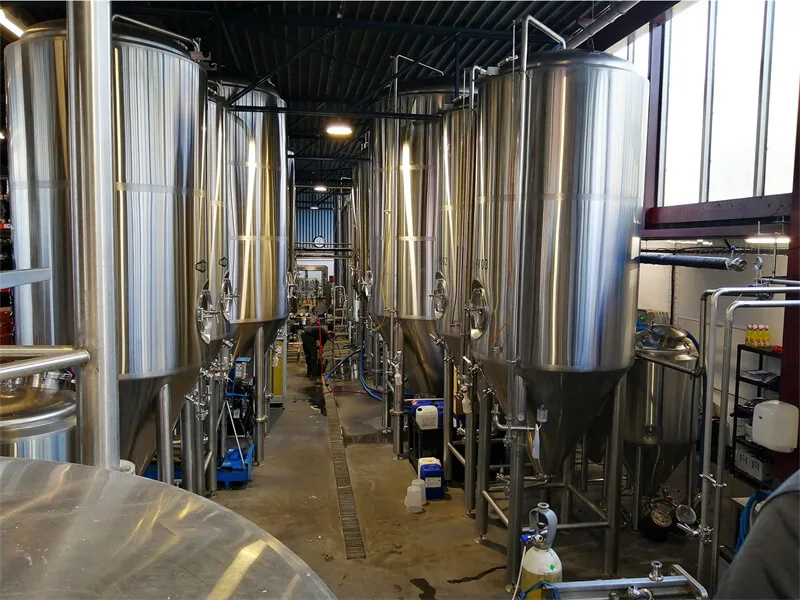
5. Temperature Control Protects Your Brand
Consistent fermentation temperature is critical for beer flavor and brand stability.
Well-designed fermentation tanks with efficient cooling:
- Reduce fermentation variability
- Shorten production cycles
- Menor consumo de energía
For founders, this translates to consistent beer quality and fewer customer complaints—both essential for building a strong brand.
6. Safety, Compliance, and Risk Reduction
Fermentation tanks operate under pressure, especially in modern breweries using unitanks or pressure fermentation.
Founders should ensure:
- Tanks are properly pressure-rated
- Safety valves and monitoring are included
- Equipment complies with local regulations
These factors reduce operational risk and protect the business from regulatory or insurance issues.
7. Cleaning Efficiency Saves Time and Money
Time spent cleaning is time not spent brewing or selling beer.
Founder-focused benefits of good CIP design:
- Shorter cleaning cycles
- Lower water and chemical usage
- Reduced labor costs
Over the life of a brewery, efficient cleaning design can save thousands of dollars in operating costs.
8. Space Planning and Future Expansion
Many founders regret not planning for growth early enough.
Before finalizing tank sizes, consider:
- Ceiling height and access limitations
- Room for additional tanks
- Whether utilities can support future expansion
Designing fermentation systems with growth in mind avoids disruptive rebuilds and protects your initial investment.
A Founder’s Perspective on Choosing the Right Solution
Working with an experienced brewery equipment partner can significantly reduce decision-making stress and long-term costs. A fermentation tank solution designed around your current needs—while allowing for future growth—helps founders focus on building their brand instead of managing equipment limitations.
Conclusión
For brewery founders, choosing fermentation tanks is not just an equipment decision—it is a business strategy. The right fermentation tank solution supports consistent beer quality, predictable production, and confident expansion.
By focusing on scalability, reliability, and operational simplicity, founders can build a fermentation system that grows with their brewery and supports long-term success.
Selecting fermentation tanks for a commercial brewery is not just about size—it’s about efficiency, consistency, safety, and future growth. By carefully considering capacity planning, tank design, material quality, cooling performance, and expansion needs, breweries can build a fermentation system that supports stable production and high-quality beer for years to come.
If you’re planning a new commercial brewery or upgrading your fermentation cellar, working with an experienced equipment supplier can help you tailor the right tank configuration for your production goals.