“Can I open a craft beer bar with no experience?”
“What should I prepare if I only have a small space and limited budget?”
The truth is, starting a craft beer brewpub isn’t as difficult as many think—but beginners often fall into two common traps: overspending on high-end equipment or cutting corners with cheap, low-quality setups. Both can lead to costly mistakes.
After years in the brewing industry, here’s a practical, no-nonsense guide covering equipment selection, startup planning, and common pitfalls—so you can start smart and grow steadily.
Start Smart: Focus on Practicality, Not Perfection
For a 50–100㎡ neighborhood brewpub, success doesn’t come from “premium everything.” Instead, focus on:
- High value-for-money craft beer
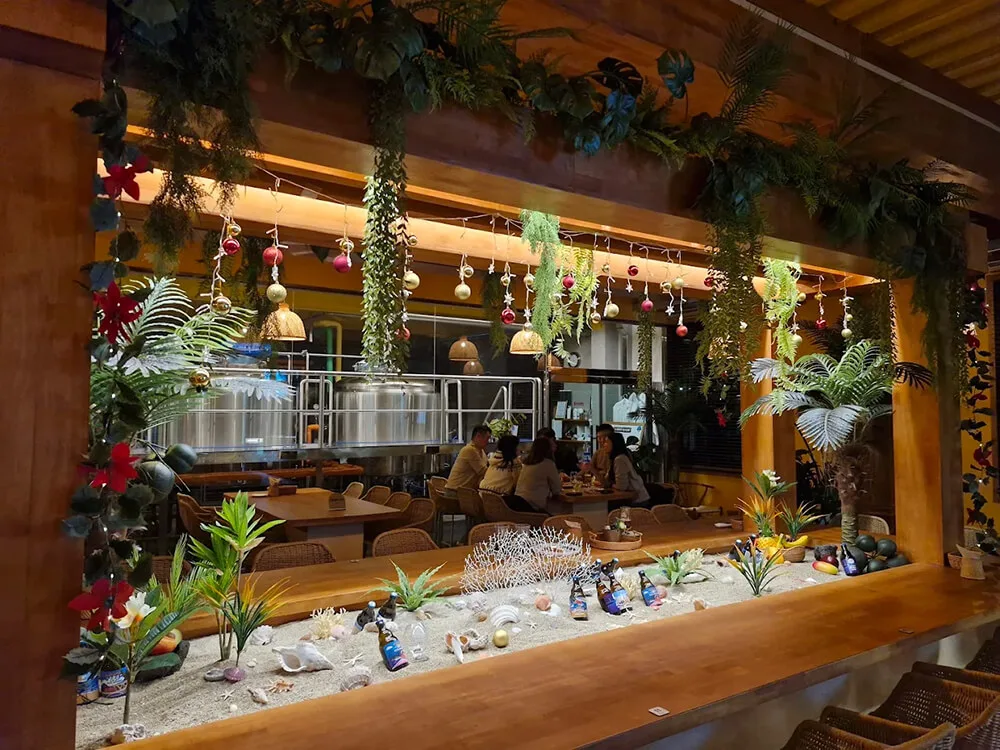
- Comfortable, welcoming atmosphere
- Simple, reliable operations
In the early stage, prioritize just three things:
- Choosing the right equipment
- Controlling your budget
- Avoiding common mistakes
Master these, and you’ll have a solid foundation.
1. Essential Brewing Equipment for Beginners (High ROI Setup)
Your equipment directly impacts beer quality and operational efficiency, but beginners don’t need large-scale or fully automated systems.
For small brewpubs producing 1–5 core styles (e.g., wheat beer, lager, basic IPA) with daily output of 50–300L, focus on three stages:
Brewing → Fermentation → Serving
1.1 Core Brewing Equipment
Option A: All-in-One Brewing & Fermentation System (Best for Beginners)
Ideal for complete beginners:
- Combines mashing and fermentation
- Compact footprint: 3–5㎡
- Easy to operate, minimal installation
- Fewer pipes = easier cleaning, lower contamination risk
Key requirements:
- Food-grade SUS304 stainless steel
- Polished inner surface for hygiene
- Jacketed fermentation tank with ±0.5–1°C temperature control
This ensures stable fermentation and consistent flavor.
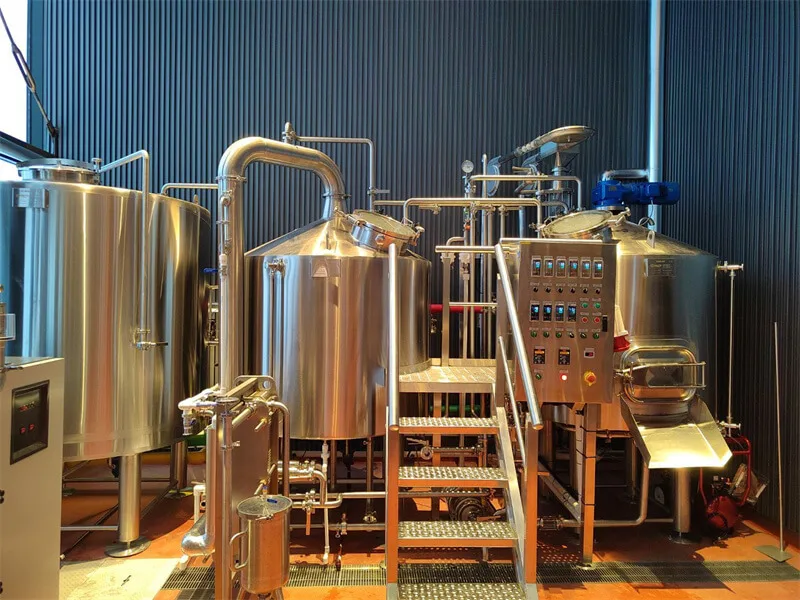
Option B: Split System + Conical Fermenters (For Future Expansion)
Better if you plan to expand your beer range:
Configuration:
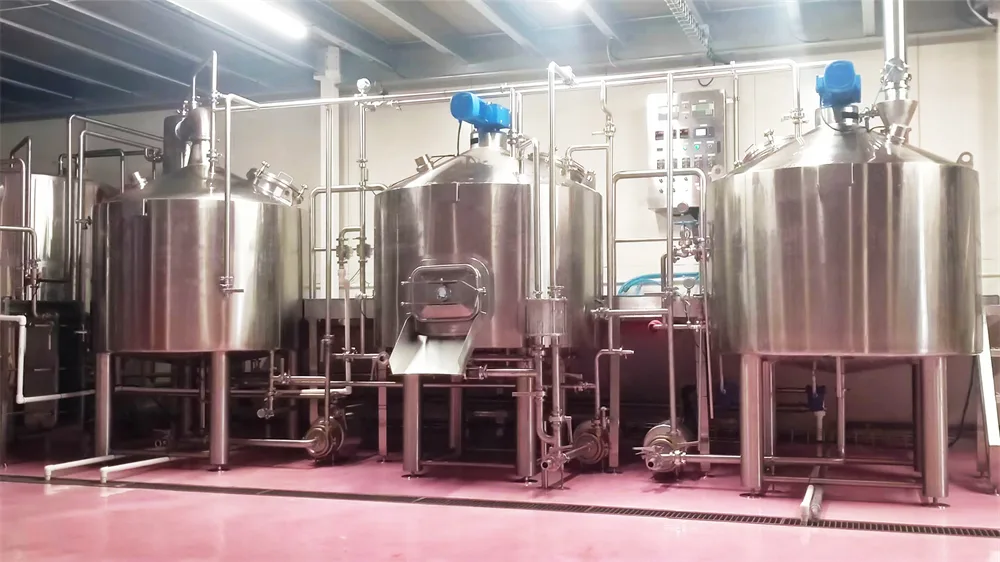
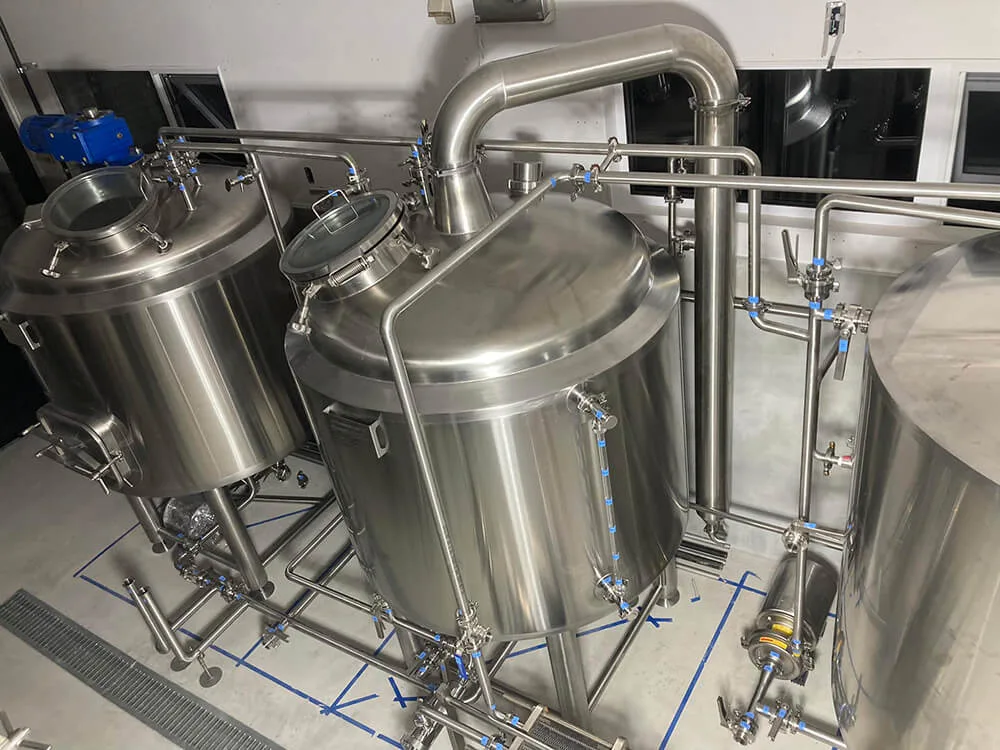
- Mash tun + lauter tun + kettle (split system)
- 2–3 conical fermenters
Recommended size:
- 200L brewhouse → ~180L per batch
- Brew 2–3 times/week → 500–600L weekly capacity
Tip:
SUS304 is more than sufficient—no need to overspend on SUS316 unless required.
Automation Level: Semi-Automatic Is Enough
- Automatic temperature control (critical)
- Manual operation for non-critical steps
This reduces cost while staying beginner-friendly.
1.2 Supporting Equipment (Small Cost, Big Impact)
These are often overlooked—but essential:
✔ Chiller (Cooling System)
- Choose dual-compressor models for stability
- Ensures consistent fermentation temperature
- Prevents off-flavors
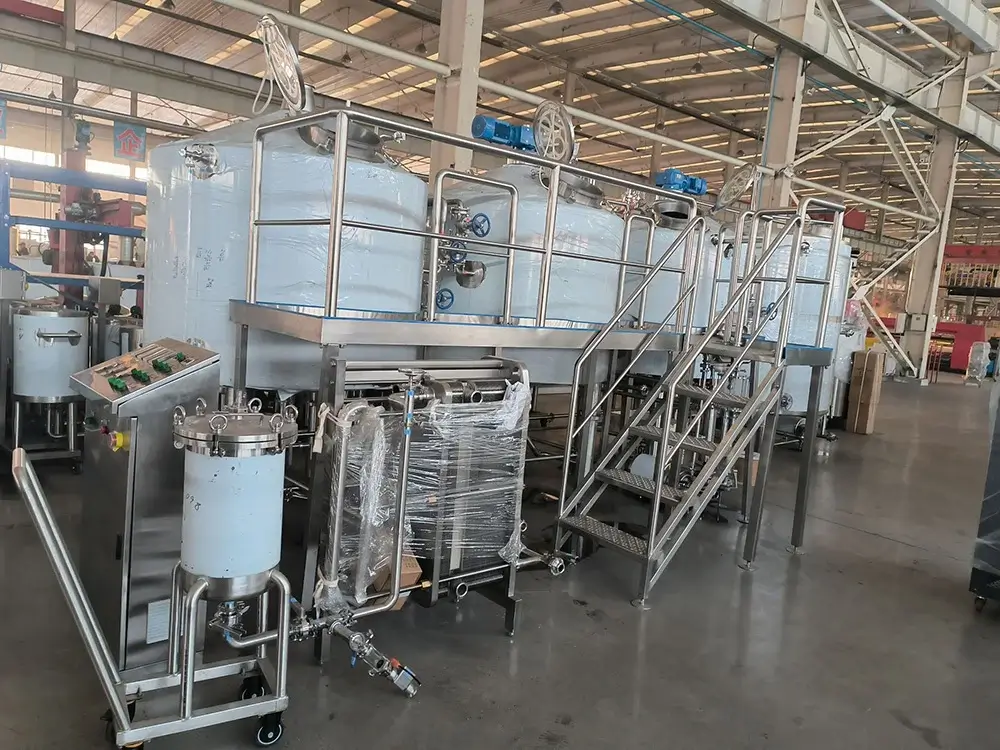
✔ CIP Cleaning System
- Cleans tanks and pipes without disassembly
- Saves labor and improves sanitation
- Prevents contamination (a common beginner issue)
✔ Basic Tools Kit
- Hydrometer
- Sanitizers
- Silicone hoses
- Filters
Budget-friendly but indispensable.
1.3 Draft Beer System (Serving Setup)
Your serving system affects both taste and customer experience.
Basic setup:
- Food-grade CO₂ tank
- Stainless steel beer lines
- 3–6 taps
Key tips:
- Avoid plastic tubing—use stainless steel or silicone
- Keep lines chilled to reduce foam issues
Optional: LED-lit taps for better visual appeal and branding.
2. Common Beginner Mistakes (Avoid These!)
Mistake 1: Choosing Cheap, Low-Quality Equipment
If it’s far below market price, expect issues:
- Poor temperature control
- Thin materials
- Low durability
Result: higher long-term costs and inconsistent beer quality.
Mistake 2: Buying Second-Hand Equipment
Risks include:
- Hidden contamination
- Worn-out components
- Frequent breakdowns
Unless inspected by a professional, avoid used equipment.
Mistake 3: Unbalanced System Configuration
Example:
- Large brewhouse + poor fermentation control = bad beer
- Good brewing + poor draft system = poor customer experience
Always think end-to-end system compatibility.
Mistake 4: Overinvesting Too Early
Don’t try to “build everything at once.”
Start small:
- 2–3 fermenters initially
- Expand as demand grows
Choose modular systems for easy upgrades.
3. Budget & Startup Planning
3.1 Practical Startup Tips
✔ Location Strategy
- Residential areas or office districts
- Stable foot traffic + lower rent
- Avoid expensive downtown locations early on
✔ Product Strategy
- Start with 1–2 flagship beers
- Focus on consistency over variety
✔ Maintenance Routine
- Clean equipment after every brew
- Weekly deep sanitation
- Replace seals/valves every 3–6 months
Reflexiones finales
There’s no “perfect setup” for a beginner brewpub—and no need to chase perfection.
Focus on:
- Practical equipment choices
- Controlled spending
- Avoiding common mistakes
The real value of craft brewing isn’t just in the beer—it’s in the process:
from brewing your first batch to building a loyal customer base.
Start small, improve steadily, and grow with experience.
👉 Contact us today for a custom brewhouse system design tailored to your production goals, budget, and future expansion plans.