In homebrewing and craft beer production, mashing is one of the most important steps. It directly affects beer flavor, mouthfeel, and alcohol content.
Many beginners often ask:
- Why do some recipes use two-step or multi-step mashing?
- Why are the temperatures different?
- Why is the first mash rest usually lower than the second?
This article explains these questions using basic brewing science and real brewing experience, helping you better understand how mashing works in a modern brewhouse system.
1. What Is Mashing and Why Is It Important?
Mashing is the process where enzymes in malt convert starch into fermentable sugars that yeast can use.
This process determines:
- Fermentability of the wort
- Body and mouthfeel of the beer
- Final alcohol level and flavor balance
Malt contains several enzymes, and each enzyme works best at a specific temperature. If temperature control is poor, enzyme activity drops or stops, leading to:
- Low mash efficiency
- Thin body
- Incomplete fermentation
That’s why temperature control is critical, especially when using professional brewery equipment.
2. Key Enzymes in Malt and Their Temperature Ranges
Understanding enzyme behavior is the foundation of mash temperature control.
β-Glucanase (40–45°C)
Breaks down β-glucans, reduces wort viscosity, and improves lautering. Too much activity may reduce body and foam stability.
Protease (50–54°C)
Breaks proteins into amino acids and peptides. This supports yeast nutrition and affects foam quality and mouthfeel.
β-Amylase (62–67°C)
Produces fermentable sugars (mainly maltose). Important for high attenuation and dry beer styles.
α-Amylase (71–72°C)
Breaks starch randomly, creating dextrins. These sugars are less fermentable and increase body and sweetness.
3. Why Use Two-Step or Multi-Step Mashing?
A single mash temperature cannot optimize all enzymes at the same time.
Step mashing allows different enzymes to work at their ideal temperatures, giving brewers more control over wort composition.
A typical example:
- Low-temperature rest (45–55°C) for protein breakdown
- Higher-temperature rest (62–70°C) for starch conversion
This method improves:
- Wort nutrition
- Sugar balance
- Flexibility for different beer styles
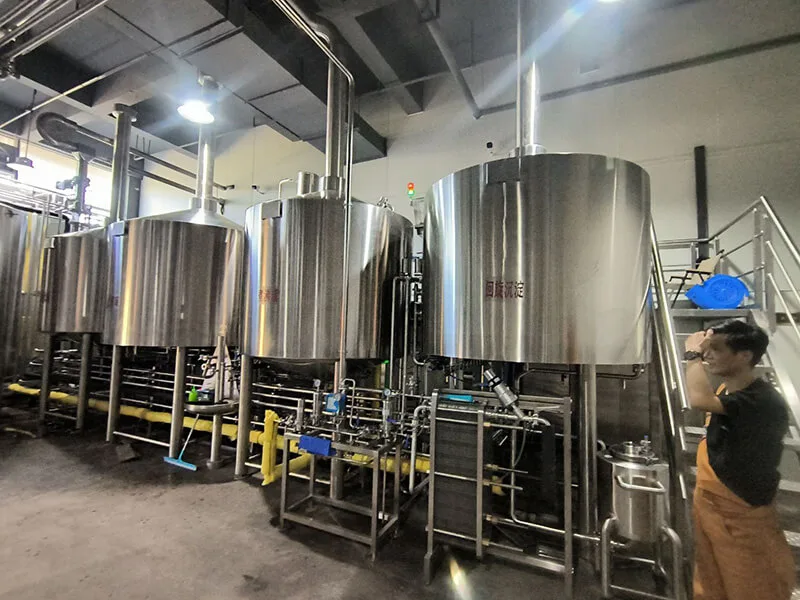
In professional brewhouse systems, step mashing is widely used to maximize malt performance.
4. Why Is the First Mash Temperature Lower?
The first rest is lower to protect β-amylase, which is sensitive to heat.
If the mash starts too hot (above 68°C):
- β-amylase is quickly deactivated
- Fermentable sugar production drops
- Final beer may be sweet and under-attenuated
By starting at a lower temperature and slowly increasing heat:
- Proteases work first
- Both amylase enzymes can function properly
- Wort fermentability and body stay balanced
This is especially important for malt-forward styles like Pilsner and Bock.
5. Common Mash Temperature Stages
| Temperature | Stage | Main Purpose |
|---|---|---|
| 35–40°C | Mash-in rest | Enzyme activation, β-glucan breakdown, better lautering |
| 45–55°C | Protein rest | Protein breakdown, foam and mouthfeel control |
| 62–70°C | Saccharification | Starch to sugar conversion |
| 75–78°C | Mash-out | Stops enzyme activity, improves extract yield |
Modern brewery equipment allows precise control of each stage.
6. Homebrewing vs Industrial Brewing
Homebrewing
Many homebrewers use single-step mashing at 65–68°C for 60–90 minutes. This is a practical compromise where both amylase enzymes remain active.
Industrial Brewing
Commercial breweries often use multi-step mashing programs, gradually heating from 30°C to 75°C.
This level of control helps:
- Improve consistency
- Adjust wort composition
- Match different beer styles
A well-designed brewhouse system makes this process stable and repeatable.
7. Common Mistakes and Practical Tips
- Lower is safer than higher: High temperatures destroy enzymes faster
- Malt modification matters: Well-modified malt may skip protein rest
- Mash-out is important: Heating to ~78°C locks wort composition
Good temperature control protects enzyme activity and improves final beer quality.
Conclusión
Mashing is both science and craft.
By understanding enzyme behavior and using temperature control wisely, brewers can shape:
- Fermentability
- Body
- Flavor balance
Whether you brew a crisp lager or a full-bodied ale, a properly designed mash program—and reliable brewery equipment—is the foundation of great beer.
If you are planning a new brewery or upgrading your brewhouse system, choosing the right equipment and mash design is critical.
Contact us to learn more about professional brewing solutions, system design, and equipment support for your brewery.