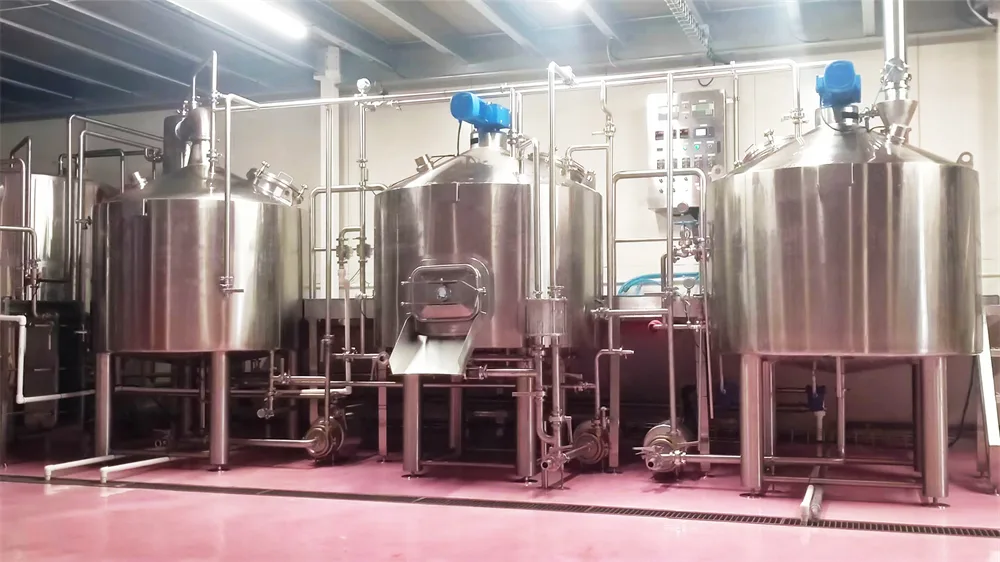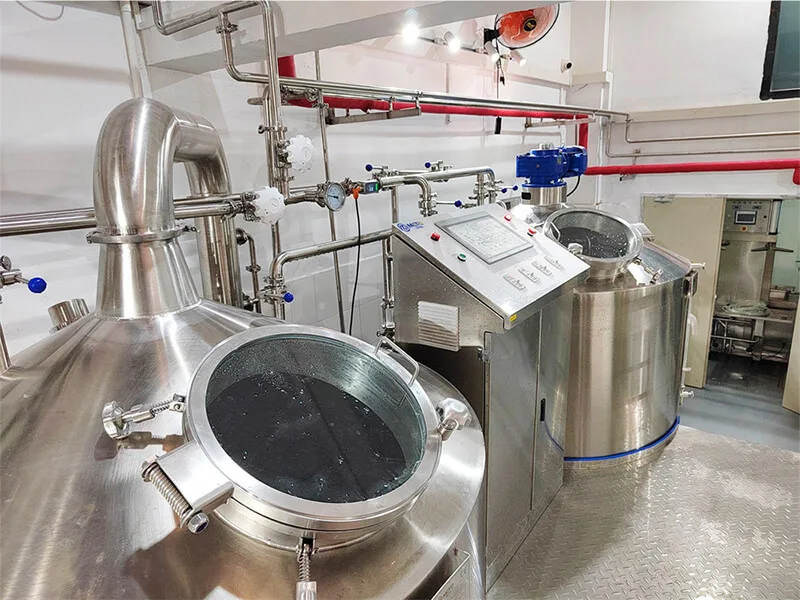
Choosing beer equipment is like choosing the right pair of shoes—there’s no “best,” only what fits your needs. Many beginners, bar owners, and brewing enthusiasts fall into the trap of thinking “higher specs are better” or “more expensive means more reliable.” The result? Overspending—or equipment that simply doesn’t perform the way they need.
Some pursue exceptional craft beer flavor but end up with production-line systems designed for efficiency. Others want to reduce operating costs with energy-saving setups but mistakenly invest in high-energy-consumption equipment.
The real key is demand-driven selection: define whether your priority is flavor, efficiency, or energy savings, then match your equipment configuration accordingly. Here’s a detailed breakdown of how to choose the right brewing system based on your goals.
1. Flavor-Focused Setup: Preserve Aroma and Complexity
Lo mejor para: Craft brewpubs, small breweries, homebrewers
Objetivo: Maximize flavor expression, aroma layers, and mouthfeel
In this scenario, equipment should faithfully translate your recipe into the final beer, without introducing off-flavors or inconsistencies.
Key Equipment Considerations
Brewhouse System: Go for Split Systems with Precision Control
Flavor starts in the mash. Choose a multi-vessel brewhouse (e.g., 2-vessel 3-tank or 3-vessel system) instead of all-in-one units. Independent control of mashing, lautering, and boiling allows precise step mashing (e.g., 62–65°C beta-amylase rest, 72°C saccharification rest), improving body and fermentability.
Busca:
- Adjustable agitators (30–60 RPM, ~45° blade angle)
- Food-grade SUS304 stainless steel
- Polished interior (Ra ≤ 0.4 μm) to prevent contamination
Fermentation Tanks: Precision Temperature = Flavor Stability
Fermentation defines the beer’s character. Use conical fermenters with jacketed cooling, offering ±0.1–0.5°C precision.
For specialty styles:
- IPA: pressure-capable tanks (0.8–1.2 bar) for dry hopping
- Sour beer: 316L stainless steel + CIP with pasteurization
Filtration: Don’t Over-Filter Flavor Away
Avoid excessive filtration:
- Hazy styles: diatomaceous earth + ~2μm membrane
- Lagers: ~0.45μm crossflow filtration
Avoid 1μm “absolute filtration”—it strips aroma and body.
Common Mistakes to Avoid
- Cheap all-in-one systems with poor temperature control
- Rough interior tanks that trap yeast and bacteria
- Low-grade valves (use food-grade seals + 316L cores)
2. Efficiency-Focused Setup: Maximize Output, Minimize Labor
Best for: Commercial bars, restaurants, mid-sized breweries
Goal: Increase production speed, reduce labor, enable batch consistency
Here, equipment should be automated, integrated, and scalable.
Key Equipment Considerations
Brewhouse: Integrated & Automated Systems
Choose all-in-one brewhouse systems (3- or 4-vessel integration). These reduce brewing time from 7–8 hours to 4–5 hours and allow multiple batches per day.
Busca:
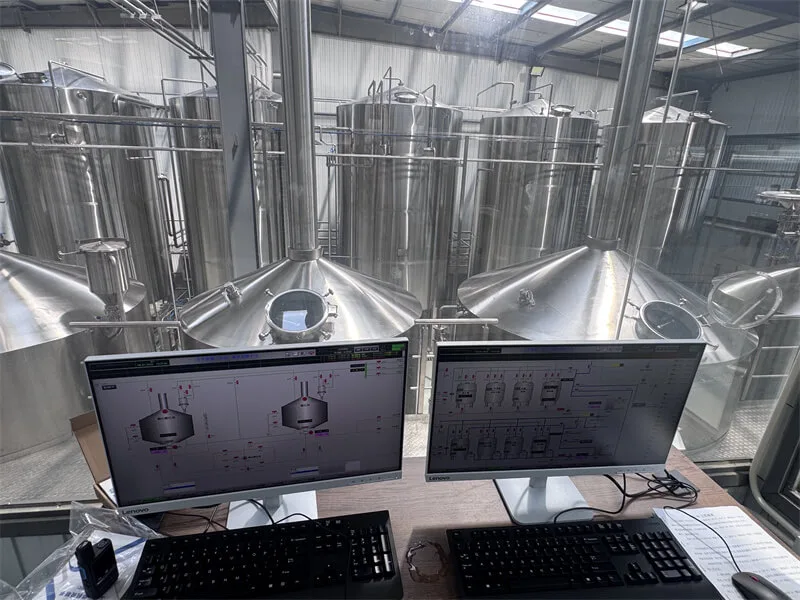
- PLC touchscreen control systems
- Recipe memory and automation
- Real-time monitoring (temperature, pressure, gravity)
Fermentation: Scale and Turnover Efficiency
Match fermenter capacity to brewhouse output.
Use:
- Multiple fermenters for continuous production
- Fast fermentation systems (reduce cycle to 5–7 days for ales)
- Yeast recovery systems (≥95% recovery rate)
Auxiliary Equipment: Automate Everything Possible
- Automatic filling systems
- Transfer pumps
- Flow monitoring systems
Modular designs are ideal for future expansion.
Common Mistakes to Avoid
- Oversizing equipment beyond actual demand
- Overcomplicated automation requiring skilled operators
- Ignoring after-sales support and system reliability
3. Energy-Efficient Setup: Reduce Long-Term Operating Costs
Best for: Long-term brewery operations
Goal: Lower energy consumption (electricity, gas) and improve ROI
Energy efficiency may cost more upfront—but saves significantly over time.
Key Equipment Considerations
Brewhouse Heating: Optimize Energy Use
- Steam heating (best for medium/large scale, ~30% more efficient)
- Electric + heat recovery systems
- Insulation: ≥120mm polyurethane + reflective layer
Heat recovery alone can reduce energy use by ~30%.
Fermenters: Insulation + Smart Cooling
- Insulation ≥100mm polyurethane
- Glycol cooling systems
- Variable-frequency chillers (adjust output automatically)
Fermentation cooling accounts for ~40% of total energy use, so optimization is critical.
System-Wide Efficiency
- Choose certified energy-efficient equipment
- Short piping layouts to reduce heat loss
- Energy-saving pumps and components
- Ambient temperature compensation systems
Common Mistakes to Avoid
- Buying cheap, high-energy-consumption systems
- Sacrificing temperature precision for energy savings
- Ignoring material quality (304/316L ensures durability and efficiency)
4. Final Thoughts: Balance Your Priorities
There is no universal solution—only the right balance for your needs:
- Flavor-first: Prioritize precision, materials, and process flexibility
- Efficiency-first: Focus on automation, integration, and scalability
- Energy-first: Invest in insulation, heat recovery, and efficient systems
No matter your focus, always consider:
- Facility size
- Budget
- Production scale
- After-sales support
The right brewing equipment doesn’t just improve beer quality—it enhances operational efficiency, reduces long-term costs, and strengthens your competitive edge.
Choose wisely, and every batch you brew will pay you back.
👉 Contact us today for a custom brewhouse system design tailored to your production goals, budget, and future expansion plans.